
Key Takeaways
1. The Radxa CM4 is a budget-friendly compute module priced starting at $70, positioned between the CM3 and CM5 models.
2. The CM4 features a Rockchip RK3576 SoC with an octa-core setup (four Cortex A72 and four Cortex A53 cores) and a Mali G52 MC3 GPU.
3. The CM5, priced at $107, has superior performance with an RK3588 SoC, featuring Cortex A76 and Cortex A55 cores and a Mali G610 MP4 GPU.
4. The entry-level CM4 model includes 32 GB of eMMC storage and 4 GB of LPDDR4X RAM, with an upgraded version available for $115 offering 8 GB RAM and 64 GB storage.
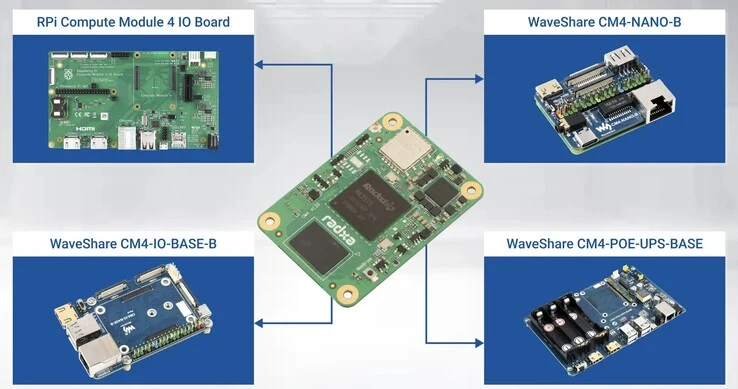
5. The CM4 is compatible with various third-party boards, including those from Raspberry Pi and WaveShare, and can connect to an I/O board for expanded ports.
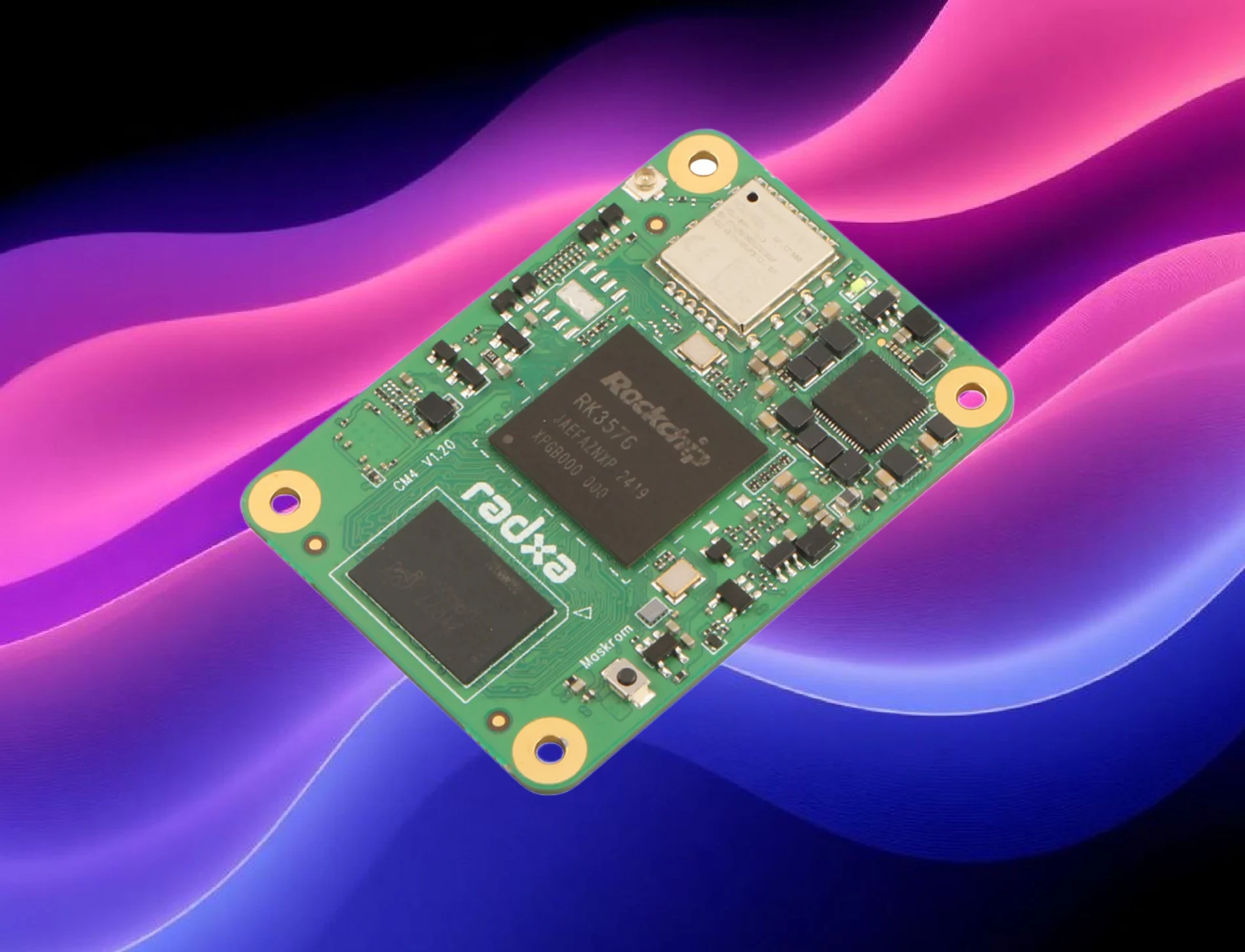
Radxa has just shared information about its newest product in the system-on-modules market, which is called the CM4. This budget-friendly compute module is designed to fit nicely in between the CM3 and CM5 models, providing a solid range of features. The company has also disclosed the pricing, with the CM4 starting at $70.
Performance Differences
The main distinction between the CM5 and the CM4 modules is in their SoC performance, along with some other differences. The CM4 operates on the Rockchip RK3576 SoC, featuring an octa-core configuration that includes four Cortex A72 cores and four Cortex A53 cores, plus a Mali G52 MC3 integrated GPU. In contrast, the CM5, which is currently priced at $107 on Amazon, utilizes the more advanced RK3588 SoC, which includes Cortex A76 and Cortex A55 cores, along with a Mali G610 MP4 GPU.
Variants and Compatibility
As noted earlier, the Radxa CM4 starts at $70 for its entry-level model, which includes 32 GB of eMMC storage and 4 GB of LPDDR4X RAM. There is also a version with 8 GB of memory and double the storage, available for $115. By connecting the CM4 to an I/O board, users can access a wide variety of ports. Additionally, the CM4 is compatible with third-party boards, such as those offered by Raspberry Pi and WaveShare.
Source:
Link
Leave a Reply