
Key Takeaways
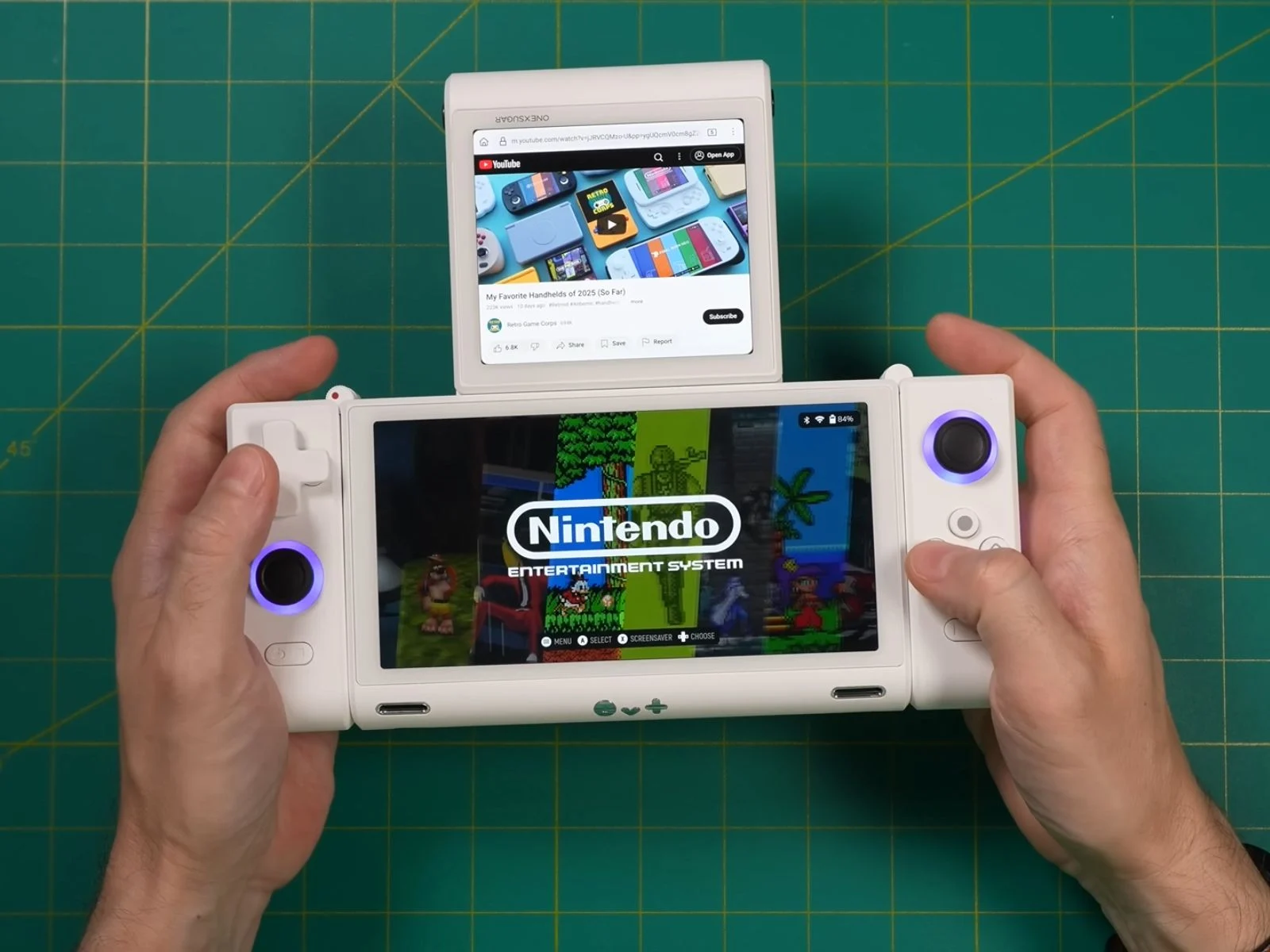
1. Unique Dual-Screen Design: The OneXSugar Sugar 1 features a dual-OLED setup with a 6.01-inch main screen and a 3.92-inch secondary screen that can be rotated or flipped for flexible usage.
2. Performance Issues: Powered by the Snapdragon G3 Gen 3 chip and 16 GB of RAM, the device showed significant performance drops during heavy use, scoring lower in stability compared to competitors like the Ayaneo Pocket S2.
3. Gameplay Limitations: While it performs well with certain emulated games, issues arose with dual-screen titles, particularly with touch inputs not registering on the secondary screen.
4. Battery Life Variability: The battery life varies greatly depending on usage, lasting over 11 hours in low-demand scenarios but dropping to under 2 hours during intensive gaming.
5. Weight and Comfort Concerns: Despite its innovative design, the device’s weight (486 grams) and boxy shape were criticized for affecting comfort during gameplay.
The OneXSugar Sugar 1 is a unique handheld gaming device with dual screens, which started as a project on Indiegogo. YouTuber Russ from Retro Game Corps recently tested it and pointed out the creative aspects as well as the shortcomings of this $599 Android device.
Unique Design Features
What makes the 1X Sugar different from other Android gaming consoles is its special dual-OLED setup. It features a 6.01-inch main screen and a smaller 3.92-inch secondary one, both of which can be rotated or flipped based on how you want to use it. This flexibility allows the device to mimic different console setups, including a clamshell design similar to the Nintendo DS and 3DS.
Performance Insights
The OneXSugar Sugar 1 is powered by the Snapdragon G3 Gen 3 chip and comes with 16 GB of LPDDR5X 8533 MHz RAM, but it doesn’t perform well under pressure. In the 3DMark Wild Life Extreme Stress Test, Russ found it scored a high of 5124 and a low of 4248, showing a drop in performance after 20 minutes of heavy use. The thermal stability was measured at 82.9%.
In a comparison, Russ tested the Ayaneo Pocket S2, which performed better in the same stress test, achieving a thermal stability score of 92.3%. While the Pocket S2 scored lower overall at 4,882, the OneXSugar Sugar 1 managed to get a higher peak score of 5,124 in the same test.
Stability Comparison
However, when looking at the lowest scores, the Pocket S2 scored 4,506, while the OneXSugar Sugar 1 only reached 4,248, which suggests that the Ayaneo has better stability during use.
When it comes to playing emulated games and Android titles, the Sugar 1 does well with DS, 3DS, and PS2 games at high resolutions. Still, Russ encountered problems with dual-screen titles like Yoshi’s Island DS, where the second screen showed the gameplay but didn’t pick up touch inputs.
Additional Specifications
The device includes 512 GB of UFS 4.0 storage, has a 5600 mAh battery, and uses a fan-based cooling system. Battery life can change quite a bit depending on how you use it. For instance, the OneXSugar Sugar 1 lasted over 11 hours playing Contra III through SNES emulation with no shaders and in Saving mode. But, when playing God of War II via PS2 emulation at 3× resolution in Balanced mode, the battery lasted less than 2 hours.
Russ appreciated the design of the OneXSugar Sugar 1 but criticized its weight of 486 grams and boxy shape as significant downsides. Furthermore, the modular D-pad and face buttons, while innovative, were not comfortable during actual gameplay.
The price for the 1X Sugar is set at $599 and it’s available on ONEXPLAYER’s official site. Russ concluded that this device is mainly for early adopters and not yet suitable as a replacement for a dedicated DS or Switch Lite. Be sure to check out the review video linked below for a detailed look.
Source:
Link

Leave a Reply