
Key Takeaways
1. Pluto, Enceladus, and Europa may have liquid water and essential elements for life beneath their icy surfaces.
2. Cryovolcanism on Enceladus allows ocean water to escape into space, enabling easier sample collection.
3. Researchers are addressing challenges related to molecular changes during water’s journey from the ocean to space.
4. Water samples were taken from the Deep Circumpolar Current, which has conditions similar to those on distant ocean worlds.
5. The samples will be tested in a simulator to understand how cryovolcanism affects materials and the potential for life beyond Earth.
Pluto, Enceladus (the moon of Saturn), and Europa (the moon of Jupiter) are icy planets that are thought to have liquid water under thick ice layers. These celestial bodies are also believed to have essential elements for life, such as carbon, nitrogen, and chemical energy. Thus, scientists are exploring if these places might support tiny life forms.
Cryovolcanism as a Game Changer
To get water samples from these icy worlds, scientists usually need to drill through several kilometers of ice. Yet, Enceladus offers a different option through a process called cryovolcanism. In cryovolcanic events, ocean water from beneath the surface can burst into space, making it possible for researchers to gather samples without the need for drilling. The difficulty lies in the fact that many molecules may change during their trip from the ocean to the outer space — this is a problem that researchers Mariam Naseem, Marc Neveu, and their team are working to solve.
Unique Research Location
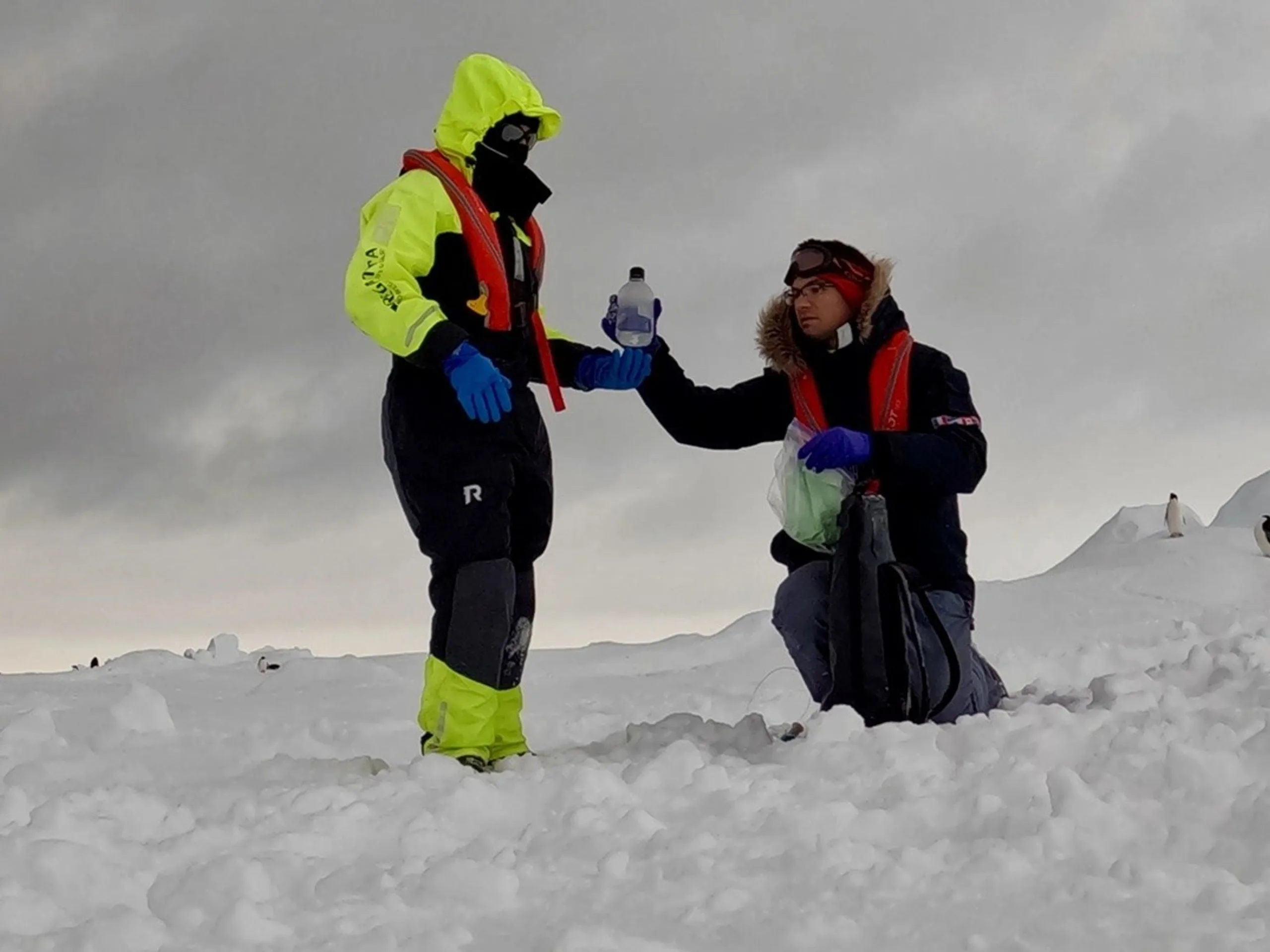
The team gathered water samples from the Deep Circumpolar Current, located 3,675 feet (1,120 meters) below the Weddell Sea, which is east of the Antarctic Peninsula. They chose this location because the water there is cut off from sunlight, mirroring conditions on ocean worlds far from Earth.
Testing Conditions for Life
The collected samples will undergo testing in a simulator that mimics the environment of space. This approach will allow scientists to understand how cryovolcanism affects ocean materials and how these changes could impact the search for life outside of our planet.
Source:
Link
Leave a Reply