
Key Takeaways
1. Astronomers discovered a young exoplanet, TOI-5734 b, orbiting the star TOI-5734, located about 106 light-years from Earth.
2. TOI-5734 b is classified as a hot sub-Neptune with a radius of 2.1 Earth radii and a mass of 9.1 Earth masses, experiencing extreme temperatures around 688 K.
3. The star TOI-5734 is a young K-type dwarf star, smaller and less massive than our Sun, with TOI-5734 b located near the upper limit of the radius valley.
4. The exoplanet may be losing its atmosphere through photoevaporation, potentially evolving into a rocky super-Earth in about 300 million years.
5. The discovery utilized the Transiting Exoplanet Survey Satellite (TESS) to measure size and brightness, alongside HARPS-N for confirming mass and density.
Astronomers have found a young exoplanet that orbits the star TOI-5734, which is situated roughly 106 light-years from Earth. This planet, which is smaller than Neptune but bigger than Earth, has a radius of 2.1 Earth radii and boasts a mass of 9.1 Earth masses, with a density that is a bit less than that of our planet. It’s categorized as a hot sub-Neptune exoplanet because of its size and its close orbit to its star, completing a full orbit every 6.18 days at a distance of 0.06 AU. Due to its close proximity to its star, this exoplanet experiences extremely high temperatures, estimated at around 688 K.
Characteristics of TOI-5734
The TOI-5734 star is a relatively young K-type dwarf star that has 0.72 times the mass of our Sun and 0.64 times its radius. The exoplanet TOI-5734 b resides near the upper limit of the radius valley, which is a gap observed in planet sizes between 1.5 and 2.0 Earth radii. There are very few planets that exist in this transitional area, suggesting that TOI-5734 b could be undergoing a significant change. Research indicates that this planet might be losing its atmosphere due to a process called photoevaporation, and scientists predict that it could shed its primordial envelope in about 300 million years, possibly evolving into a rocky super-Earth.
Observational Tools and Methods
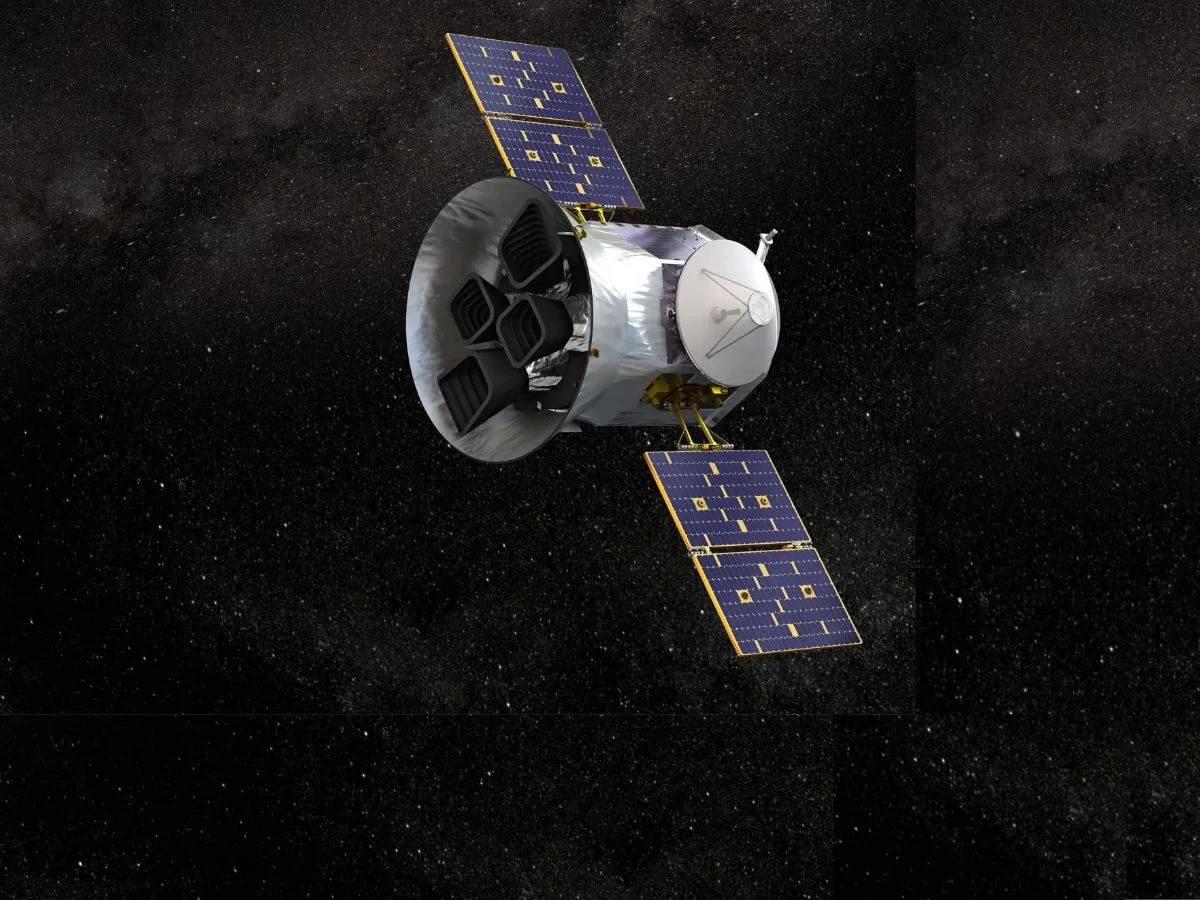
The main tool that led to this discovery was the Transiting Exoplanet Survey Satellite (TESS). This instrument helps gauge the planet’s size by monitoring the star for slight decreases in brightness, which happen when a planet crosses in front of it. The initial observations were made in 2022, and to confirm these findings, another instrument known as HARPS-N was utilized. Together, these tools allowed astronomers to measure the planet’s mass, radius, and overall density, offering important understanding about how planetary systems develop over time.
arXiv via Phys.org
Source:
Link
Leave a Reply