
Key Takeaways
1. Partner Flexibility: Intel’s Arc GPUs allow partners like Sparkle and Maxsun to design custom PCB layouts and cooling solutions, unlike the strict regulations from Nvidia and limited support from AMD.
2. Sales Growth: Intel’s B580 cards have seen a sharp increase in sales, with one partner reporting a rise from 400 to 2,000 monthly shipments, although still far behind Nvidia’s highest sales.
3. Driver Improvements: Intel has made significant strides in stabilizing Arc’s drivers, focusing on software readiness to avoid past issues, although challenges remain with performance in certain games.
4. Supply Chain Challenges: Intel’s supply chain is not fully developed, leading to long wait times for product availability and volatile pricing, impacting launch schedules and market dynamics.
5. Long-Term Commitment Needed: While Intel’s partner-focused strategy shows promise, the company must address internal supply and driver issues to fully establish Arc as a competitive product in the market.
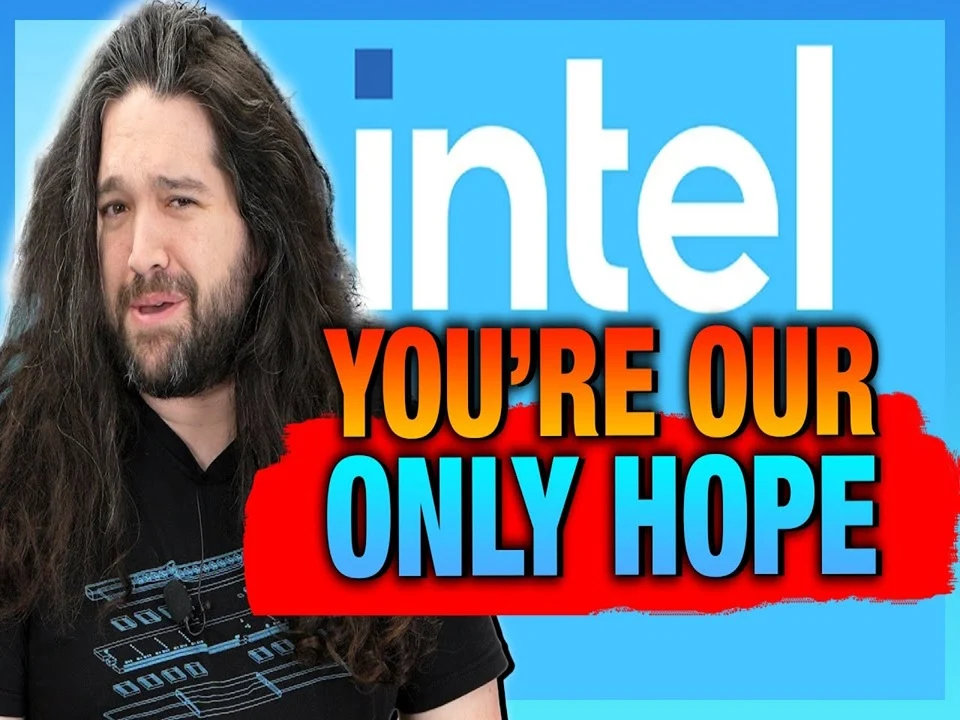
Board partners collaborating with Intel on Arc GPUs describe the firm as surprisingly accommodating and adaptable when compared to its rivals. Sparkle and Maxsun, among others, verify that they have the freedom to design custom PCB layouts and cooling solutions, including dual-GPU setups, as long as they handle warranty and RMA responsibilities. This contrasts sharply with Nvidia, which imposes strict design regulations, and AMD, which provides minimal engineering assistance. A source from Sparkle mentioned to Gamers Nexus, “Intel allows us to do whatever we wish,” emphasizing how Arc’s status as an underdog has fostered a more partner-friendly environment.
Sales Growth
Sales of Intel’s B580 cards have seen a significant uptick, with one partner reporting monthly shipments of 2,000 units—up from just 400 per month of the A770 during the Alchemist period. Entry-level variants like the A310 are also selling well as low-power display outputs, and some dual-GPU prototypes are already in the works. Although this reflects an increasing interest, it’s still a small portion of the 30,000 to 40,000 monthly units that brands like EVGA sold of Nvidia’s RTX 3060 at its highest point. Intel is clearly advancing, but it still lacks the scale and logistical momentum that AMD and Nvidia benefit from due to their long-standing relationships and higher-volume manufacturing.
Driver Improvements
Intel has made substantial advancements in stabilizing Arc’s drivers, with partners noting that numerous launch delays are now due to software readiness rather than hardware. The company is reportedly committed to preventing a repeat of the Alchemist disaster, where launch-day drivers were riddled with significant bugs and compatibility issues. While current driver quality has improved greatly and many contemporary games run smoothly on Arc, challenges persist with DX11 performance and frame pacing in select titles. Intel’s careful, software-first strategy is a wise long-term decision, but it continues to hinder Arc’s release speed and media exposure.
Supply Chain Challenges
Despite the growing demand for Arc cards, Intel’s supply chain is still not fully developed. Partners mention it can take up to eight months from the time an order is placed to getting GPUs onto the market—six months to receive the silicon, followed by two months for manufacturing and logistics. Many board partners must wait for production at contract factories they share with AMD and Nvidia partners, complicating launch schedules further. Pricing is also volatile: while Intel aims for a 250 US dollar MSRP for the B580, many models are priced between 300 and 380 US dollars on sites like Newegg and Amazon. Lower-priced SKUs sell out quickly, whereas more expensive cards remain available, indicating a price sensitivity that Intel has yet to fully manage.
This article is based on findings and direct partner interviews conducted by Gamers Nexus, featured in their July 2025 video report. Although the Arc B580 signifies real progress, Intel is still trying to catch up in nearly every other area—from production capacity to pricing control. The company’s partner-focused strategy is a strength, but it may not suffice unless Intel resolves its internal supply and driver issues and fully commits to Arc as a long-term project.
Source:
Link
Leave a Reply