Category: Tablets

  • Samsung Galaxy Z TriFold Name and Specs Leaked by Insider

    Samsung Galaxy Z TriFold Name and Specs Leaked by Insider

    Key Takeaways

    1. Samsung’s upcoming double-folding tablet will be named “Galaxy Z TriFold,” not “Galaxy G Fold.”
    2. The device is expected to launch on December 5, 2025, and will compete with Huawei Mate XTs.
    3. It will likely feature a Qualcomm chipset, possibly the Snapdragon 8 Elite, and a 200 MP primary camera.
    4. Battery capacity is estimated at 5,600 mAh, with a usable capacity of 5,437 mAh; the device has a 6.5-inch cover display and a 10-inch flexible AMOLED display.
    5. The device’s thickness ranges from 3.9 mm to 4.2 mm, depending on where it is measured.


    Samsung’s upcoming double-folding tablet will not introduce a new Galaxy line, contrary to earlier speculations. The idea of a Galaxy G Fold appears to be incorrect. Instead, the device that will compete with the Huawei Mate XTs is expected to be named the “Galaxy Z TriFold,” based on the latest leaks from China, with a launch date projected for December 5, 2025.

    Device Specifications and Chipset

    This new naming information comes from a well-known leaker in the US. Evan Blass shared additional insights in a recent post on X, mentioning that the tablet will likely be powered by a Qualcomm chipset. While it’s not clear which Snapdragon model it will feature, the Snapdragon 8 Elite seems to be a reasonable guess. Furthermore, Samsung is set to include a 200 MP sensor for its primary camera.

    Battery and Display Details

    A Chinese source recently estimated the battery capacity to be 5,600 mAh, which slightly differs from Blass’s figure of a “rated capacity” of 5,437 mAh—this refers to the actual usable capacity instead of what’s listed on the spec sheet. Blass also noted that the 6.5-inch cover display could reach a peak brightness of 2,600 nits, while the flexible 10-inch AMOLED display should have a maximum brightness of 1,600 nits. Lastly, the thickness of the device is reported to vary based on where it’s measured, with the slimmest point being 3.9 mm and the thickest at 4.2 mm.

    Final Remarks

    Evan Blass has become a reliable source for leaks in the tech community, and his insights about the Galaxy Z TriFold are already generating buzz. The anticipation for this innovative device continues to grow as we approach its expected launch date.


    Source:
    Link


  • Stable HyperOS 3 Launches for Xiaomi Pad 7 and More Devices

    Stable HyperOS 3 Launches for Xiaomi Pad 7 and More Devices

    Key Takeaways

    1. Xiaomi has started rolling out the stable HyperOS 3 update for the Xiaomi Pad 7, following previous updates for other devices in the Xiaomi 15 series and POCO F7 Ultra.
    2. The update for the Xiaomi Pad 7 is Android 16-based and identified by the build number OS3.0.2.0.WOZMIXM, following a similar update for the Chinese version of the tablet.
    3. Users can expect an OTA notification for the update soon, but it may take time due to the staged rollout; manual checks can be done in the tablet settings.
    4. Other global models set to receive the HyperOS 3 update include various Redmi Note 14 and POCO devices, as well as the Xiaomi MIX Flip.
    5. The HyperOS 3 update offers performance enhancements, new features like “Hyperland,” and AI-driven writing and translation capabilities.


    After releasing the stable HyperOS 3 update for the global versions of the Xiaomi 15 series, Xiaomi 15T lineup, POCO F7 Ultra, and Xiaomi Pad 7 Pro, Xiaomi is now extending the rollout to another device: the Xiaomi Pad 7.

    New Update for Xiaomi Pad 7

    As reported by XiaomiTime, the Chinese manufacturer has begun distributing the stable Android 16-based update for its 2024 tablet. This update is identified by the build number OS3.0.2.0.WOZMIXM. This comes after the Chinese version of the Xiaomi Pad 7 received its update near the end of October.

    If you own a Xiaomi Pad 7, be on the lookout for an OTA notification in the next few days. Since this is a staged rollout, it may take a while for the update to reach your device. Alternatively, you can check for the update manually by going to Settings > About tablet and tapping “Check for updates.”

    Other Global Variants

    Other global models slated to receive the stable HyperOS 3 update this November include the Redmi Note 14 Pro+, Redmi Note 14 Pro 5G, Redmi Note 14 Pro, Redmi Note 14 (priced at $195 on Amazon), POCO F7 Pro, POCO F7, POCO X7 Pro, POCO X7 Pro Iron Man Edition, POCO X7, and the Xiaomi MIX Flip.

    HyperOS 3 might be more captivating than the Android 16 platform update it’s based on. Xiaomi is working hard to enhance its software by incorporating some of the best features from its competitors. The most obvious addition is “Hyperland,” which closely resembles Apple’s Dynamic Island. Additionally, the update introduces a customizable lockscreen reminiscent of iOS 16.

    Performance Enhancements

    Xiaomi also claims to bring major optimizations to the kernel and graphics pipeline, aiming for improved performance. For supported devices, the new software unlocks a range of AI-driven writing and translation functionalities.

    Via: XiaomiTime

    Source:
    Link


  • Viwoods Launches AiPaper Reader: 6.13″ E Ink, AI, 4G, Android 16

    Viwoods Launches AiPaper Reader: 6.13″ E Ink, AI, 4G, Android 16

    Key Takeaways

    1. AI Chatbot Interaction: Users can engage with three AI chatbots (OpenAI GPT, Google Gemini, DeepSeek) for enhanced understanding of e-books.

    2. Study Assistance: The device can create summaries and save snippets, aiding in easier studying and knowledge retention.

    3. Display Quality: Features a 6.13-inch E Ink Carta 1300 display with a resolution of 824 x 1,648 pixels for clear reading.

    4. Device Specifications: Dimensions are 159.39 × 80.27 × 6.7 mm, with a weight of 138 g, powered by an eight-core CPU, 4 GB RAM, and 128 GB storage.

    5. Price and Availability: The Viwoods AiPaper Reader is priced at $279.99 and available on Amazon.


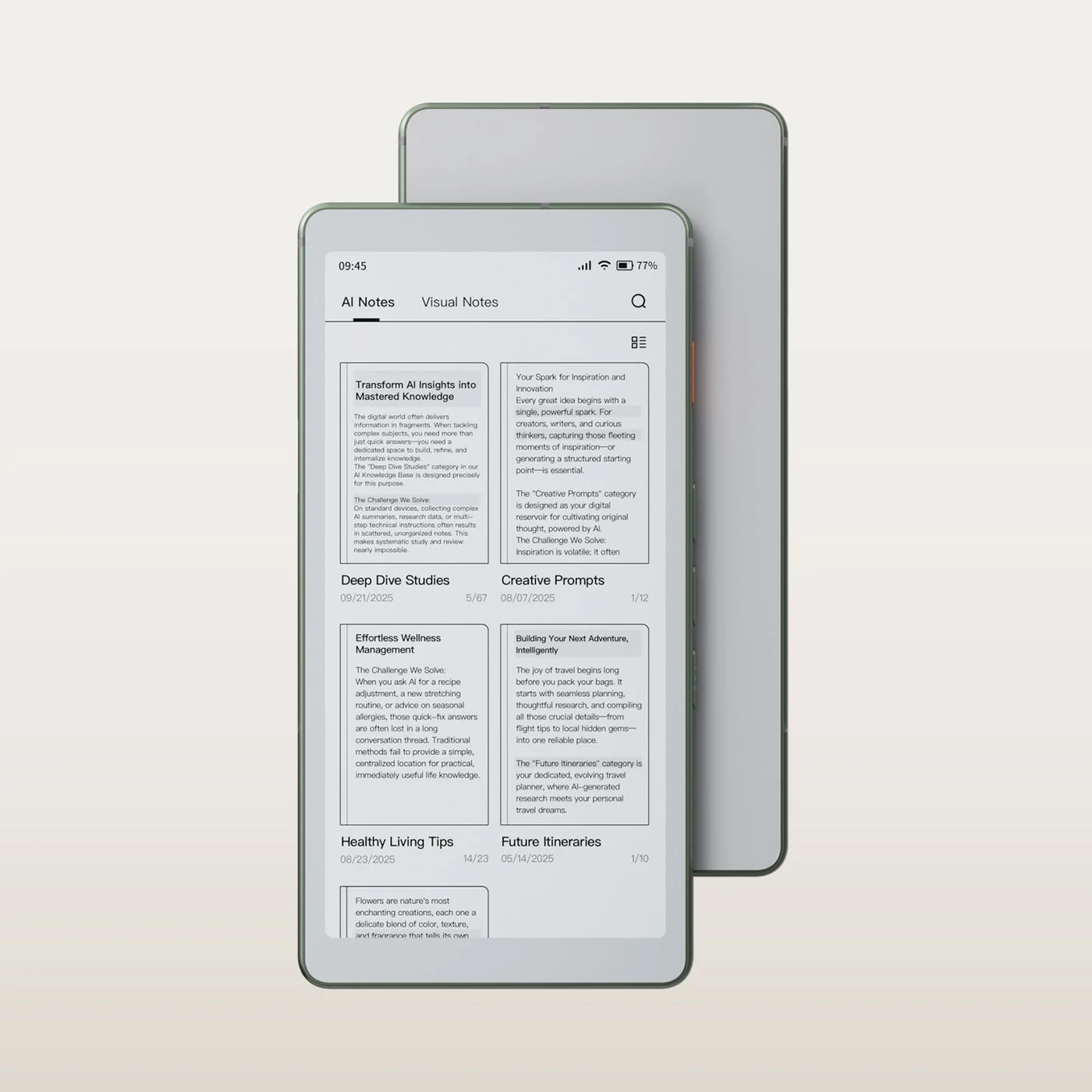
    Viwoods has introduced the AiPaper Reader, which comes with an AI reading companion and a special AI button designed for e-book enthusiasts.

    Engage with AI Chatbots

    By pressing the AI button, users can interact with one of three available AI chatbots: OpenAI GPT, Google Gemini, or DeepSeek. This feature allows users to pose questions about their e-books, helping them understand the characters, settings, and narratives better.

    Simplified Studying and Knowledge Storage

    According to Viwoods, the device can also create summaries to make studying easier, and users can save snippets from their e-books in a personal knowledge base. The AI responses are shown on a 6.13-inch E Ink Carta 1300 display with a resolution of 824 x 1,648 pixels.

    Device Specifications

    The dimensions of the e-book reader are 159.39 × 80.27 × 6.7 mm (6.28 x 3.16 x 0.26 in.), and it has a weight of 138 g (4.87 oz.). It operates on Android 16, powered by an eight-core CPU, 4 GB of RAM, and 128 GB of storage.

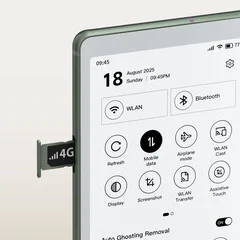
    Connectivity options include Wi-Fi and Bluetooth, with optional 4G LTE support; however, audio can only be outputted through Bluetooth headphones.

    The Viwoods AiPaper Reader is priced at $279.99 and can be found on Amazon.

    Source:
    Link


  • Customizable Minimalistic E-Book Reader with E-Ink Display

    Customizable Minimalistic E-Book Reader with E-Ink Display

    Key Takeaways

    1. The Open Book Touch is a customizable e-reader developed by the maker community and will be sold through a CrowdSupply campaign.
    2. It is powered by an ESP32-S3 chipset, suitable for reading e-books but not as powerful as modern computer processors.
    3. The device features built-in WiFi and Bluetooth for wireless connectivity and can be programmed using Arduino and CircuitPython.
    4. It has compact dimensions (3.0 x 4.65 x 0.38 inches) and weighs around 3 oz, with a 4.26-inch display at a resolution of 480 x 800 pixels.
    5. The Open Book Touch includes a front light with adjustable color settings, a microSD card slot for storage, and a 1,800mAh battery for decent usage time.


    Devices featuring e-ink displays come in many shapes and sizes, each with unique designs. Certain models are fully functional tablets equipped with e-ink screens, offering more than just reading e-books. These gadgets typically operate on Android and can be found at stores like Amazon. The recently unveiled Open Book Touch is a very simple e-reader that allows for extensive personalization.

    Open Book Touch Overview

    This initiative hails from the maker community and will be sold through a CrowdSupply campaign, although the exact price has not yet been disclosed. The e-book reader is driven by an ESP32-S3, a chipset commonly used in various development boards. While it doesn’t match the performance of a modern AMD or Intel APU, it is definitely adequate for reading e-books. The chip includes built-in WiFi and Bluetooth, enabling wireless connections. Additionally, the device can be programmed using Arduino and CircuitPython, allowing users to develop their own projects.

    Specifications and Features

    The Open Book Touch has dimensions of 3.0 x 4.65 x 0.38 inches and weighs approximately 3 oz. It boasts a small 4.26-inch display with a resolution of 480 x 800 pixels. The screen is also equipped with a front light that offers both cool and warm white settings. Furthermore, the device includes a microSD card slot for storing e-books and other compatible files. Finally, the integrated battery has a capacity of 1,800mAh, ensuring decent usage time.

    Source:
    Link


  • Chuwi Hi10 X2: Affordable Convertible Windows Tablet Launches

    Chuwi Hi10 X2: Affordable Convertible Windows Tablet Launches

    Key Takeaways

    1. The Chuwi Hi10 X2 features a 10.1-inch IPS display with a resolution of 1280×800 pixels and a 16:10 aspect ratio, similar to the Hi10 X1.
    2. It is powered by an Intel Core i3 10100Y processor, offering a slight improvement in thermal performance compared to the Intel N150 in the previous model.
    3. The tablet retains a 3,400 mAh battery and the same camera setup, with an 8 MP rear camera and a 5 MP front-facing camera.
    4. Connectivity options include WiFi 6, Bluetooth 5.3, and a pogo pin connector for keyboard attachment, alongside 8 GB of RAM and 256 GB of storage.
    5. The Hi10 X2 is priced at $199.99, with a discount available using the coupon code Hi268, bringing the price down to $177.11.


    Chuwi has launched the Hi10 X2, a slightly updated version of the Hi10 X1, featuring a similar convertible design. This new Windows tablet maintains some of the same specifications, such as the 10.1-inch IPS display, which offers a resolution of 1280×800 pixels and an aspect ratio of 16:10.

    Updated Processor

    Unlike its predecessor, which ran on the Intel N150, the Hi10 X2 is equipped with the Intel Core i3 10100Y. This is a dual-core processor from the Amber Lake series. While this CPU isn’t a significant upgrade compared to the previous model, it does have a slightly lower thermal design power (TDP) than the N150, which could potentially enhance battery performance.

    Battery and Camera Features

    In terms of battery life, the Hi10 X2 comes with a 3,400 mAh battery, identical to that of the Hi10 X1. The camera setup remains unchanged as well, featuring an 8 MP rear camera and a 5 MP front-facing camera for selfies.

    Connectivity and Specifications

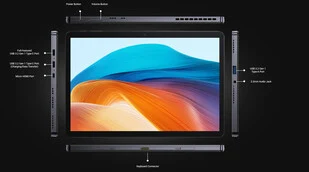
    The port arrangement of the Chuwi Hi10 X2 is the same as the X1, which includes a pogo pin connector located on the bottom for attaching a keyboard to the tablet (available on Amazon). For wireless options, this convertible tablet supports WiFi 6 and Bluetooth 5.3. Additional highlights include 8 GB of RAM and 256 GB of storage, along with a lightweight and slim profile.

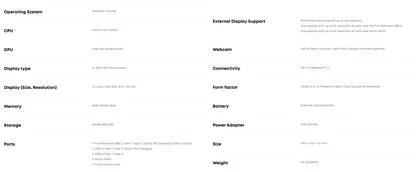
    Chuwi’s Hi10 X2 is available on its official website for a price of $199.99, but this drops to $177.11 with the coupon code Hi268 applied. To find out more about this budget-friendly Windows tablet, take a look at the specifications sheet provided below.

    Source:
    Link


  • Budget Poco Pad M1 Key Specs Revealed in Latest Leak

    Key Takeaways

    1. Xiaomi is expanding its tablet range through its budget-friendly sub-brand, POCO, with the introduction of the Poco Pad M1.
    2. The Poco Pad M1 is essentially a rebranded version of the Redmi Pad 2 Pro, following Xiaomi’s strategy of releasing similar products under different names.
    3. The Poco Pad M1 features a Snapdragon 7s Gen 4 processor, an Adreno 810 GPU, and operates on Android 15 with 8GB of RAM.
    4. The device has been listed on the Geekbench benchmark database, confirming its technical specifications.
    5. While no official launch date is set, the benchmark listing suggests that an announcement from Xiaomi is likely imminent.


    Xiaomi seems to be broadening its global range of tablets through its cost-effective “POCO” sub-brand. After rumors about the Poco Pad X1, an even cheaper model called the Poco Pad M1 has come to light, signaling a continuation of Xiaomi’s somewhat perplexing release strategy: rebranding.

    Specifications Confirmation

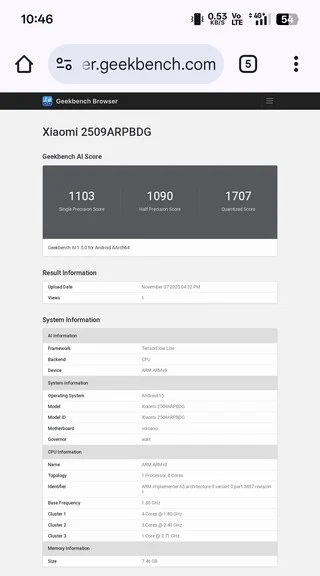
    The Poco Pad M1 has recently been listed on the Geekbench benchmark database. The main details provided there imply that the M1 will essentially be a renamed version of the recently revealed Redmi Pad 2 Pro, which Xiaomi has also launched in the worldwide market. For those who are not familiar with Xiaomi’s pattern of releases, it may seem odd to launch a similar tablet under a different brand name. However, the company has consistently followed this approach for years with its budget-friendly and mid-tier Redmi and POCO smartphones.

    Technical Details Revealed

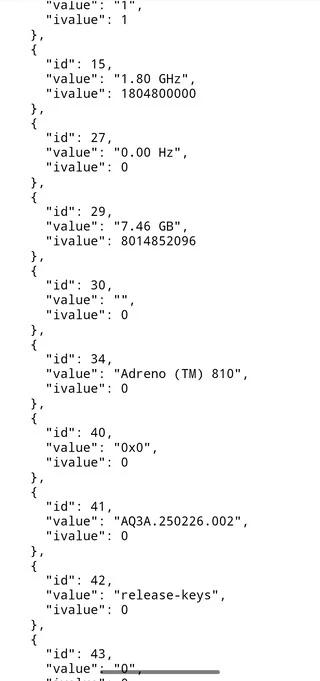
    Tech tipster Abhishek Yadav spotted the Geekbench entry, which verifies the technical specifications of the Poco Pad M1, aligning perfectly with those of the Redmi Pad 2 Pro. The tablet is powered by the Snapdragon 7s Gen 4 processor, featuring a CPU layout that includes one core running at 2.71GHz along with an Adreno 810 GPU for handling graphics. The listing also mentioned that the device operates on Android 15 and comes equipped with 8GB of RAM.

    Anticipated Release Timeline

    Although there are no confirmed details regarding the launch date of the tablet, its appearance in a benchmark database usually indicates that an official announcement from Xiaomi is just around the corner. POCO enthusiasts seeking a device with a reliable, budget-friendly set of features can expect that they won’t have to wait too long for this tablet to be unveiled.

    Source:
    Link


  • Xiaomi Poco Pad X1 Leaks Online: Snapdragon 7+ Gen 3 Tablet

    Xiaomi Poco Pad X1 Leaks Online: Snapdragon 7+ Gen 3 Tablet

    Key Takeaways

    1. Xiaomi is developing a new tablet, likely named the Poco Pad X1, in addition to the Pad 8 and Pad 8 Pro.
    2. The Poco Pad X1 may be a rebranded version of the Xiaomi Pad 7, based on a Geekbench listing.
    3. The tablet features the Adreno 732 GPU, part of the Snapdragon 7+ Gen 3 chipset, similar to the Xiaomi Pad 7.
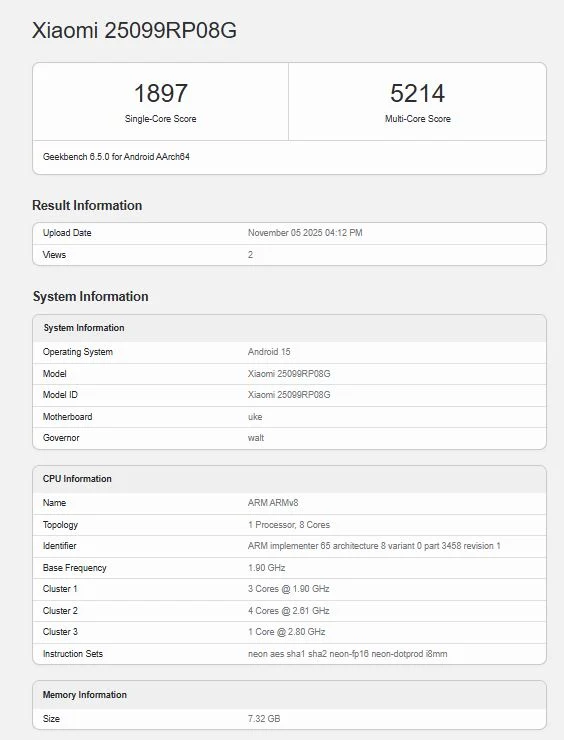
    4. Performance scores for the Poco Pad X1 show 1,897 in single-core and 5,214 in multi-core tests, aligning closely with the Xiaomi Pad 7.
    5. The upcoming tablet will have 8 GB of RAM and will run on Android 15.


    Xiaomi seems to be working on another tablet. The company introduced the Pad 8 and Pad 8 Pro in China last September, and while both are set to be launched globally next year, there appears to be yet another tablet in development, which is likely to be released as a Poco model.

    New Model Details

    According to a Geekbench listing, this upcoming tablet has the model number “25099RP08G” and is expected to be named the Poco Pad X1. This information first came to light two months ago, suggesting that it might be a rebranded version of the Xiaomi Pad 7. The Geekbench data supports this theory, showing that the device is equipped with the Adreno 732 GPU, which is found in the Snapdragon 7+ Gen 3 chipset that also powered the Xiaomi Pad 7.

    Performance Insights

    The performance scores for this new tablet are notable—1,897 for the single-core test and 5,214 for the multi-core test. These results are very close to what we found during our own tests of the Xiaomi Pad 7. Furthermore, the listing verifies that the device will come with 8 GB of RAM and will run on Android 15.

    Source:
    Link


  • Dasung Launches 50 Hz E-Readers with Android: E Ink Evolution

    Dasung Launches 50 Hz E-Readers with Android: E Ink Evolution

    Key Takeaways

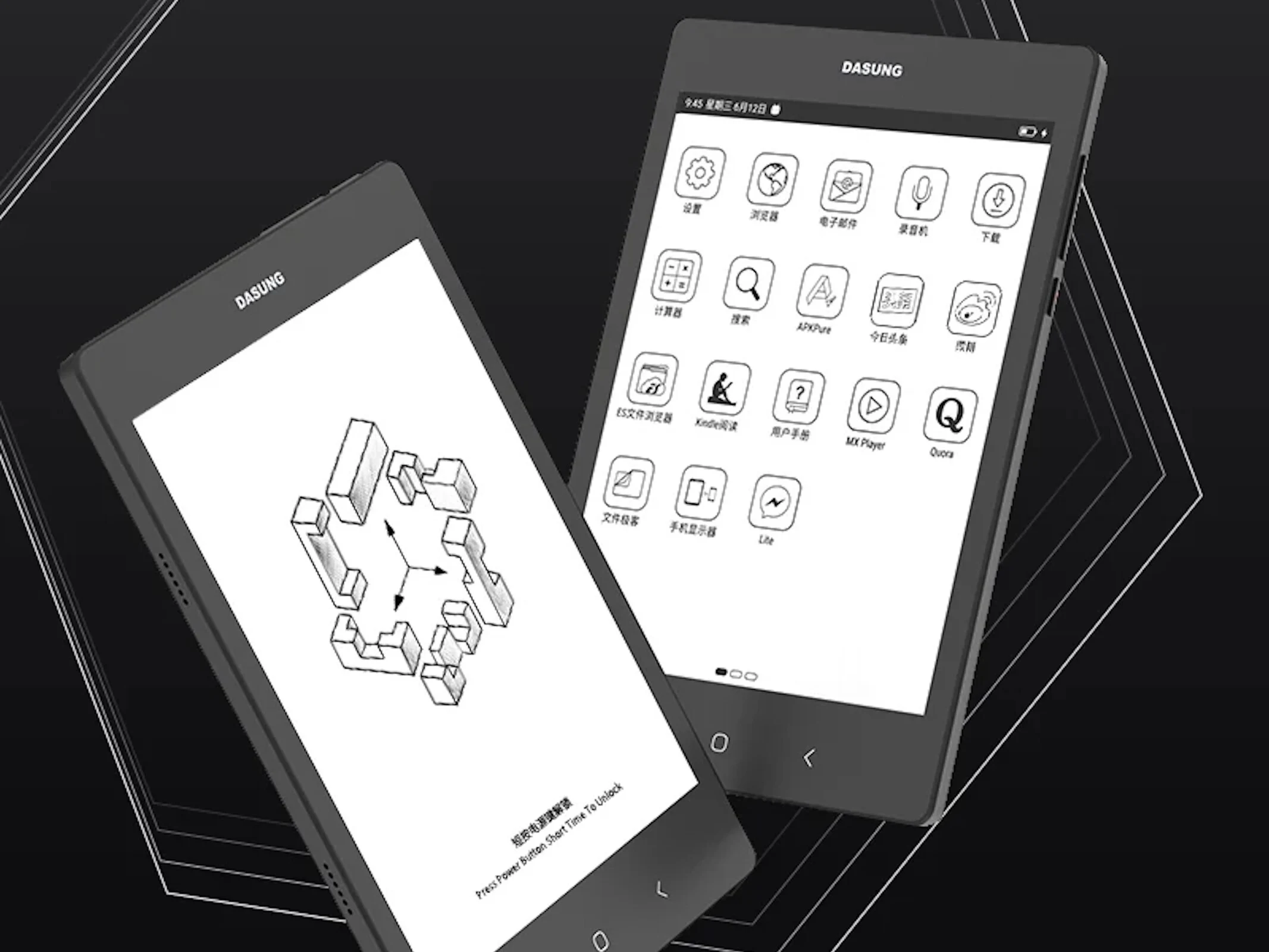
    1. Dasung has launched two new e-readers with a 50Hz refresh rate for smoother video performance.
    2. The models, Not-eReader 078 and Not-eReader 103, do not support color display, limiting their use for videos and colored content.
    3. Both models have a resolution of 1872 x 1404, with the Not-eReader 078 featuring a 7.8-inch screen and the Not-eReader 103 a slightly larger screen over 10 inches.
    4. The e-readers operate on Android, allowing users to install additional apps.
    5. Specifications for the Not-eReader 078 include 4 GB of RAM and 64 GB of internal storage, but pricing and availability information is currently unavailable.


    Dasung has introduced two fresh e-readers, each featuring a 50Hz refresh rate. The company is quite proactive in enhancing the refresh rates of electronic ink devices. As a result, these two new models should perform almost similarly to AMOLED or LCD screens, particularly in terms of displaying video content smoothly.

    Details on the New Models

    The newly launched models, the Not-eReader 078 Revolutionary Edition and the Not-eReader 103 Revolutionary Edition, come with screens that do not support color display. This limitation affects their ability to showcase videos as well as comics and textbooks that contain color images. Both the Not-eReader 078 and Not-eReader 103 are reported to have a resolution of 1872 x 1404, yet they vary in size. The former has a 7.8-inch screen, while the latter is slightly larger at just over 10 inches.

    Operating System and Specs

    Both e-readers run on Android, which allows for the installation of extra apps. As reported by It Home, the Not-eReader 078 is said to have 4 GB of RAM and 64 GB of internal storage. However, details regarding pricing and availability for these devices are still missing.

    Source:
    Link


  • Lenovo Legion Y700 Gaming Tablet with Snapdragon 8 Elite Gen 5

    Lenovo Legion Y700 Gaming Tablet with Snapdragon 8 Elite Gen 5

    Key Takeaways

    1. The upcoming Lenovo Legion Y700 tablet will feature an 8.8-inch 3K LCD display with a 165Hz refresh rate.
    2. It will be powered by the Snapdragon 8 Elite Gen 5 SoC, offering a 20% boost in CPU performance compared to the previous model.
    3. The new tablet is expected to include a “super-sized” VC heat dissipation system for improved cooling during gaming.
    4. A larger battery, approximately 9,000 mAh, will be included, compared to the 7,600 mAh battery in the Y700 (4th Gen).
    5. The Lenovo Legion Y700 tablet is set to launch in the first half of next year, initially in the Chinese market.


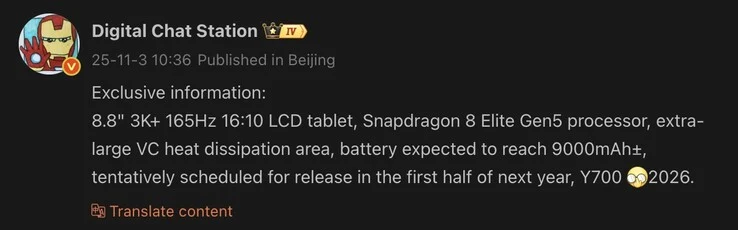
    The Lenovo Legion series focuses on gaming devices, which include laptops, desktops, and even tablets running Android. Recently, Lenovo launched several Legion Y700 models that boast a compact design and high-end performance. This year, the company unveiled the Legion Y700 (4th Gen) in China. A new leak from the well-known source, Digital Chat Station, has surfaced, providing insights about the next iteration of the Lenovo Legion Y700 tablet, set to arrive next year.

    Display Features

    According to the leak, the upcoming Lenovo Legion Y700 tablet will maintain its compact size with an 8.8-inch display that offers a stunning 3K resolution and a refresh rate of 165Hz. Nevertheless, it will stick with an LCD panel rather than adopting an OLED one. The details about the display seem to mirror those of the Y700 (4th Gen).

    Performance Improvements

    A significant enhancement expected in the new Legion Y700 tablet is its performance capabilities. The leak indicates that it will be equipped with the latest Snapdragon 8 Elite Gen 5 SoC. For context, the previous Y700 (4th Gen) used the Snapdragon 8 Elite chipset. Qualcomm claims that the 8 Elite Gen 5 delivers roughly a 20% boost in CPU performance over its predecessor. Additionally, the new Lenovo tablet might come with a “super-sized” VC heat dissipation system to ensure it stays cool during intense usage.

    Battery Life and Release Timeline

    The next-generation Lenovo Legion Y700 tablet could feature a substantial battery, approximately in the 9,000 mAh range. For comparison, the Y700 (4th Gen) had a 7,600 mAh battery. The tipster has also suggested that this new model of the Lenovo Legion Y700 tablet could be launched in the first half of next year. It’s important to note that this timeline is specifically for the Chinese market, and the global release is still unclear.

    Source:
    Link


  • Samsung Galaxy Z TriFold Model Certified, EU Launch Possible

    Samsung Galaxy Z TriFold Model Certified, EU Launch Possible

    Key Takeaways

    1. Samsung unveiled its first dual-folding tablet at the APEC summit, but details are limited and it was displayed behind glass.
    2. The trifoldable device may be called Galaxy Z TriFold or Galaxy G Fold, with no confirmed release date or locations.
    3. The model code Q7M has six variants listed on the Bluetooth SIG website, targeting markets in Asia and the U.S.
    4. There is uncertainty about a European launch, with only a confirmed release in the UAE and rumors for Taiwan and Singapore.
    5. Samsung hinted at new foldable designs for 2026, suggesting a 2023 launch is unlikely.


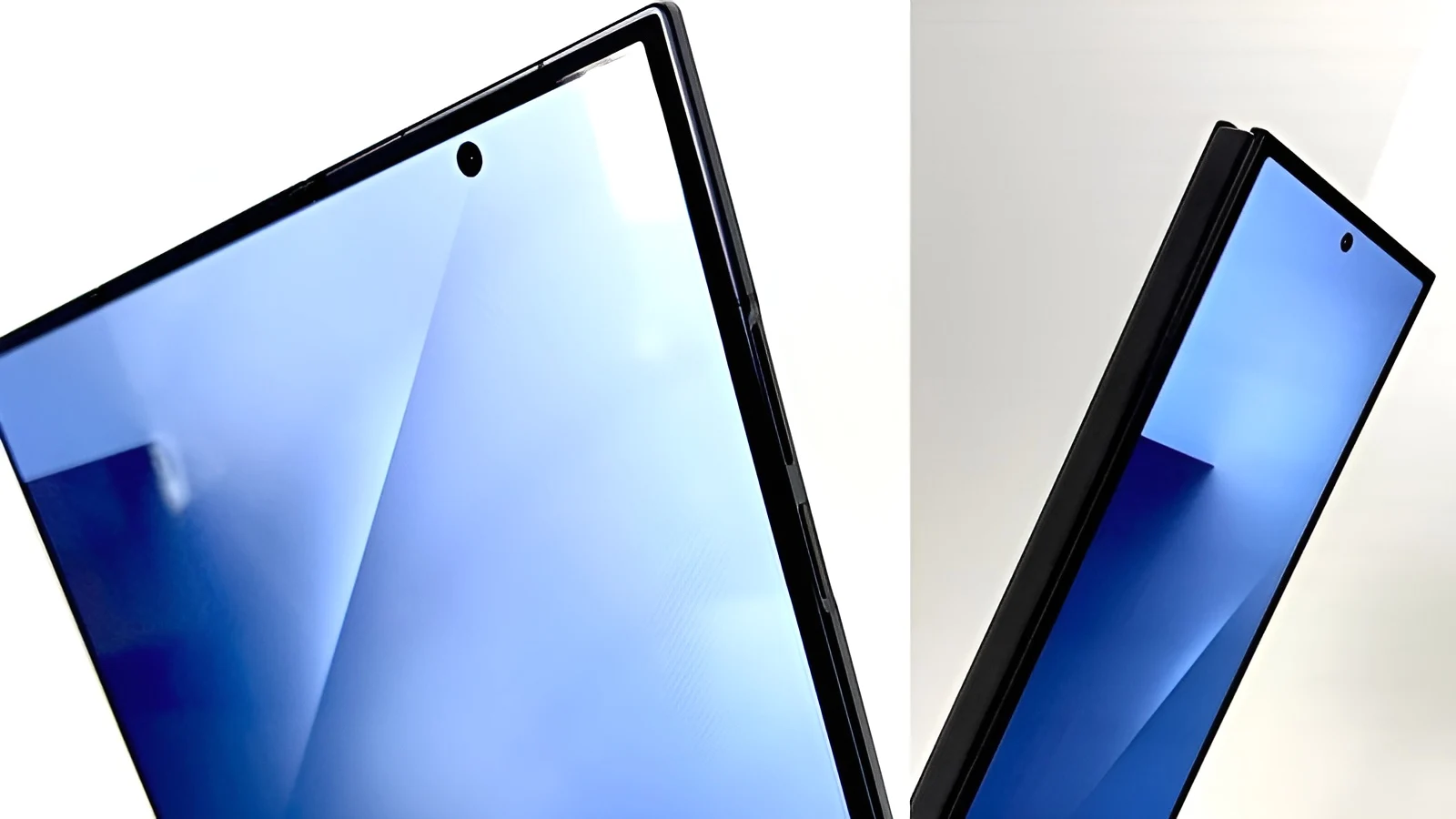
    On the final day of October, Samsung presented its first dual-folding tablet to the audience at the APEC summit, although it was behind glass and had very limited access. There are no high-resolution images or specific details available regarding the trifoldable device. Furthermore, it is still not clear when or where the Samsung trifoldable, possibly named Galaxy Z TriFold or Galaxy G Fold, will actually hit the market.

    Model Variants and Market Plans

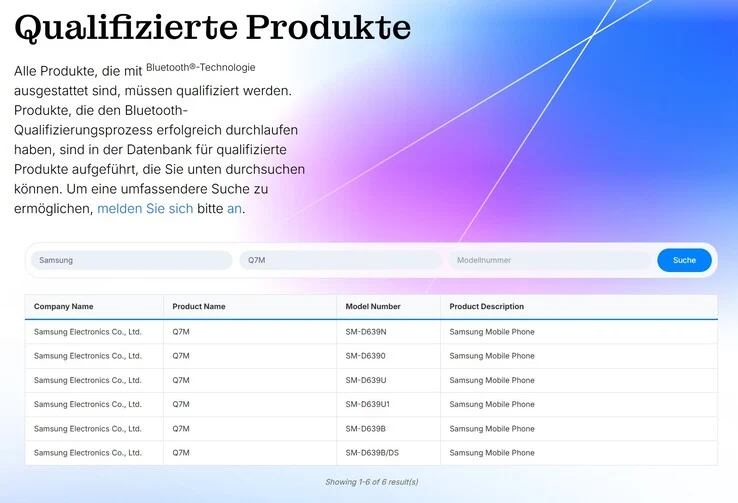
    Interestingly, the Samsung foldable with the internal code Q7M has recently appeared on the Bluetooth SIG website with six different model variants, as seen in the screenshot below. According to leaks, the launch is expected to cover more than just the Korean and Chinese markets. The model numbers SM-D639N and SM-D6390 are likely for the two Asian regions, while the SM-D639U and SM-D639Ui models are aimed at the United States. The remaining SM-D639B and SM-D639B/SD models are considered “international” variants, which could suggest availability in Europe.

    European Launch Uncertainty

    It remains uncertain if Samsung’s trifoldable will officially launch in Europe. So far, only a release in the United Arab Emirates has been confirmed, alongside the two models. There are also rumors about launches in Taiwan and Singapore, yet there hasn’t been any mention of a European launch. During Samsung’s latest quarterly earnings announcement, they hinted at new foldable designs for 2026, indicating that a launch this year is likely not going to happen.

    Source:
    Link