Category: Phones

Stay updated with the latest phone news, reviews, and trends. Discover cutting-edge smartphones, features, and innovations in our Phones category at GizNewsDaily

  • Samsung Galaxy S25 Ultra Prototype: Testing with Three Rear Cameras

    Samsung Galaxy S25 Ultra Prototype: Testing with Three Rear Cameras

    It’s been some time since the Galaxy S24 series was released, and now rumors about the Galaxy S25 series are already surfacing online. Contrary to earlier speculations, it appears the S25 series may not feature the stacked battery aimed at higher energy density. Instead, the series is expected to utilize AI technology to conserve power, potentially enhancing battery life.

    Galaxy S24 Ultra

    Fewer Cameras and Introduction of Variable Zoom

    A recent rumor from tipster @ISAQUES81 highlights three new aspects of the camera system of the Galaxy S25 Ultra. Samsung is reportedly testing an early prototype of its next Ultra flagship.

    According to the tipster, the S25 Ultra prototype features only three cameras on the back, a reduction from the four cameras offered by its predecessors. These cameras include a main, ultra-wide, and a single periscope telephoto lens. The company has apparently eliminated the “weak” 3x telephoto module and aims to compensate with digital zoom.

    Samsung had already been experimenting with zoom cameras since the predecessor model, where they replaced the “weak” 10MP 10x telephoto lens with a 50MP 5x one. The phone performs well with long-range zooms using the high-resolution 5x camera and AI capabilities. Applying a similar approach to the 3x range is theoretically feasible.

    Camera Enhancements

    The main camera maintains the same sensor size and resolution. However, the new sensor is expected to capture more light, possibly due to a larger aperture, which generally benefits the ISP and results in better image quality.

    The periscope telephoto lens uses a larger sensor compared to the Galaxy S24 Ultra, potentially improving detail in zoomed shots. The most significant change is the addition of variable zoom, which enhances the quality of zoomed images. Variable zoom employs mechanisms similar to dedicated cameras, creating a larger image on the sensor without cropping, thereby minimizing detail loss during zooming.

    However, unlike the Xperia 1 V, which offers 3.5x – 5.2x continuous optical zoom, the S25 Ultra will provide two fixed focal lengths—one between 4 and 5x zoom and the other between 6 and 7x zoom. This approach is akin to merging two different zoom cameras into one module. Digital zoom will still be used for values between the two fixed focal lengths, but the proximity of these focal lengths should result in minimal noticeable loss.


    Samsung Galaxy S25 Ultra Prototype: Testing with Three Rear Cameras
  • SMIC’s 5nm Breakthrough to Power Huawei Mate 70 Processors

    SMIC’s 5nm Breakthrough to Power Huawei Mate 70 Processors

    SMIC has played a vital role in producing Huawei's Kirin chips, including the Kirin 9000S and 9010, both of which are fabricated using a 7nm process. The foundry is reportedly working on its own 5nm chip production technique.

    Milestone Achievement

    Recent reports from Business Korea and Hankyung indicate that SMIC has successfully reached this milestone, meaning their 5nm process is now prepared for chip manufacturing.

    This achievement is remarkable, especially given the infrastructure issues SMIC faces due to US export limitations. However, the reports highlight that SMIC's new 5nm node depends on the older Deep Ultraviolet (DUV) lithography rather than the more advanced Extreme Ultraviolet (EUV) technology.

    Lithography Technologies

    DUV lithography employs deep ultraviolet light with a wavelength of approximately 193nm to engrave circuit patterns onto silicon wafers.

    In contrast, EUV lithography utilizes much shorter extreme ultraviolet light (around 13.5nm). This shorter wavelength facilitates the creation of finer features, enabling the production of more powerful and efficient chips. Consequently, EUV is deemed essential for achieving the most advanced chip designs.

    The reason SMIC cannot adopt EUV technology stems from ongoing US-China tensions. ASML, a major supplier of EUV lithography machines, is barred by US export regulations from providing its technology to Chinese foundries like SMIC. Hence, SMIC must rely on DUV lithography for its 5nm node.

    Future Prospects

    Despite concerns about production yield, Huawei is expected to utilize processors manufactured using SMIC's new 5nm node in its upcoming Mate 70 series.

    Additionally, there are rumors of a new Huawei laptop featuring a Kirin chip designed for PCs that is purported to compete with Apple's M2 in terms of performance. Whether these rumors hold true remains to be seen.

  • Poco F6 Pro: Expected Performance and Camera Features

    Poco F6 Pro: Expected Performance and Camera Features

    Poco has revealed that it will be launching the Poco F6 series on May 23. The lineup will include two models: the Poco F6 and the Poco F6 Pro. These devices are essentially rebranded versions of the Redmi Turbo 3 and the Redmi K70, which are exclusive to China. In this article, we will delve into the specifications and features expected for the Poco F6 Pro.

    Specifications

    The Poco F6 Pro is anticipated to offer top-tier performance with advanced hardware. Given that it is a rebranded version of the Redmi K70, we can expect similar specifications. The device is likely to be powered by the latest Snapdragon processor, ensuring smooth multitasking and gaming experiences.

    Features

    The Poco F6 Pro is expected to come with a high-refresh-rate display, potentially 120Hz, for an enhanced visual experience. Additionally, the camera setup is likely to include multiple lenses, catering to various photography needs. Battery life should also be robust, with fast charging support to ensure minimal downtime.

    Pricing

    Pricing details for the Poco F6 series haven't been disclosed yet. However, it's expected to be competitively priced, aligning with Poco's tradition of offering high-performance devices at budget-friendly rates.

    Stay tuned for more updates as we approach the launch date.

  • Nothing Phone (2a) Green Line Issue: Software Update or Hardware?

    Nothing Phone (2a) Green Line Issue: Software Update or Hardware?

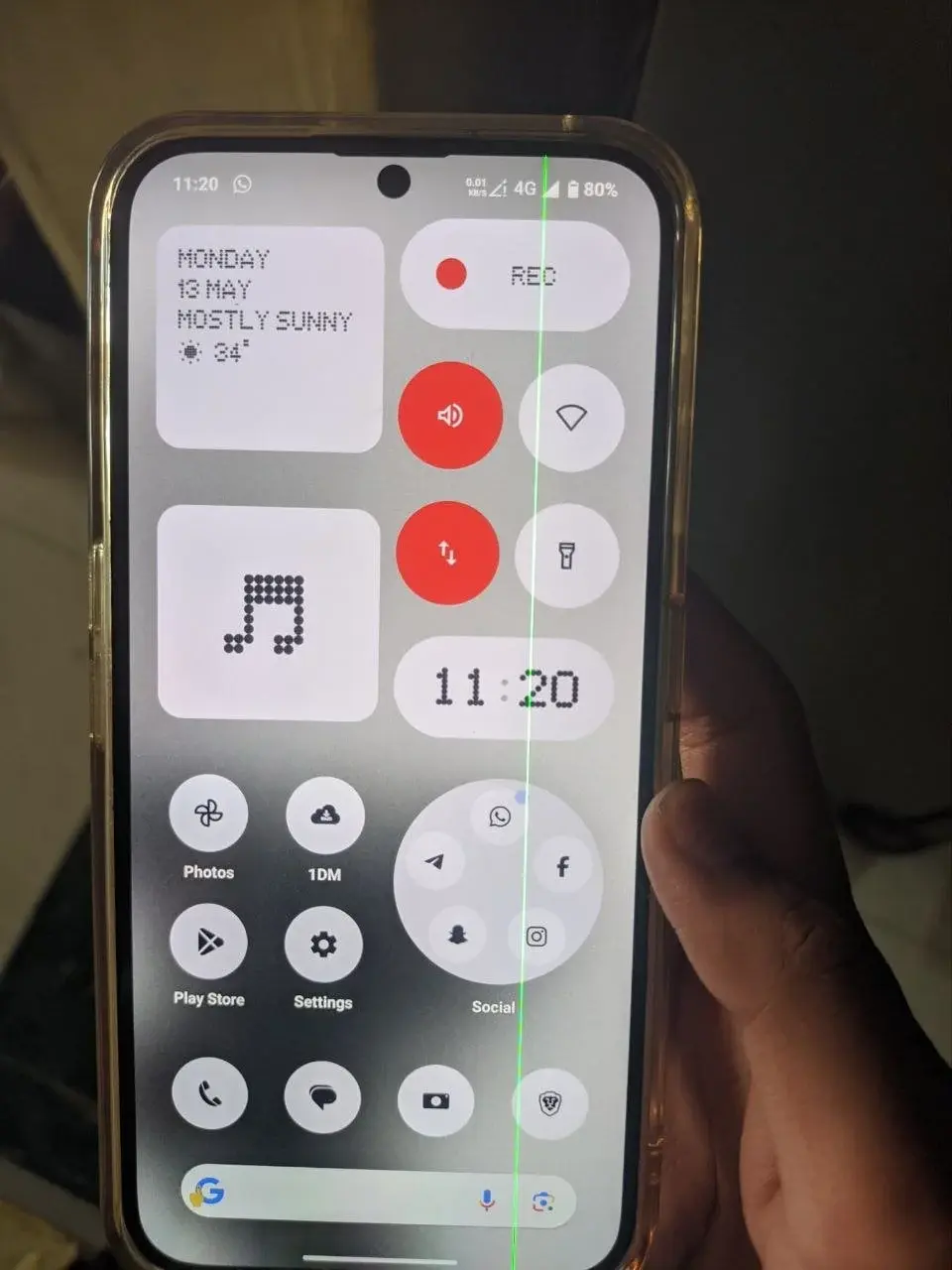
    London-based tech company Nothing has recently launched the budget-friendly Nothing Phone (2a) in various markets, including India. Initially, the phone had several performance and camera issues, but Nothing has addressed most of these through multiple updates. However, the notorious "green line issue" has now appeared on the Phone (2a).

    Green Line Issue Emerges

    This problem is familiar to smartphones using OLED displays. Previous cases have shown brands like Samsung, Motorola, and OnePlus dealing with similar issues. An X (formerly Twitter) user has shared photos and a video of a Phone (2a) exhibiting a vertical green line on the right side of the screen. The device in question also has the latest Nothing OS 2.5.5.a update, released around 19 days ago. This seems to be the first known instance of a green line appearing on the Phone (2a).

    Potential Causes and Observations

    The user did not mention when or how the issue started. Notably, many green line problems on OnePlus and Samsung phones have emerged following software updates. While brands have not explicitly explained this, investigations suggest that software updates may change display parameters, like voltage settings, causing an electrical fault in the display that appears as a green line of dead pixels.

    There are other possible reasons for these green lines, including physical damage from dropping, bending, or applying too much pressure on the display. Additionally, damage or defects in the display connector or the flex cable connecting to the motherboard can also cause this issue.

    Current Status

    Regarding the Nothing Phone (2a), no other reports of the green line issue have been found on X or the Nothing Community forums, indicating that this might be an isolated case for now. Stay tuned for further updates on this matter.


    Nothing Phone (2a) Green Line Issue: Software Update or Hardware?
  • Moto Razr 50 Ultra Specs Revealed Ahead of Launch

    Moto Razr 50 Ultra Specs Revealed Ahead of Launch

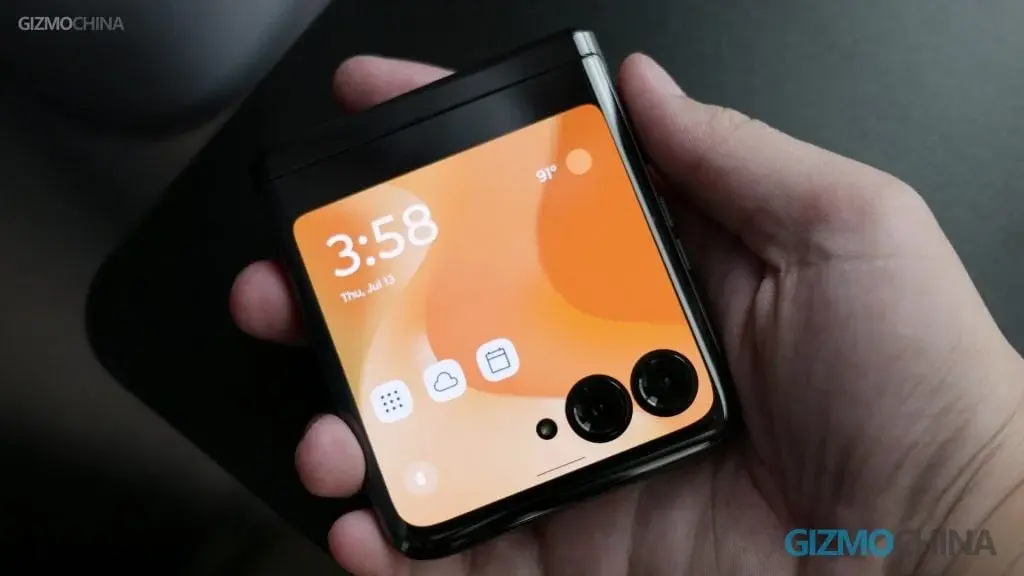
    Real-life photos of the Motorola Razr 50 Ultra have emerged online, showcasing the device’s dimensions. Now, thanks to OnLeaks, nearly all the key specifications of the Razr 50 Ultra (also known as the Moto Razr+ 2024) have been revealed. Let’s delve into the details.

    Motorola Razr 50 Ultra Specifications

    Similar to its predecessor, the Moto Razr 40 Ultra, the new model features a 6.9-inch 2640 x 1080 resolution flexible OLED inner display and a 3.6-inch cover display.

    While the display remains unchanged, the chipset has been upgraded from the Snapdragon 8+ Gen 1 to the latest Snapdragon 8s Gen 3. According to the leak, it comes with 12GB RAM and 256GB of internal storage. For context, the Moto Edge 50 Ultra and the newly released iQOO Z9 Turbo also utilize this chipset. It includes 1x Cortex-X4 core clocked at 3GHz, 4x Cortex-A720 cores running at 2.8GHz, and 3x energy-efficient Cortex-A520 cores.

    Significant Camera Upgrade

    Another major enhancement is in the phone’s rear camera system. The previous 12MP and 13MP sensors have been replaced by 50MP sensors. Additionally, the ultra-wide-angle lens has reportedly been replaced by a 2x telephoto lens. However, the 32MP front-facing camera remains unchanged.

    Battery and Other Enhancements

    The device also features a slightly larger 4000mAh battery compared to its predecessor’s 3800mAh capacity. It will support both wired and wireless charging.

    The water-repellent coating has been upgraded to an IPX8 dust and water-resistant rating. The IPX8 rating means the device can be submerged in up to 1.5 meters of fresh water, though it is not dust-proof. The phone will also offer eSIM support.

    This model will be Motorola’s first clamshell phone to feature the Hello UI, a custom interface based on Android 14.

    Pricing and Availability

    The Razr+ 2023 (8GB + 256GB variant) was introduced at a price of $999, and it appears that the price will remain unchanged.

    The Razr+ 2024 will come in three colors: Midnight Blue, Spring Green, and Hot Pink. It will be available in the US for $999 for the 12GB RAM + 256GB storage variant. The expected launch is in June.

  • Xiaomi 15 Series Price Hike: More Expensive Than Predecessor

    Xiaomi 15 Series Price Hike: More Expensive Than Predecessor

    The Xiaomi 15 series has been the subject of much speculation recently. Today, both the standard and Pro variants were spotted on the IMEI database, hinting at their upcoming release.

    A credible source, Digital Chat Station on Weibo, mentioned that Xiaomi might face challenges in keeping the launch prices of the Xiaomi 14 series steady for its successors.

    This is somewhat expected given the climbing costs of chips, memory, and other components. For instance, the Xiaomi 14 launched at CNY 3,999 (around $552) in China, while the 14 Pro started at CNY 4,999 (around $691).

    Rising Prices

    Internationally, the base model of the Xiaomi 14 was priced at €999 (around $1,077). According to the latest leak, it seems like the Xiaomi 15 series will be even more expensive.

    Such a price increase could make Xiaomi’s phones less appealing to users, especially when brands like Samsung and Apple, with their stronger brand recognition, offer their latest flagships at similar or even lower prices.

    Competitive Landscape

    For example, the Galaxy S24 series ranges from $799.99 to $1,199.99 for the Ultra version. This is already more affordable than the starting price of the Xiaomi 14. So, if the Xiaomi 15 series is priced higher, it will be even more difficult for Xiaomi to compete with its rivals.Galaxy S24 series ranges from $799

    Specifications and Design

    Regarding specifications, both the Xiaomi 15 and 15 Pro will feature the Snapdragon 8 Gen 4 chipset and a triple-camera setup on the back, each sensor having 50 megapixels.

    In terms of design, they are expected to look similar to their predecessors. Xiaomi will also release a Titanium version of the Xiaomi 15 Pro with satellite communication capabilities as indicated in the IMEI listing. However, both the 15 Pro and 15 Pro Titanium are expected to be exclusive to the Chinese market, just like their predecessors.


    Xiaomi 15 Series Price Hike: More Expensive Than Predecessor
  • Poco F6 Pro Design Unveiled; Confirms Redmi K70 Rebrand

    Poco F6 Pro Design Unveiled; Confirms Redmi K70 Rebrand

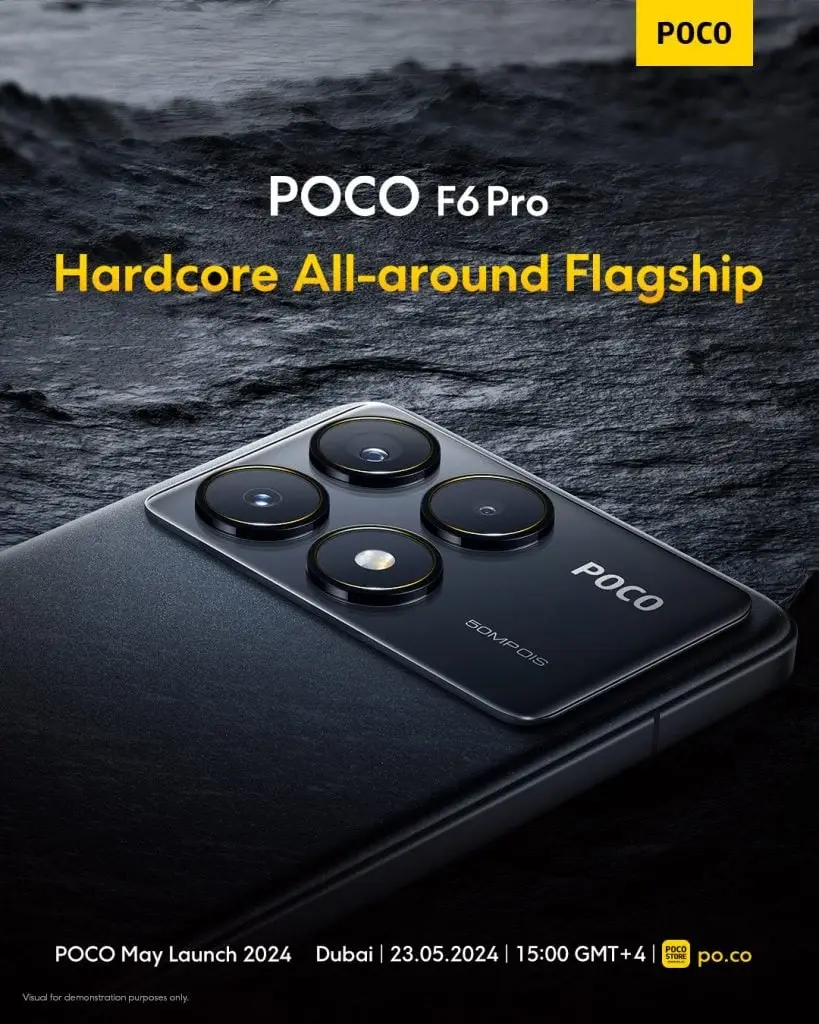
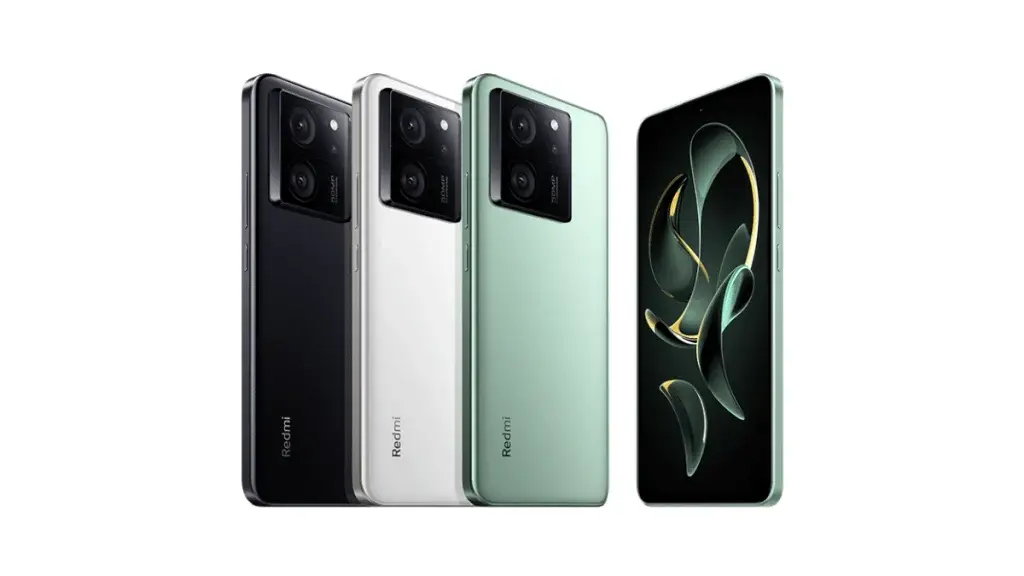
    Poco has an international event slated for May 20, 2024, where it will unveil the Poco F6 series smartphones. This series includes two models: the Poco F6 and the Poco F6 Pro. Recently, the company has hinted that the Poco F6 is essentially a rebranded version of the Redmi Turbo 3 by showcasing its design. Now, Poco has also disclosed the design of the Poco F6 Pro, which resembles the Redmi K70, a model exclusive to China.

    Design Teaser

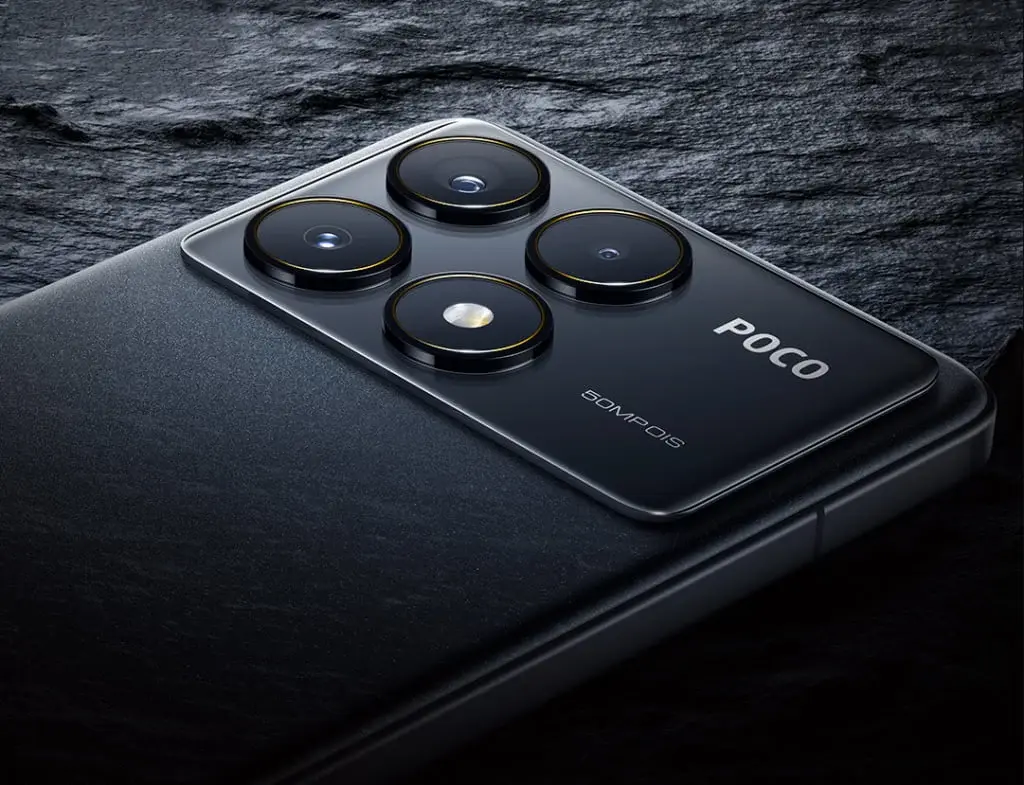
    A recent teaser shared on X (formerly known as Twitter) has unveiled the design of the Poco F6 Pro. It features flat sides and a slightly curved back panel for better grip, along with a rectangular camera module that includes four cutouts, identical to the Redmi K70. Thus, it’s safe to assume that the Poco F6 Pro will be a replica of the Redmi K70, albeit with different branding.

    Poco F6 Pro Expected Specifications

    The Poco F6 Pro is anticipated to come with a Snapdragon 8 Gen 2 processor, potentially coupled with up to 16GB of RAM. It’s expected to have a 6.67-inch OLED display with 2K resolution and a 120Hz refresh rate. For the camera setup, it might include a 50MP primary camera with OIS, an 8MP ultra-wide lens, and a 2MP macro sensor. The front camera is speculated to be a 16MP selfie shooter. Additionally, the device is rumored to pack a 5,000mAh battery with support for 120W fast charging.


    Poco F6 Pro Design Unveiled; Confirms Redmi K70 Rebrand
  • Android 15 (One UI 7): Final Major Update for These Galaxy Phones

    Android 15 (One UI 7): Final Major Update for These Galaxy Phones

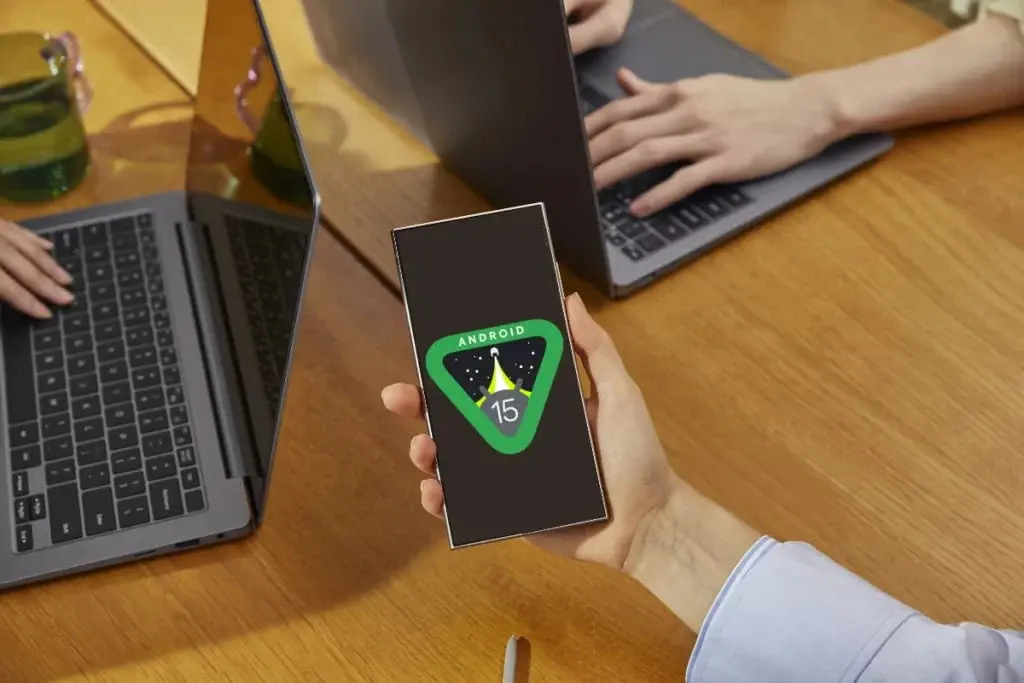
    Every year, numerous Galaxy devices lose eligibility for future Android OS updates after receiving the promised number of updates. This year is no different, with Android 15 being the final major OS update for many Galaxy smartphones.

    I’ve compiled a list of Samsung Galaxy devices that will no longer receive OS updates after upgrading to Android 15. Check the list to see if your device is reaching the end of its OS update lifecycle.

    Importance of Android OS Updates

    Android OS updates bring exciting new features, improvements, and UI changes that enhance user experience. However, at some point, your device will become ineligible for future updates. It’s important to stay informed about future OS availability for your device to ensure you don’t miss out on the latest features.

    Android 15: The Last OS Update for These Galaxy Phones

    • Galaxy S21
    • Galaxy S21+
    • Galaxy S21 Ultra
    • Galaxy Z Fold 3
    • Galaxy Z Flip 3
    • Galaxy A14
    • Galaxy A14 5G
    • Galaxy A05
    • Galaxy A05s
    • Galaxy M14 4G
    • Galaxy M14 5G
    • Galaxy F14 5G

    This unofficial list is based on the software update policy for each Samsung Galaxy phone and tablet. These devices may receive Android 15 as their final OS update unless Samsung extends support. However, they will also get the One UI 7.1 incremental update and continue to receive security patches for a period.

    Galaxy M-series and F-series phones typically get two major Android OS updates, so those launched with Android 13 will get Android 15 as their final update. The Galaxy A-series gets two major OS upgrades for older models, while newer ones are promised four updates. Select Galaxy A-series phones may receive up to four OS updates.

    All Galaxy S-series, Tab S-series, and Z-series phones launched from the Galaxy S21, Galaxy Z Fold 3/Flip 3, and Galaxy Tab S8 series are eligible for four years of Android OS support.

    Also Read: One UI 7 Eligible Devices and Release Date

    Samsung's Software Update Policy

    Samsung’s software update policies for Galaxy smartphones and tablets are generous. No other smartphone brand offers as many as four Android OS updates to mid-range devices like Samsung does. Many brands don’t even offer this many updates to their high-end devices.

    One of the best aspects of Samsung is its clear software update policy. Users know what to expect, unlike brands such as Realme, Oppo, and Xiaomi, which often leave users uncertain about future updates until official lists are released, usually months after a new OS launch.

    Samsung had the best software support until Google launched its Pixel 8 series with a staggering 7 years of OS updates. Samsung quickly caught up by offering the same support for its Galaxy S24 series.

    What to Expect from Android 15 (One UI 7)?

    If your Galaxy device is eligible for Android 15, you might wonder about the new features. Android 15 is still under development, but Google has announced several features, and many more have been discovered in beta builds, promising an exciting update.

    Key Features in Android 15

    Satellite Connectivity Support
    Android 15 supports satellite connectivity, allowing you to send texts even without cell towers, as long as you have access to the open sky. This feature is not limited to emergency use but extends to SMS and preinstalled RCS apps.

    Find My Phone Network
    The Find My Phone feature gets a significant update. Android 15 phones can ping each other via Bluetooth, helping locate lost devices. Nearby Android devices can pick up Bluetooth signals from the broadcasting device and upload encrypted location details to Google’s servers.

    Battery Health
    Android 15 may introduce the “Battery Health” feature, indicating the remaining battery capacity, helping users decide when to replace their battery.

    App Archiving
    The app archiving feature lets you uninstall apps while keeping user data. Android 15 removes the restriction of archiving apps only through the Play Store, allowing any apps to be archived.

    Partial Screen Sharing
    This privacy-focused feature allows users to share and record a single app instead of the entire screen, preventing accidental exposure of sensitive apps.

    Notification Cooldown
    “Notification Cooldown” reduces the volume of successive notifications from the same app, preventing users from feeling overwhelmed.

    Sensitive Notifications
    This feature prevents malicious third-party apps from reading OTPs, protecting users from OTP frauds.

    For a more detailed look at the new features coming in Android 15, check out our Android 15 section for the latest news and developments around the new OS.

  • Redmi K70 Ultra to Feature Independent Display Chip

    Redmi K70 Ultra to Feature Independent Display Chip

    Redmi is set to expand its K70 series by introducing the K70 Ultra, according to recent leaks.

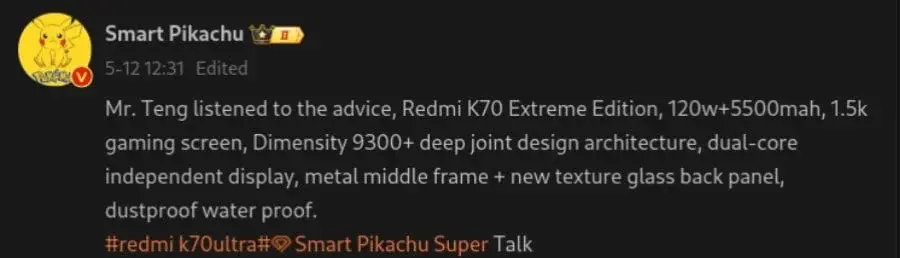
    A Weibo tipster known as Smart Pikachu has disclosed several key specifications of the upcoming Redmi K70 Ultra. The forthcoming model will feature a robust 5500mAh battery, which is a 500mAh increase over its predecessor, the Redmi K60 Ultra. Despite the larger battery, the charging capacity remains the same at 120W.

    Display and Performance

    The front display is expected to boast a 1.5K resolution. Additionally, it will incorporate an independent dual-core chip, possibly similar to the X7 display chip used in the K60 Ultra, which enables a native frame rate of 144 fps in compatible games.

    The leak aligns with information from another Weibo source, Digital Chat Station, stating that the phone will be powered by MediaTek’s latest Dimensity 9300+ chipset. Currently, the newly released Vivo X100s Pro is the only device equipped with this chip.

    Design and Build

    There is also mention of a customized “deep joint design architecture,” suggesting a tailored version of the Dimensity 9300+ specifically for the Redmi K70 Ultra. The phone will feature a robust metal middle frame and a textured glass back panel. It will also offer dust and water resistance to protect against accidental damage and environmental factors.

    Redmi K70 Ultra to Feature Independent Display Chip

    Launch Timeline

    The Redmi K70 Ultra is anticipated to be launched in June or July this year. Additionally, a modified version of the same device branded as Xiaomi 14T Pro is expected to be released later this year for the global market.

    Stay tuned for more updates as the launch date approaches.

  • Samsung Galaxy F55 Specs Revealed Ahead of May 17 Flipkart Launch

    Samsung Galaxy F55 Specs Revealed Ahead of May 17 Flipkart Launch

    The Samsung Galaxy F55 has recently been listed on a well-known online retailer in India. This model is eagerly awaited due to its distinctive design. The listing on Flipkart has provided additional insights into its specifications and features. Here are all the details.

    Samsung Galaxy F55: What We Know So Far

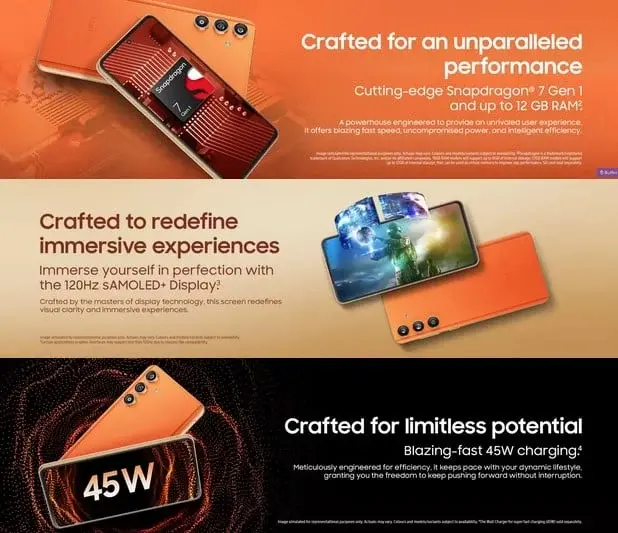
    The Galaxy F55 from the South Korean tech giant has a dedicated microsite that has gone live on Flipkart. This page confirmed that the device will feature the Qualcomm Snapdragon 7 Gen 1 SoC. The chipset is coupled with either 8GB or 12GB of RAM. Moreover, the phone supports virtual RAM expansion of 8GB and 12GB for the respective models. Additionally, buyers can expand the storage via a microSD card slot.

    Display and Camera

    Samsung highlighted the 120Hz Super AMOLED display on the upcoming Galaxy F55 on Flipkart. The front camera includes a 50-megapixel selfie shooter. On the rear, there's a triple camera setup featuring a 50-megapixel primary sensor with OIS (Optical Image Stabilization), a 5-megapixel ultra-wide angle lens, and a 2-megapixel sensor. The device also supports dual recording, allowing users to record from both the front and rear cameras simultaneously.

    Additional Features

    Other significant features include 45W wired fast charging, an in-display fingerprint scanner, Knox Security, Quick Share, Voice Focus, and the promise of four Android OS upgrades along with five years of security updates. The Samsung Galaxy F55 is set to launch in the region on 17th May 2024, so keep an eye out for more updates.