Category: Phones

Stay updated with the latest phone news, reviews, and trends. Discover cutting-edge smartphones, features, and innovations in our Phones category at GizNewsDaily

  • Geekbench Unveils CPU and GPU Specifications of Vivo V30 Featuring Snapdragon 7 Gen 3

    Geekbench Unveils CPU and GPU Specifications of Vivo V30 Featuring Snapdragon 7 Gen 3

    Vivo V30 with Snapdragon 7 Gen 3 Chipset Spotted on Geekbench

    Last month, Qualcomm unveiled its flagship Snapdragon 8 Gen 3 chipset, which has already made its way into smartphones like the Xiaomi 14 series and iQOO 12 series in China. Now, it seems that Qualcomm is also preparing to launch two Snapdragon 7-series chipsets. One of these chipsets, believed to be the next-generation Snapdragon 7 Gen 3, is expected to debut later this month or in early December. In line with this, the alleged Vivo V30 smartphone featuring the unannounced Snapdragon 7 Gen 3 chipset has now appeared on the Geekbench benchmarking platform.

    Vivo V30 Geekbench Listing

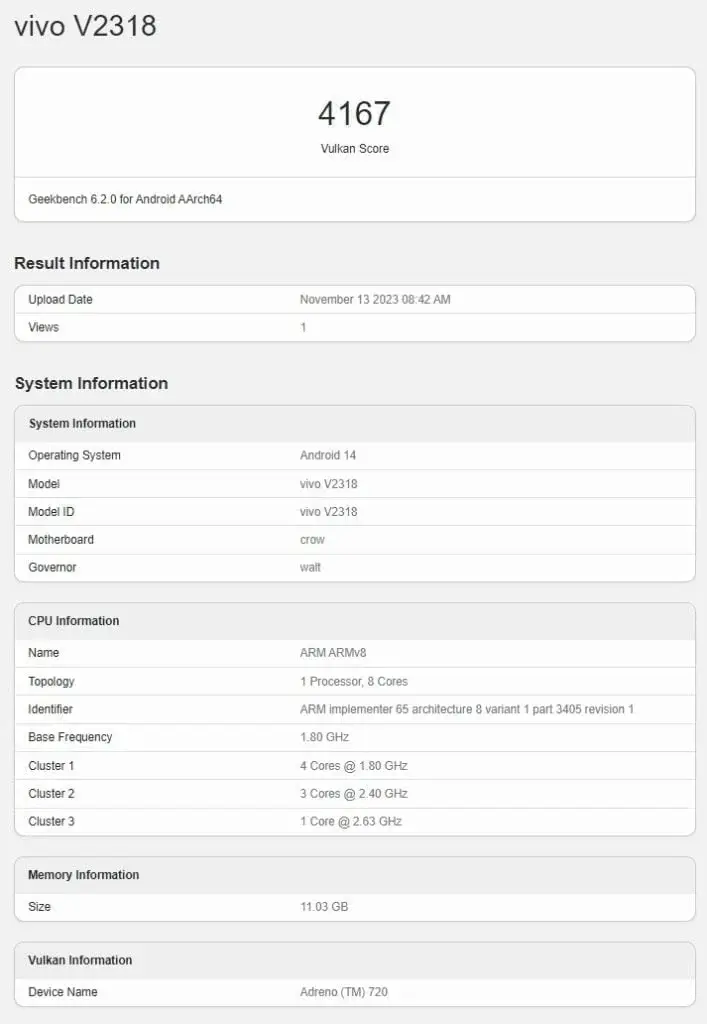
    According to reports, Vivo is currently working on the Vivo V30 and Vivo V30 Pro, with model numbers V2318 and V2319, respectively. The alleged Vivo V30 has now surfaced on the Geekbench platform, specifically in the database of the Vulkan test, which measures GPU performance. The device has achieved a score of 4167 points in this test, indicating its powerful performance.

    Snapdragon 7 Gen 3 Chipset and Specifications

    The benchmark listing reveals that the Vivo V30 is powered by a Qualcomm chip, which is likely to be the upcoming Snapdragon 7 Gen 3 chipset. It also features 12 GB of RAM and runs on Android 14. Going into more detail about the chip, the listing shows that the SD7G3 consists of a high-performance core clocked at 2.63GHz, three performance cores operating at 2.40GHz, and four efficiency cores running at 1.80GHz. Additionally, it is equipped with an Adreno 720 GPU for enhanced graphics performance.

    Vivo's Upcoming Releases

    While there is no official information about the launch date of the Vivo V30 series, it is worth noting that Vivo is also expected to release the Vivo S18 and Vivo S18 Pro smartphones in China. The Vivo S18 is likely to feature the Snapdragon 7 Gen 3 chipset, while the S18 Pro could come with the Dimensity 9200 Plus chipset. It is speculated that the Vivo V30 may be a modified version of the S18, while the V30 Pro could be a rebranded edition of the V30 Pro. It is anticipated that the Vivo V30 series will make its debut in the first quarter of 2024 in various global markets, including India.

  • Huawei Confronts Obstacles as Demand Exceeds Available Supply

    Huawei Confronts Obstacles as Demand Exceeds Available Supply

    Huawei Technologies has recently faced challenges in production and supply chain for its Mate 60 Pro 5G. However, the company has demonstrated resilience and adaptability in overcoming these obstacles. Despite issues with supply and demand, Huawei has implemented strategies to manage the situation.

    Limiting Purchase Orders

    To address the surging demand for the Mate 60 Pro, Huawei introduced a pre-order system. This decision was made to buy time for securing orders from suppliers. The main challenge lies in the advanced Kirin 9000s processor, which has complicated the supply chain dynamics and delayed the parts provision process.

    Subscription Program

    In an unconventional move, Huawei launched a subscription program for the Mate 60 Pro. Customers are promised delivery within 90 days of ordering, and purchases are limited to one unit per consumer. This approach aims to manage supply efficiently while maintaining customer interest.

    Impressive Sales Figures

    Despite the hurdles, the Mate 60 Pro has achieved notable success. Within just eight weeks of its launch, the series recorded 2.4 million units in domestic sales, according to Counterpoint data. This achievement is particularly impressive considering the background of US trade sanctions that Huawei has been facing.

    Symbol of Resilience

    The Mate 60 series, especially the Pro model, has become a symbol of Huawei's resilience. The company has managed to navigate through supply shortages and secure a strong market position, even during the Singles' Day shopping season. Despite limited daily sales due to supply constraints, the Mate 60 series continues to be popular among consumers.

    In conclusion, Huawei's Mate 60 Pro 5G has faced challenges in production and supply chain. However, the company has implemented strategies such as the pre-order system and subscription program to manage supply efficiently. Despite these obstacles, the Mate 60 Pro has achieved impressive sales figures and has become a symbol of Huawei's resilience in the face of adversity.

  • Samsung Unveils Timeline for One UI 6.0 Release

    Samsung Unveils Timeline for One UI 6.0 Release

    Samsung One UI 6.0 Update: European Market Release Schedule

    Samsung recently disclosed its most recent One UI 6.0 update for Galaxy devices in October. This version, which operates on Android 14, introduces a variety of new functionalities and improvements. Presently, Samsung’s community manager has revealed the schedule for launching One UI 6.0 in the European market, giving users an idea of when they can anticipate receiving the update.

    Primary Aspects of One UI 6.0

    The One UI 6.0 update brings numerous enhancements to enrich the user experience. Some of the notable features include:

    • Fresh Widgets: The update provides enhanced customization choices, allowing users to tailor their devices according to their preferences.
    • Revamped Quick Settings Panel: One UI 6.0 showcases a more user-friendly and intuitive interface for the Quick Settings Panel, simplifying access to essential settings for users.
    • Modern Emoji Style: The Samsung keyboard undergoes a makeover with a blend of enjoyment and contemporary flair, introducing a new emoji style for users.

    For more comprehensive information about the One UI 6.0 update, please refer to this [article](link to the article).

    Commencement of Rollout: Galaxy S23 Series at the Forefront

    The initiation of the One UI 6.0 update rollout began towards the end of October, with the Galaxy S23 series being the initial recipients of the update. This underscores Samsung’s dedication to supplying cutting-edge features to its premier devices.

    Timeline for European Rollout: Insights from Samsung Community Manager

    The timeline for releasing One UI 6.0 in the European market, as communicated by Samsung’s community manager, is as follows:

    • October: Galaxy S23 series
    • November 13: Galaxy Z Flip 5, Galaxy Z Fold 5, Galaxy A54, Galaxy A34
    • November 15: Galaxy S22 series (S22, S22 Plus, S22 Ultra)
    • November 20: Galaxy S23 FE, Galaxy A13 5G, Galaxy A33 5G, Galaxy A53 5G, Galaxy Z Flip 4, Galaxy Z Fold 4
    • November 24: Galaxy S21 series (including S21 FE)
    • November 27: Galaxy A52, A52s 5G, A13, A23 5G, Z Flip 3, Z Fold 3
    • November 30: Ongoing rollout, encompassing Galaxy A72

    December Update Schedule

    The rollout of the One UI 6.0 update continues into December, with the following devices slated to receive the update on specified dates:

    • December 1: Galaxy A24 5G
    • December 4: Galaxy A04s
    • December 8: Galaxy XCover 5

    Devices with Indeterminate Timelines

    The rollout schedule for the following devices is yet to be determined:

    • Galaxy A14 5G, A52 5G, Tab A7 Lite, A14, A05s

    Official Confirmation Awaited

    Although the European market is poised to be the first to receive the One UI 6.0 update, there are expectations that the rollout will extend to the US and India shortly thereafter. Nevertheless, Samsung has not yet provided an official timeline for these regions.

    Stay tuned for additional updates regarding the rollout of the One UI 6.0 update for Samsung Galaxy devices across diverse markets.

    Note: The original text does not supply pricing and specifications details for the One UI 6.0 update.

  • Oppo Reno 11 Series Launch Date and Color Variants Unveiled

    Oppo Reno 11 Series Launch Date and Color Variants Unveiled

    Confirmed Launch Date for Oppo Reno 11 and Reno 11 Pro

    The tech community in China has circled November 23 on their calendars with excitement as Nubia, Honor, and Oppo gear up for their product unveilings on the same day. Nubia is set to showcase the Red Magic 9 Pro series, Honor will introduce the Honor 100 lineup, and Oppo is slated to reveal the Reno 11 series at 2 pm (local time).

    Design and Color Options Revealed for Oppo Reno 11 Series Landing Page

    Access the landing page for the Oppo Reno 11 series now live on Oppo China’s website for a sneak peek into the design aesthetics of the forthcoming lineup. This dedicated page not only confirms the launch date but also showcases a palette of four color choices: Flourite Blue, Moonstone, Turquoise, and Obsidian Black.

    While the front design of the Reno 11 series remains under wraps, speculation suggests that both the Reno 11 and Reno 11 Pro will sport a curved-edge OLED display featuring a centered punch-hole and an in-screen fingerprint sensor, reminiscent of the Reno 10 series. The official website hints at the promise of SLR-grade portrait photography on both devices. However, intricate details on crucial specifications are yet to be disclosed by the manufacturer.

    Speculations Surrounding the Alleged Specifications of Oppo Reno 11 and Reno 11 Pro

    Leaked reports indicate that the Reno 11 might house the Dimensity 8200 chipset, while its Pro counterpart, the Reno 11 Pro, is rumored to integrate the Snapdragon 8 Plus Gen 1 chipset. Expectations suggest that the Reno 11 could pack a 4,800mAh battery with 67W rapid charging support, while the Pro model may come with a slightly smaller 4,700mAh battery featuring 80W charging functionality. Both smartphones are projected to operate on ColorOS 14, based on Android 13.

    Regarding the display, the Reno 11 and Reno 11 Pro are anticipated to feature OLED screens boasting a 120Hz refresh rate. The standard Reno 11 is rumored to offer a Full HD+ resolution, whereas its Pro variant is speculated to provide a more superior 1.5K resolution. Both phones are rumored to house a 32-megapixel front camera and a rear camera array consisting of an 8-megapixel IMX355 ultra-wide lens and a 32-megapixel IMX709 telephoto camera with 2x zoom capabilities. For primary cameras, whispers suggest the Reno 11 and 11 Pro could incorporate LYT-600 and LYT-700 sensors, respectively.

    With the launch date rapidly approaching, smartphone enthusiasts are on the edge of their seats, eagerly anticipating Oppo’s official unveiling of the Reno 11 series’ specifications and features. Keep an eye out for more updates on this highly anticipated smartphone lineup.

  • Potential Launch of Samsung Galaxy A25 5G in India as Support Page Appears on Official Website

    Potential Launch of Samsung Galaxy A25 5G in India as Support Page Appears on Official Website

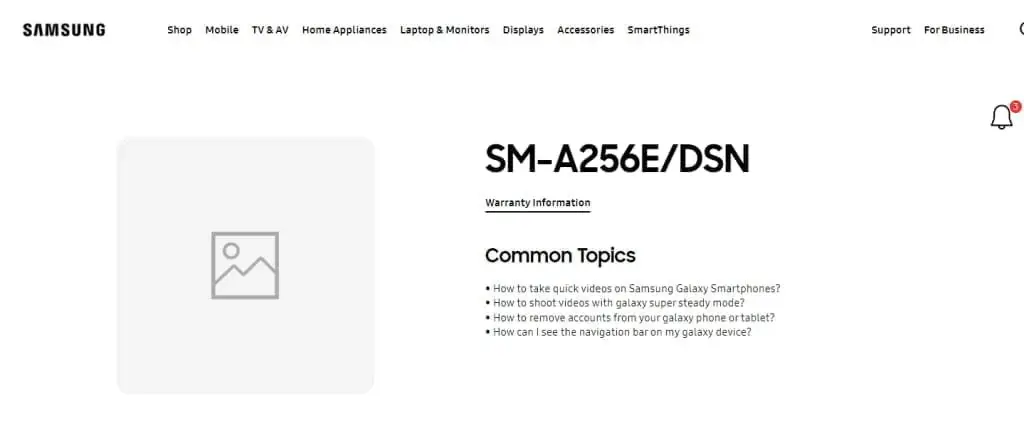
    Samsung is preparing to launch a new mid-range smartphone called the Samsung Galaxy A25 5G in the global market. The Indian support page for the device has already gone live, suggesting that its launch might be sooner than expected in India. The device has been listed with the model number SM-A256E/DSN on the support page, which is the same model number found on the Bureau of Indian Standards certification website. However, the FCC certification has the device listed under a different model number, indicating that the global variant might have slight differences from the Indian model.

    Samsung Galaxy A25 5G Specs

    According to leaked information, the Samsung Galaxy A25 5G will come with a 50MP main rear camera and a 6.5-inch FHD+ display featuring a waterdrop-style notch. It is rumored to be powered by Samsung's Exynos 1280 chipset and will have a 5,000mAh battery that supports 25W fast charging through a USB-C port.

    The front camera is expected to have a resolution of 13MP, while the rear camera setup will include an 8MP ultrawide lens and a 2MP macro lens. The smartphone will be available in two models: Model 1 with 6GB of RAM and 128GB of storage, and Model 2 with 8GB of RAM and 256GB of storage. The pricing for the Samsung Galaxy A25 5G is speculated to range from EUR 300 to EUR 400, positioning it as an affordable yet feature-rich option.

    Conclusion

    With its impressive camera capabilities, large display, powerful chipset, and long-lasting battery, the Samsung Galaxy A25 5G seems to be a promising mid-range smartphone. As the device prepares for its global launch, consumers can look forward to a device that offers great value for money.

  • Ahead of its global launch, the Poco X6 5G receives IMDA certification

    Ahead of its global launch, the Poco X6 5G receives IMDA certification

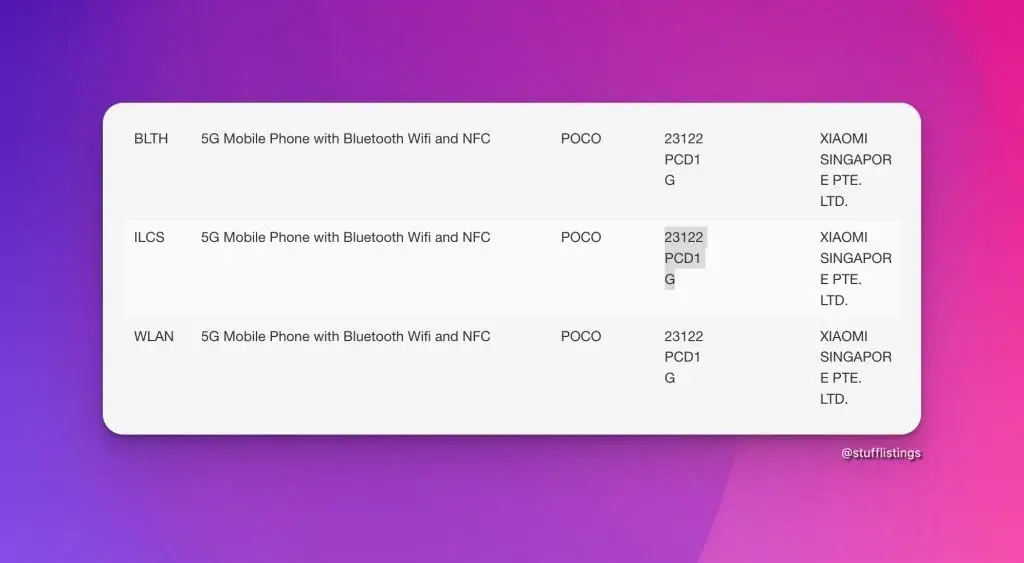
    Redmi recently launched its Redmi Note 13 lineup in China and now, the brand is preparing to introduce these devices to the global market. According to a recent report, the Redmi Note 13 Pro (Chinese model) will be released as the Poco X6 5G globally. The device has now received the IMDA certification, indicating its readiness for launch.

    IMDA Certification Details

    The IMDA certification of the Poco X6 5G reveals that it carries the model number 23122PCD1G. This certification confirms that the device will support 5G connectivity, as well as Bluetooth, WiFi, and NFC capabilities. Additionally, it also serves as a green light for the device to be launched in Singapore. Earlier, the Poco X6 5G had also received BIS certification, hinting at a potential launch in India in the near future. While not much information has been officially confirmed regarding the specifications, we can refer to the spec sheet of the Redmi Note 13 Pro (Chinese model) to gain an idea of what to expect from the Poco X6 5G.

    Expected Specifications of Poco X6 5G

    Drawing from the specifications of the Redmi Note 13 Pro, it is anticipated that the Poco X6 5G will sport a large 6.67-inch OLED panel with a 1.5K resolution of 1220 x 2712 pixels and a 120Hz refresh rate. If the specifications remain consistent, the device may also come with Gorilla Glass Victus protection, a feature seldom found in the lower end of the mid-range segment.

    Under the hood, the Poco X6 5G is likely to be powered by a Snapdragon 7s Gen 2 chip. The battery capacity is expected to be 5,100mAh, accompanied by 67W fast charging support. While details regarding RAM and storage are still unclear, it is expected that the global variants will not offer extravagant specifications like its Chinese counterpart, which boasts up to 6 GB of RAM and 512 GB of storage. Instead, a more modest configuration of 8 GB of RAM and up to 256 GB of storage is likely to be available outside of China.

    Moving on to the camera department, the Poco X6 5G could feature a triple camera setup consisting of a 200-megapixel primary sensor with optical image stabilization (OIS), an 8-megapixel ultra-wide lens, and a 2-megapixel macro lens. For selfies, a 16-megapixel front camera may be present. However, rumors suggest that the global model might see a downgrade with a 64-megapixel primary camera replacing the 200-megapixel sensor.

    Looking ahead, Qualcomm has recently unveiled the new Snapdragon 7 Gen 3 chip, which could potentially make its way into upcoming mid-range smartphones.

  • Chinese Language Support Coming to Samsung Galaxy S24 Series with Gauss AI

    Chinese Language Support Coming to Samsung Galaxy S24 Series with Gauss AI

    Samsung Introduces Powerful AI Model "Samsung Gauss" at Developer Conference

    Samsung has unveiled its latest AI model, "Samsung Gauss," at the ongoing Samsung Developer Conference (SDC) Korea 2023. This powerful generative AI model, named after mathematician Carl Friedrich Gauss, showcases Samsung's commitment to advancing technology for improved user experiences and productivity.

    Samsung Gauss AI Suite: Enhancing User Experiences

    The Samsung Gauss AI suite comprises three specialized components designed to cater to various domains. These components include:

    1. Samsung Gauss Language: This component focuses on linguistic tasks such as email composition and translation.
    2. Samsung Gauss Code: It provides coding assistance for software development.
    3. Samsung Gauss Image: This component enables image generation and editing.

    By offering generative AI capabilities in different areas, Samsung aims to enhance user-device interaction, providing a more intuitive and natural experience. The goal is to offer users convenience, personalization, and the ability to engage in creative activities using Samsung devices.

    On-Device AI for Data Security

    One of the key features of Samsung Gauss is its on-device operation. By processing and storing consumer data locally, Samsung addresses common concerns about data security in AI applications. This approach ensures that user data remains secure and protected.

    Multilingual Support and Future Plans

    According to tipster @Tech_Reve, Samsung's Gauss language model supports multiple languages, including Korean, English, French, Spanish, Chinese, and Japanese. This indicates that the AI model will be available for Chinese users in the future, expanding its accessibility and usability.

    In addition to the Gauss AI model, Samsung has also announced its plans to introduce Galaxy AI in the upcoming Galaxy flagship phones, specifically the Galaxy S24 series. This feature will enable real-time audio and text translations during phone calls. Renowned tipster Ice Universe has confirmed that Galaxy AI will indeed be usable on domestic Galaxy S24 series phones.

    With these advancements, Samsung continues to push the boundaries of AI technology, offering innovative solutions to enhance user experiences and productivity. The introduction of Samsung Gauss and the upcoming Galaxy AI feature demonstrate the company's commitment to integrating AI capabilities into its devices for a seamless and enhanced user experience.

  • How to Apply for OxygenOS 14 Beta 2 Update on OnePlus Nord CE 3

    How to Apply for OxygenOS 14 Beta 2 Update on OnePlus Nord CE 3

    OnePlus Announces Second Beta Testing Phase for OxygenOS 14 X Android 14 on Nord CE 3 Devices

    OnePlus has recently announced the second beta testing phase for OxygenOS 14 X Android 14 on its Nord CE 3 devices. This exciting opportunity allows Indian users to experience Android 14 on their Nord CE 3 devices before its official release to the public.

    Participating in the Open Beta Test

    If you are interested in participating in the Open Beta Test (OBT) recruitment, there are a few important steps to follow. First, make sure that your device is running the most recent version of OxygenOS 13.1. The application period for the beta testing phase runs from November 14 until a specified number of applications is reached. It is crucial to submit your application during this timeframe as the application channel will close afterward.

    To apply, navigate to Settings > About device > Tap up to date > Tap icon on the top right > Beta program, and follow the provided steps. Ensure that your phone has been updated to the detectable version CPH2491_13.1.0.592(EX01).

    Review Process and Receiving the New Version

    After the application channel closes, the review process will take place within 5 workdays. If your application is successful, you can expect to receive the new version within the next 3 workdays. Once your application has been approved, you can download the version by going to Settings > About device > Download Now.

    Important Considerations

    Before participating in the beta testing phase, it is essential to keep a few things in mind. First, ensure that your device's battery level is above 30% before installing the new version. Additionally, make sure that you have a minimum of 4 GB of storage space available on your smartphone.

    It is important to exercise caution as the software is currently in the beta testing phase, and its stability may not be on par with the official version. It is strongly recommended to avoid installing the beta version on your primary device to prevent potential malfunctions in your device or specific applications.

    Changes in the New Build

    For individuals who were part of the first beta testing phase, here are the changes coming with the new build:

    System

    • Integrates the October 2023 Android security patch to enhance system security.
    • Adds support for app-specific refresh rates to improve the user experience.
    • Improves system stability and performance.
    • Extends battery life in some scenarios.
    • Fixes an issue that might cause some third-party apps to crash.
    • Fixes a screen flicker issue that might occur when certain apps are opened.
    • Fixes a display issue that affects the widgets on the Home screen when you switch to Dark mode.
    • Fixes a display issue that might affect the icons in Quick Settings.

    Apps

    • Improves weather animations, such as thunderstorms.
    • Fixes an issue where the keyboard might fail to open in some scenarios.

    By participating in the beta testing phase and providing feedback, users can contribute to the development of a more stable and optimized version of OxygenOS 14 X Android 14 for the Nord CE 3 devices.

  • Adobe RAW Support Now Available for Google Pixel 8 and Pixel 8 Pro

    Adobe RAW Support Now Available for Google Pixel 8 and Pixel 8 Pro

    Google Pixel 8 and Pixel 8 Pro Now Support Adobe RAW Editing!

    Google's Pixel 8 and Pixel 8 Pro smartphones have recently received Adobe RAW support, providing users with enhanced photography editing options. This update comes shortly after Adobe introduced HDR output support for Lightroom on Android.

    More Flexibility with RAW Image Files

    RAW image files contain more data than JPEGs, allowing photographers to have greater flexibility when editing their photos. While the Pixel 8 and 8 Pro already have the capability to shoot in RAW format, it is typically only necessary for significant image editing purposes.

    Adobe's RAW Support for Pixel 8 Series

    With Adobe's inclusion of RAW support for the Pixel 8 series, photographers can now utilize Lightroom and Photoshop to edit their Pixel 8 RAW files with more control and precision compared to the Google Photos app. This development makes high-quality photography on the Pixel 8 more accessible to users.

    Recognition and Compatibility

    Lightroom and Photoshop now recognize Pixel 8 RAW files, which are delivered in DNG format. This support extends to the front-facing camera, wide-angle lens, and main sensor on the Pixel 8. On the Pixel 8 Pro, RAW support is also available for images taken with the telephoto lens. Each lens has its own distinct RAW profile.

    Requirements for Adobe RAW Support

    In order to use Adobe RAW support on the Pixel 8 series, users must have a minimum plug-in version of 16.0.1. Additionally, it is important to ensure that their Adobe apps, namely Lightroom and Photoshop, are updated to the latest version for seamless compatibility.

    Pricing and Specifications

    No pricing or specification details were provided in the original text.

    Overall, the addition of Adobe RAW support for the Pixel 8 and Pixel 8 Pro smartphones enhances the photography experience for users who desire advanced editing options. With Lightroom and Photoshop recognizing Pixel 8 RAW files, photographers can now have more control and precision in their editing process, making high-quality photography on the Pixel 8 devices more accessible than ever before.

  • CQC certifies OnePlus 12 Global edition with 100W fast charging

    CQC certifies OnePlus 12 Global edition with 100W fast charging

    OnePlus 12: Fast Charging and Other Details Revealed

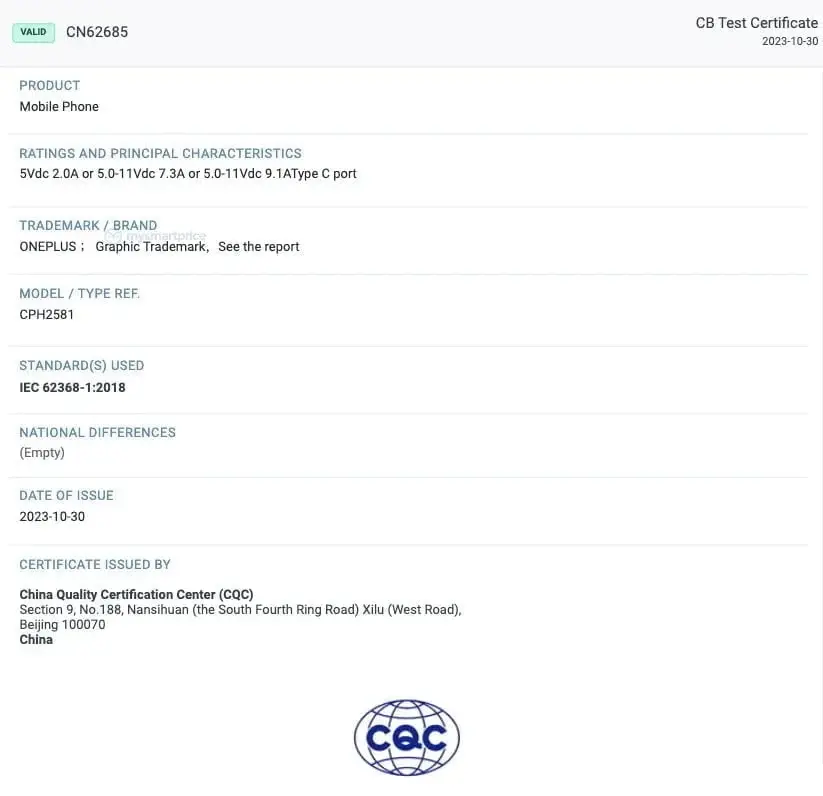
    The OnePlus 12, the highly anticipated flagship smartphone from the Chinese tech company, has made an appearance on the CQC certification platform. The device, identified by the model number CPH2581, has also been spotted on the TDRA and EEC databases recently. The online listing on the certification platform reveals that the OnePlus 12 will come with impressive fast charging capabilities.

    Fast Charging Support

    According to the CQC certification, the OnePlus 12 will support fast charging rates of 10W (5V/2A), 80W (11V/7.3A), and 100W (11V/9.1A) through its USB Type-C port. Additionally, the device is expected to offer 50W wireless fast charging as well. This indicates that the global variant of the smartphone will have the same fast charging capabilities as the Chinese version.

    Other Features and Specifications

    While finer details about the OnePlus 12 are still scarce, previous certifications have confirmed that the device will indeed support 100W fast charging. In addition, recent reports have revealed some noteworthy features of the upcoming flagship. The OnePlus 12 will sport a Sony LYT-808 primary camera on the back, along with a 64-megapixel OmniVision OV64B periscope telephoto camera that offers 3x optical zoom.

    Moreover, the OnePlus 12 will come with an X1 OLED display manufactured by BOE. This display is confirmed to offer a 2K resolution and an impressive peak brightness of 2,600nits. Notably, the OnePlus 12 is the first smartphone with a 2K resolution to receive the DisplayMate A+ rating, further highlighting the device's display quality.

    Performance and Software

    The OnePlus 12 has also made an appearance on Geekbench, revealing some details about its performance and software. The device is listed with the Snapdragon 8 Gen 3 chip, 16 GB of RAM, and the Android 14 operating system. These specifications indicate that the OnePlus 12 will deliver powerful performance and a smooth user experience.

    In conclusion, the OnePlus 12 is shaping up to be an impressive flagship smartphone with its fast charging capabilities, advanced camera setup, high-quality display, and powerful performance. As we await its official release, OnePlus fans can look forward to experiencing the cutting-edge features and specifications offered by the OnePlus 12.