Category: Home

  • AWS Outage Disrupted Smart Beds and Exposed Cloud Vulnerabilities

    AWS Outage Disrupted Smart Beds and Exposed Cloud Vulnerabilities

    Key Takeaways

    1. AWS downtime on October 20 disrupted various services, highlighting our reliance on cloud infrastructure.
    2. The issue originated from a malfunction in AWS’s DynamoDB in the US-East-1 region, causing widespread connectivity problems.
    3. Smart technology, like Eight Sleep’s Pod mattress, became inoperable due to dependence on cloud services during the outage.
    4. Eight Sleep quickly implemented a “Bluetooth low energy outage mode” to allow local control of their devices during internet failures.
    5. The incident underscores the need for local fallback systems in cloud-dependent technology to ensure functionality during outages.


    When Amazon Web Services (AWS) experienced downtime on October 20, the spotlight was on the impact it had on social media and streaming services. However, the effects were much broader. This incident highlighted how deeply intertwined our daily lives are with cloud infrastructure. In fact, some smart beds became nothing more than “wet bags” during the outage.

    Cause of the Disruption

    Amazon later identified the source of the issue. It originated in their US-East-1 region located in Northern Virginia, where their distributed database service, DynamoDB, malfunctioned, causing a chain reaction. This failure obstructed new online connections, which in turn disrupted EC2 virtual machines, Network Load Balancers, and associated backend APIs. Essentially, a vital data channel on the Internet became blocked, and the repercussions were felt worldwide.

    Impact on Smart Technology

    Among those affected was Eight Sleep’s expensive $7,000 Pod. This smart mattress utilizes water circulation and AI temperature mapping to enhance sleep quality. The downtime of AWS servers also impacted this sleep technology company.

    The Pod’s dependence on cloud-based machine learning and real-time biometric synchronization made it susceptible. Since its algorithms and user information are hosted on AWS servers, the outage caused it to be temporarily inoperable. One user even noted that one side of the bed reached a scorching 110°F.

    Quick Response from Eight Sleep

    Eight Sleep’s CEO, Matteo Franceschetti, addressed the issue on X and assured users that a fix was on the way. Within a day, the company introduced a Bluetooth low energy fallback they referred to as “outage mode.” This feature is a local control system that circumvents cloud APIs, allowing direct communication between the device and the app. Thus, users could adjust their beds via Bluetooth during Internet outages.

    Meanwhile, AWS engineers worked tirelessly to restore service. Once resolved, they rebooted essential systems to re-establish connectivity. Amazon issued a formal apology, labeling the outage “a significant event.” They committed to putting in place architectural safeguards to avert a future occurrence. However, this isn’t the first time such an incident has taken place.

    Historical Issues with AWS

    The US-East-1 region has consistently been AWS’ weak spot. Ironically, it is the oldest and busiest hub for the cloud company. Still, it was the center of outages in 2021, 2023, and 2024, impacting major services like Disney+, Slack, and Zoom.

    Each incident showcased how cascading failures within AWS’s internal dependencies exacerbated what began as minor system problems. Engineers have since cautioned that the extreme centralization of workloads in specific regions creates systemic risks. This could be addressed by more intelligent load distribution and regional redundancy.

    A Call for Change

    While the circumstances may seem humorous, they draw attention to a significant concern: the vulnerability of cloud-dependent technology. AWS, Google Cloud, and Microsoft Azure together manage the backend systems that a majority of connected devices rely on. These services support various gadgets, from thermostats to medical monitors. When they fail, so do the devices people think are self-sufficient.

    Consumer advocates argue that a ‘right-to-function’ standard should be established, necessitating that essential features continue to operate even during cloud service failures. Local fallback systems, such as on-device AI or Bluetooth controls, can maintain usability and reduce dependence on far-off data centers.

    The incident involving Eight Sleep serves as a wake-up call, emphasizing that the reliability of the “smart” revolution hinges on the servers that support it. Until hardware manufacturers prioritize local control, even the simple act of going to bed may rely on a data center remaining functional.

    Source:
    Link



  • DJI Romo Launches Premium Robot Vacuums with Drone-Grade Sensors

    DJI Romo Launches Premium Robot Vacuums with Drone-Grade Sensors

    Key Takeaways

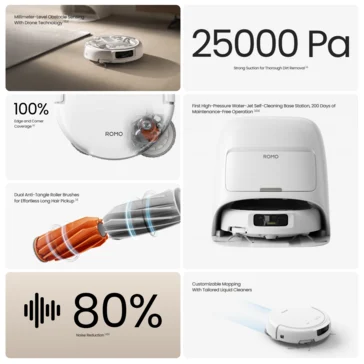
    1. Advanced Sensor Technology: The Romo features dual fisheye cameras, LiDAR, and machine-learning mapping to detect small objects (as narrow as 2 mm) and navigate around household items.

    2. Powerful Cleaning Performance: With a suction power of up to 25,000 Pa and features like high-speed roller motors and an auto-wash base, Romo excels in managing various debris types and minimizing maintenance.

    3. User Privacy and Security: The DJI Home app allows users to control cleaning modes and manage privacy, with encrypted data streaming and two-factor authentication for camera access.

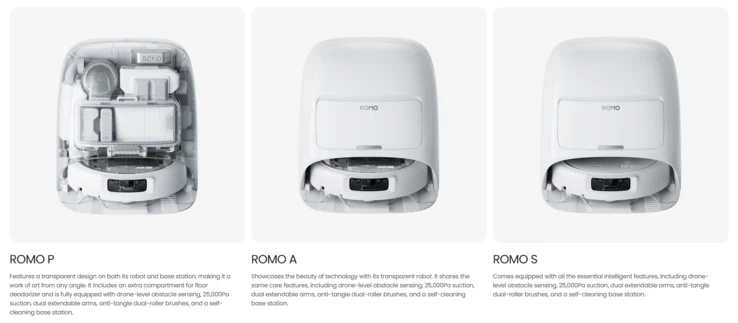
    4. Multiple Models Available: The Romo is offered in three versions (Romo S, Romo A, Romo P) with varying features and prices, starting from €1,299 (~$1,511) to €1,899 (~$2,210).

    5. Additional Accessories: Official accessories include extra brushes, a ramp for thresholds, and a starter cleaning solution, enhancing the vacuum’s usability and effectiveness.


    DJI has launched its latest product, the Romo, marking its debut as a complete robot vacuum. This innovative device incorporates technology from the company’s drone expertise. The Romo range is designed for effective cleaning on both hard surfaces and carpets, offering three different models with a strong emphasis on avoiding obstacles, self-cleaning, and powerful suction.

    Advanced Sensors and Mapping

    The Romo features an advanced sensor system that includes dual fisheye cameras, a wide-angle solid-state LiDAR, and machine-learning mapping abilities. According to DJI, this technology enables Romo to detect very small objects, claiming it can identify items as narrow as 2 mm. It can also navigate around common household items like cables, socks, and even playing cards. However, it’s important to keep in mind that these results were obtained in controlled settings; actual performance may differ based on your home layout and software updates.

    Impressive Cleaning Features

    When it comes to cleaning capabilities, Romo stands out among consumer-grade vacuums. It boasts a suction power of up to 25,000 Pa and an airflow rate of 20 L/s, complemented by two high-speed roller motors designed for effectively managing hair. Additionally, it includes a 164 ml water tank that adjusts its flow automatically. The dual flexible side arms are designed to reach into corners and adapt instantly, while the adaptive brush control minimizes debris spread when dealing with litter like cat litter. An auto-wash base is also part of the package, featuring four high-pressure nozzles, a sizable 16 mm waste outlet, and a downward force of 12 N on pads, which DJI claims can extend pad maintenance intervals to approximately 200 days in controlled tests.

    Privacy and Control Features

    Users can manage privacy and controls through the DJI Home app, which provides various cleaning modes tailored for carpets, thresholds, kitchens, bathrooms, and pet areas. To ensure security, cameras require two-factor authentication upon initial use, stream data is encrypted, and users have the option to disable camera features for privacy reasons.

    The Romo is officially available starting today (October 28) at store.dji.com and through authorized retailers in three versions: Romo S (€1,299, ~$1,511), Romo A (€1,599, ~$1,860), and Romo P (€1,899, ~$2,210). The P version features transparent windows on both the unit and its base, along with an additional chamber for concentrated cleaning solutions or pleasant floor scents. Official accessories include extra brushes, a ramp for thresholds up to 4 cm, and a starter cleaning solution.


  • Elecrow CrowPanel Advance: 7-Inch Smart Display with ESP32-P4

    Elecrow CrowPanel Advance: 7-Inch Smart Display with ESP32-P4

    Key Takeaways

    1. The CrowPanel Advance is a 7-inch smart display with a resolution of 1024 x 600 pixels, driven by an ESP32-P4NRW32 processor.
    2. It supports programming through ESP-IDF and Arduino IDE, with graphical interface design facilitated by the LVGL framework.
    3. The device is versatile, suitable for displaying real-time data and managing tasks, but may require technical setup.
    4. It can operate on battery or USB power and supports multiple connectivity options, including WiFi, Bluetooth 5.3, ZigBee, and LoRa.
    5. An optional 2MP camera is available, increasing the price from $45.90 to $53.90, and an ESP32-S3 model variant is also offered.


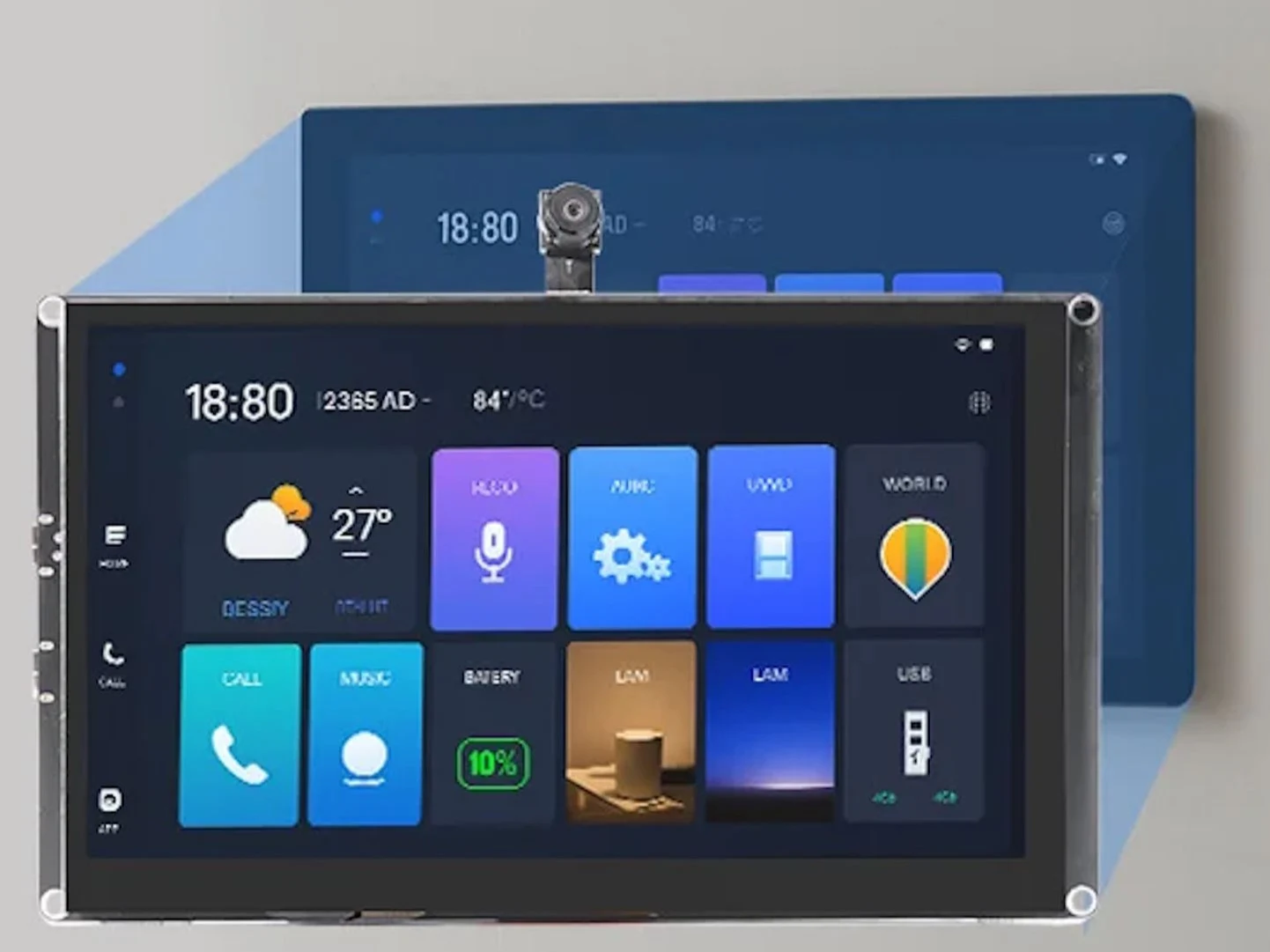
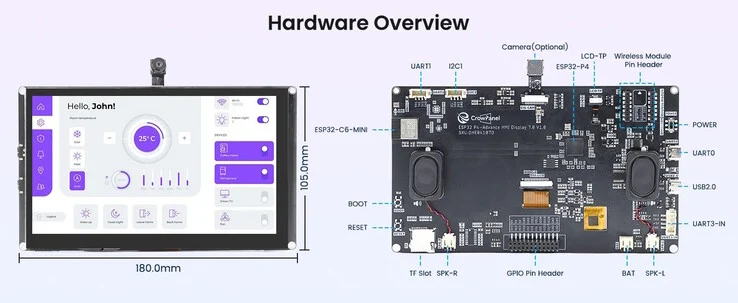
    The company Elecrow has introduced a new product in its lineup of smart displays. Named the CrowPanel Advance with the ESP32-P4, this device combines a display with a development board, allowing it to operate in a fairly independent manner. It features a 7-inch IPS touchscreen that has a resolution of 1024 x 600 pixels and a standard brightness level of 400 nits.

    Technical Specifications

    The CrowPanel Advance is driven by an ESP32-P4NRW32, which provides considerably lower performance compared to standard desktop processors. Nevertheless, it is sufficient for showing custom interfaces and other functionalities. Users can utilize both the ESP-IDF and the Arduino IDE for programming, and the LVGL framework enables relatively straightforward graphical interface design.

    Versatile Usage

    This smart display can serve various purposes, such as displaying real-time data like temperature or humidity. The touchscreen facilitates easy navigation between different displays or managing a thermostat. However, it’s important to note that using the CrowPanel Advance might involve some tinkering and setup. For those who prefer a more straightforward experience, alternatives like the Echo Show 8 could be more suitable for users lacking technical expertise.

    Power and Connectivity Options

    The device is capable of running on battery power, or it can be continuously powered through a USB connection. It connects to wireless networks via 2.4GHz WiFi and also supports Bluetooth 5.3, BLE, ZigBee, LoRa, nRF2401, Matter, and, optionally, Thread. It includes GPIO pins for connecting sensors and actuators. Additionally, users can enhance the device with an optional 2MP camera, which raises the price from $45.90 to $53.90. There’s also a model variant featuring the ESP32-S3 available on Amazon UK.

    Elecrow’s new offering seems promising for those looking to experiment with smart display technology.

    Source:
    Link


  • Anker Solix F3000 Solar Generator: 3 kWh Power, $1,100 Off

    Anker Solix F3000 Solar Generator: 3 kWh Power, $1,100 Off

    Key Takeaways

    1. Pricing: The Anker Solix F3000 is available for $1,499, significantly discounted from the retail price of $2,599. Bundles with solar panels and expansion batteries offer additional savings.

    2. Weight and Size: The power station weighs 41.5 kg and measures 65 x 30 x 37 cm, but features wheels and a telescopic handle for easier transport.

    3. Battery Capacity: It has a 3,072 Wh LFP battery that can deliver 3,600 W of continuous power, suitable for powering multiple devices without mains electricity.

    4. Expandable Capacity: The F3000 can be expanded up to 12 kWh by adding up to three BP3000 batteries for more energy needs.

    5. Charging Options: It supports charging rates of up to 2,400 W via solar panels and 1,800 W from mains power, and includes various USB ports and a UPS function for uninterrupted power supply.


    Following a pre-sale campaign, the Anker Solix F3000 is now officially for sale. This new top-of-the-line power station can be ordered directly from the manufacturer or on Amazon, and it comes with a significant discount.

    Pricing Details

    Those who buy just the Anker Solix F3000 will pay $1,499 rather than the suggested retail price of $2,599. When bundled with a 400 W foldable solar panel, the solar generator costs $1,779 instead of the RRP of $3,498. You can also save more by getting the power station along with the 3 kWh BP3000 expansion battery. Anker Solix is offering this bundle for $2,499 instead of the RRP of $4,398. Additionally, a 400 W solar panel can be included for a total of $2,998 instead of the RRP of $5,397, which means a saving of $2,399.

    Specifications

    The Anker Solix F3000 is quite heavy, weighing 41.5 kg and measuring about 65 x 30 x 37 cm, yet it has wheels and a telescopic handle that make it somewhat easy to transport. It has a large capacity with a 3,072 Wh LFP battery and delivers 3,600 W of continuous power through its four outlets. This enables you to power different devices without relying on the mains, which is useful during blackouts or while camping. If you need more capacity, it can be expanded to a maximum of 12 kWh by adding up to three BP3000 batteries.

    Features

    Alongside a UPS function for uninterruptible power supply, the Anker Solix F3000 includes multiple USB ports with up to 100 W and various other connections. This robust power station can be charged at rates of up to 2,400 W through solar panels or a maximum of 1,800 W from the mains.

    Disclaimer: Notebookcheck isn’t accountable for any price changes made by retailers. The discounted price or offer mentioned here was valid at the time of writing and may be subject to time limits and/or limited availability.

    Source:
    Link


  • Govee Unveils Unique Smart Plug with Built-in Light Feature

    Govee Unveils Unique Smart Plug with Built-in Light Feature

    Key Takeaways

    1. 8-in-1 Functionality: The Goveelife Smart Plug features two smart outlets, four always-on outlets, and USB ports, allowing multiple devices to be powered simultaneously.

    2. Remote Control and Voice Compatibility: Users can control the smart plug via the Govee Home app and it is compatible with Amazon Alexa and Google Assistant for voice commands.

    3. Safety Features: The device has a 5VA Fire Protection Rating, along with surge and overload protection for user safety.

    4. Pre-order Pricing: The smart plug is available for pre-order on Amazon US for $32.99, with a potential discount bringing the price to $29.69 until November 3rd.

    5. Launch Date: The official release date is October 31st, with expected delivery for early November.


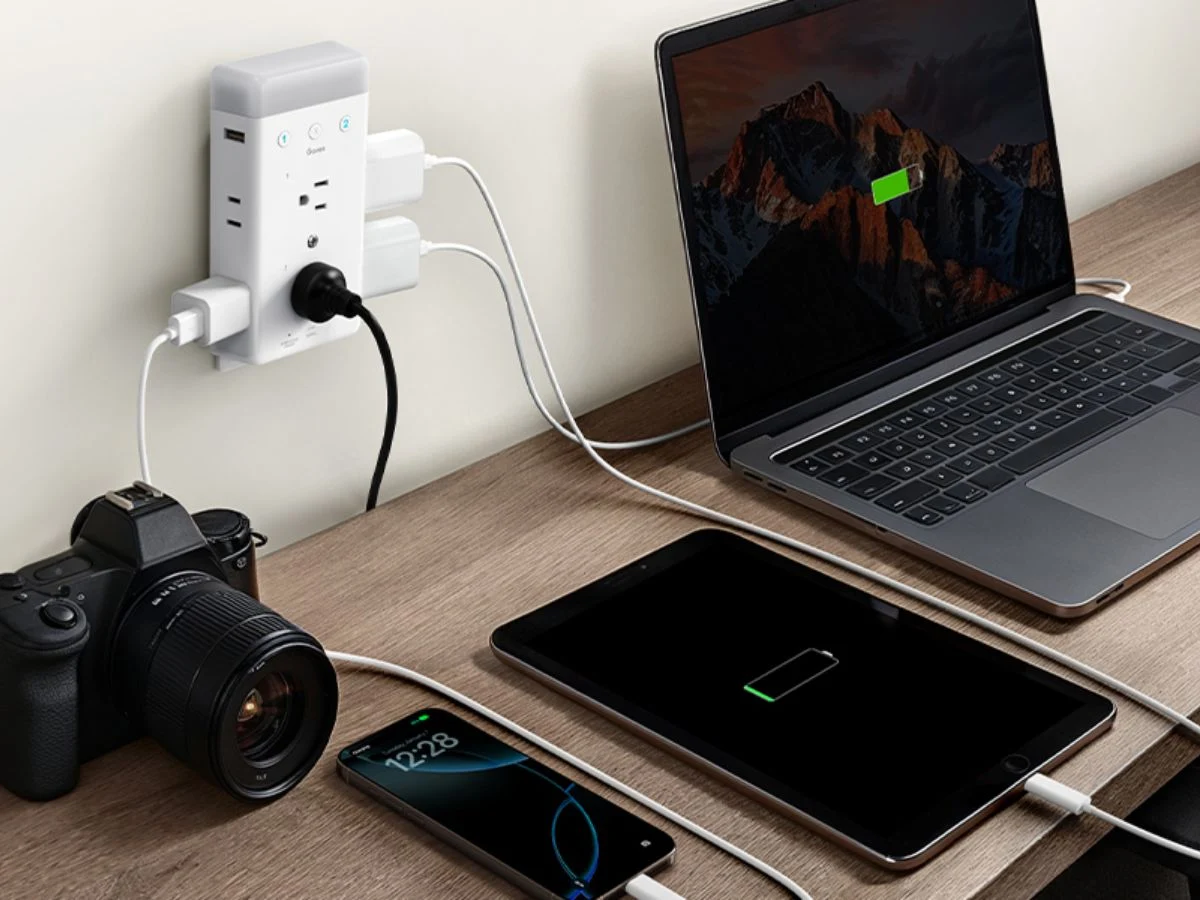
    Govee has introduced a new smart home gadget in the United States: the Goveelife Smart Plug Outlet Extender With Night Light. It is already up for pre-order on Amazon, and its official launch is coming soon.

    Versatile Functionality

    This latest Smart Plug from Govee is an 8-in-1 device, designed to power multiple devices like a laptop, router, lamp, and phone at the same time. It features two smart outlets, four always-on outlets, a USB-C port, and a USB-A port spread across three sides. The spacing between the outlets is 1.97 inches (~52 mm), which should make it easy to fit various plugs. Additionally, it includes a built-in RGB light that can function as a night light, providing users with a selection of 15 different lighting effects.

    Convenient Control Options

    Users can manage the smart plug remotely via the Govee Home app, allowing for timers and schedules to be set. Furthermore, it is compatible with voice commands from Amazon Alexa and Google Assistant. The device is constructed with a 5VA Fire Protection Rating for safety and includes surge and overload protection. It can be securely mounted using the provided screw, measuring 3.5 x 6.3 x 1.2 inches (~89.9 x 160 x 31.0 mm) and weighing 3.4 oz (~95 g).

    Pricing and Availability

    The Goveelife Smart Plug Outlet Extender with Night Light is currently available for pre-order on Amazon US at a price of $32.99. Some customers can take advantage of a 10% discount coupon at this retailer, bringing the price down to $29.69. This offer is valid until November 3rd. The product is set to officially release on October 31st, with Amazon customers expecting to receive their orders in early November. It remains uncertain when or if a version for the UK or EU markets will be available.

    Source:
    Link


  • Mova G70 Cordless Vacuum Cleaner Launches with 90-Minute Runtime

    Mova G70 Cordless Vacuum Cleaner Launches with 90-Minute Runtime

    Key Takeaways

    1. Mova’s G70 Complete cordless vacuum features a robotic arm brush for thorough cleaning in tight spaces.
    2. It includes a 6-segment telescopic wand, adjustable from 37.5 cm to 68 cm, and a wide-angle LED light for better visibility.
    3. The vacuum has a suction power of 225 AW and weighs approximately 1.95 kg, making it easy to handle.
    4. It offers a runtime of up to 90 minutes and has a swappable battery for convenient charging.
    5. The G70 Complete is priced at €299 and is available at MediaMarkt, Saturn, and Amazon.


    Mova, a manufacturer of intelligent cleaning solutions, has launched its newest G70 Complete cordless vacuum in Europe. This model marks the company’s first one to feature a robotic arm brush, which is specifically designed to clean every nook and cranny in your home, according to Mova’s announcement. The G70 Complete boasts a suction power of 225 AW, driven by its 700 W high-speed brushless motor.

    New Design Features

    In this latest version, Mova has added a 6-segment telescopic wand making it easier to reach under furniture and into tight spaces. Users can also modify the length of the telescopic handle from 37.5 cm (14.7 inches) up to 68 cm (26.7 inches). Similar to the Tineco Pure A90S, the G70 features a wide-angle green LED light at the bottom, allowing users to spot dirt on the floor more easily.

    Advanced Cleaning Technology

    Moreover, the vacuum is fitted with an OptiInsight Multi-Surface Twin brush that includes a robotic arm and anti-tangle strips. Additionally, it comes with interchangeable nozzles for versatile cleaning tasks. Weighing approximately 1.95 kg (4.29 lbs), the device is designed to be effortlessly lifted and operated with one hand. It also includes a dust container with a built-in scraper and filter, holding up to 0.5 liters of dust and debris.

    Impressive Battery Life

    The G70 Complete provides a runtime of up to 90 minutes when using the combination tool, and about 50 minutes when utilizing the multi-surface twin brush, all thanks to its 8 x 2500 mAh battery pack. The battery is easily swappable for hassle-free charging. Additionally, Mova’s latest cordless vacuum is equipped with a small OLED screen that displays the battery level and the current mode.

    Other standout features consist of auto suction adjustment, edge-to-edge cleaning on the front side, dust sensing technology, deep scrubbing, illumination technology, and four cleaning settings: min, mid, auto, and max.

    Pricing and Availability

    The Mova G70 Complete is available for €299, and customers can buy the cordless vacuum directly from MediaMarkt and Saturn, both online and in over 300 stores across the country. It’s also up for grabs on Amazon.

    Mova Press Release

    Source:
    N/A)


  • Anker Launches Compact Charger with Smart Display Upgrade

    Anker Launches Compact Charger with Smart Display Upgrade

    Key Takeaways

    1. The Anker Charger (100W, 3 Ports, Smart Display) is now available in the US for $59.99, down from $69.99.
    2. It features a compact design with folding pins, measuring 2.7 x 2.2 x 1.3 inches and weighing 7.5 oz.
    3. The charger has two USB-C ports (up to 100W each) and one USB-A port (up to 33W), allowing simultaneous charging of three devices.
    4. It includes a smart low current mode for outputs at or below 5W and a built-in digital display with six screen options for monitoring.
    5. The product’s availability in Europe is still uncertain.


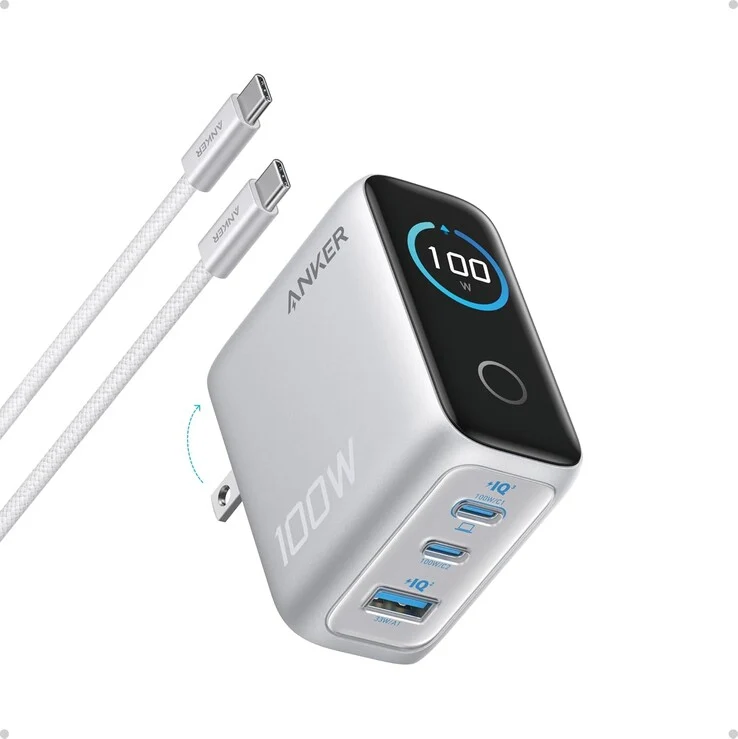
    A fresh iteration of the Anker Charger (100W, 3 Ports, Smart Display) has hit the shelves in the US. The first version made its debut in early October 2025, after being introduced in China earlier in May.

    Pricing and Availability

    You can now snag the Anker Charger (100W, 3 Ports, Smart Display) in a sleek silver finish from the brand’s online shop for $59.99, reflecting a $10 reduction from the original retail price of $69.99. This deal is also applicable to the original dark gray model. However, it’s uncertain how long these discounts on the accessories will be available. Although this product is listed on the brand’s Amazon page, the $10 discount is not applicable there.

    Specifications

    The Anker Charger (100W, 3 Ports, Smart Display) is a compact GaN charger that features folding pins, with dimensions of 2.7 x 2.2 x 1.3 inches (~69 x 55 x 34 mm) and a weight of 7.5 oz (~212 g). As indicated by its name, this device can charge three gadgets at the same time. It has two USB-C ports, which can output up to 100W each when used independently. It’s important to mention that the charger maintains a top output of 100W for 50 minutes before it reduces to 90W. The third port is a USB-A port that provides up to 33W. When all three ports are used together, the first USB-C delivers 80W, the second provides 12W, and the USB-A port gives 7.5W.

    Additional Features

    One noteworthy function is the smart low current mode that activates automatically when the output is at or below 5W for more than a minute. Additionally, users have the option to select from six different screens on the built-in digital display, allowing them to keep an eye on charging and temperature information. It remains uncertain if or when a version of the Anker Charger (100W, 3 Ports, Smart Display) will be available in Europe.


  • Mova Rover X10: The Future of Pool Cleaning with Drone Technology

    Mova Rover X10: The Future of Pool Cleaning with Drone Technology

    Key Takeaways

    1. Mova launched new pool cleaning robots, including the standout model Rover X10 with a 7-in-1 OMNI Clean System.
    2. The Rover X10 can clean surfaces, pool floors, walls, and has a runtime of up to 6 hours for pools up to 500 m².
    3. It features 15 motors for agile movement, filters particles as small as 3 μm, and has a 5-liter waste container.
    4. The Diver A10 and Diver R10 are additional models, with the A10 offering a 3.5-liter tank and the R10 having a 120-minute runtime.
    5. Pricing and availability details for all models are not yet announced.


    Mova has recently launched a range of new pool cleaning robots that aim to provide almost complete pool cleanliness. The Mova Rover X10 stands out as the main model, boasting the 7-in-1 OMNI Clean System. It is said to effectively clean not just the surface of the water and the pool floor, but also the walls, particularly at the waterline where grime tends to accumulate. This model offers a runtime of up to 6 hours and is suitable for pools with a maximum surface area of 500 m².

    Advanced Cleaning Technology

    Equipped with 15 motors, the design of this model allows it to move through the water similar to a drone, ensuring that even pools with complicated shapes can be cleaned thoroughly. It can filter out tiny particles as small as 3 μm, not just larger debris like leaves, and has a container that holds up to 5 liters of waste. The navigation is claimed to occur in real time. They also advertise AquaSonar technology, which allows users to monitor and control the cleaning process.

    Additional Models

    The Diver A10 is another option that features a 3.5-liter tank and incorporates Hall sensors for accurate cleaning up to 5 centimeters above the waterline. There’s also the Diver R10, which serves as a basic model with a runtime of up to 120 minutes and a filtration rate of approximately 5,700 liters per hour. On the other hand, the Rover X10 is reported to filter around 38,000 liters.

  • First Hoofed Dinosaur Discovered: A Sensational Find

    First Hoofed Dinosaur Discovered: A Sensational Find

    Key Takeaways

    1. Two well-preserved fossils of Edmontosaurus annectens show signs of hoof-like features for the first time in a land vertebrate.
    2. The fossils were found in the “Mummy Zone” of the Lance Formation in Wyoming, known for its exceptional dinosaur remains.
    3. The back feet of E. annectens had keratinized hoof sheaths with flat bottoms enclosing spade-shaped bones.
    4. Additional soft-tissue characteristics included a tall fleshy crest, spines along the tail, and polygonal scales, preserved by unique fossilization conditions.
    5. This discovery marks E. annectens as the earliest known land vertebrate with true hooves, indicating that hoof evolution began in hadrosaur species during the Early Cretaceous.


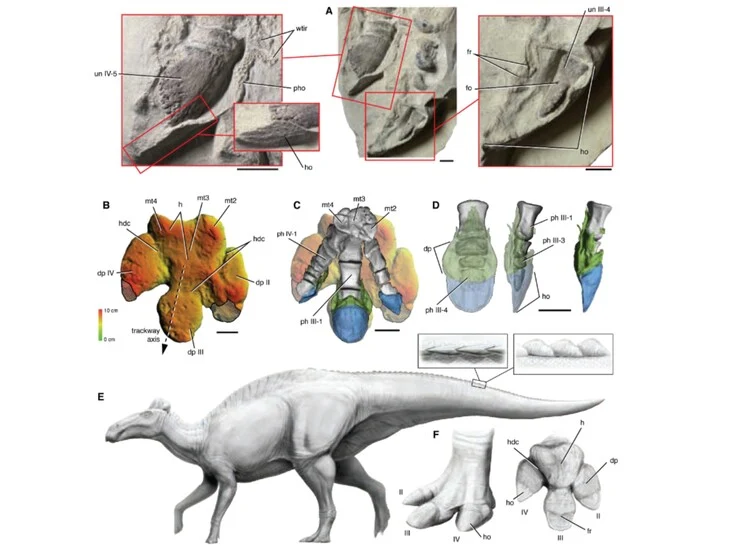
    Today, it’s commonly thought that many dinosaurs were feathered. However, the concept of prehistoric reptiles having hooves is not as well-known, mainly because no fossils have been previously found to support this idea. This situation has changed with a new study in Science. Researchers have recently uncovered two incredibly well-preserved fossils of the duck-billed dinosaur Edmontosaurus annectens, which seem to show clear signs of hoof-like features. These fossils were discovered in the “Mummy Zone” of the Lance Formation in Wyoming, which is a six-mile-wide area famous for its well-preserved dinosaur remains.

    Discovering the Hoof Structures

    The research indicates that toes II to IV on the back feet of E. annectens had keratinized hoof sheaths with flat bottoms that enclosed spade-shaped bones. Similar hoof-like structures were found on the front feet, although they were arranged differently. Such hooves have not been recorded in any other land vertebrate before. Interestingly, the hoof sheaths on the middle toes were about 15 centimeters long – which is nearly twice the length of the bones inside.

    Other Fascinating Features

    In addition to this astonishing anatomical finding, the fossils provided more soft-tissue characteristics: there was a fleshy crest along the back that would have reached around 28 centimeters (about 11 inches) tall in an adult, a series of spines along the tail, and polygonal scales that varied from one to nine millimeters in size. These details were observable thanks to the remarkable preservation state, which was made possible by the special conditions at the site of the discovery.

    The remains first dried out during a drought, then were quickly buried under river sediment during a flood and packed with sand. A thin layer of clay—less than a millimeter thick—settled on the skin’s surface, preserving its outer shape like a “clay template.” This kind of fossilization had only been observed in low-oxygen marine areas before, marking this as the first known instance in a land river system.

    Importance of the Findings

    This discovery is extremely important for paleontology: Edmontosaurus annectens has now been identified as the earliest known land vertebrate with true hooves, making it the first example of hoofed movement in evolutionary history. The results imply that hoofs began to appear in early hadrosaur species as far back as the Early Cretaceous, long before they showed up in mammals.


  • Gut Breathing Treatment Study Shows High Tolerance and Safety

    Gut Breathing Treatment Study Shows High Tolerance and Safety

    Key Takeaways

    1. Oxygen Absorption via Intestines: Some mammals can absorb oxygen through their intestines, a concept that won an Ig Nobel Prize in 2024.

    2. First Human Trial: A team led by Dr. Takanori Takebe successfully tested enteral ventilation on humans for the first time.

    3. Study Design: The trial involved 27 healthy male participants, using perfluorodecalin (PFD) as a liquid capable of holding significant amounts of oxygen.

    4. Tolerability Findings: Participants tolerated the rectal administration of PFD well, with no severe side effects noted, although some experienced mild discomfort.

    5. Future Research Needed: While the study confirmed safety, further research is necessary to explore the effectiveness of oxygen-enriched PFD for potential therapeutic use in critical situations.


    Animal research has revealed that some mammals, such as mice, rats, and pigs, can take in oxygen via their intestines. This rare idea even won an Ig Nobel Prize in 2024. Until recently, it was uncertain if this method could work for humans. However, that changed when a worldwide team from the United States and Japan, headed by Dr. Takanori Takebe, a stem cell researcher from Japan, successfully tried enteral ventilation on humans for the first time. The findings from the phase 1 trial were published on October 20, 2025, in the journal Cell / Med.

    Study Details

    The research took place at Cincinnati Children’s Hospital in the United States and involved 27 healthy male participants aged between 20 and 45. The team used perfluorodecalin (PFD), a liquid that can hold a significant amount of oxygen – up to 500 milliliters of O₂ for every liter. Already utilized in eye surgeries and as an oxygen carrier in medical products, PFD was given in gradually increasing amounts to check for tolerability. Each participant received between 25 and 1,500 milliliters of the liquid, with every dose remaining in the intestine for a period of 60 minutes.

    Important Observations

    It’s crucial to mention that the PFD used during this research was not oxygenated, meaning it didn’t have any extra oxygen added. The main goal of this initial trial was to examine how well participants could tolerate receiving the liquid rectally, rather than to test its effectiveness for oxygen delivery.

    No severe side effects or toxic responses were recorded, even at the maximum dose. About 59% of participants noted mild issues like stomach pain, gas, or the need to defecate, particularly with the larger doses. Four out of six participants in the highest-dose group stopped their sessions early due to discomfort. Nevertheless, lab results, blood pressure, and organ function remained normal throughout the study. No PFD was found in the blood, indicating that it wasn’t absorbed through the intestinal walls. Despite these slight side effects, the rectal use of PFD was deemed to be well tolerated.

    Future Implications

    In conclusion, while the study shows that the procedure is safe, it has not yet proven any therapeutic advantage, since non-oxygenated PFD was utilized. Future studies need to explore how much oxygen from oxygen-enriched PFD can be absorbed into the bloodstream via the intestinal lining. If therapeutic effectiveness is established, this could lead to a revolutionary ventilation technique—one that could be useful in situations where traditional ventilation methods are too risky or impractical, such as in acute lung failure cases. This might provide a potential answer for urgent situations that current medical practices struggle to handle.