Category: Gaming

  • AOC U27G4 Monitor: 4K 160Hz & FHD 320Hz for Gamers

    AOC U27G4 Monitor: 4K 160Hz & FHD 320Hz for Gamers

    Key Takeaways

    1. The AOC U27G4 gaming monitor features dual-mode display allowing users to switch between 4K at 160Hz and Full HD at 320Hz.
    2. It has a Fast IPS panel with a peak brightness of 450 nits, 1ms response time, and covers 100% of the sRGB color gamut.
    3. Connectivity includes two HDMI 2.1 ports and one DisplayPort 1.4, along with gaming features like Game Color tuning and Motion Blur Reduction Sync.
    4. The monitor’s ergonomic design includes height adjustment, pivoting, tilting, and a sleek look with ultra-thin bezels.
    5. It has VESA DisplayHDR 400 certification, flicker-free technology, and a low-blue light panel to reduce eye strain during long gaming sessions.


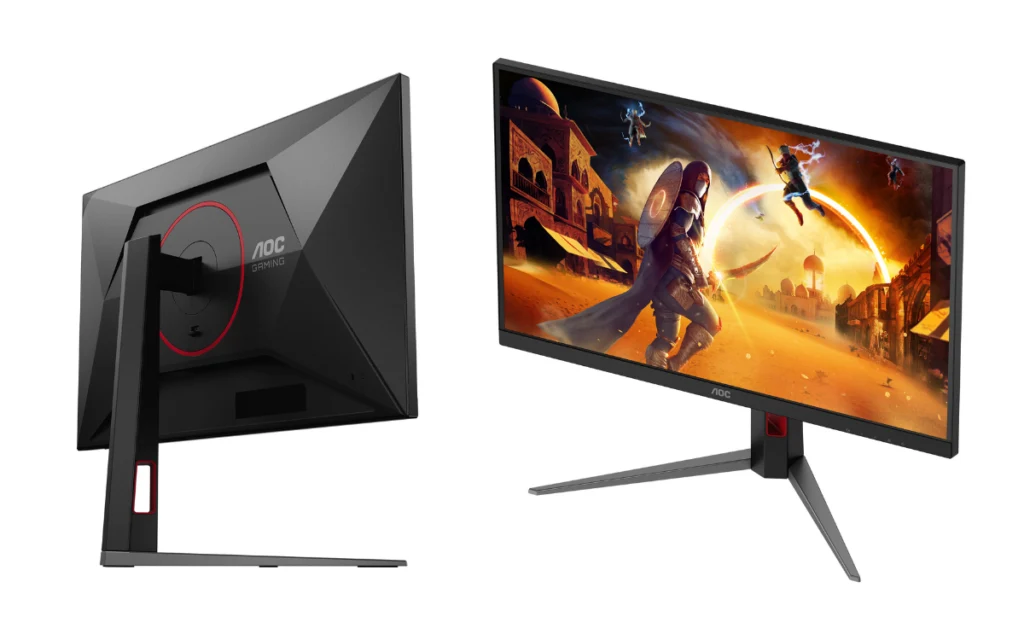
    AOC has launched the U27G4, a 27-inch gaming monitor that improves upon last year’s U27G40E model, showcasing a significant upgrade with its dual-mode display feature. Users can easily toggle between 4K resolution at 160Hz and Full HD at 320Hz. This makes it an attractive option for those who enjoy immersive AAA games and high-refresh-rate competitive gaming.

    AOC U27G4 Features

    The U27G4 is equipped with a Fast IPS panel that offers a precise 3840×2160 resolution at 160Hz or a smoother 1920×1080 at 320Hz. It has a peak brightness of 450 nits, a contrast ratio of 1000:1, and an ultra-fast 1ms gray-to-gray (GTG) response time. The display supports a 10-bit color depth (8-bit + FRC) and covers 100% of the sRGB and 95% of the DCI-P3 color gamut, which ensures that visuals are both vibrant and accurate. Additionally, AOC has incorporated Adaptive-Sync technology, with AMD FreeSync support, to remove screen tearing and stuttering, improving the smoothness of gameplay.

    Connectivity and Gaming Features

    When it comes to connectivity, the monitor includes two HDMI 2.1 ports, one DisplayPort 1.4 input, and a 3.5mm headphone jack. AOC has included various gaming features such as its exclusive G-Menu software, Game Color tuning, Shadow Control, Dynamic Crosshair, and Overdrive. For first-person shooter gamers, the monitor offers low input lag and Motion Blur Reduction Sync (MBR Sync) to enhance clarity in action sequences. Picture-in-Picture (PIP) and Picture-by-Picture (PBP) modes allow users to multitask by showing two signal sources at once.

    Design and Ergonomics

    Design-wise, the U27G4 features a sleek, gaming-oriented look with ultra-thin bezels of just 1mm, along with a narrow 6.2mm black border. The black-red color scheme boosts its esports vibe. The ergonomic stand allows for height adjustments of up to 130mm, bi-directional pivoting, tilting from -5 to 23 degrees, and a 30-degree swivel, ensuring a comfortable and customizable setup. Furthermore, the monitor is VESA 100x100mm compatible for those who prefer wall mounting.

    AOC has also received VESA DisplayHDR 400 certification for this model, which guarantees deeper blacks and brighter whites, although it doesn’t match the contrast levels of higher-end HDR displays. The monitor includes flicker-free technology and a hardware-based low-blue light panel designed to minimize eye strain during prolonged gaming sessions.
  • AMD RX 9070 XT Price May Disappoint Gamers

    AMD RX 9070 XT Price May Disappoint Gamers

    Key Takeaways

    1. AMD’s Radeon RX 9070 XT and RX 9070 graphics cards will be released on February 28, with sales starting on March 6.
    2. Speculated prices for the RX 9070 series range from $500 to $849, but recent leaks suggest they may be higher than expected.
    3. Custom graphics cards often sell for more than their MSRP, indicating that actual prices may exceed initial estimates for the RX 9070 series.
    4. AMD has not confirmed the pricing yet, leaving gamers hopeful for potential adjustments to make the cards more competitive.
    5. Concerns are growing that high prices could lead to the RX 9070 and RX 9070 XT being unsuccessful in the market.


    There’s a lot of excitement surrounding AMD’s new Radeon RX 9070 XT and RX 9070 graphics cards. The release date for the RX 9000 series has been set for February 28, with sales expected to begin in March, specifically on March 6. Lately, Nvidia has dominated the GPU news, showing a mix of positive aspects like good performance and negative ones, including price hikes and melting connectors. Those looking for mid-range graphics cards have been anticipating this moment, as the RX 9070 XT and RX 9070 are expected to compete with the GeForce RTX 5070 and RTX 5070 Ti. However, the anticipated prices for these AMD cards might end up being higher than what many had hoped for.

    Speculation on Pricing

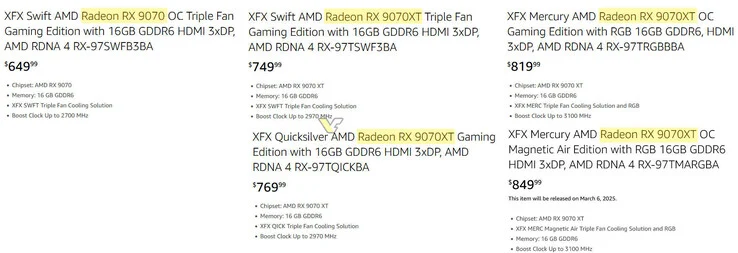
    Last week, we discussed leaks about the RX 9070 XT and RX 9070, which suggested that these cards might be available at reasonable prices: around $500 for the Radeon RX 9070 and between $600 and $650 for the RX 9070 XT. However, recent price leaks from sources like @momomo_us, @GawroskiT, and VideoCardz indicate that AMD fans might be in for a surprise. The RX 9000 series graphics cards from XFX are reportedly priced from $649 to as high as $849. Moreover, placeholder prices for the Acer Predator BiFrost RX 9070 XT OC with 16 GB show tags of €1079.90 (approximately $1,133) and €1,106.53 ($1,161). It’s important to note that these European prices don’t necessarily reflect what US customers will pay, as high VAT in Europe can inflate costs.

    Price Comparisons and Expectations

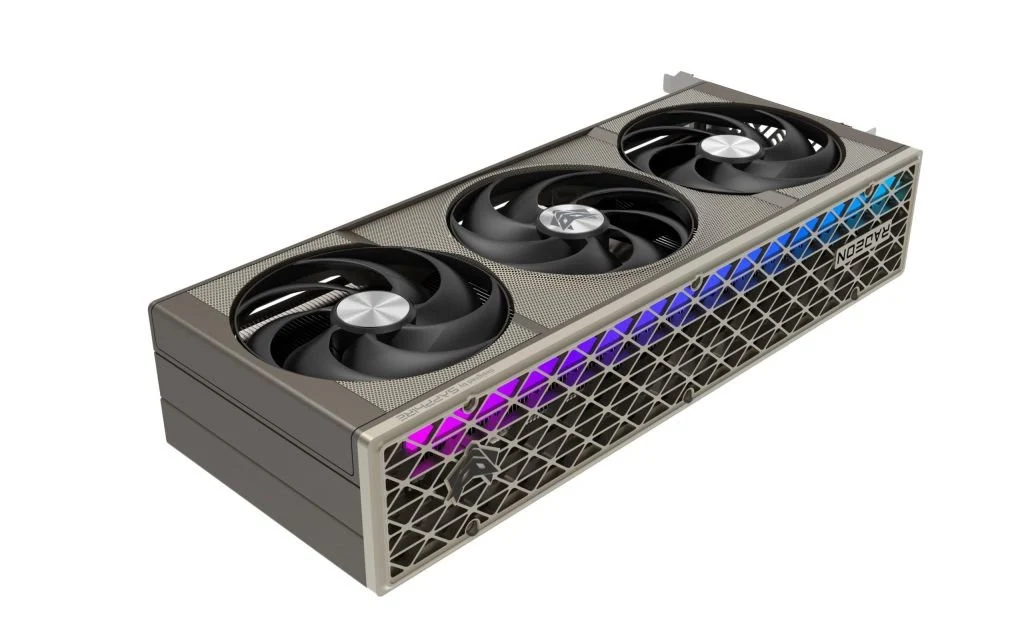
    It’s clear that custom graphics cards often come with a heftier price tag than the manufacturer’s suggested retail price (MSRP). For example, the XFX Speedster Merc 310 AMD Radeon RX 7900 XTX with 24 GB was listed at $1,099.99, while the RX 7900 XTX had an MSRP of $999. This suggests that if the rumored pricing for something like the $849 XFX Mercury AMD Radeon RX 9070 XT OC Magnetic Air Edition holds true, then the actual MSRP for the RX 9070 XT could be closer to $750 instead of the earlier estimates of $600-$650.

    Hope for Gamers

    Gamers still have a glimmer of hope, whether these prices turn out to be genuine or not. If the prices are inaccurate, users will need to wait for AMD to confirm the real MSRPs. AMD’s Frank Azor previously mentioned that a starting price of “$899 USD was never part of the plan.” On the other hand, if the prices are confirmed, we might see a reduction soon to make them more appealing compared to the RTX 5070 cards. However, right now, many are expressing concerns that such pricing could render the Radeon RX 9070 and RX 9070 XT “dead on arrival” (DOA).

    Source:
    Link


  • Turtle Beach Unveils New Purple & Arctic Camo Stealth Headsets

    Turtle Beach Unveils New Purple & Arctic Camo Stealth Headsets

    Key Takeaways

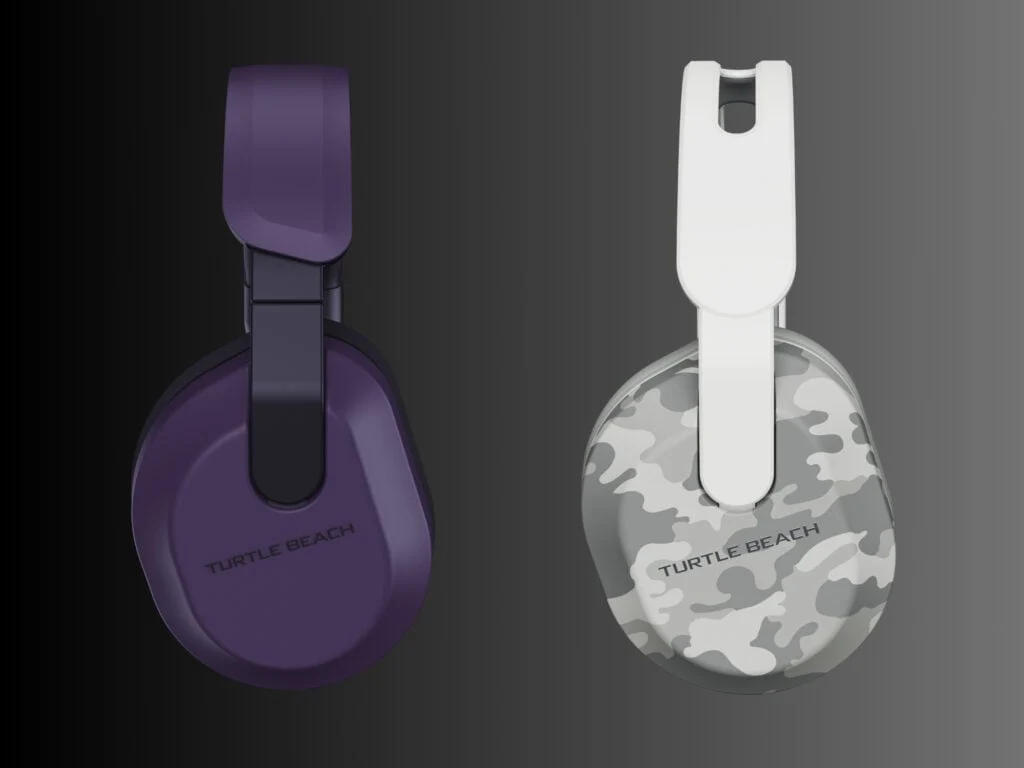
    1. Turtle Beach has launched two new colors for its Stealth 600 and Stealth 500 wireless gaming headsets: deep purple for Stealth 600 (Xbox) and Arctic Camo for Stealth 500 (Xbox and PlayStation).

    2. The new color options reflect a trend of personalization in gaming accessories, moving beyond traditional black and white designs.

    3. The Stealth 600 headset features 50mm Nanoclear™ drivers, AI-powered noise cancellation, and an 80-hour battery life, priced at $99.99.

    4. The Stealth 500 headset offers a floating headband, 40-hour battery life, and supports both 2.4GHz and Bluetooth, priced at $79.99.

    5. Sennheiser has introduced the HD 505 headphones, designed for music and gaming, featuring customizable elements like cables and ear pads.


    Turtle Beach, a popular brand for gaming accessories, has just revealed two new colors for its well-loved Stealth 600 and Stealth 500 wireless gaming headsets. The Stealth 600 for Xbox will now come in a vibrant deep purple, while the Stealth 500 will be offered in Arctic Camo for both Xbox and PlayStation users.

    Trend of Customization

    These fresh color options show a rising trend of personalization in gaming gear. With many gamers wanting to showcase their unique style, companies like Turtle Beach are expanding their offerings beyond the standard black and white choices that have dominated the market for years.

    Performance and Features

    The Stealth 600 and Stealth 500 headsets are recognized for their excellent performance, which includes quality sound, impressive battery life, and wireless capabilities. The third-generation Stealth 600, which is priced at $99.99, comes with Turtle Beach’s 50mm Nanoclear™ drivers, AI-powered noise cancellation, and a remarkable 80-hour battery life. The new deep purple variant will only be available at Target in the U.S.

    On the other hand, the Stealth 500, which costs $79.99, features a floating headband for enhanced comfort, a 40-hour battery life, and both 2.4GHz and Bluetooth support. The Arctic Camo version will be sold exclusively at Walmart in the U.S. for PlayStation users, while the Xbox version can be found at other global retailers.

    New Releases from Sennheiser

    In related news, Sennheiser has unveiled the HD 505 headphones, aimed at both music fans and gamers alike. Produced in Tullamore, Ireland, these headphones are equipped with a 120-ohm transducer, an open-back design, and a wide soundstage. They weigh 237g and feature a synthetic leather headband, metal mesh ear cups, and a detachable 1.8m cable that includes 3.5mm and 6.3mm connectors. Users can customize their headphones by swapping out cables and ear pads.

    Source:
    Link


  • AMD’s 32GB Radeon RX 9070 XTX Graphics Card Launch Expected

    AMD’s 32GB Radeon RX 9070 XTX Graphics Card Launch Expected

    Key Takeaways

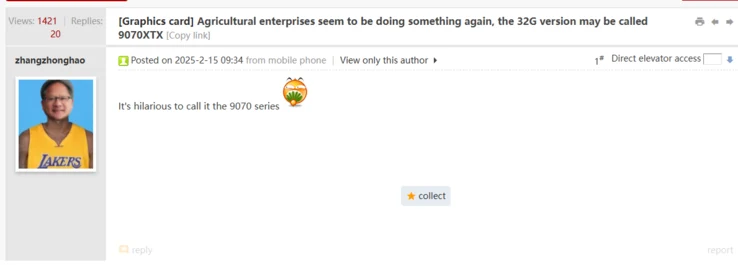
    1. Frank Azor from AMD denies the existence of a 32 GB Radeon GPU, but leaker Zhangzhonghao insists it is real.
    2. The rumored GPU may be named Radeon RX 9070 XTX, indicating a focus on gaming rather than AI.
    3. The exact specifications, including the GPU model and thermal design power (TDP), remain unclear.
    4. Pricing speculation suggests a price around $1,000, contingent on competition with Nvidia’s GeForce RX 5080.
    5. The Radeon RX 9070 XTX is not expected to launch until late in the first half of 2025.


    Even though Frank Azor from AMD put a stop to the talk about a 32 GB Radeon GPU, a leaker on Bilibili, named Zhangzhonghao, stands by the claim that it’s real. It’s not unusual for companies to deny the existence of products that haven’t been released yet. Zhangzhonghao has also shared what seems to be a tentative name and addressed some doubts that arose from the first leak.

    Name and Gaming Focus

    It looks like the 32 GB Radeon RX 9070 XT might actually be called the Radeon RX 9070 XTX, bringing back XTX-branded models in the RDNA 4 line. This indicates that the GPU is intended for gaming rather than being an AI-focused card, which was a prior assumption. However, there are still many unanswered questions that we hope will be clarified soon.

    GPU Specifications Unclear

    To start with, the exact GPU model that the rumored Radeon RX 9070 XTX will utilize remains a mystery. Will it feature the Navi 48 like the standard 9070 XT, or could it be a higher-tier variant that can effectively utilize its 32 GB VRAM? Additionally, the thermal design power (TDP) is another aspect that’s uncertain. Some overclocked versions of the 9070 XT require a power supply of 900 Watts, so it would make sense if the Radeon RX 9070 XTX has similar demands.

    Pricing Speculation

    Finally, perhaps the most crucial question revolves around its price. We should get a better understanding of this when the standard Radeon RX 9070 XT is unveiled on February 28. A price of around $1,000 seems reasonable and could be justified if the Radeon RX 9070 XTX competes well against Nvidia’s GeForce RX 5080. Regardless, the GPU is not expected to launch until the later part of the first half of 2025.

    Source:
    Link


  • GameMT E6 Max: Versatile Retro Handheld for Multiple Consoles

    GameMT E6 Max: Versatile Retro Handheld for Multiple Consoles

    Key Takeaways

    1. GameMT is launching the E6 Max handheld, designed for portable gaming but not for the latest AAA titles.
    2. The E6 Max operates on Android 13 and supports emulation for classic consoles, using an SD card for game storage.
    3. It features an Allwinner A527 SoC, 4GB of RAM, and a 5-inch IPS screen with a resolution of 1280 x 720 pixels.
    4. The device includes WiFi 6, an HDMI port, a 3.5mm headphone jack, and various gaming controls like analog sticks and action buttons.
    5. There is currently no official pricing or release date announced for the E6 Max.


    GameMT may not be the biggest name in the industry, but they create portable gaming devices that could catch your attention. Last year, they rolled out the E6 Plus, a handheld console designed for gaming on the move.

    New Launch: E6 Max

    Now, the company is set to release the E6 Max handheld, which sticks to the same idea but isn’t designed to handle the latest AAA titles. This mobile gaming system operates on Android 13 and supports emulation for various classic consoles, allowing games to be stored on an SD card.

    Specifications and Performance

    When comparing it to the GameMT E6 Plus, the E6 Max runs on an Allwinner A527 SoC, but we’re not expecting any significant boosts in performance. This gaming handheld is fitted with 4GB of RAM, which seems a bit underwhelming for today’s Android smartphones. It also sports a 5-inch IPS screen with a resolution of 1280 x 720 pixels and a brightness peak of 500 nits. Additionally, there’s an HDMI port for connecting to an external monitor or TV.

    Onboard, you’ll also find WiFi 6 for speedy wireless connectivity. Weighing in at 1.3 lbs, the device includes a 3.5mm headphone jack. The GameMT E6 Max comes equipped with analog sticks, a D-pad, action buttons, as well as shoulder buttons and triggers, essential for more intricate video games. However, as of now, there’s no official word on pricing or a release date for the new gaming handheld console.


  • Retroid Pocket Flip 2: Nintendo DS Style with GameCube Colors

    Retroid Pocket Flip 2: Nintendo DS Style with GameCube Colors

    Key Takeaways

    1. Retroid has unveiled a new gaming handheld and hinted at another upcoming device.
    2. One of the new systems features a D-pad and may have a sliding or folding mechanism.
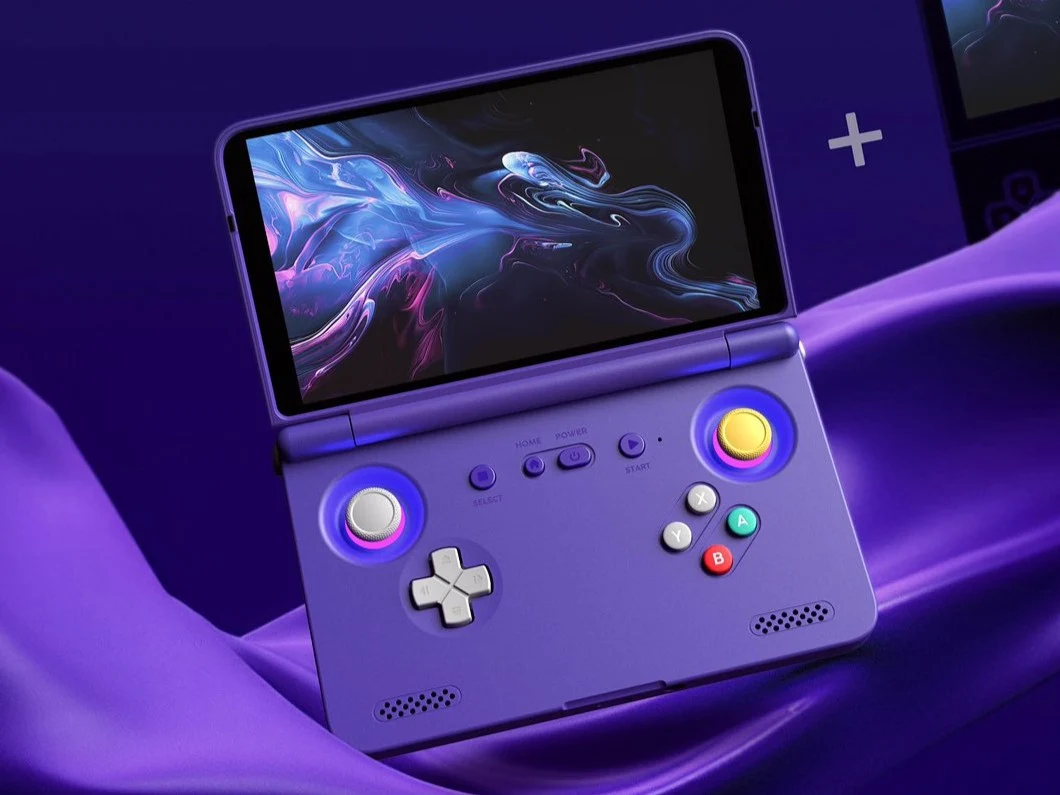
    3. The Pocket Flip 2 resembles a Nintendo DS and includes two analog sticks and a D-pad.
    4. The Pocket Flip 2 has a vibrant purple design and visible speakers at the bottom.
    5. No release dates, pricing, or technical specifications have been announced, but both devices are expected to launch in the spring.


    Retroid, a well-known player in the retro handheld market, has unveiled a new system while hinting at another one. “Announcement” is a broad term here, as the company has only shared a single image showcasing a successor to the Retroid Pocket Flip alongside another upcoming gaming device.

    A Glimpse of the New Handhelds

    In the image below, one of the new systems is only partially visible. By tweaking the brightness and contrast of the teaser image, more details come to light. The new gaming handheld appears to have a D-pad, and an edge can be seen beneath the display. This might suggest a sliding or folding mechanism, similar to what is found on other handheld consoles like the RG35XXSP.

    The Pocket Flip 2 Revealed

    Conversely, the second new Retroid handheld is displayed in a clearer image. It resembles the Nintendo DS with its foldable design. This device features two analog sticks in gray and yellow colors, while the body is painted in a vibrant purple, reminiscent of the classic Nintendo GameCube.

    Moreover, the rumored Pocket Flip 2 includes a D-pad and two clearly visible speakers located at the bottom. However, the company has not disclosed any release dates, pricing, or technical specs yet. It is anticipated that both handhelds will launch in the spring. For context, the initial Retroid Pocket Flip debuted in 2023 with a suggested retail price of $149.

    Source:
    Link

  • Avowed Not Available on Xbox Cloud Gaming for Early Access Players

    Avowed Not Available on Xbox Cloud Gaming for Early Access Players

    Key Takeaways

    1. Xbox Game Pass Ultimate offers cloud gaming, allowing subscribers to play Game Pass games on various devices but has restrictions for expensive early-access games like Avowed.
    2. The Avowed Premium Edition provides early access starting February 13th, while the Standard Edition will be available on Game Pass after the official release on February 18th.
    3. Cloud gaming support for Avowed is lacking, limiting play to Xbox and PC during early access, despite Microsoft’s ownership of Obsidian since 2018.
    4. Nvidia’s GeForce Now offers better cloud gaming options, allowing players to explore Avowed on compatible devices, though many tiers are currently unavailable due to payment processor changes.
    5. Initial reception of Avowed has been mixed, with some gameplay aspects criticized, but it will soon reach a larger audience on February 18th.


    One significant advantage of Xbox Game Pass Ultimate is its cloud gaming capability. Subscribers have the ability to play Game Pass games on different devices and can also stream their own games. However, they often face restrictions when it comes to accessing expensive early-access games. This applies to Obsidian’s action RPG Avowed, which means that those wanting to play via the cloud will need to explore other options.

    Early Access Details

    The Avowed Premium Edition opens up an early access phase that started on February 13th. This version is available on several platforms, such as the Xbox Store, Steam, and Battle.net. The Standard Edition is included in Game Pass and Game Pass Ultimate but will not be available until the official release date of Avowed, which is February 18th. Players can choose to upgrade to the Premium Edition for an additional cost, but they shouldn’t count on being able to stream the game on devices like smart TVs, browsers, or smartphones.

    Compatibility Concerns

    It’s quite odd that cloud gaming support is missing, especially since Microsoft bought Obsidian Entertainment back in 2018. Currently, the game is limited to Xbox and PC, although a release for PS5 in the future is not out of the question. Given the additional expenses involved, it’s frustrating for gamers to be stuck using their PCs or Xbox consoles during the early access time frame.

    Cloud gaming is becoming an attractive method to enjoy highly anticipated games from anywhere as streaming quality and variety get better. Nvidia’s GeForce Now leads in game streaming options, allowing users to utilize powerful gaming setups. Unlike Microsoft’s service, players of Avowed can freely explore Eora on compatible GeForce Now devices. Unfortunately, many tiers of GeForce Now are currently unavailable due to Nvidia’s changes in payment processors.

    Reception and Expectations

    In terms of its initial reception, Avowed hasn’t reached the high standards established by Obsidian’s Pillars of Eternity. NBC’s review noted that some gameplay aspects feel superficial, which detracts from the engaging narrative. However, the game is set to face a much wider audience on February 18th, including those who play via Xbox Cloud.

    Source:
    Link


  • RTX 50 Gaming Laptops Delayed Due to Nvidia’s AI Server Focus

    RTX 50 Gaming Laptops Delayed Due to Nvidia’s AI Server Focus

    Key Takeaways

    1. Asus, MSI, and Acer showcased RTX 50 gaming laptops at CES 2025, with pre-orders starting on February 25.
    2. Nvidia has delayed the launch of RTX 50 mobile GPUs, with high-end models now expected in March and mid-range options in April.
    3. There are rumors of performance issues with RTX 50 GPUs, including hardware functionality problems and unfinished drivers.
    4. Nvidia’s focus on AI products is impacting resource allocation, causing delays in the release of RTX 50 laptop graphics cards.
    5. Acer’s Predator Helios Neo 16 AI, featuring up to an RTX 5070 Ti, is set to be available in Q2 2025, supporting the reported delays.


    Laptop manufacturers such as Asus, MSI, and Acer showcased their gaming laptops powered by RTX 50 at CES 2025. The pre-orders for these first RTX 50 gaming laptops are set to begin on February 25. Currently, there are no RTX 50 gaming laptops available in stores.

    Delays in GPU Launch

    A report from DigiTimes has revealed that Nvidia has postponed the release of its RTX 50 mobile GPUs. The high-end RTX 50 laptop graphics cards, including the RTX 5090, are now expected to launch in March. Additionally, the mid-range options like the RTX 5070 are also delayed and are now anticipated in April instead of March.

    Gamers eagerly waiting for the next-generation gaming laptops will have to exercise some patience.

    Performance Concerns

    According to DigiTimes, there are rumors that Nvidia may not be achieving the expected performance levels with the RTX 50 laptop GPUs. Team Green could be encountering issues related to hardware functionality, as the report mentions “screen problems after the hardware is turned on.” This may suggest that the drivers are still unfinished. DigiTimes cites unnamed supply chain sources hinting at these issues.

    These unnamed sources also indicate that the delay of the RTX 50 laptop GPUs is “probably related to Nvidia’s full sprint to AI servers.” This focus on AI products appears to be impacting “the company’s resource allocation,” which in turn is hindering the “debugging efficiency of new products.”

    Resource Allocation Issues

    In simple terms, it seems Nvidia is having a hard time directing enough resources to the consumer segment, which is causing delays in completing the RTX 50 laptop graphics cards. As a result, the release of RTX 50-based gaming laptops may be pushed back by as much as two months.

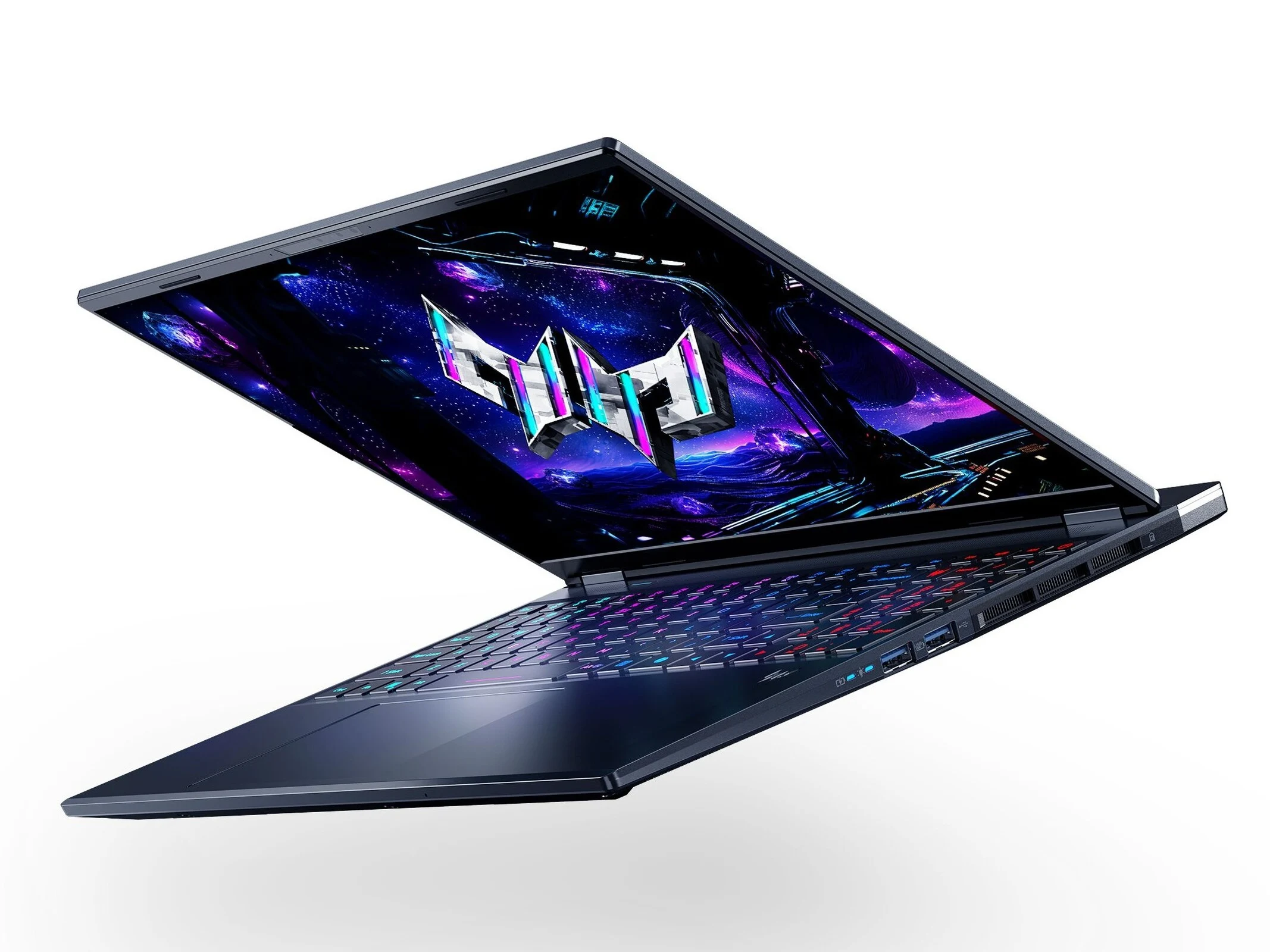
    While we cannot definitively confirm the accuracy of the DigiTimes report, Acer has announced that its mid-range Predator Helios Neo 16 AI, featuring up to an RTX 5070 Ti mobile GPU, will be available in Q2 2025, which supports the rumors mentioned earlier.

    Source:
    Link

  • AMD Radeon RX 9070 XT Retail Box Leak Reveals High PSU Needs

    AMD Radeon RX 9070 XT Retail Box Leak Reveals High PSU Needs

    Key Takeaways

    1. The PowerColor Radeon RX 9070 XT Red Devil GPU is factory overclocked and requires more power than standard models.
    2. Optimal performance of the RX 9070 XT may require a 900 Watt power supply unit (PSU), which is 100 Watts more than the RX 7900 XTX.
    3. Users may be able to operate the RX 9070 XT with a lower PSU, around 800 or 700 Watts, as its thermal design power (TDP) is expected to be around 300 Watts.
    4. AMD’s Frank Azor stated that launch cards for the RX 9070 XT will have lower minimum power supply requirements and confirmed continued use of 8-pin connectors.
    5. More details about the Radeon 9000 series, including the RX 9070 XT, will be revealed at AMD’s event on February 28.


    An X user has shared what appears to be the retail packaging for PowerColor’s Radeon RX 9070 XT Red Devil model. This GPU comes pre-overclocked from the factory and typically needs more power compared to standard models. When you push the clock speeds up on RDNA 4, it tends to consume a lot of power.

    Power Supply Requirements

    Reportedly, this graphics card requires an impressive 900 Watt PSU for optimal performance. This is 100 Watts more than what the previous Radeon RX 7900 XTX with 96 CUs needed. However, this is more like an exception rather than the standard. In practical terms, you might be able to use an 800 Watt or even a 700 Watt PSU for the Radeon RX 9070 XT, since a prior leak indicated that its TDP would stay around the 300 Watt mark.

    AMD’s Comments

    Frank Azor from AMD joined the discussion and noted, “There will be 9070 XT cards available at launch that will require lower minimum power supply wattages.” He also made a jab at Nvidia and reassured users that AMD would continue using 8-pin power connectors for most models. Nevertheless, some versions with higher power needs might switch to the troublesome 12-pin cables.

    Recently, Frank has been quite engaged in conversations about RDNA 4. Just the day before, he dismissed an earlier rumor regarding a possible 32 GB RX 9070 XT variant. Regardless, we only have to wait a couple of weeks until AMD’s event on February 28 to learn more about the Radeon 9000 series.

    Source:
    Link


  • Switch 2 Patent Reveals 180-Degree Rotating Joy-Con Design

    Switch 2 Patent Reveals 180-Degree Rotating Joy-Con Design

    Key Takeaways

    1. Nintendo’s patent hints at new features for the Joy-Con of the Switch 2, including enhanced grip and stability with magnets.
    2. The Joy-Con may have a mouse-like function similar to the Lenovo Legion Go’s right controller.
    3. The controllers could support a mechanism for a 180-degree flip, allowing for flexible orientation.
    4. The design allows controllers to be attached upside down, with the console able to recognize the switch and adjust the display accordingly.
    5. The 180-degree flipping feature could position the headphone jack flexibly, depending on user preference and console use.


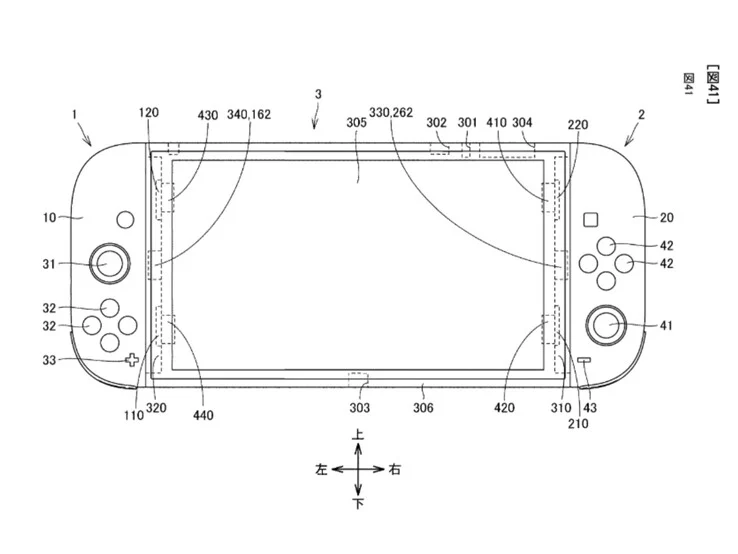
    On February 6, Nintendo released a patent that hints at some thrilling new features for the Joy-Con of the Switch 2. It’s already been confirmed that these new controllers will incorporate magnets to enhance grip and stability. There are also whispers that they may include a mouse-like function, akin to the right controller found on the Lenovo Legion Go, and might even support a mechanism that allows for a 180-degree flip.

    New Controller Features

    The patent WO/2025/027801 shows an illustration of the Switch 2’s Joy-Con appearing to be attached upside down. This indicates that the left controller could fit on the right side and the right controller could fit on the left. However, this function would only be beneficial if the console can automatically recognize the switch and modify the display accordingly, thus providing users with more versatility when utilizing the ports.

    Flexibility in Design

    The potential 180-degree flipping feature for the Joy-Con could allow users to choose whether the headphone jack is positioned at the top or the bottom of the console. Given that the Switch 2 will indeed have two USB ports, the ability to change sides could come in handy, depending on the intended use of the second port.

    Source:
    Link