Category: Gaming

  • GeForce RTX 50-Series Benchmark Issues Resolved, New Gamer Problem Emerges

    GeForce RTX 50-Series Benchmark Issues Resolved, New Gamer Problem Emerges

    Key Takeaways

    1. Nvidia has removed 32-bit support for the GeForce RTX 50 series, impacting performance benchmarks.
    2. The RTX 5090 and RTX 5080 underperformed compared to older models like the RTX 4090 in PassMark tests.
    3. Compatibility issues with 32-bit CUDA and OpenCL appear to be the cause of performance drops in newer graphics cards.
    4. Some gamers are reverting to older graphics cards for better compatibility with games that require 32-bit support.
    5. The performance gap in benchmarks raises concerns about the overall gaming experience for users of the RTX 5090 and RTX 5080.


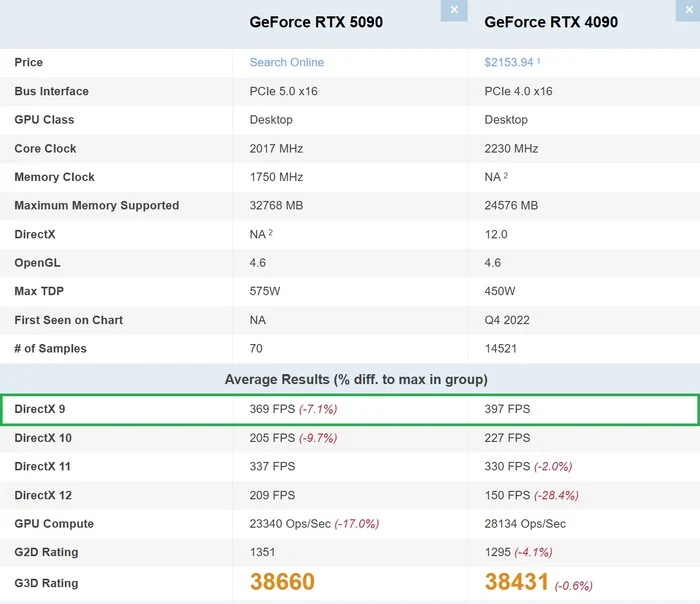
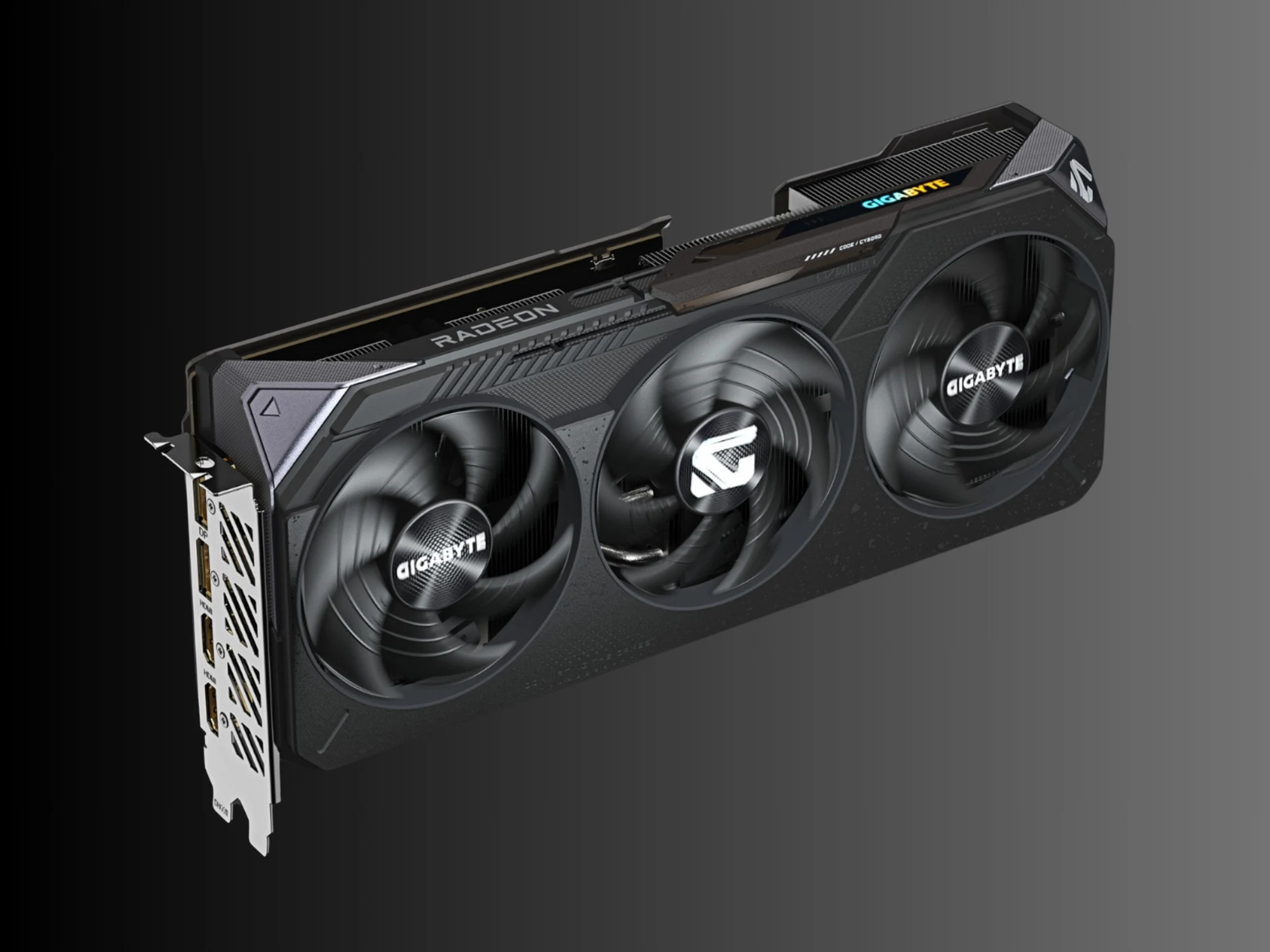
    Recently, we’ve been discussing the odd situation concerning new graphics cards like the GeForce RTX 5090 and RTX 5080 on the PassMark benchmark database. Even though both models did well in our extensive evaluations, they struggled to surpass their older counterparts on this specific platform. In fact, the RTX 5090 ended up ranking lower than the RTX 4090 regarding overall graphics benchmark performance. The surprising cause of these performance issues has now come to light via an X account associated with PassMark.

    Nvidia’s 32-Bit Support Removal

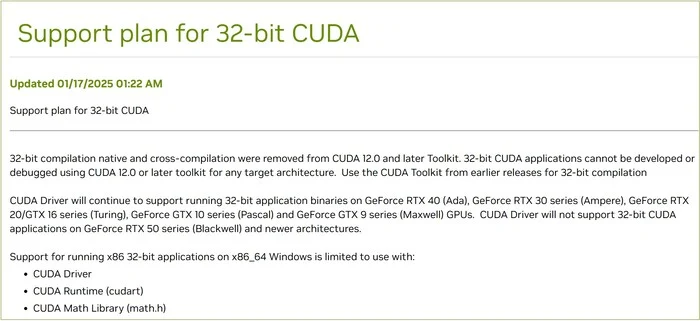
    In simple terms, Nvidia’s subtle withdrawal of 32-bit support for the GeForce RTX 50 series probably should have been more noticeable. While 32-bit CUDA (Nvidia’s unique framework) and 32-bit OpenCL (the open-source counterpart) will continue to function on older card generations, they are now “deprecated” for the Blackwell architecture. Although PassMark indicates that its PerformanceTest application is 64-bit, the compatibility issues likely led to the RTX 5090 and RTX 5080 either not functioning properly or underperforming. Ironically, the site mentions that they couldn’t even acquire an RTX 5090 for direct testing.

    Impacts on Benchmarking and Gaming Performance

    While this revelation does clarify why the RTX 5090 and RTX 5080 appeared less impressive compared to the RTX 4090 and RTX 4080 in this context, and a future update from PassMark may enhance the performance of the Blackwell cards, that’s unfortunately where the good news ends. As highlighted in the X post included below this article, the removal of software layer support doesn’t clarify why the RTX 5090 lags behind the RTX 4090 in the DirectX 9 test, especially when comparing sample sizes of 70 versus 14,521, which is quite unbalanced.

    Concerns for Gamers

    Moreover, while this development is positive for those who care mainly about benchmarks, it might spell trouble for gamers. Due to the support changes, many gamers have reported purchasing older graphics cards just to ensure compatibility with games that rely on 32-bit PhysX. For instance, a user named u/jerubedo is utilizing an RTX 3050 (Asus OC Edition, which is available on Amazon) alongside the RTX 5090 to mitigate possible software support challenges. Among various game tests, they discovered that running Batman Arkham Asylum at maximum settings without the RTX 3050 yielded 61 FPS, whereas using the older Ampere card increased performance to 390 FPS.

    Source:
    Link

  • GeForce RTX 5090 Laptop Tops PassMark as Best Mobile GPU

    GeForce RTX 5090 Laptop Tops PassMark as Best Mobile GPU

    Key Takeaways

    1. The GeForce RTX 5090 Laptop GPU has achieved a score of 28,280 in PassMark’s G3D Mark, making it the highest-performing mobile GPU currently available, surpassing the RTX 4090 Laptop GPU by a small margin of +2.79%.

    2. The RTX 5090 Laptop GPU features enhanced specifications, including 24 GB of GDDR7 memory and 10,496 CUDA cores, compared to the 16 GB GDDR6 and 9,728 cores of the RTX 4090 Laptop GPU.

    3. The GPU has a thermal design power (TDP) ranging from 95-150 W, positioning it between the AMD Radeon RX 6950 XT and the Radeon PRO W7800 in performance rankings.

    4. Reactions to the RTX 5090’s performance are mixed; Nvidia supporters celebrate its top spot, while critics note its minimal advantage over the RTX 4090 and the age of the desktop cards it outperforms.

    5. Compatibility issues may affect the performance readings of the RTX 5090 Laptop GPU in benchmarks, as Nvidia has discontinued support for 32-bit frameworks, prompting PassMark to develop a patch for more accurate representation.


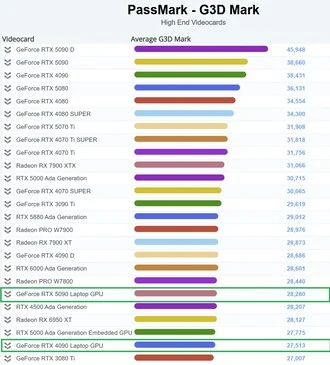
    A GeForce RTX 5090 Laptop GPU has surfaced in PassMark’s G3D Mark performance chart for top-tier video cards, currently boasting a score of 28,280 that places it above the RTX 4090 Laptop GPU. This indicates that the Blackwell chip has taken the title of the highest-performing mobile GPU on the platform, although only one sample has been logged as of now. The RTX 5090 Laptop GPU, with a thermal design power (TDP) ranging from 95-150 W, is positioned slightly above the AMD Radeon RX 6950 XT desktop graphics card (which came out in 2022) and just below the Radeon PRO W7800 desktop graphics card (released in 2023) in the latest rankings.

    Varied Reactions

    Depending on your preference for GPU brands, this might be seen as either an impressive outcome or a disappointing one. Those in favor of Nvidia will likely be thrilled that the GeForce RTX 5090 Laptop GPU has secured the top spot among mobile GPUs on the benchmark, achieving this with significantly lower TDPs compared to desktop models. However, critics may highlight the age of the desktop cards it surpasses and the minimal margin separating the RTX 5090 Laptop from the RTX 4090 Laptop (just +2.79%). In this instance, transitioning from an Ada Lovelace GPU to a Blackwell one appears to have its advantages.

    Enhanced Specifications

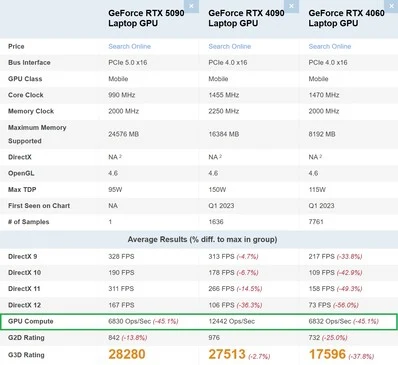
    To begin with, the RTX 5090 Laptop GPU is equipped with 24 GB of GDDR7 memory (while the 4090 Laptop has 16 GB GDDR6) and features 10,496 CUDA cores in contrast to its predecessor’s 9,728 cores. The new RTX 50-series mobile GPUs are expected to offer improved processing efficiency, aided by the latest Max-Q technologies which introduce many optimizations. Yet, amidst all these advancements, one might wonder why the RTX 5090 Laptop GPU is only +2.79% ahead of the RTX 4090 Laptop GPU (as found in the Alienware M18 R2, available on Amazon) in the primary performance chart and even seems to be on par with RTX 4060 Laptop GPU levels in PassMark’s GPU Compute evaluation.

    Potential Issues

    This could likely stem from compatibility challenges. As previously mentioned, PassMark has revealed that the underwhelming performances of RTX 50-series cards in this specific benchmark may be attributed to Nvidia discontinuing support for 32-bit frameworks. The platform is currently working on a patch to ensure that Team Green’s products receive a more accurate representation in the benchmarks offered. As illustrated in the comparison below, the RTX 5090 Laptop GPU clearly outperforms the RTX 4060 Laptop GPU in DirectX 9-12 tests, yet it appears to perform comparably in GPU Compute. Regardless, this marks a promising beginning for Nvidia’s premier mobile chip, demonstrating its ability to achieve a high benchmark result even under less-than-ideal conditions.

    Source:
    Link


  • Bizarre Low-Poly Immersive Sim 70% Off on Steam Now

    Bizarre Low-Poly Immersive Sim 70% Off on Steam Now

    Key Takeaways

    1. Intense Sensory Experience: Cruelty Squad features striking visuals and sound effects that may overwhelm players, including a warning for those with photosensitive epilepsy.

    2. Familiar Gameplay: Players assume the role of an assassin for a corporate entity, with gameplay reminiscent of Hitman and Deus Ex.

    3. Open-Ended Levels: The game offers vast, open environments encouraging exploration, interaction with NPCs, and multiple strategies to complete missions.

    4. Replay Value: Successful missions reward players with currency for body modifications and weapons, enhancing gameplay diversity and replayability.

    5. Deep Themes: The game combines tactical gameplay with themes of depression, creating a unique and engaging experience.


    There isn’t really a way to accurately describe Cruelty Squad. It’s a violent and bold attack on your senses, from the eye-strain-inducing visuals to the reverb-soaked soundtrack and intentionally shrill sound effects. As a game, it seems to do everything to discourage you from playing it. It even comes with a warning label advising people with photosensitive epilepsy to stay away.

    Discovering the Depths

    However, in spite of its loud rejection of conventions, there is an unexpectedly rich and enjoyable game underneath. You take on the role of a sorrowful assassin hired by a dubious corporate organization, and the core gameplay loop will feel quite familiar to fans of titles like Hitman and Deus Ex.

    Engaging Gameplay Mechanics

    Once you choose your loadout, you delve into vast open-ended levels, interacting with NPCs, determining routes, and exploring the best strategies to complete your objectives. There are several paths to uncover during a mission, many ways to reach your targets, and the enormous scale of the levels offers significant replay value.

    A successful assassination or extraction will grant you currency to spend on body modifications – which give you abilities like extended jumps and improved body armor. Any weapon you find during a mission is added to your collection and can be selected in your loadout before embarking on a mission.

    Unique Experience

    Cruelty Squad feels like a strange fever dream intertwined with not-so-subtle commentary on depression and features extremely engaging, tactical gameplay that feels gratifying to execute. The game is currently 70% off on Steam until March 8th.

  • Lenovo Legion Blade 9000K 2025: RTX 5080, Liquid Cooling, Wi-Fi 7

    Lenovo Legion Blade 9000K 2025: RTX 5080, Liquid Cooling, Wi-Fi 7

    Key Takeaways

    1. Launch of Legion Blade 9000K: Lenovo introduced the Legion Blade 9000K 2025 AI Genesis Edition, targeting gamers and content creators with a powerful gaming desktop.

    2. High-Performance Specifications: The desktop features Intel Core Ultra processors, Nvidia GeForce RTX GPUs, advanced cooling systems, and ample RAM and storage options for optimal performance.

    3. Robust Build and Connectivity: Built on a Z890 chipset with extensive connectivity options, including Wi-Fi 7 and Thunderbolt 4, the Blade 9000K supports reliable networking and expansion capabilities.

    4. AI Integration: The inclusion of Xiaotian AI enhances system performance, assists with content creation, and offers smart system tuning, making it a strong alternative to traditional software.

    5. Pricing and Availability: The flagship model is priced at 25,999 yuan ($3,587), with launch discounts available, while additional configurations are set to be released soon.


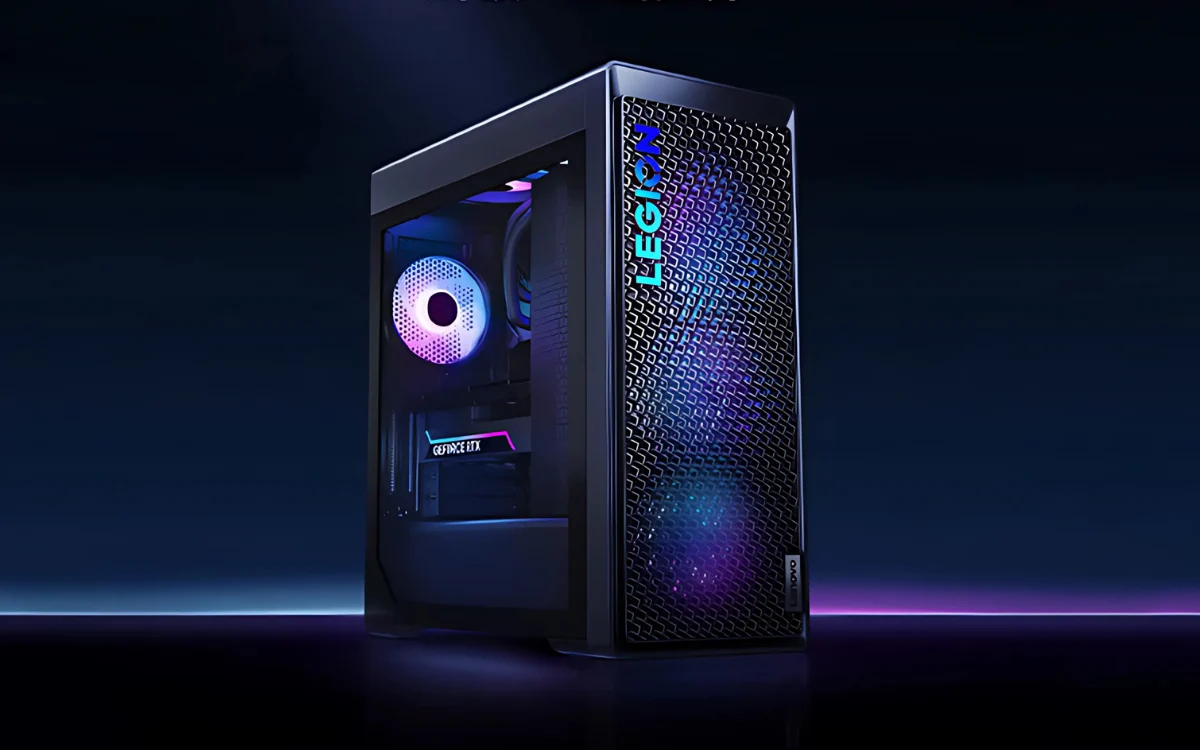
    Lenovo kicks off 2025 with a bold move into the premium gaming PC sector, building upon the success of its previous year’s model. During its recent launch event, the brand unveiled the Legion Blade 9000K 2025 AI Genesis Edition, a powerful gaming desktop crafted for both gamers and content creators.

    Specifications of the Lenovo Legion Blade 9000K

    The Lenovo Legion Blade 9000K offers several configurations, featuring Intel Core Ultra 9 285K, Ultra 7 265K, and Ultra 5 processors. It also comes with GPU choices, including the Nvidia GeForce RTX 5080 and RTX 5090D, meeting the diverse needs of gamers and creators alike.

    To manage heat, the Blade 9000K includes a 360mm all-in-one liquid cooling system that can dissipate up to 280W of heat. Lenovo has added a matrix temperature control system and an optimized airflow setup, which guarantees consistent performance even during demanding tasks.

    Build and Performance Features

    The desktop is built on a Z890 chipset motherboard, providing 14+1+1+1-phase power delivery for reliable overclocking and durability. It is compatible with PCIe 5.0 expansion, features four M.2 SSD slots, and provides additional PCIe slots for expansion cards. In terms of memory, it includes 32GB of DDR5 5600MHz dual-channel RAM, which can be expanded to 192GB, allowing for smooth multitasking and quick data processing.

    For storage, users get a 1TB PCIe 4.0 SSD and another 1TB secondary PCIe SSD, both equipped with dedicated heat dissipation armor to avoid thermal throttling. Users can also expand their storage with four SATA 3.0 ports.

    Connectivity and Design

    On the connectivity side, the Blade 9000K is well-furnished with Wi-Fi 7 and a 2.5Gbps Ethernet port, ensuring fast and reliable network performance. The rear I/O panel has Thunderbolt 4, USB 3.2 Gen2, multiple DisplayPort 2.1 and HDMI 2.1b outputs, and a 7.1-channel high-fidelity audio system powered by the ALC1220 codec.

    The Lenovo Blade 9000K showcases HALO aesthetics, featuring an ARGB “Night Star Gate” lighting system and a Titanium Mesh grey chassis designed for optimal airflow. It comes with an independent GPU bracket for added durability and is powered by an 850W 80 Plus Gold modular power supply, ensuring reliable and efficient performance with options for upgrades.

    AI Integration and Software

    Lenovo has integrated Xiaotian AI, a local hybrid AI-powered assistant intended to enhance system performance, help with content creation, and offer smart system tuning. Xiaotian AI is capable of summarizing documents, translating text, generating content driven by AI, and more, making it a formidable alternative to traditional software.

    The Blade 9000K operates on Windows 11 and is preinstalled with Microsoft Office Home Edition. To guarantee long-lasting reliability, Lenovo has put the system through 185 stringent quality control assessments, including extreme temperature, pressure, drop, and static resistance tests.

    Pricing and Availability

    The Legion Blade 9000K 2025 AI Genesis Edition is available in three configurations, but only two are currently on the market. The flagship Ultra 9 285K model (RTX 5080, 64GB RAM, 2TB storage) is priced at 25,999 yuan ($3,587), and it has a launch discount bringing it down to 23,999 yuan ($3,311). The Ultra 7 265K variant (RTX 5080, 32GB RAM, 2TB storage) is priced at 22,499 yuan ($3,104), with a reduced price of 20,499 yuan ($2,828). The high-end configuration featuring an RTX 5090D is yet to be released.

    During the event, the company also showcased its first 240Hz OLED gaming monitor. For daily updates, be sure to check out our News Section.

    Stay ahead in tech! Join our Telegram community and subscribe to our daily newsletter for top stories!

    Source:


  • Lenovo Launches First 240Hz OLED Gaming Monitor: A Game Changer

    Lenovo Launches First 240Hz OLED Gaming Monitor: A Game Changer

    Key Takeaways

    1. First Curved OLED Monitor: Lenovo introduces the Legion Pro 34, its first curved OLED gaming monitor with a 240Hz refresh rate.

    2. High-Quality Display: The monitor features a 34-inch display with a resolution of 3440×1440, an 800R curvature, and a contrast ratio of 1,500,000:1, ensuring vibrant colors and deep blacks.

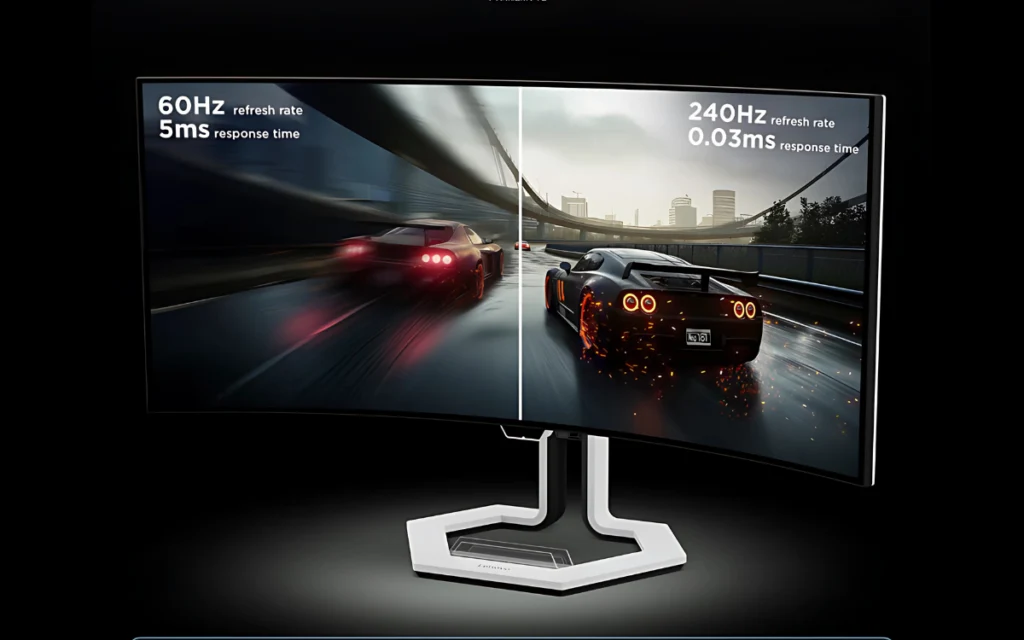
    3. Advanced Refresh Rate and Response Time: It offers a 240Hz refresh rate and a GTG response time of 0.03ms, providing smooth visuals during fast-paced gaming.

    4. Rich Connectivity Options: The Legion Pro 34 includes HDMI 2.1, DisplayPort 1.4, USB-C, multiple USB-A ports, and an RJ45 Ethernet port, along with a built-in KVM switch for managing multiple devices.

    5. User Comfort and Features: The monitor has an adjustable stand, dual speakers, an AI-driven ambient light sensor, and certifications for eye comfort and OLED burn-in prevention.


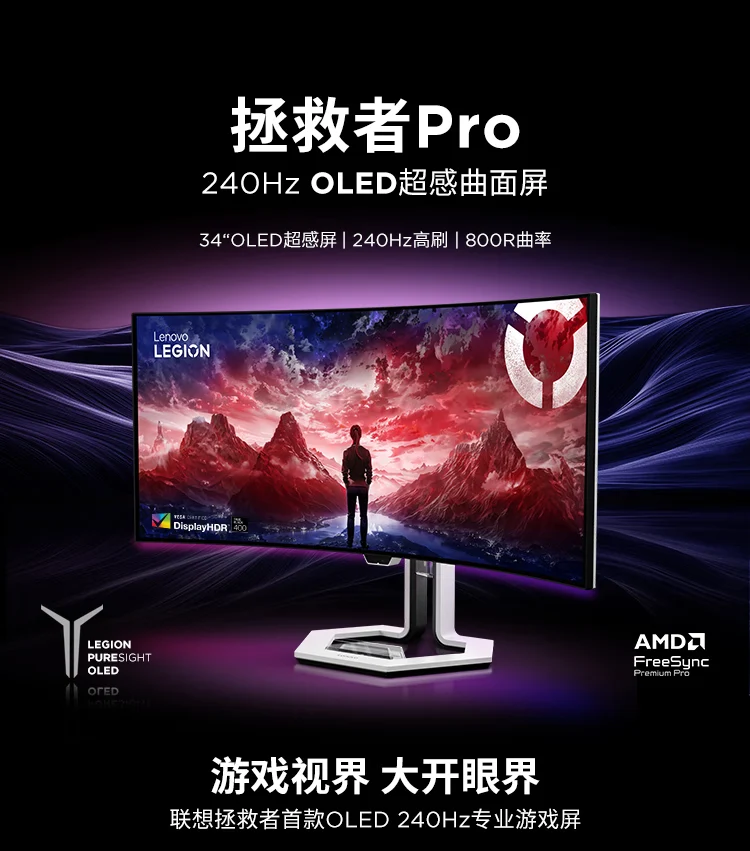
    Lenovo is enhancing its offerings in the gaming monitor market with the introduction of the Legion Pro 34, marking its first curved OLED monitor capable of 240Hz refresh rate. This monitor is now available in China at an introductory price of 4,999 yuan (~$690), while its regular retail price is set at 6,199 yuan (~$855). This launch phase presents a valuable chance for gamers and professionals who are looking for a top-tier display.

    Specifications of the Legion Pro 34

    The Legion Pro 34 is equipped with a 34-inch curved ultra-sensory OLED display that boasts a resolution of 3440×1440 and an 800R curvature for a captivating visual experience. It provides a refresh rate of 240Hz along with a GTG response time of 0.03ms, ensuring fluid visuals and minimal blurring during intense gaming sessions.

    Outstanding Display Features

    Featuring a contrast ratio of 1,500,000:1, the OLED panel delivers rich blacks and bright colors without any backlight issues. It achieves 99% coverage of sRGB and 98.5% of DCI-P3, allowing for precise color accuracy, and supports 10-bit color depth with a stunning 1.07 billion colors. The monitor can peak at 1300 nits brightness (APL 1.5%) and has a standard brightness of 275 nits, catering to both gaming and creative tasks.

    Moreover, Lenovo has included HDR True Black 400 certification, which improves contrast and detail in highlights for HDR content. To ensure smooth visuals, the monitor is compatible with AMD FreeSync Premium Pro and VESA AdaptiveSync technologies, helping to minimize screen tearing and stuttering. It also boasts a VESA ClearMR 13000 certification, which assures minimal motion blur, ensuring clarity during fast-paced movements.

    Connectivity and Ergonomics

    On the connectivity front, the Legion Pro 34 is impressively equipped, featuring HDMI 2.1, DisplayPort 1.4, and a USB-C port that supports 140W fast charging. It also offers several USB-A ports and an RJ45 Ethernet port for reliable wired connections. A built-in KVM switch allows users to manage multiple devices through a single keyboard and mouse.

    The design also prioritizes ergonomics and user comfort. The monitor features an adjustable stand that allows for height, tilt, and swivel adjustments. It is VESA mount compatible (100x100mm), providing flexible mounting options. For audio, Lenovo has included dual 5W speakers with Waves MaxxAudio certification for a rich sound experience.

    Additional Features

    Additionally, the Legion Pro 34 is equipped with an AI-driven ambient light sensor that modifies brightness according to the surrounding environment. It also has certifications for eye comfort and OLED burn-in prevention technology, ensuring long-lasting durability and a pleasant viewing experience.

    Earlier this month, Lenovo also launched a compact Wi-Fi 6 hotspot that boasts a battery life of 12 hours and features for gaming optimization.


  • 8BitDo Launches Upgraded 2.4 GHz and Bluetooth Wireless Controller

    8BitDo Launches Upgraded 2.4 GHz and Bluetooth Wireless Controller

    Key Takeaways

    1. The Ultimate 2 Wireless Controller is the latest release from 8BitDo, following the Ultimate 2C, Micro, and Zero 2 models.
    2. It features TMR joysticks that offer lower energy consumption and a faster polling rate of 1,000 Hz in both 2.4 GHz and wired modes.
    3. The controller uses an ‘8Speed’ low latency 2.4 GHz connection with a USB Type-C receiver, differing from the common USB Type-A.
    4. It includes 6-axis motion controls and Hall effect triggers that can toggle to non-linear tactile triggers.
    5. The Ultimate 2 is priced at $59.99 and is available in black, purple, and white, with matching charging docks included.


    Hardly any time has gone by since 8BitDo updated the Ultimate 2C with fresh color choices. Right after that, the company unveiled the Micro and Zero 2, which are among the tiniest controllers ever made by them. Now, they have released the Ultimate 2 Wireless Controller, or just Ultimate 2 for short.

    Design and Features

    As the name implies, the Ultimate 2 takes the place of the original Ultimate. But it also borrows its design elements from the Ultimate 2C, featuring four face buttons along with additional shoulder buttons. However, the Ultimate 2 is not just a simple mix of earlier models.

    8BitDo claims that the Ultimate 2 is fitted with TMR joysticks. In theory, these should use less energy than the Hall effect versions while providing a quicker polling rate, which 8BitDo says reaches 1,000 Hz in both 2.4 GHz and wired settings.

    Connectivity and Controls

    The Ultimate 2 also offers 8BitDo’s ‘8Speed’ low latency 2.4 GHz connection mode. Interestingly, the included 2.4 GHz receiver uses a USB Type-C connection instead of the USB Type-A that is common with other 8BitDo controllers. Additionally, it comes with 6-axis motion controls and Hall effect triggers. The latter can also be switched to non-linear tactile triggers with a simple toggle.

    As of now, you can find the 8BitDo Ultimate 2 available for order on Amazon for $59.99, offered in black, purple, and white color variants, each including matching charging docks. According to listings on Amazon, the black and white versions are expected to begin shipping later this week. For more information, check out 8BitDo’s official website.

    Source:
    Link


  • Asus ROG Strix Scar 16 and 18 (2025) Pricing and Release Info

    Asus ROG Strix Scar 16 and 18 (2025) Pricing and Release Info

    Key Takeaways

    1. Asus has opened pre-orders for the Strix Scar (2025) series featuring Intel Core Ultra 9 275HX, 32GB RAM, Wi-Fi 7, and Bluetooth 5.4.

    2. The Scar 16 starts at $3,299.99 with RTX 5080 and 2TB SSD, while the top-tier RTX 5090 version is priced at $4,299.99.

    3. The Scar 18 begins at $2,699.99 for the 1TB SSD model and can go up to $4,499.99 with RTX 5090 graphics.

    4. Both models feature a ROG Nebula HDR display with a 240Hz refresh rate and mini LED technology, with the Scar 18 offering up to 1,200 nits brightness.

    5. The new models are available for pre-order directly from Asus and select retailers, featuring the latest NVIDIA technologies like DLSS 4 and Frame Generation.


    Asus has opened pre-orders for the Strix Scar (2025) series, featuring the Intel Core Ultra 9 275HX, 32GB of RAM, Wi-Fi 7, Bluetooth 5.4, and dual Thunderbolt 5 ports. This line also boasts a substantial 90 watt-hour (Wh) battery, similar to that of the new Strix G18. The pricing varies based on the RTX 5000-series graphics and SSD capacities.

    Pricing Details

    The Scar 16 begins at $3,299.99, equipped with the RTX 5080 and a 2TB PCIe 4.0 SSD. For those seeking higher performance, the same setup but with the top-tier RTX 5090 graphics is priced at $4,299.99. Both models, G635LW-XS97 and G635LX-XS97, feature a ROG Nebula HDR display that operates at 240Hz and uses mini LED technology. The Scar 18, with its 18-inch version of the same display, maintains up to 1,200 nits brightness, even in its entry-level variant (G835LR-XS96), which is powered by the RTX 5070 Ti.

    Model Specifications

    The Scar 18 is available starting at $2,699.99 for the model with a 1TB SSD. It escalates to $3,399.99 for the 2TB version (G835LW-XS97) featuring an RTX 5080 card, and reaches a peak price of $4,499.99 for the same setup but with the RTX 5090 graphics. Most of these new models can be directly purchased from Asus, with the exception of the high-end Strix Scar 18 (2025), which can also be found at Best Buy.

    Official Announcement

    ASUS Republic of Gamers (ROG) has shared a press release from Fremont, California, dated February 25, 2025, announcing their 2025 NVIDIA® RTX™ Laptop GPU range, now available for pre-order. This advanced collection features the latest NVIDIA technologies, including DLSS 4 and Frame Generation, allowing users to experience ray tracing without compromising on performance. The full line-up for pre-order includes the ROG Strix SCAR 16 & 18, ROG Strix G18, and ROG Zephyrus G14 & G16.

    Source:
    Link

  • Tetris Forever Collector’s Edition with Exclusive Handheld Console

    Tetris Forever Collector’s Edition with Exclusive Handheld Console

    Key Takeaways

    1. Digital Eclipse has launched a collector’s edition of Tetris Forever for PS5 ($499) and Nintendo Switch.
    2. The edition includes a retro handheld console inspired by the Nintendo Game Boy, playing NES Tetris and Tetris 2 + BomBliss.
    3. Tetris Forever features 15 classic Tetris titles and a new “Time Warp” mode for up to four players.
    4. Extras in the collector’s edition include a soundtrack CD, woven patches, magnetic Tetris blocks, and a large poster.
    5. The collector’s edition is priced at $139.99, available for preorder, with shipping expected in late September.


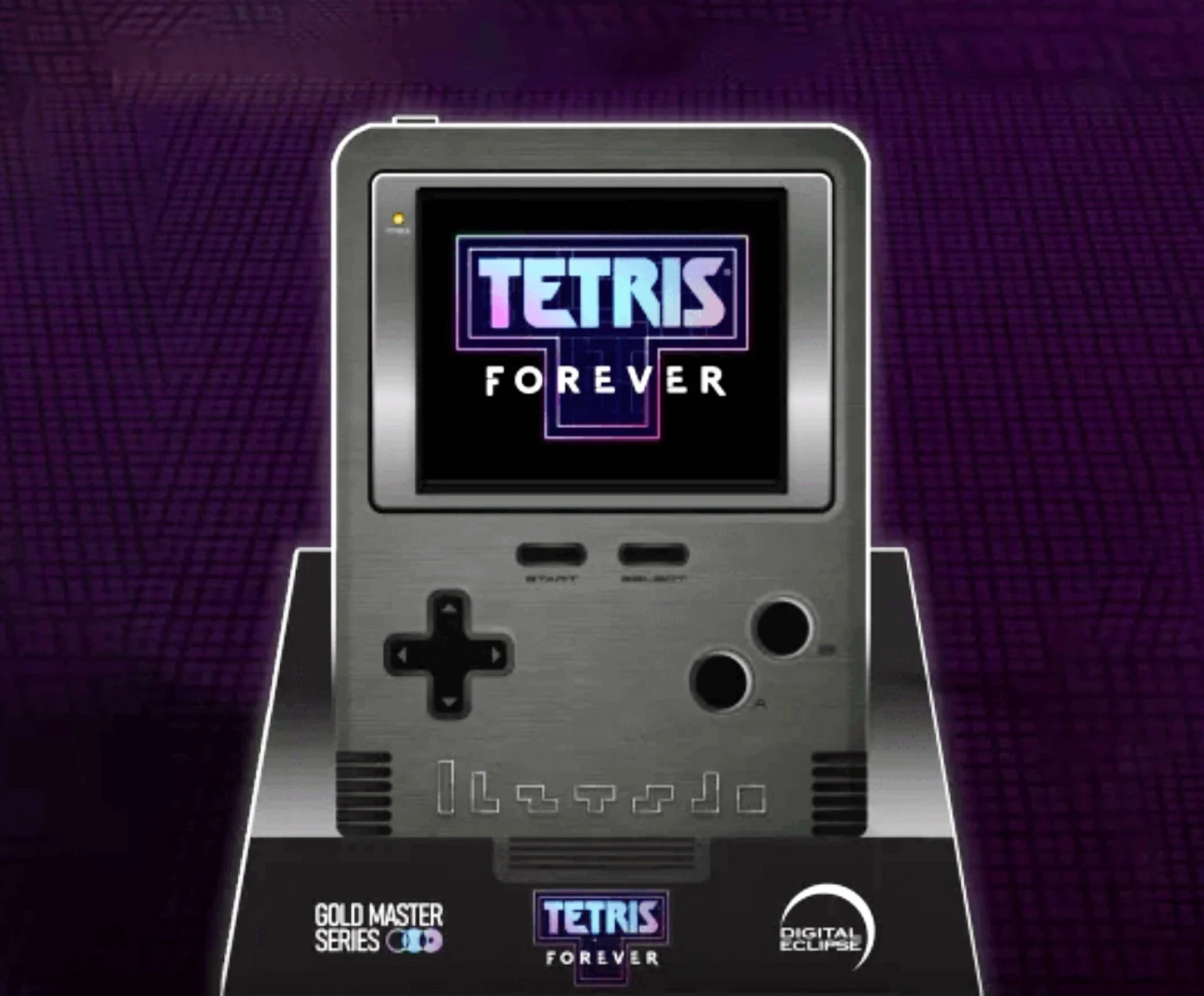
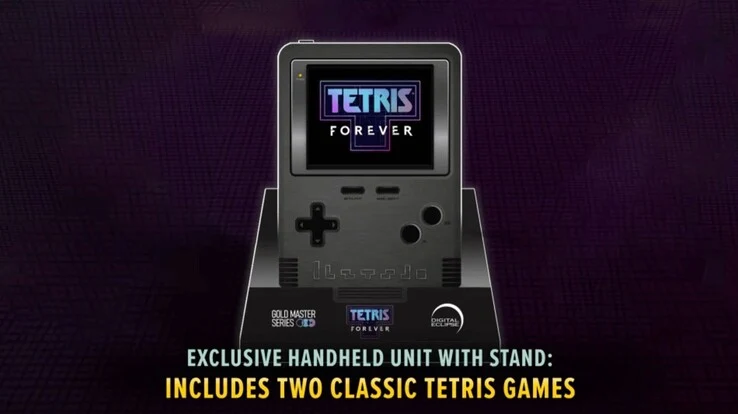
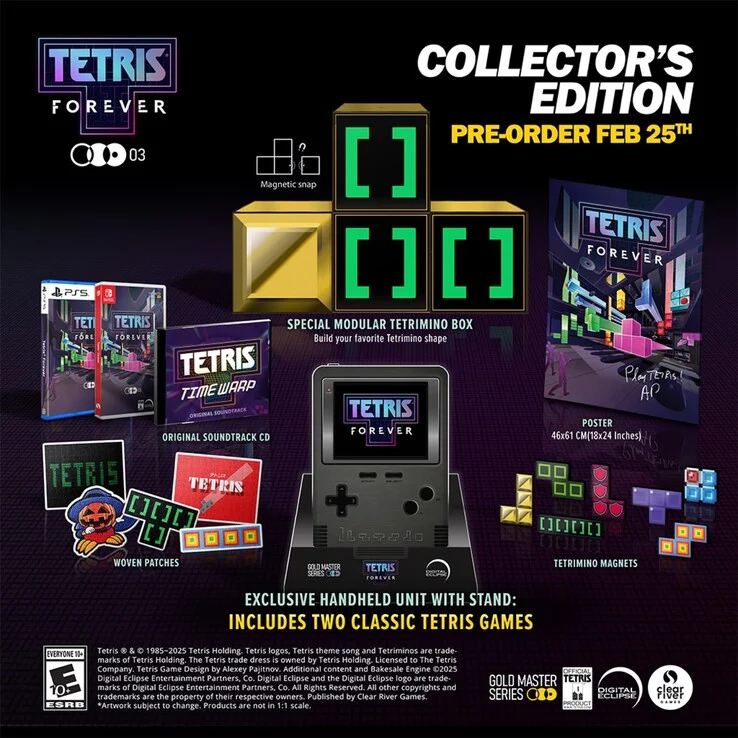
    Digital Eclipse has announced an exciting new collector’s edition of Tetris Forever, which offers a disc version for the PlayStation 5 (about $499 on Amazon) or a game card for the Nintendo Switch. One of the most fascinating aspects of this edition is a handheld console that comes with a stand.

    Handheld Console Inspiration

    This handheld console seems to draw inspiration from the iconic Nintendo Game Boy, the device that played a significant role in Tetris’s rise to fame across the globe, as it was included with the original Game Boy launch. The new retro handheld can play just two games: the classic NES Tetris and Tetris 2 + BomBliss. Digital Eclipse has not shared any additional details regarding this device’s specifications yet.

    Game Features and Extras

    Tetris Forever includes 15 classic Tetris titles along with a new “Time Warp” mode, allowing up to four players to compete while switching between various versions of Tetris in real-time. The collector’s edition also provides a soundtrack CD, Tetris-themed woven patches, magnetic Tetris blocks, tetromino-shaped fridge magnets, and a large poster for Tetris Forever measuring 61 x 46 cm (24.0 x 18.1 in).

    Pricing and Availability

    The Tetris Forever Collector’s Edition is priced at $139.99 and is currently available for preorder from Limited Run Games, with shipping expected to commence around late September. For this price, you will receive either the PS5 or Switch version of Tetris Forever, the unique gaming handheld featuring two classic Tetris games, a soundtrack CD, a poster, a collector’s box, and tetromino magnets.

    Source:
    Link


  • AMD RX 9070 XT Price Lower than RTX 5070 Ti, Reports Say

    AMD RX 9070 XT Price Lower than RTX 5070 Ti, Reports Say

    Key Takeaways

    1. Launch Date and Pricing: AMD Radeon RX 9070 and RX 9070 XT are set to launch on March 6th, with expected prices between $549 and $749.

    2. Market Focus: AMD is targeting the mid-range market, not planning a high-end GPU to compete with Nvidia’s RTX 5090, while the RX 9070 XT may offer good value for 4K gaming.

    3. Competitive Pricing Insights: The RX 9070 XT could potentially retail for $699, which would make it a more attractive option compared to the RTX 5070 Ti priced at $749 or more.

    4. Upcoming Announcement: AMD is holding a YouTube event on February 28 to likely confirm pricing for the RX 9000 series, which could impact market availability.

    5. Gamer Concerns and Market Share: Gamers have raised concerns about performance without multi-frame generation, and AMD could gain more market share by ensuring sufficient RX 9000 series card distribution.


    With the expected launch date of the AMD Radeon RX 9070 and RX 9070 XT set for March 6th, the precise pricing is still unclear. Retailer leaks suggest that the manufacturer’s suggested retail prices (MSRPs) might fall between $549 and $749, aligning closely with the Nvidia RTX 5070 and RTX 5070 Ti. Nevertheless, AMD has recently released a slide indicating potentially more competitive pricing, especially for the RX 9070 XT. VideoCardz has shared some press materials which imply that the RDNA 4 GPU could be priced below $700.

    Key Insights from Media Slide

    The main point from the media slide is that 85% of gamers tend to buy video cards costing less than $700. At the moment, AMD does not plan to introduce a high-end GPU that would compete with the RTX 5090. Instead, the focus is on the mid-range segment, although the RX 9070 XT could provide excellent value for those interested in 4K gaming. Initial benchmarks have indicated significantly better ray-tracing performance with AMD’s latest GPUs.

    Price Expectations and Comparisons

    The promotional image supports the idea that the RX 9070 XT could retail for $699. Renowned tech leaker David Huang has also concurred with this estimate in a recent post on X. However, additional taxes may push the GPU’s price well above that figure. Plus, overclocked models might see increased prices. A $649 RX 9070 XT would also make it a more appealing choice compared to the RTX 5070 Ti, which starts at $749 or more.

    AMD has planned a YouTube event on February 28 to likely confirm the pricing for the RX 9000 series. This announcement may still come too late for customers eager to see better stock availability than what the RTX 5000 series offers.

    Gamer Opinions and Market Competition

    Gamers have also voiced their concerns about the performance enhancements of Blackwell GPUs, especially without multi-frame generation enabled. AMD has the potential to capture more of Nvidia’s market share by distributing a sufficient number of RX 9000 series cards while delivering more power for the cost.

    Source:
    Link


  • Sony Offers Free PSN Credits for Christmas Eve Code Issues

    Sony Offers Free PSN Credits for Christmas Eve Code Issues

    Key Takeaways

    1. Sony is offering free $10 redemption codes to users who experienced issues with vouchers on December 24th, regardless of financial loss.
    2. Many affected users are encouraged to contact PSN support if they haven’t received email notifications about the issue.
    3. Sony has not provided a clear explanation for the recent PlayStation Network outages and past operational issues.
    4. PlayStation Plus subscribers are promised five free days of service as compensation, but some users feel this is less valuable than the $10 voucher.
    5. Ongoing server problems are a growing concern for gamers, especially with upcoming game releases like Monster Hunter Wilds.


    The PlayStation Network outage on February 7th and 8th caught a lot of attention in the news. But this wasn’t the only problem gamers have dealt with regarding Sony’s online service. On December 24th, many customers encountered error messages when trying to use their vouchers. To address this, Sony is now giving out free $10 redemption codes to affected users, regardless of whether they lost any money on Christmas Eve.

    Email Notifications

    PlayStation LifeStyle reported about an email that was sent to a subscriber who had trouble entering a code. Although a $10 credit isn’t much nowadays, some players might still be able to redeem their original vouchers. Sony is aware of the accounts that were affected, but if someone hasn’t gotten a similar message, they should reach out to PSN support for assistance.

    Lack of Explanation

    Like the prolonged downtime of the PlayStation Network, Sony hasn’t given a clear reason for the issues during the holiday season. Gamers were only informed that there was an “operational issue” back in February. For over 18 hours, subscribers were unable to play multiplayer games or even single-player games that required an internet connection. This situation brought back memories of the notorious hacking event in 2011, which lasted an incredible 23 days.

    Compensation for Subscribers

    PlayStation Plus subscribers have been promised five free days of service as compensation for the inconvenience. However, customers are still waiting to see this credit reflected, and many feel this offer is less generous compared to the recent $10 voucher. Considering that the PS Plus Essential tier is priced at $9.99 monthly, a lot of gamers might actually prefer receiving a voucher instead.

    With both PlayStation and Xbox games depending heavily on online networks, server problems are becoming a bigger worry. Monster Hunter Wilds is set to launch on February 28th, and PS5 players are crossing their fingers that the network issues seen during the second open beta test won’t happen again.

    Source:
    Link