
Category: Gaming

  • MagicX One 35: New Retro Handheld for Dreamcast & PlayStation Games

    MagicX One 35: New Retro Handheld for Dreamcast & PlayStation Games

    Key Takeaways

    1. The MagicX Zero 40 will launch soon, with a delayed release on June 27, and a smaller alternative, the One 35, is expected in July.
    2. MagicX plans to produce fewer than 10,000 units of the Zero 40, with specific quantities for each color: 1,333 Phantom Purple, 1,666 Starry Grey, and 4,999 Midnight Black.
    3. The One 35 will feature a 3.5-inch screen, Nintendo ABXY button layout, shoulder buttons, a single joystick, and is larger than the Mini Zero 28.
    4. The design of the One 35 aims to enhance TATE gameplay in a vertical position, with two d-pads shown in engineering samples.
    5. The chipset for the One 35 is not confirmed, but it may reuse the Allwinner A133P or a more powerful option for better emulation capabilities.


    The MagicX Zero 40 is set to launch soon after a delay of ten days. Alongside this, a smaller and horizontally designed alternative is expected to arrive. Currently, the One35 or One 35 is not listed on MagicX’s website.

    Details Shared

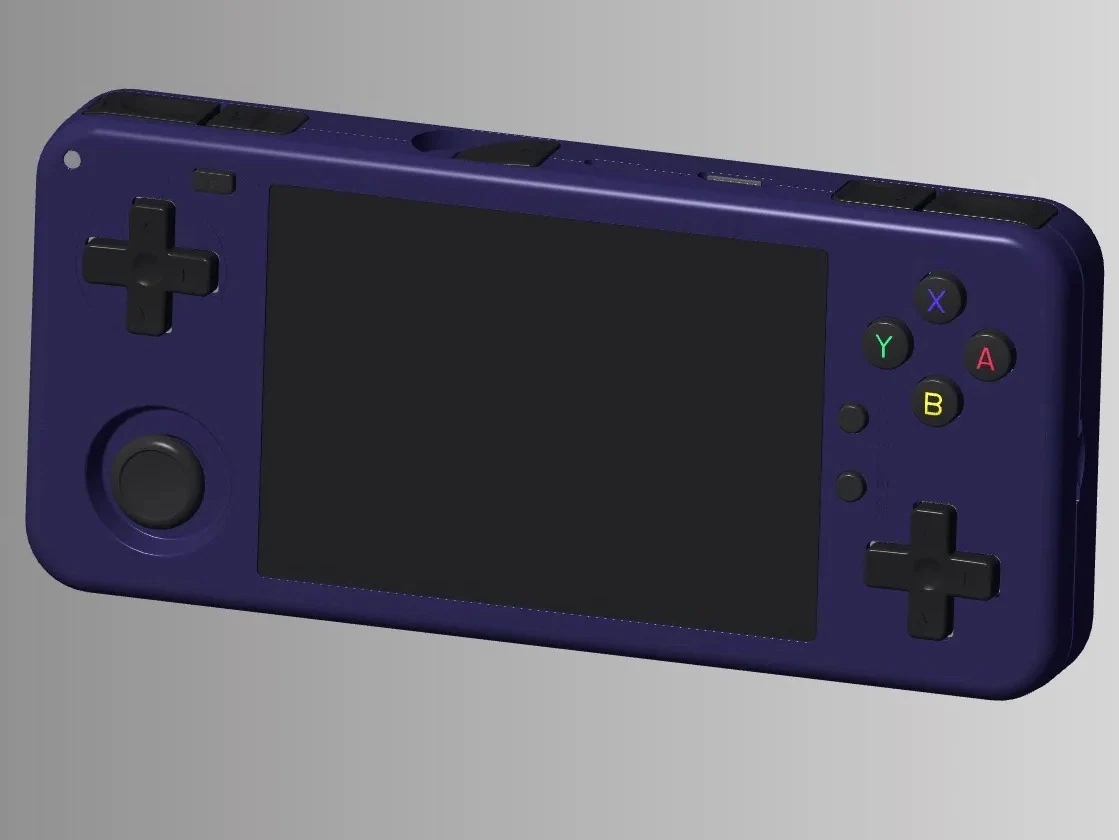
    However, MagicX has provided some information on Discord, which includes three render images that are shown below. The company plans to produce fewer than 10,000 units, with 1,333 set aside for Phantom Purple, 1,666 for Starry Grey, and 4,999 for Midnight Black. The shipping dates may differ based on the color, but MagicX is not likely to give detailed information before the Zero 40’s release on June 27.

    One 35 Unveiling

    In the meantime, MagicX anticipates revealing the One 35 by July. The device will feature a 3.5-inch screen, surrounded by a Nintendo ABXY button layout, along with shoulder buttons and a single joystick. Therefore, the One 35 is expected to be significantly larger than the Mini Zero 28 (currently priced at $79.99 on Amazon). The render images also depict two d-pads that were seen in an engineering sample displayed by MagicX in February.

    TATE Gameplay

    From what we understand, this design aims to enhance TATE gameplay in a vertical position. Unfortunately, at this point, MagicX has not confirmed which chipset will power the One 35. It is possible that the company will reuse the Allwinner A133P; however, the ability of the device to emulate Dreamcast and PlayStation 2 games suggests that MagicX may be looking for a more robust option.

    Source:
    Link
  • New Management Sim on Steam: 65K Reviews & 25% Launch Discount

    New Management Sim on Steam: 65K Reviews & 25% Launch Discount

    Key Takeaways

    1. Supermarket Simulator has officially launched on Steam, transitioning from Early Access to a full release with enhanced features.
    2. Developed by solo developer Yusuf Toptan under Nokta Games, the game has received over 65,000 reviews and holds a “Very Positive” rating.
    3. Version 1.0 introduces online orders and delivery systems, along with significant visual improvements and optimized performance.
    4. Future plans include console releases for Xbox and PlayStation, as well as the addition of multiplayer capabilities for co-managing stores.
    5. The game is currently available at a 25% launch discount, priced at $14.99 until June 26.


    Supermarket Simulator has officially completed its development phase. As of June 19, this popular early access game has made its full release on Steam, transforming its wild store management gameplay into a finished experience. Players who’ve been busy stocking shelves, mopping floors, and handling customers since February can now enjoy the game with improved features, more polish, and a sneak peek at future updates – including multiplayer options and console releases.

    Development Journey

    The game is the brainchild of solo developer Yusuf Toptan, created under the Nokta Games brand. Over the past year and a half, it has built on the surprising success it found in Early Access. What began as a brief four-month project has blossomed into one of the top indie simulation games on Steam, gathering more than 65,000 reviews and receiving a nearly universal “Very Positive” rating.

    New Features and Enhancements

    With the launch of version 1.0, players can now utilize a system for online orders and delivery, allowing them to pack and ship customer purchases straight from their store. The latest update also brought numerous visual enhancements, including improved lighting, upgraded furniture models, refreshed character visuals, and new outdoor lighting that creates a more engaging environment. Performance has been optimized too, with better VRAM handling and decreased CPU usage.

    Future Plans

    In addition to these core updates, the developers have announced that a console version is expected later this year, with Xbox and PlayStation (PS5 Slim currently priced at $499 on Amazon) in their sights. Multiplayer capabilities are also being worked on, enabling players to co-manage their stores alongside friends. This could mark another significant achievement for this already thriving game.

    Although the game features a charming visual style, players have noted how demanding and time-consuming the gameplay can get, particularly when they’re trying to keep pace with customer demand, stock the shelves, and oversee employees all at once. This balancing act is a vital aspect that has kept players engaged, with some reports of playtimes reaching into the hundreds of hours.

    Supermarket Simulator is currently offered at a launch discount of 25%, lowering the price to $14.99 until June 26.

    Source:
    Link

  • Nintendo Switch Reddit Users Uncover Hidden Limit on Game Cards

    Nintendo Switch Reddit Users Uncover Hidden Limit on Game Cards

    Key Takeaways

    1. Users can hide a maximum of 300 game cards from their Nintendo Switch digital library.
    2. The limit has surprised some users and highlights challenges with managing large game collections.
    3. Community reactions include curiosity and frustration over the presence of clutter from beta versions and apps.
    4. There is a demand for better management options, such as deleting or archiving content rather than just hiding it.
    5. The limit mirrors a similar restriction on the Nintendo 3DS, raising questions about Nintendo’s digital library flexibility.


    In a post on r/NintendoSwitch, a Reddit user known as TheVelcroStrap shared their experience of hitting a limit when they tried to hide items from their digital game library. They found that the system allows users to hide only up to 300 game cards, after which they cannot hide any more titles.

    Organizing a Growing Collection

    The user was attempting to tidy up their expanding collection, which consisted of various indie games, free downloads, and additional content like DLC, art books, and soundtracks. After successfully hiding many of these items, they were surprised to discover the limit and wanted to inform others who might be facing similar challenges with their extensive libraries.

    Mixed Reactions from the Community

    The responses to the thread varied, showing a blend of curiosity and mild annoyance. Some individuals were unaware that such a limit existed, while others were frustrated by the presence of beta versions, demos, and apps like Hulu cluttering the game card view. A commenter even likened this limit to a similar one on the Nintendo 3DS, implying that it could be a deliberate design choice or a carryover from older systems.

    Desire for Better Management Options

    Many users noted that the clutter from outdated beta versions and unnecessary entries complicates the interface, and they expressed a desire for more detailed options to delete or archive content entirely, rather than just hiding it.

    Interestingly, the Nintendo 3DS had a well-known limit of 300 icons on its Home Menu, which caused older games to vanish from view once the limit was reached, although they were still installed. This limitation garnered a lot of attention in developer forums like GitHub, where users debated whether it could be modified or expanded with custom firmware.

    As of now, there has been no official word from Nintendo regarding this limitation. It has ignited a broader discussion about the flexibility of Nintendo’s digital library system. With digital game purchases becoming the norm, many players are left pondering why such hard limits remain in place.

    Source:
    Link

  • Gigabyte MO27Q2A: New 280Hz OLED Gaming Monitor Priced at $499

    Gigabyte MO27Q2A: New 280Hz OLED Gaming Monitor Priced at $499

    Key Takeaways

    1. Gigabyte has launched its first 280 Hz QD-OLED gaming monitor, the MO27Q2A, featuring a 27-inch display with a resolution of 2560 x 1440 pixels.
    2. The monitor boasts an impressive 0.03 ms GtG response time and a maximum brightness of 250 nits, peaking at 1,000 nits for HDR content.
    3. The MO27Q2A offers a higher refresh rate of 280 Hz compared to its predecessor, the MO27Q2, which has a refresh rate of 240 Hz.
    4. Pricing speculation suggests the MO27Q2A may be priced at $499 in the US market, although this has not been officially confirmed.
    5. The monitor is currently not available for purchase, and further details can be found on Gigabyte’s website.


    Gigabyte has officially unveiled its first 280 Hz QD-OLED gaming monitor after presenting it last month at Computex 2025 in Taipei. The MO27Q2A features a resolution of 2,560 x 1,440 pixels on a 27-inch (26.5-inch) display. Additionally, this monitor offers an impressive 0.03 ms GtG response time, a maximum brightness of 250 nits across the entire panel, and peaks at 1,000 nits (3% APL) when displaying HDR content.

    Features Comparison

    In terms of features, the MO27Q2A is quite similar to the existing MO27Q2, which is currently priced at $679.99 on Amazon. However, the new model is expected to provide slightly enhanced visual performance with its 280 Hz refresh rate compared to the 240 Hz of its predecessor. It’s worth noting that there are already 360 Hz, 27-inch QD-OLED gaming monitors available with native resolutions of 1440p, such as the Aorus FO27Q3, which launched last year at a price of $799.

    Pricing Speculation

    It seems that Gigabyte is aiming to set the MO27Q2A apart from previous 27-inch and 1440p QD-OLED gaming monitors primarily through its pricing strategy. As per TFTCentral, Gigabyte had previously indicated that the monitor would be priced at $499 in the US market. However, this has not been confirmed in their press release, and as of now, the MO27Q2A is not available for purchase from any retailers. For additional information, please visit Gigabyte’s website. For reference, the monitor comes with the following input/output options:

    Source:
    Link


  • Next-Gen AMD RDNA 5 GPUs to Feature HDMI 2.2 Without Full Bandwidth

    Next-Gen AMD RDNA 5 GPUs to Feature HDMI 2.2 Without Full Bandwidth

    Key Takeaways

    1. AMD has canceled the RDNA 4 GPU to focus resources on the RDNA 5 architecture, which is expected to show promising performance.

    2. The upcoming RDNA 5/UDNA architecture, known as “GFX13,” will support HDMI 2.2 with potential bandwidths of 64 Gbps and 80 Gbps.

    3. HDMI 2.2, unveiled at CES 2025, doubles the bandwidth of HDMI 2.1b and supports higher resolutions and refresh rates, but requires new “Ultra96” HDMI cables.

    4. AMD’s decision to implement HDMI 2.2 at lower bandwidths may be a cost-saving strategy, although the exact reasons are unclear.

    5. The RDNA 5 architecture is expected to launch in late 2026 or early 2027, with potential integration into the PS6.


    We have been receiving various reports about AMD’s upcoming RDNA 5 or UDNA technology since the year 2023. In August of that same year, we mentioned that AMD decided to cancel its top-tier RDNA 4 GPU in order to allocate resources for the RDNA 5 architecture, which was expected to deliver “promising early performance metrics.” Although AMD did not release a flagship RDNA 4 GPU, it’s unclear if this decision has positively influenced the progress of RDNA 5.

    New Hardware Insights

    Recently, we are beginning to obtain some hardware details about the RDNA 5/UDNA architecture. Kepler_L2 has released information regarding the potential HDMI setup for AMD’s upcoming GPUs.

    Kepler_L2 claims that the next-gen RDNA5/UDNA, known internally as “GFX13,” will have support for 64 Gbps and 80 Gbps HDMI 2.2. However, this does not represent the complete bandwidth capabilities of HDMI 2.2.

    HDMI 2.2 Overview

    Unveiled at CES 2025, HDMI 2.2 doubles the bandwidth compared to HDMI 2.1b’s 48 Gbps and brings support for 4K@480 Hz, 8K@240 Hz, and 10K@120 Hz. This is a major improvement over HDMI 2.1b, which maxes out at 4K@120 Hz and 8K@120 Hz. Nonetheless, to fully utilize the enhanced bandwidth, users will need to purchase the new “Ultra96” HDMI cables.

    According to reports, AMD is only implementing HDMI 2.2 at 80/64 Gbps for its next-generation Radeon GPUs. The exact reason behind this choice remains unclear, but it may be a strategy to save costs.

    Future Expectations

    AMD’s upcoming GPU architecture is being touted as a “Zen moment” for its graphics division. The architecture is anticipated to make its debut on desktop systems sometime in late 2026 or early 2027. There are also hints that an RDNA 5/UDNA-based Radeon iGPU could be featured in the PS6 around the same period.

    Source:
    Link

  • Exynos 2600 to Include New GPU Developed by Ex-Huawei Engineer

    Exynos 2600 to Include New GPU Developed by Ex-Huawei Engineer

    Key Takeaways

    1. The Exynos 2600 has a low Geekbench score, but the Xclipse 960 GPU shows promise.
    2. The Xclipse 960 is the first GPU that doesn’t use RDNA IP and is being developed in-house by Samsung.
    3. Samsung has hired a GPU expert from Huawei to aid in the Xclipse 960’s development.
    4. Creating a GPU from scratch is difficult, and the Xclipse 960 may integrate elements of RDNA architecture or switch to a Mali-based design.
    5. Previous leaks had hinted at the development of the Xclipse 960 before this recent confirmation.


    An earlier report discussed the performance of the Exynos 2600 in several well-known benchmarks. Although its Geekbench score isn’t particularly impressive, the Xclipse 960 GPU shows potential. This GPU is said to be the first of its type that doesn’t utilize RDNA IP.

    Source of Information

    The details originate from Fixed Focus Digital, a leaker on Weibo (via @Jukanlosreve on X), who claims that Samsung will create the Xclipse 960 in-house. This revelation isn’t entirely new, as previous leaks have suggested the same. Reports indicate that Samsung has enlisted a GPU specialist from Huawei to assist with its development.

    Development Challenges

    Samsung has experience in creating SoC components internally (remember Mongoose?), but crafting a GPU from scratch is challenging. Therefore, it’s quite possible that the Xclipse 960 will incorporate some aspects of the RDNA architecture. Alternatively, it may completely shift direction and adopt a Mali-based design, similar to what HiSilicon did with the new Maleoon GPU seen in chips like the Kirin 9020.

    Source:
    Link

  • Xbox Classics Program May Bring Xbox 360 Games to PC

    Xbox Classics Program May Bring Xbox 360 Games to PC

    Key Takeaways

    1. Microsoft is reinforcing its “players first” strategy by collaborating with an emulation team to bring classic Xbox games to modern platforms.
    2. The project, tentatively named “Xbox Classics,” aims to make Xbox 360 and original Xbox titles available on PC, modern consoles, and cloud gaming services like Game Pass and xCloud.
    3. Enhanced versions of these games will feature improved graphics, stability, and support for handheld consoles, rather than just being simple re-releases.
    4. A potential game lineup for this initiative includes titles like Fable 2, Skate 3, and Batman: Arkham Asylum, with more games expected to be added.
    5. Microsoft has not officially confirmed the Xbox Classics program, and licensing issues may affect the expansion of the emulated game library.


    Microsoft appears to be reinforcing its “players first” strategy, and if the latest rumors are accurate, exciting developments are on the horizon for fans of classic Xbox games. The company is reportedly collaborating with an emulation team to make older titles, including those from the Xbox 360 and the original Xbox, available on PC, modern Xbox consoles, and cloud gaming services. These games are expected to be upgraded for current technology.

    Leaker Insights

    This information comes from the well-known leaker eXtas1s, who recently discussed Xbox’s collaboration with the Xenia Canary team in his latest YouTube video (linked below). Xenia Canary is a specialized version of the open-source Xenia emulator, focused on Xbox 360 game emulation. According to the leaker, a source within Xbox reveals that the project is tentatively named “Xbox Classics.” It aims to deliver games from the Xbox 360 and original Xbox to modern consoles and PC via Game Pass and xCloud. This initiative further emphasizes Xbox’s commitment to backward compatibility.

    Enhanced Gaming Experience

    These titles won’t simply be re-releases; they are set to feature enhanced stability, improved graphics, integration with Game Pass, and support for handheld consoles. Although there are no specific release dates for an official announcement, the leaker mentions that it is expected to coincide with the 25th anniversary of Xbox, coming in November 2026. The announcement is believed to happen in two separate waves throughout 2026.

    Potential Game Lineup

    The list of games to be optimized in this initiative reportedly includes Fable 2, Skate 3, and Batman: Arkham Asylum, among others. This emulation platform is designed to allow for additional titles to be included, all while offering better performance and enhancements.

    However, licensing issues may pose a challenge, and Microsoft will need to navigate this aspect to expand the library of emulated games. It’s important to highlight that Microsoft has not confirmed any details regarding the rumored Xbox Classics program, so these claims should be approached with caution.

    eXtas1s on YouTube, Xenia Canary on GitHub.

    Source:
    Link


  • Keychron Launches Affordable Lightweight 8K Wireless Gaming Mice

    Keychron Launches Affordable Lightweight 8K Wireless Gaming Mice

    Key Takeaways

    1. Keychron has launched two new wireless 8K gaming mice, the M2 8K and M3 Mini 8K, focusing on conventional designs.
    2. Both mice feature PixArt 3950 sensors, support 8K polling rates, and have customizable settings via the Keychron Launcher web app.
    3. The M2 8K is designed for right-handed users with an ergonomic shape and includes four buttons, while the M3 Mini 8K has a symmetrical design and two additional programmable buttons.
    4. They support Bluetooth, 2.4 GHz wireless, and wired USB-C connections, with a battery life of approximately 140 hours in Bluetooth mode.
    5. Both mice utilize Huano blue shell pink dot switches for a satisfying click, but the M2 8K is lighter and designed for palm or fingertip grips compared to the M3 Mini 8K.


    Keychron is well-known for its wide range of durable mechanical and Hall-effect gaming keyboards, but they have recently focused on creating gaming mice. They previously launched the Keychron M5 and M7 ergonomic gaming mice. Now, Keychron has introduced two new wireless 8K gaming mice — the Keychron M2 8K and M3 Mini 8K, returning to a more conventional gaming mouse design.

    Features and Pricing

    Both gaming mice are equipped with PixArt 3950 sensors that support 8K polling rates. They come in black and white and are available for purchase at Keychron’s online store for just $69.99. However, that’s about where their features align. Despite the similarities, both mice can be fully customized through the Keychron Launcher web app, allowing users to adjust settings like LOD, Motion Sync, and angle snapping. They offer impressive specs, including sensitivity up to 30,000 DPI, tracking speeds of 750 IPS, and acceleration of 50 G.

    Design of the M2 8K

    The Keychron M2 8K is designed for right-handed users and has an ergonomic shape that is slightly asymmetrical. It’s a straightforward design, featuring only four buttons — left click, right click, and two side buttons — along with a clickable scroll wheel, all encased in an ABS shell. There are no extravagant features like TPU overmolding or intricate engravings, but the mouse does have a lightly textured surface to enhance grip.

    The M2 8K uses well-known Huano 80M Micro Switches, often referred to as “blue shell pink dot transparent” switches, which offer a satisfying click and quick response, although they can be a bit noisy. The mouse feet are made of standard PTFE material, but it’s worth noting that Keychron does not provide spare feet in the package. Included with the M2 8K are a USB Type-A dongle, a Type-A-to-C adapter, a paracord USB-C-to-C cable, and a Type-C-to-A adapter to position the receiver closer to the mouse.

    Connectivity and Performance

    The Keychron M2 8K supports Bluetooth, 2.4 GHz wireless, and wired USB-C connections. It has a polling rate of 125 Hz over Bluetooth and up to 8 kHz when using wired or 2.4 GHz connections. The wireless functionality is powered by a 600 mAh battery, which Keychron claims provides approximately 140 hours of use in Bluetooth mode. However, higher polling rates may considerably reduce battery life. Additionally, there are hardware buttons for adjusting DPI and polling rates, plus a three-way switch for changing connectivity modes located on the bottom of the mouse. With dimensions of 122 × 67 × 41 mm and a weight of 53 g, the M2 is quite similar to the Asus ROG Keris Wireless (currently priced at $99.99 on Amazon) but is lighter and is designed for palm or fingertip grips.

    Overview of the M3 Mini 8K

    The Keychron M3 Mini 8K is a bit more advanced than the M2. While it also has an all-ABS shell, it sports a symmetrical design and a rougher surface texture, with a raised texture along the side panels. It still has just two additional programmable buttons on its left side.

    The M3 Mini 8K shares the same wireless connectivity features and battery performance as the M2 8K. Despite being smaller, the M3 Mini 8K weighs 55 g. It also uses the same Huano blue shell pink dot transparent switches as the M2 8K, which means the feel and sound will be quite alike.

    The design of the M3 Mini 8K is comparable in shape and size to the $129.99 Razer Cobra Pro Wireless, but it features a much cleaner aesthetic that may attract users looking for a mouse that can also serve as a general-use or productivity tool.

    Source:
    Link


  • Switch 2 Specs Enhance Pokémon Scarlet and Violet Performance

    Switch 2 Specs Enhance Pokémon Scarlet and Violet Performance

    Key Takeaways

    1. Nintendo assures improvements for Pokémon Scarlet and Violet with the Switch 2, addressing previous player doubts.
    2. Gameplay footage shows the game achieving 60 fps, enhancing performance and graphics in both docked and handheld modes.
    3. Handheld mode runs at about 648p with DRS, while docked mode can upscale visuals to 4K on compatible screens.
    4. The game features smoother animations but still has limitations, such as dull textures due to hardware constraints.
    5. The update is free, and players have responded positively to the performance boosts, with anticipation for Pokémon Legends: Z-A.


    Nintendo has guaranteed that Pokémon Scarlet and Violet would improve with the enhanced specs of the Switch 2. However, many gamers were doubtful until they could actually try the console and the upgrade patch. A lot of players who had stopped playing the 2022 game are now discovering it is much easier to enjoy. A new analysis from Digital Foundry explores how the Switch 2 has affected this creature-catching RPG.

    Initial Impressions of the Upgrade

    Prior to the launch of the Switch 2, Nintendo shared some gameplay footage of Pokémon Scarlet and Violet running on the new device. It looked like the game was hitting 60 fps, which tackled one of the main issues critics had with the original version. Digital Foundry verified that the game on Switch 2 achieves this frame rate, although there are still frame drops in certain open-world areas. Players can look forward to smoother graphics whether they are in docked or handheld mode.

    Resolution and Performance Differences

    When playing the Pokémon game in handheld mode, the increase in resolution doesn’t feel as striking. The handheld mode runs at about 648p, using DRS (Dynamic Resolution Scaling) to hit a 1080p resolution. In contrast, without DRS, the docked Switch 2 is capable of upscaling 1080p visuals to 4K on compatible screens. The tests also showed a basic level of DLSS upscaling being utilized during gameplay.

    Animation Improvements and Limitations

    Additionally, Pokémon Scarlet and Violet now has smoother animations, even when viewed from a distance. However, the specs of the Switch 2, featuring a custom Nvidia T239 processor and expanded memory, do have constraints. Some players have pointed out the dull textures, causing the Game Freak title to appear outdated upon its initial release. Simply having more power won’t necessarily create environments as realistic as those found in more advanced competitors.

    Nintendo’s update comes at no cost, and most players are pleased with the significant performance boosts. Still, on October 16th, Pokémon Legends: Z-A could provide the next-gen experience that fans have been wanting.

    Source:
    Link

  • Nintendo Switch 20.1.5 Update: Faster Unlocking & Better Cursor

    Nintendo Switch 20.1.5 Update: Faster Unlocking & Better Cursor

    Key Takeaways

    1. Nintendo’s Switch update version 20.1.5 focuses on general system stability improvements.
    2. Users can manually check for updates via System Settings to ensure they have the latest firmware.
    3. The update eliminates the delay when unlocking the system with Joy-Con controllers after sleep mode.
    4. The Home button now directs the cursor to the active game tile, restoring functionality familiar to original Switch users.
    5. Many usability changes have been discovered by the gaming community, even though Nintendo hasn’t officially acknowledged them.


    Nintendo has launched version 20.1.5 for its Switch consoles, which includes the OLED model, Lite, and Switch 2. The update is officially labeled by Nintendo as providing “general system stability improvements to enhance the user’s experience.” However, players on the internet have already discovered specific usability changes that extend beyond this vague explanation.

    How to Update Your Switch

    To update your Nintendo Switch, go to the System Settings from the Home menu, then scroll down to System, and choose System Update. Your console will check for the newest firmware version and install it if it’s ready. Usually, the Switch downloads updates on its own when connected to the internet, but doing a manual check can help if the update hasn’t occurred yet. Nintendo suggests restarting your console if you run into problems during the update.

    User Experiences

    Users on r/NintendoSwitch have shared that this update removes the small delay when unlocking the system with Joy-Con controllers after it wakes from sleep mode. Several players have experienced what they describe as a more fluid and responsive gameplay experience, even though Nintendo hasn’t officially confirmed these improvements.

    Notable Changes

    Another minor tweak, as pointed out by Reddit user BeemoAdvance, relates to the Home button’s functionality while playing games. They noticed that pressing the Home button now directs the cursor to the active game tile, similar to how it worked on the original Switch. Previously, the Switch 2 highlighted the profile icon instead, which some users say disrupted their familiar muscle memory.

    Even though Nintendo hasn’t publicly recognized these changes in their patch notes, numerous users have highlighted them online as potential enhancements to the overall experience. Like previous firmware updates, gamers seem to be depending on community insights to discover what may have shifted beyond the official stability notes.

    Source:
    Link