Tag: videoconferencing

  • HP Launches 65-Inch 3D Video Calling Display with Google Beam

    HP Launches 65-Inch 3D Video Calling Display with Google Beam

    Key Takeaways

    1. Google updated its Project Starline with a new hardware solution called HP Dimension, designed for better remote workspaces.
    2. The HP Dimension features a 65-inch light field display, six cameras, and AI technology for lifelike 3D video calls with spatial audio.
    3. Priced at $24,999, the setup requires both participants to have a Google Beam license and compatible hardware for full functionality.
    4. Google’s tests show improved engagement and retention compared to standard video calls, but limited to users with the necessary technology.
    5. HP Dimension will be available to select enterprise customers in late 2025, with additional audio system components available for pre-order.


    While the excitement around the Metaverse seems to have faded, the desire for better connected remote workspaces is still very much alive. Last month, Google updated its experimental Project Starline. At InfoComm 25, HP is showcasing the first hardware solution made for Google Beam: the HP Dimension.

    A Unique Display

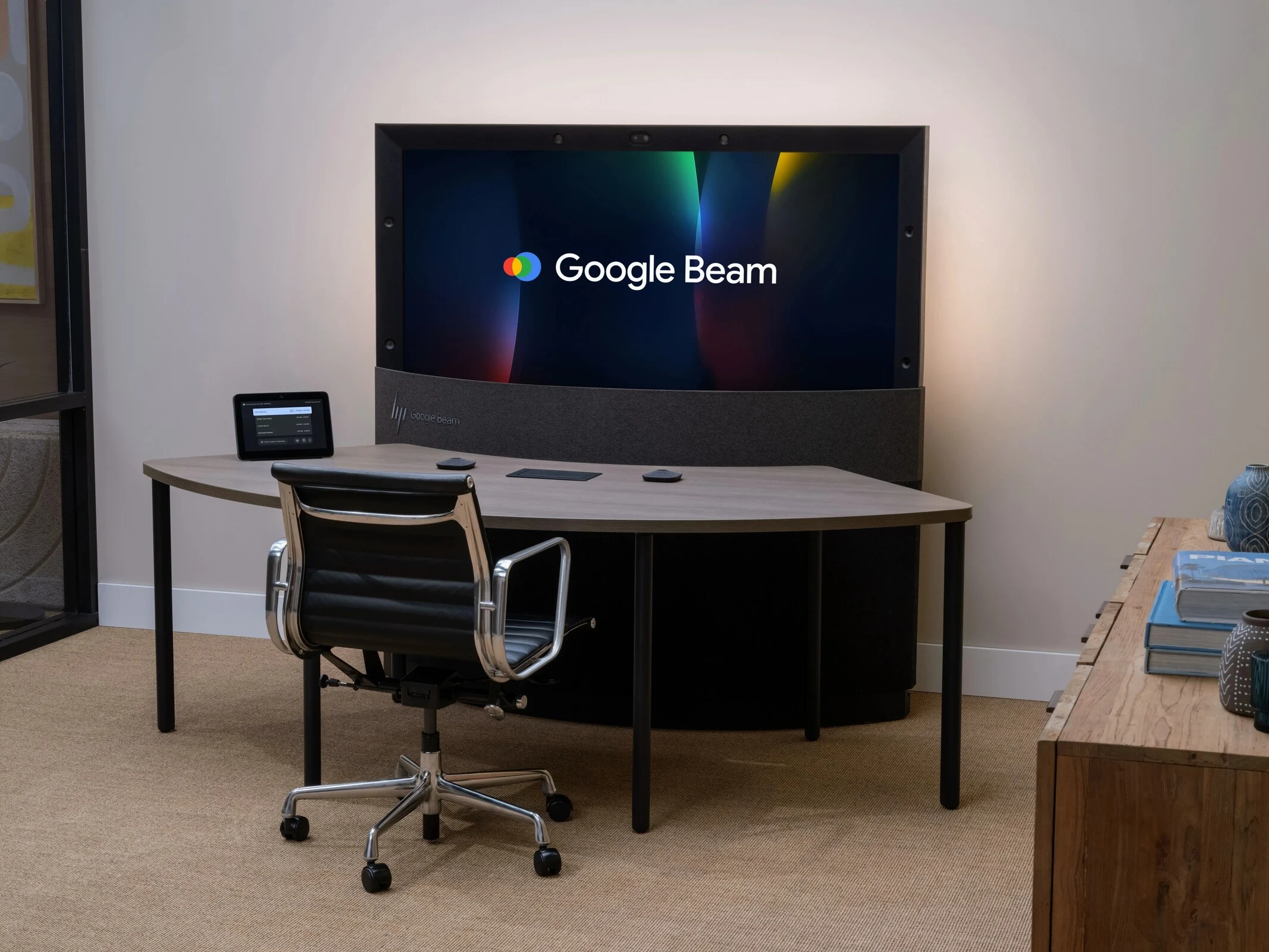
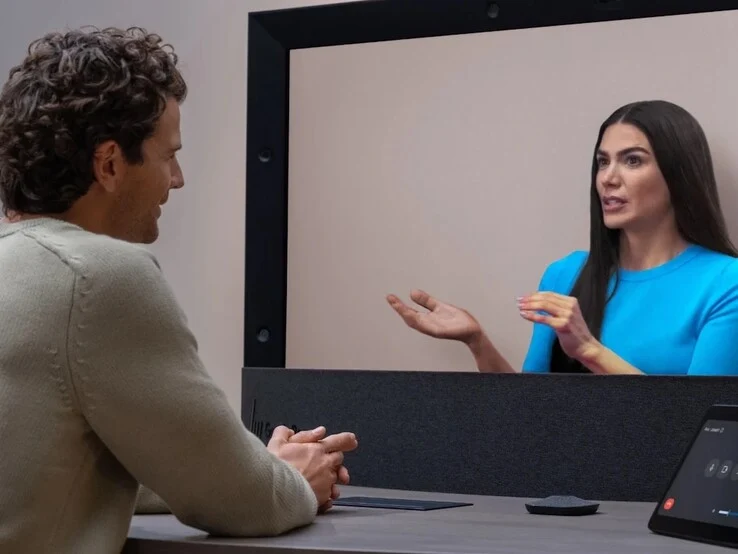
    This collaboration between HP and Google resulted in a massive light field display that measures 65 inches and features six cameras along the bezel. Thanks to AI, the HP Dimension aims to create a lifelike 3D representation of the caller, sending full-size video in real time while adjusting for lighting, shadows, and eye contact. With four built-in speakers, it offers spatial audio, making virtual meetings completely immersive without needing headphones or other devices. Additionally, HP is rolling out its new Poly Studio A2 audio system, which includes four microphone table units and a bridge that supports up to 32 input channels (or 8 Poly Studio A2 table mics).

    Price and Functionality

    At a price of $24,999, this powerful setup for film and sound engineering is not inexpensive. Google’s internal tests with its 3D video conferencing tool indicate better engagement, immersion, and retention than standard video calls. However, this technology only functions if both participants possess a Google Beam license and the necessary hardware. If one participant lacks the ability to support Google Beam, the HP Dimension simply becomes a large, pricey screen for making video calls.

    Availability and Pre-Orders

    Naturally, the HP Dimension is primarily aimed at businesses. The $24,999 price does not cover the Google Beam license, which is essential for running any video conferencing software on the device. HP indicates that it will be available to select enterprise customers in “late 2025.” Each Poly Studio A2 microphone can be pre-ordered for $329, while the bridge costs $549; however, neither is anticipated to ship until September 2025.

    Source:
    Link


  • Microsoft to Shut Down Skype: What You Need to Know

    Microsoft to Shut Down Skype: What You Need to Know

    Key Takeaways

    1. Microsoft plans to shut down Skype in May 2025, as revealed in developer code.
    2. Skype was acquired by Microsoft in 2011 for $8.5 billion, but the app’s popularity declined over time.
    3. Inconsistent updates and lack of clear direction led to missed opportunities against competitors like FaceTime and Google Hangouts.
    4. Microsoft shifted focus to Teams in 2017, positioning it as a collaboration tool integrated into Windows 11.
    5. The potential shutdown of Skype marks the end of its over 20-year journey in the communication space.


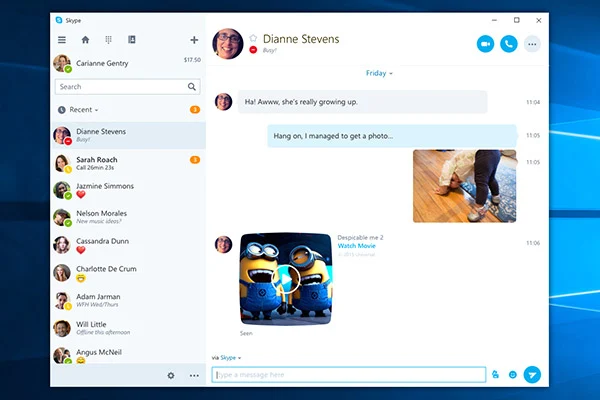
    Skype, a once hugely popular app for video calls, looks to be coming to a close. A reader from XDA Developers found out that Microsoft intends to shut down the app in May 2025. This information was discovered in a note within the code of a developer version of Skype.

    Once a Leader in Communication

    Skype, which debuted in 2003, enjoyed a period of great popularity among users who loved its voice and video calling features, as well as file sharing capabilities. In 2011, Microsoft spent $8.5 billion to acquire Skype, hoping to integrate it into its communication services. After this purchase, Microsoft decided to phase out Windows Live Messenger, further putting its hope into Skype’s future.

    Missed Opportunities and Stiff Competition

    Unfortunately, Microsoft’s lack of a clear direction and inconsistent updates caused it to miss the chance to make Skype the top platform for communication and entertainment. By the time Windows 10 was integrated in an effort to revitalize Skype’s declining user count, it was already facing strong rivals like Apple’s FaceTime, Google Hangouts, and Slack. In 2016, Microsoft opted to revert to the traditional app version for Windows 10 instead of continuing with the UWP format.

    The Shift to Teams

    In 2017, Microsoft refocused its efforts on Teams, a new platform that builds on Skype’s technology. The name itself indicates a shift in purpose, as the company markets it as a solution for team collaboration. Microsoft showed its belief in Teams by embedding it within Windows 11 from the very start of the OS’s launch, aiming to take on Slack directly.

    Microsoft has yet to confirm the news officially, but it seems that 2025 could very well mark the end of Skype’s more than 20-year journey.

    Source:
    Link