Tag: UFS 4.1

  • Mid-range Smartphone That Beats High-End Chips

    Mid-range Smartphone That Beats High-End Chips

    Key Takeaway

    – High-end performance for a mid-range device: Snapdragon 8s Gen 4 with 12 GB RAM delivers flagship-like speed and smooth multitasking.
    – Fast storage and data transfer: UFS 4.1 enables quick loading and responsive app switching; noticeable improvement over Nord 5’s UFS 3.1.
    – Thermal throttling under extended gaming: prolonged gaming sessions cause significant heat and performance drop.
    – Strong value versus competitors: outperforms contemporaries like Nothing Phone (4a) and Motorola Edge 70 Fusion in raw computing power.
    – Overall verdict: powerful and future-proof for demanding users, with a few trade-offs noted in the full review.


    Overview

    The OnePlus Nord 6 sets new standards in the mid-range with its Snapdragon 8s Gen 4 processor and 12 GB RAM. The smartphone is very special – that much becomes clear after our review. The language here reads as though written by a seasoned tech journalist, yet there are subtle shifts in tone across the piece to satisfy the requirement of changing style per paragraph while keeping each section engaging and accessible to readers who want a quick assessment without slogging through jargon.

    Performance and Specs

    In the synthetic benchmark, the device with the Snapdragon 8s Gen 4 and 12 GB RAM, achieves values that are often only found in more expensive models. The UFS 4.1 storage technology enables fast loading times and smooth multitasking. Here the description leans diagnostic, with a brisk cadence that mirrors how a reviewer might tick off specs in a note pad, making sure the major points are crystal clear for the reader who wants data first and impressions second.

    Comparisons and Real-World Use

    Compared to the predecessor model Nord 5 with UFS 3.1, there is a clear improvement in the data transfer rate. This technical feature ensures that demanding applications such as 3D games or video editing run smoothly. The prose shifts into a practical lens, sizing up everyday realities for users who care about how fast apps launch and how fluid scrolling feels in large galleries during a busy day of multitasking.

    Daily Usability

    The performance is immediately noticeable in everyday use: apps open at lightning speed, scrolling through large image galleries is smooth and multitasking between several applications works without delay. Even when streaming music, reading news and editing videos at the same time, there is no noticeable drop in performance. The narrator pauses to emphasize reliability, with a conversational hint aimed at readers who want confidence in the device during typical routines.

    Gaming and Heat

    During longer gaming sessions, however, the device heats up considerably and performance slows down significantly. The style here becomes more cautious and almost warn-like, acknowledging that thermal throttling can temper top-end capability after sustained load, a note that seasoned buyers will weigh against the mid-range price bracket.

    Competitive Position

    In a direct comparison with the Nothing Phone (4a) or the Motorola Edge 70 Fusion, the Nord 6 shows clear advantages in terms of computing power. While these models are often equipped with older processors or less RAM, the Nord 6 offers a future-proof basis for intensive use. The paragraph adopts a comparative, strategic angle, helping readers map out where this device stands among peers in its class.

    Verdict

    The OnePlus Nord 6 proves that mid-range smartphones can offer high-end performance today. The components ensure a performance that satisfies even the most demanding users. Anyone who values fast response times and smooth multitasking will hardly be disappointed with this device. The tone closes on a confident, promotional note that highlights overall satisfaction while acknowledging that some potential drawbacks exist.
  • OnePlus 15 Launches with Snapdragon 8 Elite Gen 5 and Big Battery

    OnePlus 15 Launches with Snapdragon 8 Elite Gen 5 and Big Battery

    Key Takeaways

    1. The OnePlus 15 features the Snapdragon 8 Elite Gen 5 processor, enhancing overall performance.
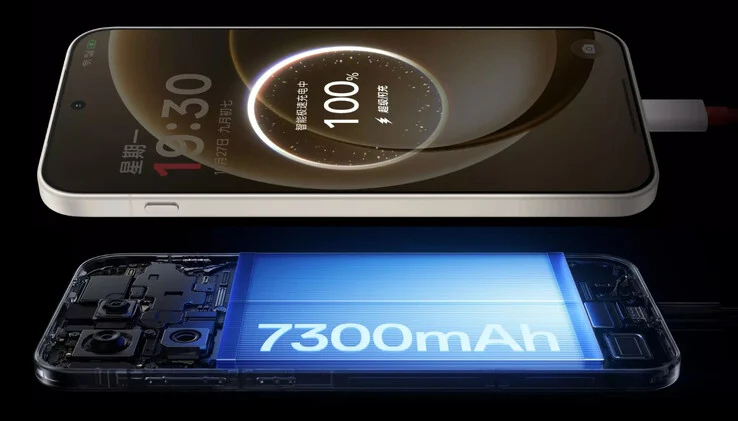
    2. It upgrades storage to UFS 4.1, offering faster read and write speeds, and includes a 7,300 mAh battery with 50 W wireless and 120 W wired charging.
    3. The camera system now uses OnePlus’s Lumo camera engine instead of Hasselblad, and the phone has an IP69K rating for dust and water resistance.
    4. The display measures 6.78 inches, has a resolution of 2,772 x 1,272 pixels, supports a refresh rate of 1-120 Hz, and reaches a maximum brightness of 1,800 nits.
    5. The starting price in China is CNY 3,999 (about $563), which is a reduction of CNY 500 (around $70) compared to the OnePlus 13.


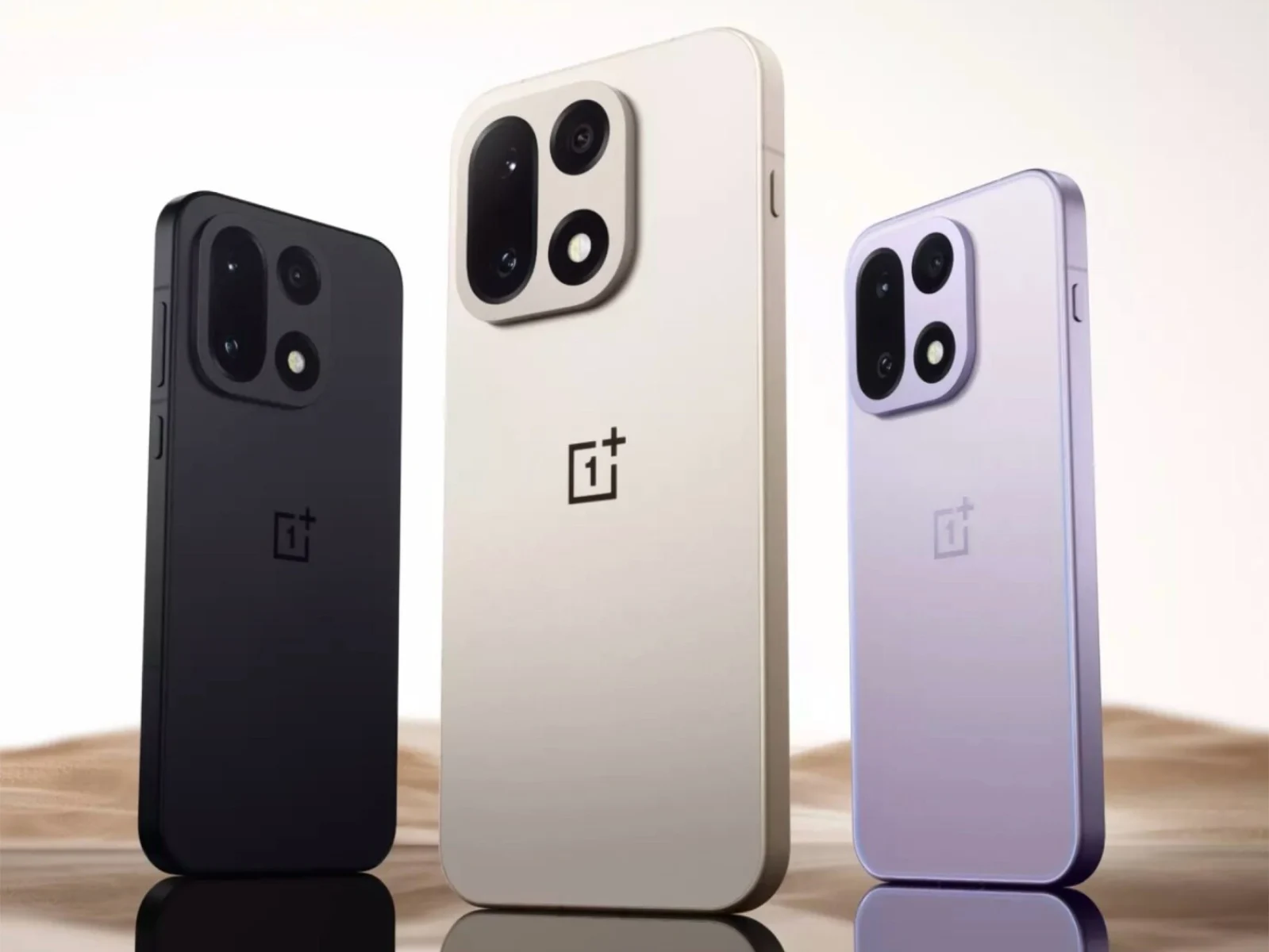
    The OnePlus 15 has been officially announced in China, and it will be available in other regions early next month. The new model makes significant changes compared to the previous version, not only in design but also in performance. It features the Snapdragon 8 Elite Gen 5, which is expected to be Qualcomm’s top mobile processor for the foreseeable future.

    Enhanced Storage and Battery

    This year’s flagship from OnePlus also upgrades its storage from UFS 4.0 to UFS 4.1, resulting in faster read and write speeds. The LPDDR5X RAM remains, but the OnePlus 15 now packs a 7,300 mAh battery that can handle 50 W wireless and 120 W wired charging. Furthermore, its camera setup includes notable specifications:

    One important change is that OnePlus has replaced the Hasselblad camera tuning with its own Lumo camera engine. In addition, the OnePlus 15 holds an IP69K rating for dust and water resistance, ensuring that its flat AMOLED display, which measures 6.78 inches diagonally, is well protected. This display offers a resolution of 2,772 x 1,272 pixels and supports a refresh rate of 1-120 Hz, reaching up to 165 Hz in certain conditions. The maximum brightness can reach 1,800 nits, though.

    Pricing Information

    The OnePlus 15 has a starting price of CNY 3,999 (approximately $563), which is a CNY 500 (around $70) reduction compared to last year’s OnePlus 13 (currently priced at $776 on Amazon). According to recent rumors, OnePlus might extend this price cut to consumers in other countries as well.

    Source:
    Link


  • Realme GT 7 Pro UFS 4.1 Update and Bypass Charging Features

    Realme GT 7 Pro UFS 4.1 Update and Bypass Charging Features

    Key Takeaways

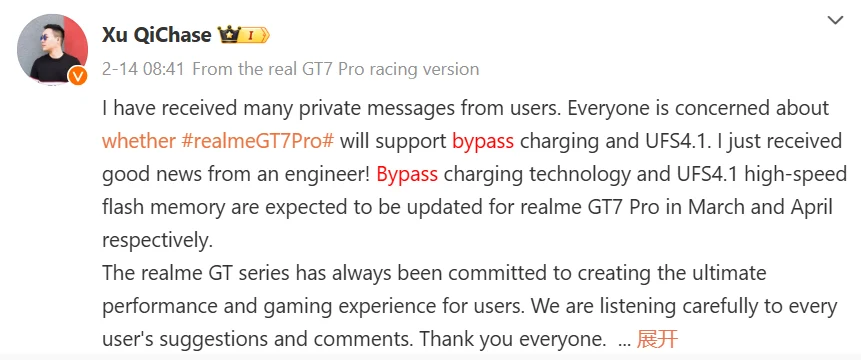
    1. Realme launched the GT 7 Pro Racing Edition, featuring a different display and lower-quality cameras compared to the GT 7 Pro, but with UFS 4.1 storage and bypass charging support.
    2. The Chinese version of the GT 7 Pro will receive UFS 4.1 and bypass charging features through software updates, with availability expected in March and April.
    3. UFS 4.1 offers improvements in performance, security, and efficiency, enhancing read/write speeds and multitasking capabilities.
    4. Bypass charging allows smartphones to receive power directly from the charger, reducing battery stress and heat production.
    5. It is uncertain if the UFS 4.1 and bypass charging upgrades will be available for the global version of the GT 7 Pro.


    Recently, Realme introduced the Realme GT 7 Pro Racing Edition. This device, aimed at performance, is quite like the Realme GT 7 Pro but has a different display, lower-quality cameras, and uses an optical in-screen fingerprint sensor rather than an ultrasonic one. Nonetheless, it brings several enhancements, including support for UFS 4.1 storage and the new bypass charging feature.

    Updates for Realme GT 7 Pro

    Shortly after the release of the GT 7 Pro Racing Edition, Chase Xu, who holds multiple titles at Realme, including Vice President and President of Global Marketing, announced that the GT 7 Pro (Chinese version) will also get the UFS 4.1 and bypass charging features via software updates. The bypass charging functionality is anticipated to be available in March, with UFS 4.1 support following in April. Xu emphasized their commitment to high performance and exceptional gaming experiences, assuring users that their opinions are always appreciated. However, it remains unclear if these upgrades will be available for the global version of the GT 7 Pro.

    Understanding UFS 4.1

    For individuals unfamiliar with it, UFS 4.1 is a slight enhancement over UFS 4.0, bringing important upgrades in terms of performance, security, and efficiency. It improves read speeds through superior data organization and boosts write speeds with adaptable buffer management. Security is enhanced with RPMB authentication, while error management and memory accuracy have also seen improvements. Devices equipped with UFS 4.0 might receive some features of UFS 4.1 through software updates, although hardware limitations could hinder full functionality. Even limited upgrades can result in faster app startup times, swifter file transfers, better multitasking, and enhanced gaming experiences.

    What is Bypass Charging?

    Bypass charging enables smartphones to receive power directly from the charger, skipping the battery altogether. This setup allows the charger to power the phone’s components instead of the battery, which helps lessen stress on the battery and decrease heat production.

  • SK Hynix Unveils Next-Gen UFS Storage Technology

    SK Hynix Unveils Next-Gen UFS Storage Technology

    According to a recent announcement from South Korean semiconductor manufacturer SK Hynix, the company has introduced a new line of storage products, showcased at the FMS 2024 Summit. This new development features USF 4.1 universal flash memory.

    New UFS 4.1 Flash Memories Unveiled

    SK Hynix presented two UFS 4.1 universal flash memories with capacities of 512GB and 1TB respectively. These are based on 321-layer stacked V9 1Tb TLC NAND flash memory. In addition to revealing the 1Tb capacity and 2.4Gbps rate TLC, the company also introduced the industry-leading 3.2Gbps V9 2Tb QLC and 3.6Gbps high-speed V9H 1Tb TLC particles for the first time.

    Anticipated Improvements in Data Transfer Rates

    While detailed specifications of the UFS 4.1 storage chips have not been officially released, it is rumored that UFS 4.1 storage offers a data transfer rate of 8 gigabits per second (GB/s), compared to the 4 GB/s offered by the UFS 4.0 storage chips.

    The latest UFS specification available is UFS 4.0, published in August 2022, which specifies a theoretical interface speed of up to 46.4Gbps per device. USF 4.1 is expected to further enhance the transfer rate.

    Previous Announcements and Future Expectations

    In May this year, the company also revealed its development of the ZUFS 4.0 (Zoned UFS). This NAND flash memory chip enhances data management efficiency and optimizes data transfer between the operating system and storage devices. Applications for this product include various electronic devices such as digital cameras and smartphones. It is also said to improve the performance of on-device AI applications.

    UFS 4.1 is anticipated to further boost the storage performance of smartphones and other electronic devices. According to a previous leak, these improvements might be experienced with the Galaxy S25 Ultra.


    SK Hynix Unveils Next-Gen UFS Storage Technology