
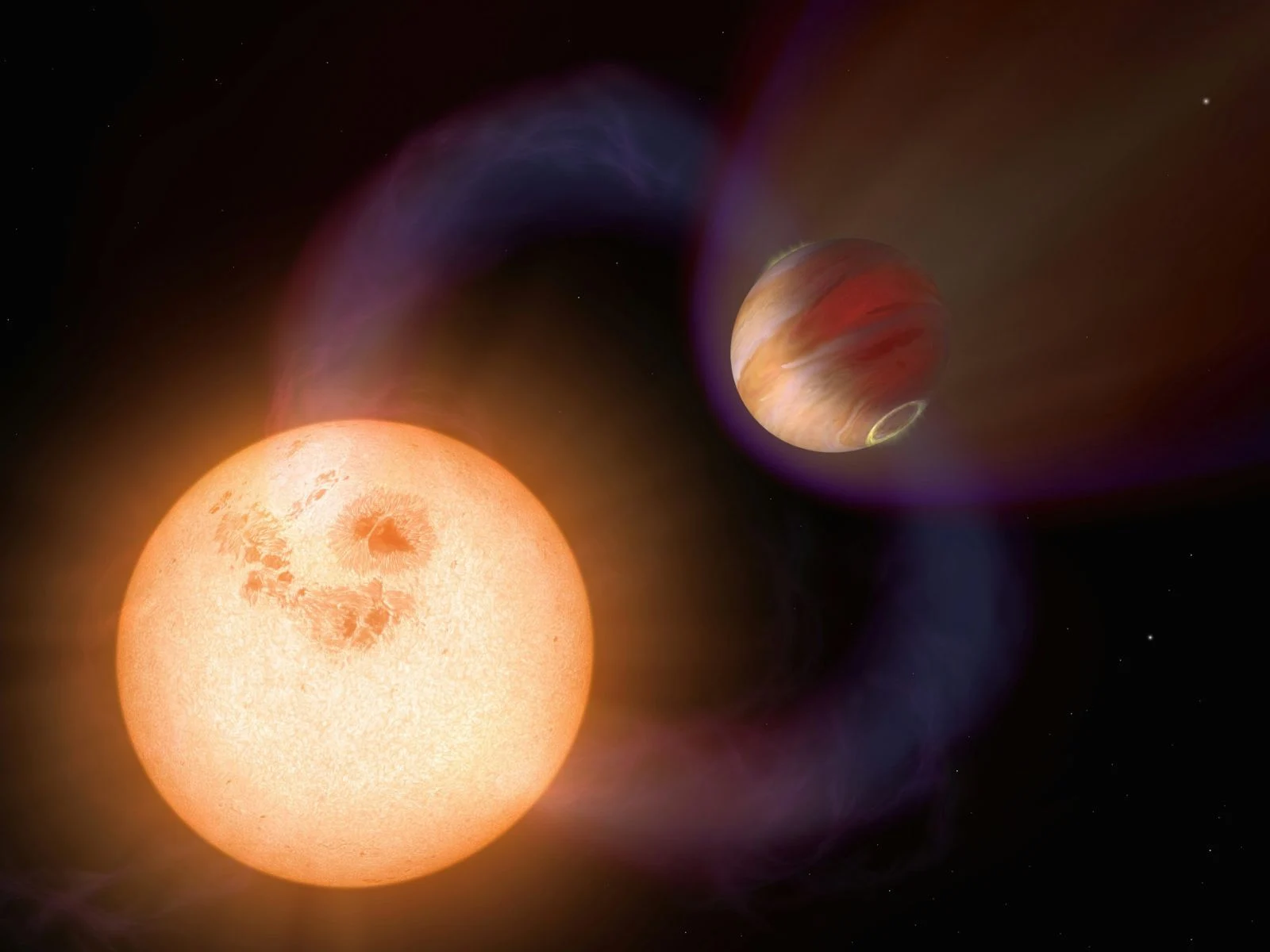
– TOI-1883 b is a super-Neptune exoplanet with one of the lowest densities ever recorded (0.4 g/cm³).
– Its mass is 13.7 times Earth’s, and its radius is 5.7 times Earth’s.
– It orbits a red dwarf every 4.5 days, making it a puffy planet extremely close to its star.
– The planet likely migrated inward and lost mass due to ultraviolet radiation from its star.
– Further observations are needed to resolve the mysteries of its origin.
Discovering a Strange New World
There is many planets in the universe, each with there own different compositions and shapes. This is the case for TOI-1883 b, a super-Neptune that was discovered in 2024 by some astronomers. Located about 383 light-years distant from Earth, this exoplanet orbits a red dwarf that is named TOI-1883 every 4.5 days. But uncertainties still remained regarding exactly what its mass was.
Observing With the Subaru Telescope
As a result, a team that Izuru Fukuda of the University of Tokyo in Japan leaded decided to observe and study this very exoplanet using the Infrared Doppler (IRD) instrument on the Subaru Telescope. As a reminder, that telescope is located over in Hawaii and it has seven instruments that can observe the universe across many different wavelenghts. So they used this tool to get precise data about its size and weight.
Key Specifications and Density Findings
Thus, the mass of TOI-1883 b is estimated to be about 13.7 times that of Earths mass, and its radius is approximately 5.7 times larger then our planet. Therefore, its density is calculated to be only 0.4 g/cm³, which is one of the lowest values ever discovered among exoplanets. For context, water has a density of 1 g/cm³, so this planet is extremely puffy.
- Mass: 13.7 Earth masses
- Radius: 5.7 Earth radii
- Density: 0.4 g/cm³
- Orbital Period: 4.5 days
- Distance from Earth: 383 light-years
Possible Puffy Planet Migration
In addition, it could be a puffy exoplanet that is located extremly close to its star. Indeed, according to the astronomers, this celestial object may have migrated toward its host star in the past and lost a significant amount of its mass due to the stars ultraviolet radiation. This process would explain why its so inflated and low-density compared to other planets.
Mysteries Left to Explore
However, many mysteries still surrounds the origin of TOI-1883 b. Therefore, further observations and studies are going to be necessary so we can better understand this strange world and how it formed. The team plans to continue monitoring it with the IRD instrument to confirm its structure and composition.