
Tag: PCIe 4.0

  • Orange Pi 6 vs Raspberry Pi: 45 TOPS AI, Dual 2.5G LAN

    Key Takeaway

    – 45 TOPS AI performance is a combined system figure; dedicated NPU contributes 28.8 TOPS
    – Powered by CIX CD8180 SoC with 12 cores and up to 24 GB LPDDR5 memory
    – Dual 2.5 GbE ports and dual M.2 2280 PCIe 4.0 slots for storage or NAS setups
    – Dual USB-C with video output, plus DisplayPort 1.4 (4K@120 Hz) and HDMI 2.0
    – Pricing and availability not yet announced; Orange Pi 5 currently available on Amazon


    Orange Pi 6: A New Single-Board Computer

    We have already covered the Orange Pi 6 Plus. The Orange Pi 6 (without “Plus”) is another single-board computer that – at least on paper – offers strong performance and a robust feature set. According to the manufacturer, it can deliver AI performance of up to 45 TOPS; however, this figure applies to the entire system, meaning it combines the CPU, NPU, and GPU. The dedicated NPU, optimised for AI workloads, contributes 28.8 TOPS.

    Performance and Processing Power

    Reaching the full 45 TOPS is likely to reduce energy efficiency. As both the CPU and GPU would be heavily utilised, which may not be ideal in real-world scenarios. The system is powered by the CIX CD8180 SoC with 12 processing cores. The LPDDR5 memory measures 8, 16, or 24 GB, depending on the selected configuration.

    Storage and Connectivity Options

    While microSD card support is included, users can also install up to two M.2 2280 SSDs, each connected via four PCIe 4.0 lanes. For NAS use cases, a SATA adapter card could be an option. Wi-Fi and Bluetooth can be added via an M.2 (Key E) module. Out of the box, wired networking is handled by two Ethernet ports, each supporting speeds of up to 2.5 Gbit/s.

    Ports and Video Output

    The board also offers two USB 3.0 Type-A ports, two USB 2.0 ports, and two fully featured USB 3.0 Type-C ports, which also support video output. DisplayPort 1.4 enables 4K output at up to 120 Hz, while HDMI 2.0 supports up to 60 Hz. MIPI CSI is supported, and power is supplied via USB Type-C. A 40-pin GPIO header is included.

    Pricing and Availability

    Pricing and availability for the 90 × 90 mm board have not yet been announced. The Orange Pi 5 is available for purchase on Amazon.

    Sources

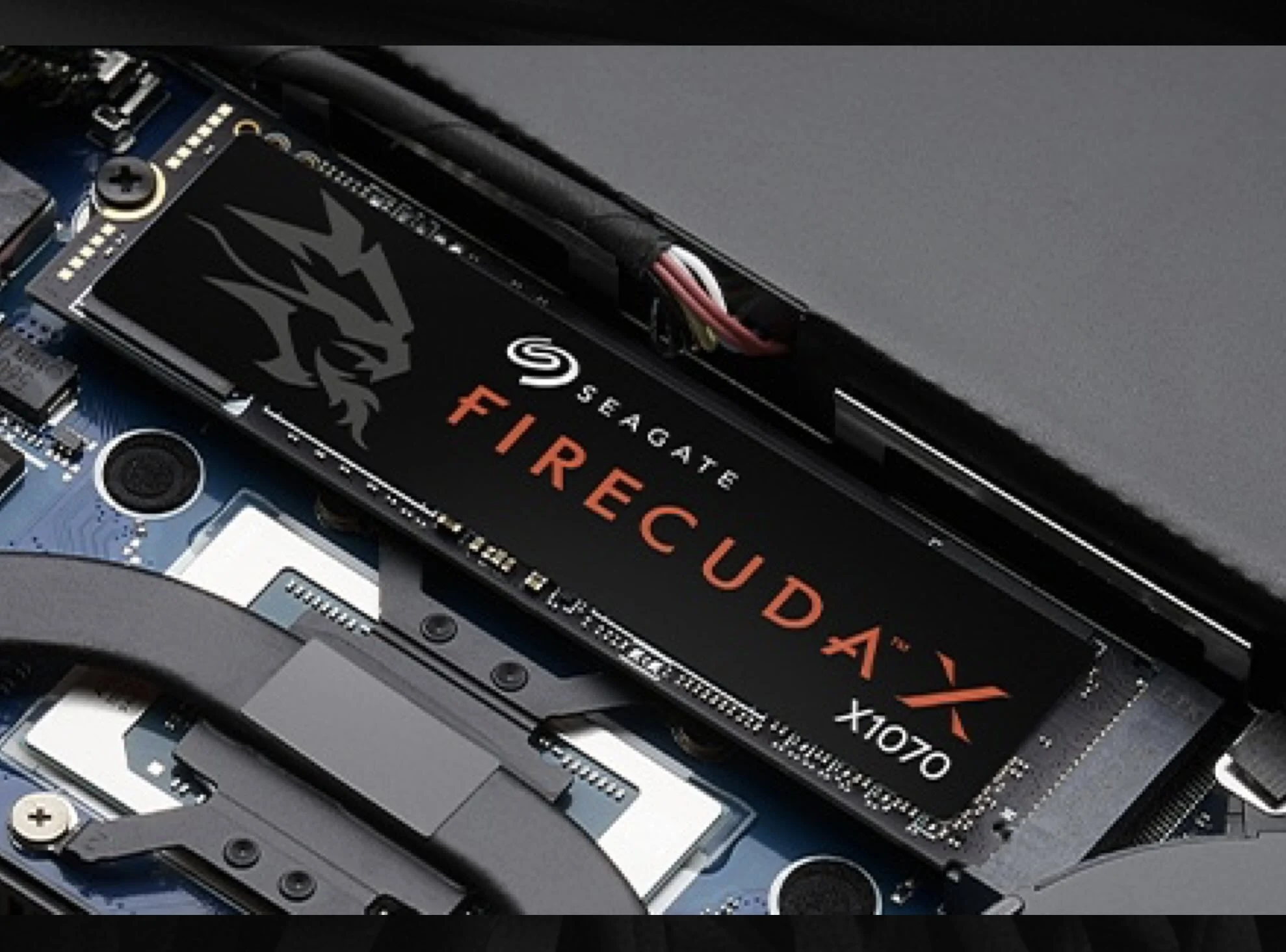
  • Seagate FireCuda X1070 SSD Leaked: Slower and Less Durable

    Seagate FireCuda X1070 SSD Leaked: Slower and Less Durable

    Key Takeaways

    1. Seagate is set to launch the FireCuda X1070 M.2 SSD, following the FireCuda 530R.
    2. The FireCuda X1070 has maximum sequential write speeds of 7,200 MB/s, lower than the 530R’s 7,400 MB/s.
    3. Sequential read speeds for the X1070 are also reduced, ranging from 800 to 500 MB/s slower than the 530R.
    4. Endurance ratings for the FireCuda X1070 are lower, with 2,400, 1,200, and 600 TBW for its 4 TB, 2 TB, and 1 TB versions, respectively.
    5. Key specifications like NAND type, DRAM cache, and controller are currently unknown, but the X1070 is expected to have lower power consumption for better thermal management.


    After being away for a year, Seagate seems to be getting ready to launch new consumer M.2 SSDs. A leaked product guide has shown us the name of the product and some additional information. Called the FireCuda X1070, this SSD continues the legacy of the FireCuda 530R, being a premium PCIe 4.0 drive.

    Performance Expectations

    The performance specs, however, are a bit underwhelming. The FireCuda X1070 reaches maximum sequential write speeds of 7,200 MB/s, which is noticeably lower than the 530R’s 7,400 MB/s. The drop in sequential read performance is even more significant, with speeds ranging from 800 to 500 MB/s slower depending on the storage option.

    Comparison to Gen 5 Drives

    It’s clear that these speeds don’t come close to PCIe Gen 5 drives, which isn’t shocking. For typical everyday tasks, though, the performance should still be sufficient. Endurance ratings have also decreased—the FireCuda X1070 now has official ratings of just 2,400, 1,200, and 600 TBW for the 4 TB, 2 TB, and 1 TB versions, while the 530R boasts ratings of 5,050, 2,400, and 1,100 TBW respectively.

    Missing Specifications

    Right now, we don’t have information on important features like NAND type, DRAM cache, and controller. The FireCuda 530R, which is priced at $170 on Amazon, uses 3D TLC NAND, and the same could potentially be true for the X1070. Interestingly, the average power consumption for the X1070 SSD is more than 40% lower, which could improve its thermal management during extended use.

    Source:
    Link