
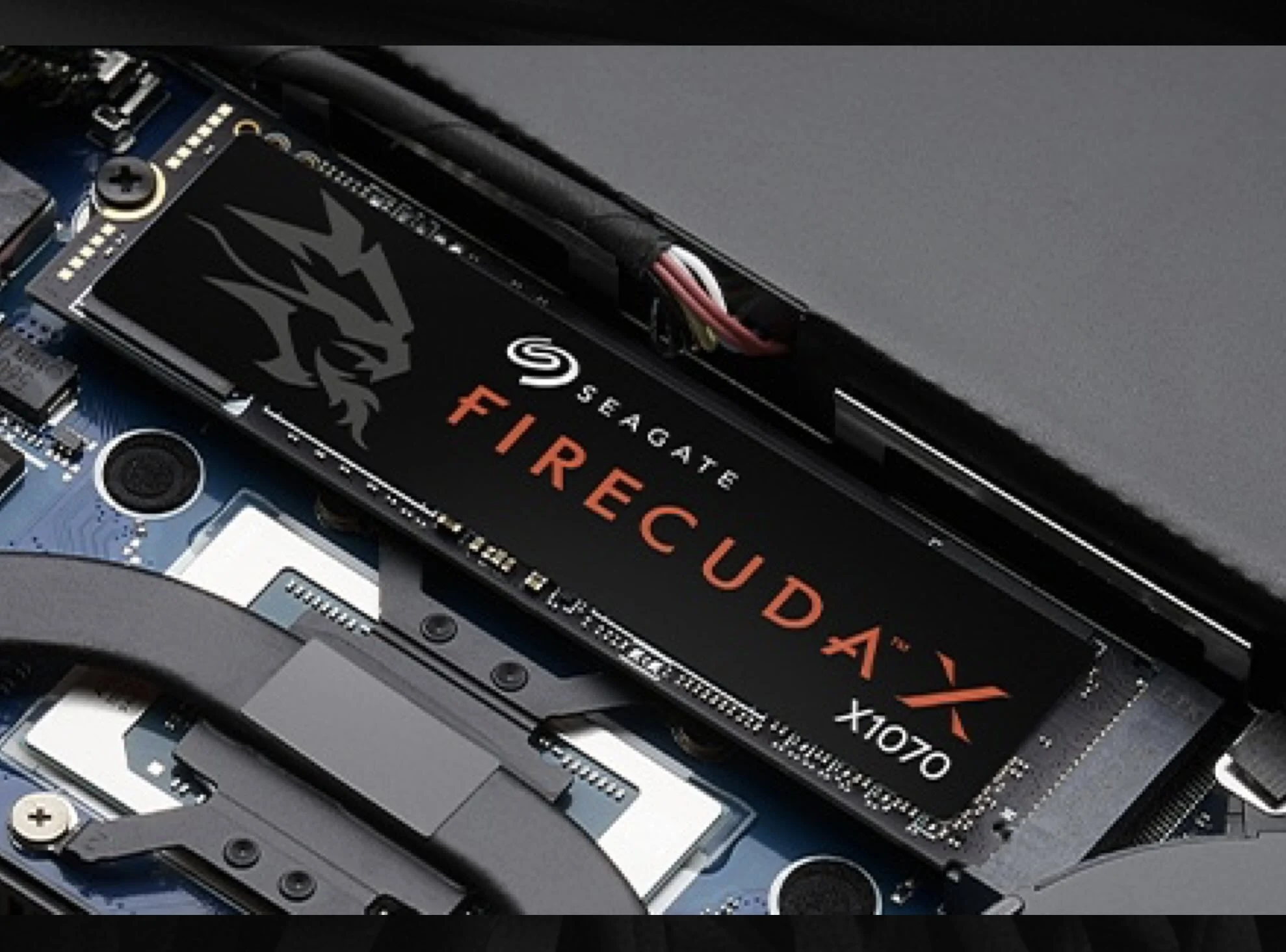
Key Takeaways
1. Seagate is set to launch the FireCuda X1070 M.2 SSD, following the FireCuda 530R.
2. The FireCuda X1070 has maximum sequential write speeds of 7,200 MB/s, lower than the 530R’s 7,400 MB/s.
3. Sequential read speeds for the X1070 are also reduced, ranging from 800 to 500 MB/s slower than the 530R.
4. Endurance ratings for the FireCuda X1070 are lower, with 2,400, 1,200, and 600 TBW for its 4 TB, 2 TB, and 1 TB versions, respectively.
5. Key specifications like NAND type, DRAM cache, and controller are currently unknown, but the X1070 is expected to have lower power consumption for better thermal management.
After being away for a year, Seagate seems to be getting ready to launch new consumer M.2 SSDs. A leaked product guide has shown us the name of the product and some additional information. Called the FireCuda X1070, this SSD continues the legacy of the FireCuda 530R, being a premium PCIe 4.0 drive.
Performance Expectations
The performance specs, however, are a bit underwhelming. The FireCuda X1070 reaches maximum sequential write speeds of 7,200 MB/s, which is noticeably lower than the 530R’s 7,400 MB/s. The drop in sequential read performance is even more significant, with speeds ranging from 800 to 500 MB/s slower depending on the storage option.
Comparison to Gen 5 Drives
It’s clear that these speeds don’t come close to PCIe Gen 5 drives, which isn’t shocking. For typical everyday tasks, though, the performance should still be sufficient. Endurance ratings have also decreased—the FireCuda X1070 now has official ratings of just 2,400, 1,200, and 600 TBW for the 4 TB, 2 TB, and 1 TB versions, while the 530R boasts ratings of 5,050, 2,400, and 1,100 TBW respectively.
Missing Specifications
Right now, we don’t have information on important features like NAND type, DRAM cache, and controller. The FireCuda 530R, which is priced at $170 on Amazon, uses 3D TLC NAND, and the same could potentially be true for the X1070. Interestingly, the average power consumption for the X1070 SSD is more than 40% lower, which could improve its thermal management during extended use.
Source:
Link