Tag: Nvidia RTX 5090

  • Nvidia GeForce RTX 5090: No VRAM ECC for Pro Workloads

    Key Takeaways

    1. The Nvidia GeForce RTX 5090 features the new GB202 GPU with significant hardware upgrades compared to previous models like the RTX 4090 and RTX 3090 Ti.

    2. The RTX 5090 does not include the ability to switch between ECC and non-ECC memory states, a feature available in the RTX 3090 Ti and RTX 4090.

    3. ECC (Error Correction Code) memory is crucial for tasks requiring high data accuracy, such as machine learning, while regular consumers may not need it.

    4. GDDR7 memory specifications now include on-die ECC to handle increased memory densities and improve error correction capabilities.

    5. The RTX 5090 has high-performance GDDR7 memory but its support for ECC features is uncertain, relying on future updates for potential activation.


    Since the Ampere generation, Nvidia has replaced its top Titan card with the 90 series models aimed at both professionals and gamers.

    Significant Hardware Upgrades

    The Nvidia GeForce RTX 5090 features the new GB202 GPU, which shows major hardware enhancements when compared to the RTX 4090’s AD102 and RTX 3090 Ti’s GA102 GPUs. Interestingly, while the RTX 3090 Ti and RTX 4090 allowed users to change the VRAM ECC state in the driver, this function seems to be omitted in the RTX 5090.

    Understanding ECC

    Error Correction Code, or ECC, is a method that allows memory to fix itself. Memory errors can happen due to bit flips during data transfer or when errors arise in the data as memory cells discharge and recharge their energy. This self-correction is achieved through either a dedicated memory chip that checks for parity among the other eight chips (known as on-die ECC) or through the memory controller (DRAM ECC).

    Most DDR5 consumer system memory supports ECC, but not fully. DDR5 RAM is designed to spot multi-bit errors but only fix single-bit errors through its built-in checking system. Due to how DDR5 divides 64-bit memory into two 32-bit sections, DDR5-ECC RAM comes in 72-bit (32+4) EC4 or 80-bit (32+8) EC8 configurations.

    When is ECC Necessary?

    ECC memory is not often needed for regular consumer tasks. If this term is new to you, it’s likely you won’t require ECC memory. Nevertheless, ECC is crucial for mission-critical and machine learning tasks where data accuracy must be preserved throughout the entire process. Google faced significant issues back in 1999 when they neglected to use ECC memory, which severely hampered their search engine’s performance due to memory corruption.

    All GPUs that use GDDR5 and GDDR6/6X VRAM have a system for detecting memory errors called Error Detection Code (EDC). Nvidia refers to this as Error Detection and Replay (EDR), a process that requests the retransmission of bits from the memory controller after a cyclic redundancy check (CRC) is completed. EDR helps reduce pixel artifacts when VRAM is overclocked, although this may have a slight negative effect on performance.

    Features of RTX 3090 Ti and RTX 4090

    A lesser-known feature in the Nvidia GeForce RTX 3090 Ti and RTX 4090 desktop GPUs is the ability to switch between ECC and non-ECC memory states via the driver. Unfortunately, this option is missing in the new RTX 5090. Both the RTX 3090 Ti and RTX 4090 incorporate a method known as “soft ECC,” which doesn’t require a separate chip for parity. Instead, activating this feature dedicates some VRAM to act like an on-die ECC module.

    Consequently, this reduces the total available VRAM and memory speed. For the RTX 4090, the usable VRAM drops from 24 GB to 22.5 GB, with 1.5 GB allocated for ECC functions. Activating the ECC state affects performance; for instance, with ECC on in the RTX 4090, 3DMark Speed Way scores saw a 6.4% decrease, and Cyberpunk 2077 2.21 Phantom Liberty experienced about a 5% dip in average fps. The extent of performance loss varies based on the specific task.

    Advances with GDDR7

    With GDDR7, JEDEC has now included on-die ECC as part of the VRAM specifications, recognizing the higher chances of errors due to increased memory densities. GDDR7 employs on-die ECC with a protocol that informs the memory controller about the types of errors that occur. According to JEDEC, GDDR7 can fully correct 1-bit errors and completely detect 2-bit errors, although the detection for rare 3-bit errors drops slightly to 99.3%.

    Moreover, the official specifications also include command address parity with command blocking (CAPARBLK) to enhance the reliability of the command address bus. However, it remains uncertain whether Blackwell’s memory controller utilizes this on-die ECC functionality by default.

    Specifications of RTX 5090

    The RTX 5090 is equipped with 512-bit GDDR7 memory rated for an impressive 1.792 TB/s bandwidth at a rapid 28 Gbps clock, which could lead to transmission errors. Furthermore, Nvidia is promoting the RTX 5090 for AI workflows, which could gain from ECC when processing large datasets. However, Nvidia’s architecture whitepaper only mentions support for “Enhanced Cyclic Redundancy Check (CRC) for Reliability, Availability, and Serviceability (RAS),” which does not equate to ECC.

    While it would be reasonable to assume that Nvidia would activate GDDR7’s on-die ECC capability for the anticipated Blackwell workstation GPUs, it is still unknown if the ECC state toggle will be available for the consumer RTX 5090 through a future driver or VBIOS update.

    Source:
    Link

  • Nvidia RTX 5090 FE Melts Power Connectors: Not 12VHPWR Fault

    Nvidia RTX 5090 FE Melts Power Connectors: Not 12VHPWR Fault

    One early user of the Nvidia GeForce RTX 5090 Founders Edition learned the hard way why Nvidia advises against using third-party cables with the new Blackwell GPUs.

    Issue with Third-Party Cables

    In a Reddit post by user u/ivan6953, the individual shared their experience of upgrading their PC with the RTX 5090, which was powered by an ASUS Loki SFX-L power supply using a ModDIY ATX 3.0 PCIe 5.0 16-pin 12VHPWR cable rated for 600 W. The user reported that while playing Battlefield 5, the GPU’s power draw was between 500–520 W when they detected a burning smell. They quickly shut down the PC and upon inspection discovered that the 12VHPWR connector had melted at both the RTX 5090 and the ASUS Loki SFX-L PSU connection points.

    Community Concerns

    When Nvidia announced that the RTX 5090 would adopt the 12VHPWR standard, it raised alarms in the PC gaming community. Many feared that the melting connector issues, first seen with the GeForce RTX 4090, would return. Initially, it appeared that the new Blackwell GPUs were not facing serious melting cable issues, despite some early reports suggesting otherwise. However, this recent Reddit post serves as clear evidence that pushing the limits of the 12VHPWR power standard could lead to significant problems for those in the PC building community.

    Speculating the Culprit

    It’s still uncertain which part is responsible for the failure in this case. The Nvidia GPU is likely not to blame, as there haven’t been many other credible reports of melting connectors. This leaves the power supply unit (PSU) and the power cable as possible culprits. One comment from the Redditor suggested the issue might stem from the PSU, noting that the “Loki’s 12VHPWR pins are MUCH thinner than in the 12VHPWR slot on 5090FE,” which could lead to higher resistance, but that doesn’t clarify why both ends of the cable melted.

    Based on the Reddit post, it seems the RTX 5090 may have drawn more power than the 600 W rating of the 12VHPWR cable or that the cable’s connectors were not adequate for the task.

    Availability of GPUs

    Currently, both the RTX 5090 and RTX 5080 are nearly impossible to find due to their high demand. However, pre-built PCs featuring these GPUs, like the RTX 5080-equipped Skytech Legacy4 (currently priced at $3,299.99 at Best Buy), are available for purchase.

    Source:
    Link

  • Buyer Shocked by Nvidia RTX 5080 Mislabelled as RTX 5090

    Buyer Shocked by Nvidia RTX 5080 Mislabelled as RTX 5090

    Locating a scarce Nvidia RTX 50 series GPU can be quite frustrating for many enthusiasts. A Reddit user named EssDee3D experienced a surprising twist after buying an RTX 5080 Founders Edition. Although the packaging clearly stated it was the right graphics card, Nvidia had labeled the housing as an RTX 5090. Unfortunately, tests later revealed that the GPU inside was indeed an RTX 5080.

    Initial Reactions to the Discovery

    When EssDee3D shared a photo of the incorrectly labeled GPU in the LinusTechTips subreddit, it was met with some doubt. Since his account was new, some users thought he was just looking for attention. However, a few hopeful commenters speculated that Nvidia may have mistakenly sent an RTX 5090 in the wrong box. After promising to investigate further, EssDee3D eventually uploaded a video showing the GPU installed in his PC. Sadly for him, the tests confirmed it was just an RTX 5080 FE, which is priced at half of the RTX 5090 FE.

    Quality Control Concerns

    So far, Nvidia’s new GPUs have not faced the melted power connector problems that affected the RTX 4090. However, some users have reported crashing issues with games and isolated cases of bricked RTX 5090s. This raises some worries about quality control, but EssDee3D’s post remains the first well-documented case of a mislabeled graphics card.

    Similarities in Design

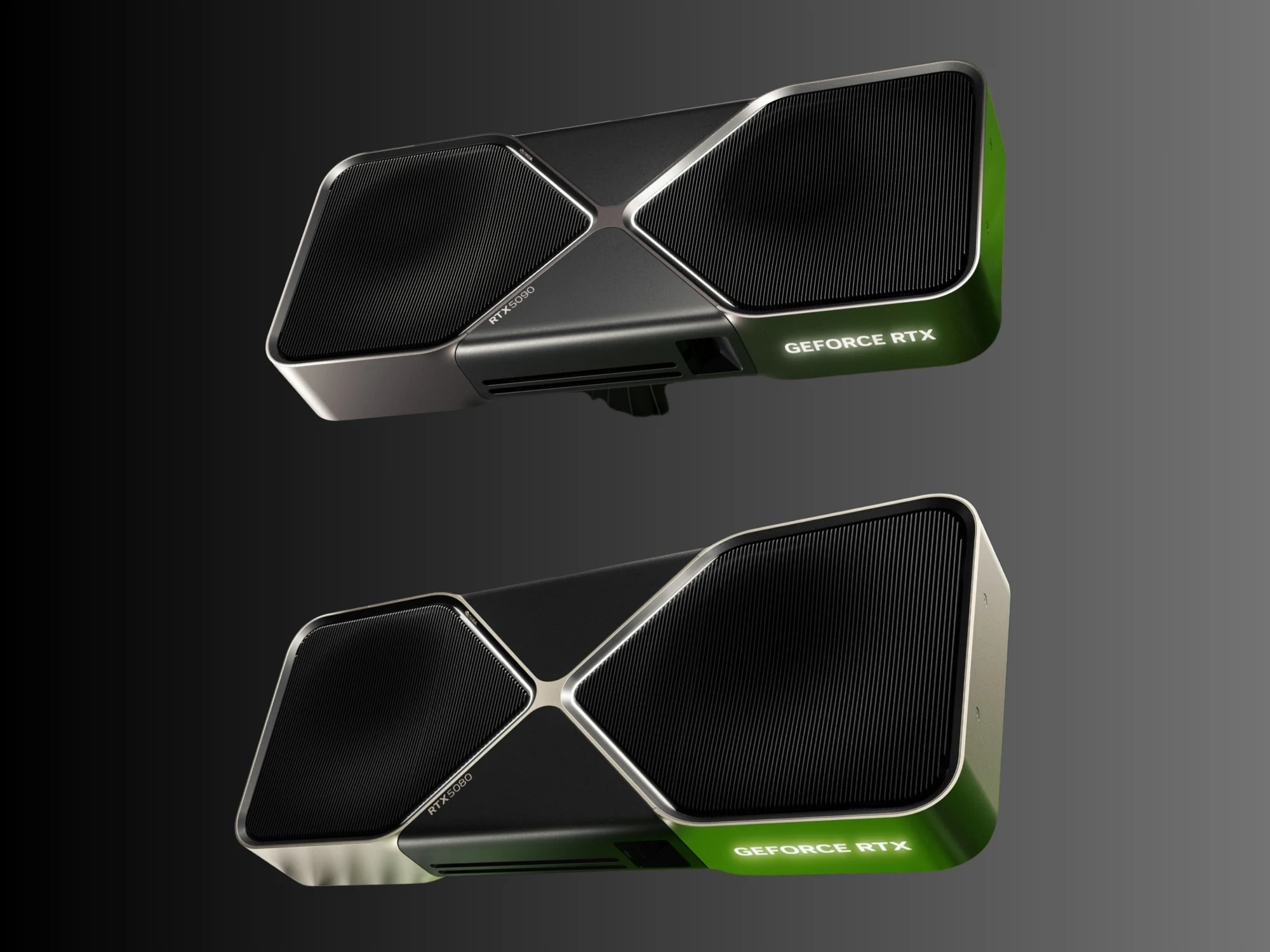
    Despite the RTX 5080 having more CUDA cores and memory, the designs of the RTX 5080 and RTX 5090 are almost indistinguishable. Both Nvidia Founders Edition GPUs are dual-slot cards with identical dimensions in width, length, and thickness. This makes it plausible that a mix-up could occur during the assembly process.

    Even though EssDee3D can expect the performance he originally paid for, he still mentioned the possibility of returning the card in his video. If he decides to sell the RTX 5080 or his PC in the future, any potential buyer will likely need a detailed explanation of the situation.

    Source:
    Link


  • UK Retailer Warns of Four-Month Delay for RTX 5090 and 5080

    UK Retailer Warns of Four-Month Delay for RTX 5090 and 5080

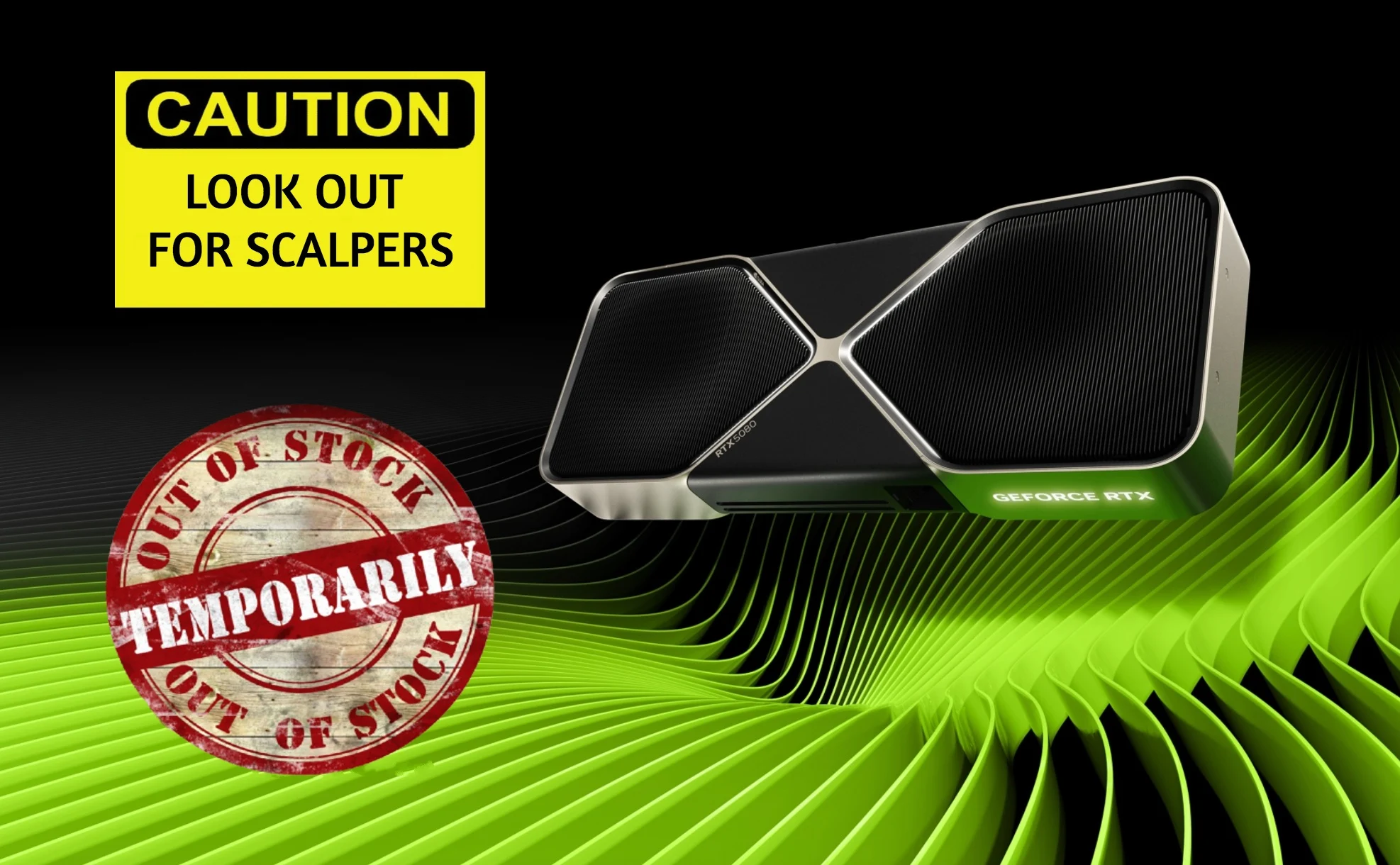
    Scoring an Nvidia RTX 5090 or RTX 5080 right now feels like trying to catch a ghost in a silicon wasteland. The reasons? The usual suspects: limited stock, huge demand, and scalpers. We shared an update about the situation in Europe, and a recent note from a well-known UK retailer presents a similarly bleak picture. It looks like those eagerly awaiting a new RTX 5090 GPU might have to hang on for as much as four months.

    Stock Updates

    Overclockers UK, in a recent statement, disclosed that they have completely run out of the Nvidia RTX 5090 and RTX 5080 – not shocking at all – and have paused pre-orders for now. Furthermore, the retailer mentioned that the RTX 5090 is anticipated to be available again sometime in the next 3 to 16 weeks, while the RTX 5080 should be back on shelves within 2 to 6 weeks. Basically, anyone in the UK hoping for a new GeForce RTX 50 GPU may need to exercise patience for several months.

    Scalper Advantage

    Given that the Nvidia RTX 5080 and RTX 5090 have been selling for thousands of dollars, it’s clear that scalpers are making huge profits from the shortages. The RTX 5090 has received mostly favorable reviews, even if its improvements over the previous generation are somewhat slight. However, the RTX 5080’s performance upgrade compared to the RTX 4080 Super was not that impressive. Yet, this lack of a significant boost doesn’t seem to dampen the excitement surrounding the cards, as evidenced by the stock issues and Overclockers’ assertion of “incredibly high demand.”

    Conclusion

    Overclockers UK, highlighted by Wccftech, continues to show the struggle consumers face in obtaining these coveted GPUs.

    Source:
    Link


  • MSI Reveals RTX 5090 Delay as Custom PC Builder Reports Low Stock

    MSI Reveals RTX 5090 Delay as Custom PC Builder Reports Low Stock

    It might not be shocking news to many gamers and PC builders that there will be a shortage of the newest graphics cards from Nvidia. It looks like history is set to repeat itself, and there’s some evidence of this from MSI, as reported by VideoCardz. On their US site, customers can continue to pre-order the RTX 5090 up until its launch date on January 30, but the shipping will only begin on February 6.

    Availability of RTX 5080

    MSI seems pretty sure about the availability of its RTX 5080 stock, as it will be ready for purchase right away, with shipping starting on January 30. However, many enthusiasts are eager to get their hands on the top-of-the-line GeForce RTX 5090. MSI has mentioned that other retailers will have stock available, but it’s likely that the amount will be limited and will sell out fast.

    Concerns About RTX 5090 Launch

    This assumption is backed by a post from StinceBuilt on X, which states that the launch of the RTX 5090 will be “very rough” and that “stock is minimal at best.” It seems the PC building company has been in talks with other retailers about the launch, and the stock situation for the RTX 5090 looks to be tight across the board. For those looking for a more affordable option, gamers may want to check out the MSI Gaming GeForce RTX 3060, which is priced at $339.99 on Amazon.

    Conclusion

    In summary, while excitement builds for the new graphics cards, the reality of stock shortages looms. Both the RTX 5080 and RTX 5090 are generating interest, but potential buyers should prepare for a challenging hunt for these coveted units.

    Source:
    Link

  • Nvidia GeForce RTX 5090 Specs Leak: Huge VRAM Boost vs RTX 5080

    Nvidia GeForce RTX 5090 Specs Leak: Huge VRAM Boost vs RTX 5080

    Prolific leaker Kopite7kimi has disclosed the specifications for Nvidia’s upcoming GeForce RTX 5090 and RTX 5080 graphics cards. The RTX 5090 will finally receive a significant increase in VRAM, while the RTX 5080 will not see this upgrade. Additionally, the RTX 5090 is expected to consume even more power than its predecessors. The exact launch date remains uncertain, but CES 2025 is anticipated to showcase this flagship product.

    GeForce RTX 5090 Specifications

    The Blackwell flagship GeForce RTX 5090 (PG144/145-SKU30, GB202-300-A1 GPU) will feature 21,760 CUDA cores. The total number of Streaming Multiprocessors (SM) is still unknown, as it depends on how many CUDA cores each SM will include. Other significant specifications consist of 32 GB of 28 Gbps GDDR7 VRAM on a 512-bit bus, offering an impressive total memory bandwidth of approximately 1.5 TB/s. The graphics card is expected to have a Total Graphics Power (TGP) of 600 Watts, likely necessitating two 12VHPWR cables to avoid overheating issues associated with high wattage through a single connector.

    GeForce RTX 5080 Specifications

    Kopite7kimi previously mentioned that the GeForce RTX 5080 (PG144/147-SKU45, GB203-400-A1 GPU) would be half of the AD202 architecture, and this holds true. It will include 10,752 CUDA cores and 16 GB of 28 Gbps VRAM on a 256-bit bus, resulting in a total memory bandwidth of around 750 GB/s. The TGP for this card is set at 400 Watts, which is significantly higher than the RTX 4080’s 320 Watts.

    Performance Expectations

    Given these specifications, the GeForce RTX 5090 is expected to be a powerhouse. In contrast, the RTX 5080 seems more like a mid-cycle refresh rather than an exciting new entry. This trend may extend to lower-tier models, suggesting that we can expect more xx70 and xx60 class cards with 8 GB of VRAM in the near future.