Tag: NuPhy

  • NuPhy Halo V2 Keyboards: 4X Battery Life & Num Pad Option

    NuPhy Halo V2 Keyboards: 4X Battery Life & Num Pad Option

    Key Takeaways

    1. NuPhy has launched the Kick75 hybrid profile keyboard and the updated Air75 V3, both featuring Gateron Low-Profile V3 switches.
    2. The new NuPhyIO versions of the Halo65 V2 and larger models improve battery life significantly by switching from QMK/VIA to proprietary NuPhyIO firmware.
    3. The Halo V2 series includes three models (Halo65 V2, Halo75 V2, Halo96 V2) with a battery life increase, despite retaining the same 4,000 mAh capacity.
    4. The Halo96 V2 NuPhyIO version offers a wireless battery life of approximately 1200 hours compared to 307 hours on the QMK/VIA version, though backlighting reduces this gain.
    5. NuPhyIO firmware offers features like automatic updates and built-in key binds, but lacks the open-source advantages of QMK, such as deep customization and community support.


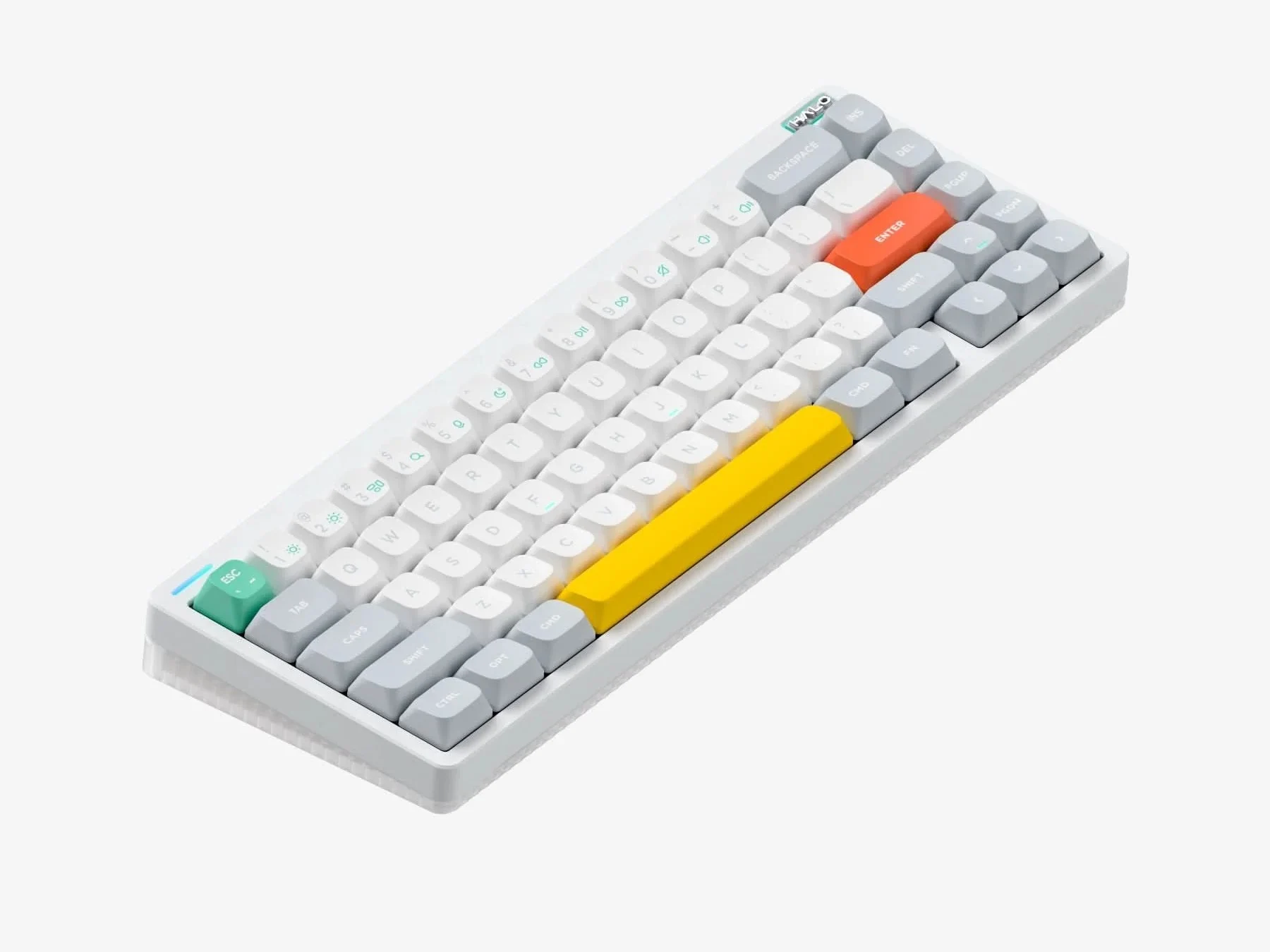
    NuPhy has been quite busy recently, launching the innovative Kick75 hybrid profile mechanical keyboard and the refreshed Air75 V3. Both of these new models come equipped with the latest Gateron Low-Profile V3 switches. Now, the mechanical keyboard manufacturer has revealed the new NuPhyIO versions of the Halo65 V2 and its larger variants. Although the hardware updates seem minimal, the primary change is in the firmware. NuPhy asserts that switching from QMK/VIA to their proprietary NuPhyIO firmware has significantly improved the battery life of these keyboards.

    Pricing and Availability

    The NuPhy Halo V2 NuPhyIO series can be purchased directly from the NuPhy store, with prices between $119.95 and $139.95, depending on the layout you choose. Meanwhile, the original Halo75 V2 with QMK firmware is listed on Amazon for $149.95.

    Different Models, Same Battery

    The Halo V2 series offers three options: the compact Halo65 V2, the somewhat larger Halo75 V2, and the numpad-equipped Halo96 V2. All of these models boast extended battery life, thanks to the NuPhyIO firmware. They maintain the same 4,000 mAh battery capacity as their QMK/VIA versions, but the QMK firmware is known for being less efficient. The PCB in the NuPhyIO versions is claimed to be simpler and more integrated compared to the QMK PCB.

    Impressive Battery Life Gains

    The switch in PCB and firmware is said to have led to a striking improvement in battery life. For instance, the wireless battery life on the Halo96 V2 NuPhyIO version has been extended to around 1200 hours from roughly 307 hours on the QMK/VIA version—nearly a 300% increase. However, it’s worth mentioning that the situation isn’t as bright when the backlighting is activated, with the new firmware only adding about a 10% boost to battery life.

    In our testing of wireless keyboards, such as the Keychron K4 HE, we found that turning up the RGB backlighting also leads to high power consumption, but NuPhy’s specific testing methods remain unclear. Factors like backlighting brightness and connectivity mode do influence power use—though the difference in power consumption between 2.4 GHz and Bluetooth polling rates from 125 Hz to 1,000 Hz isn’t as dramatic as one might expect.

    Firmware Features and Customization

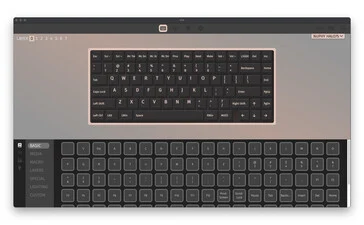
    When contrasting the NuPhyIO and QMK/VIA firmware versions, another vital aspect is the features available in each customization suite. Both offer browser-based customization, but they come with their own pros and cons. QMK is an open-source firmware project, which means that even if NuPhy were to cease operations, you could still customize your keyboard as long as you had the right JSON file. Some users even recommend cloning the QMK and VIA repositories, and in emergencies, direct firmware file edits are possible. QMK provides deep customization options, backed by excellent documentation and a robust community for support.

    On the other hand, NuPhyIO includes some handy features that QMK lacks, such as automatic firmware updates and certain built-in key binds for select creative applications. However, it doesn’t have the same open-source advantages as QMK firmware. There have also been reports of NuPhyIO keyboards losing custom key binds and macros if the battery is disconnected or runs out—this could be a deal-breaker for many serious users.

    Source:
    Link


  • NuPhy Halo65 V2: QMK/VIA Support, 1000Hz Polling, More Colors

    NuPhy Halo65 V2: QMK/VIA Support, 1000Hz Polling, More Colors

    Key Takeaways

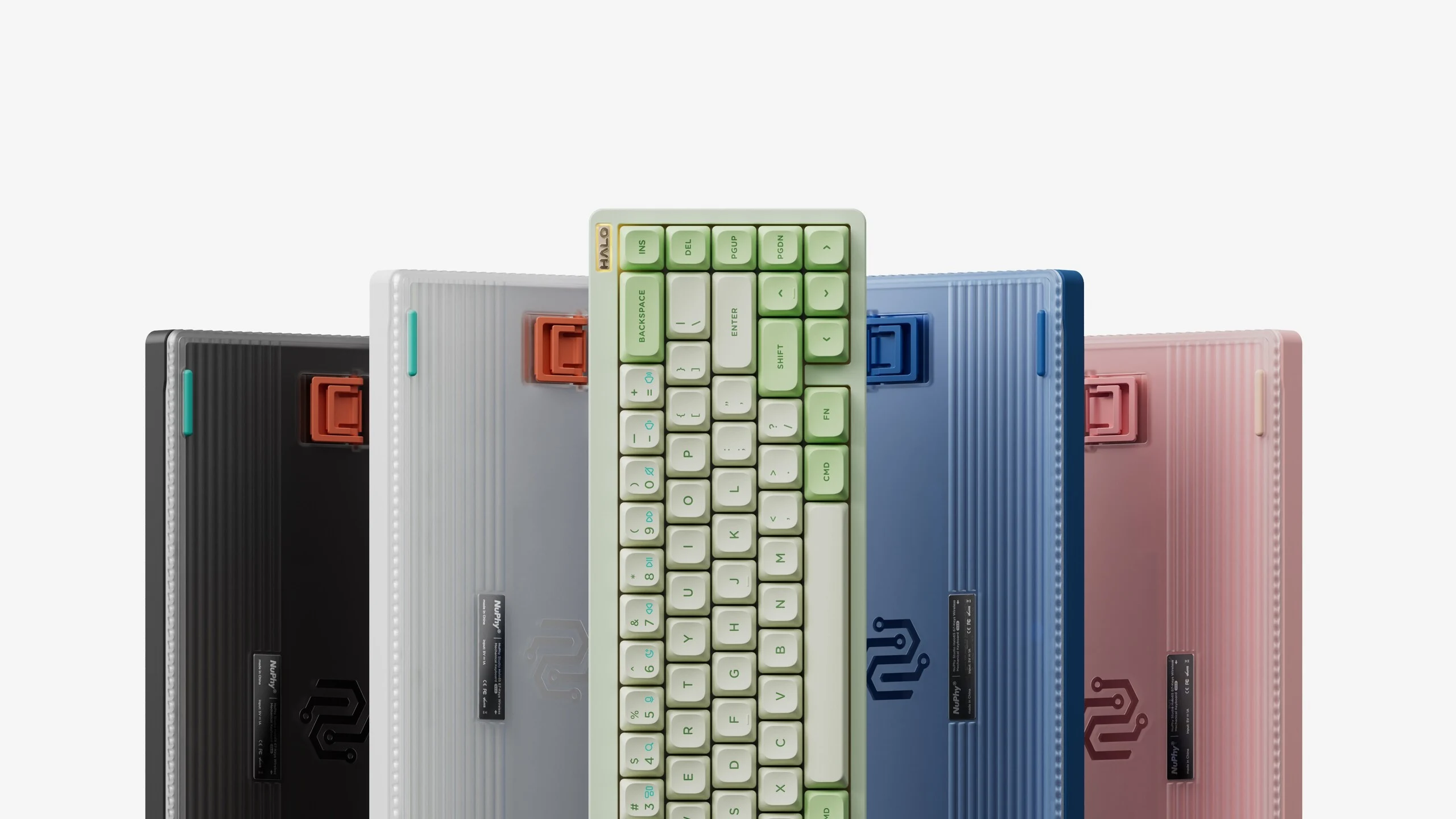
    1. The Halo65 V2 is priced at $119.95 and comes in five colors: Obsidian Black, Iconic White, Mojito, Blue Lagoon, and Sakura Fizz.
    2. Key upgrades include QMK/VIA support for extensive customization and improved 2.4G wireless mode with a 1000Hz polling rate for enhanced speed.
    3. The design features a see-through bottom case for the Halo 2.0 glow system, offering brighter LEDs and customizable lighting with SignalRGB.
    4. The keyboard uses NuPhy’s custom 5-pin mechanical switches in four variants and has double-shot PBT keycaps, along with a gasket mount and sound-dampening system.
    5. The Halo65 V2 is a significant advancement over its predecessor, competing with customizable 65% keyboards like the Keychron Q2.


    NuPhy has launched the upgraded version of its 65% Halo gaming keyboard. After teasing it on X, the Halo65 V2 is now available for purchase. This new model enhances the design, keycaps, switch options, and software support, which should lead to quicker input response, better sound, and a more polished overall experience.

    Pricing and Color Options

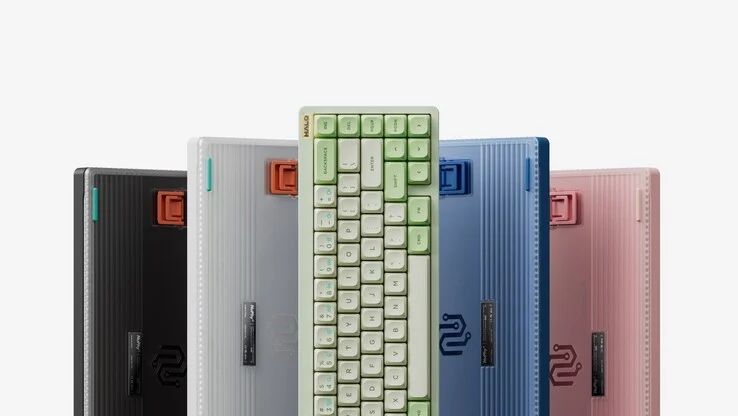
    You can buy the Halo65 V2 from NuPhy’s online shop for $119.95. It is offered in five colors: Obsidian Black (black), Iconic White (white), Mojito (green), Blue Lagoon (blue), and Sakura Fizz (pink).

    Significant Upgrades

    Initially, the Halo65 V2 was thought to be just a minor update, but NuPhy has implemented numerous upgrades. The most notable improvement is the QMK/VIA support, which allows for extensive customization. Similar to the previous version, the new model supports three connectivity modes, but the 2.4G wireless mode has significantly improved with a 1000Hz polling rate for enhanced speed.

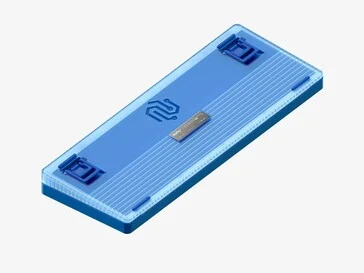
    NuPhy has also improved the overall design. The Halo65 V2 maintains the aluminum top frame, but the bottom case is now see-through to accommodate the upgraded Halo 2.0 glow system, offering a more balanced and ambient lighting effect along the edges. Alongside this, NuPhy claims that the LEDs are brighter and more powerful, and users can control the lighting entirely with SignalRGB.

    Switches and Keycaps

    The Halo65 V2 is designed around NuPhy’s custom 5-pin mechanical switches, which come in four variants: Mint, Raspberry, Lemon, and Blush Max. All of these switches are south-facing, hot-swappable, and include a POM stem, PC top housing, and PA66 nylon bottom housing. NuPhy has also substituted the KOP keycaps with its double-shot PBT keycaps in the mSA profile. Additional features consist of a gasket mount and a six-layer sound-dampening system, which are expected to enhance both acoustics and typing experience.

    With all its features, the Halo65 V2 appears to be a significant advancement rather than just a small update. Priced at $119.95, it competes directly with other customizable 65% keyboards like the Keychron Q2 (currently $94.99 on Amazon), but the combination of QMK/VIA support, 1000 Hz polling, and NuPhy’s distinctive design should make it more appealing. The keyboard is available now on NuPhy’s website and is likely to be listed on Amazon in the near future.

    Source:
    Link


  • NuPhy Kick75 Launches: Affordable, Customizable Retro Gaming Keyboard

    NuPhy Kick75 Launches: Affordable, Customizable Retro Gaming Keyboard

    Key Takeaways

    1. The NuPhy Kick75 is a hybrid-profile mechanical keyboard that supports both low-profile and full-height mechanical switches.
    2. It is available in four versions, with different firmware options (NuPhyIO and QMK/VIA), and prices ranging from $89.99 to $119.99.
    3. The keyboard offers four switch types: Red, Brown, Silver, and Blush, and comes with either nSA low-profile or mSA full-height keycaps.
    4. The Kick75 features an innovative PCB gasket mount design, allowing easy switching between profiles with minimal hardware changes.
    5. A cost-effective profile swap kit is available for $19, consisting of a taller top case and thicker foam, making it accessible for users to experiment with both profiles.


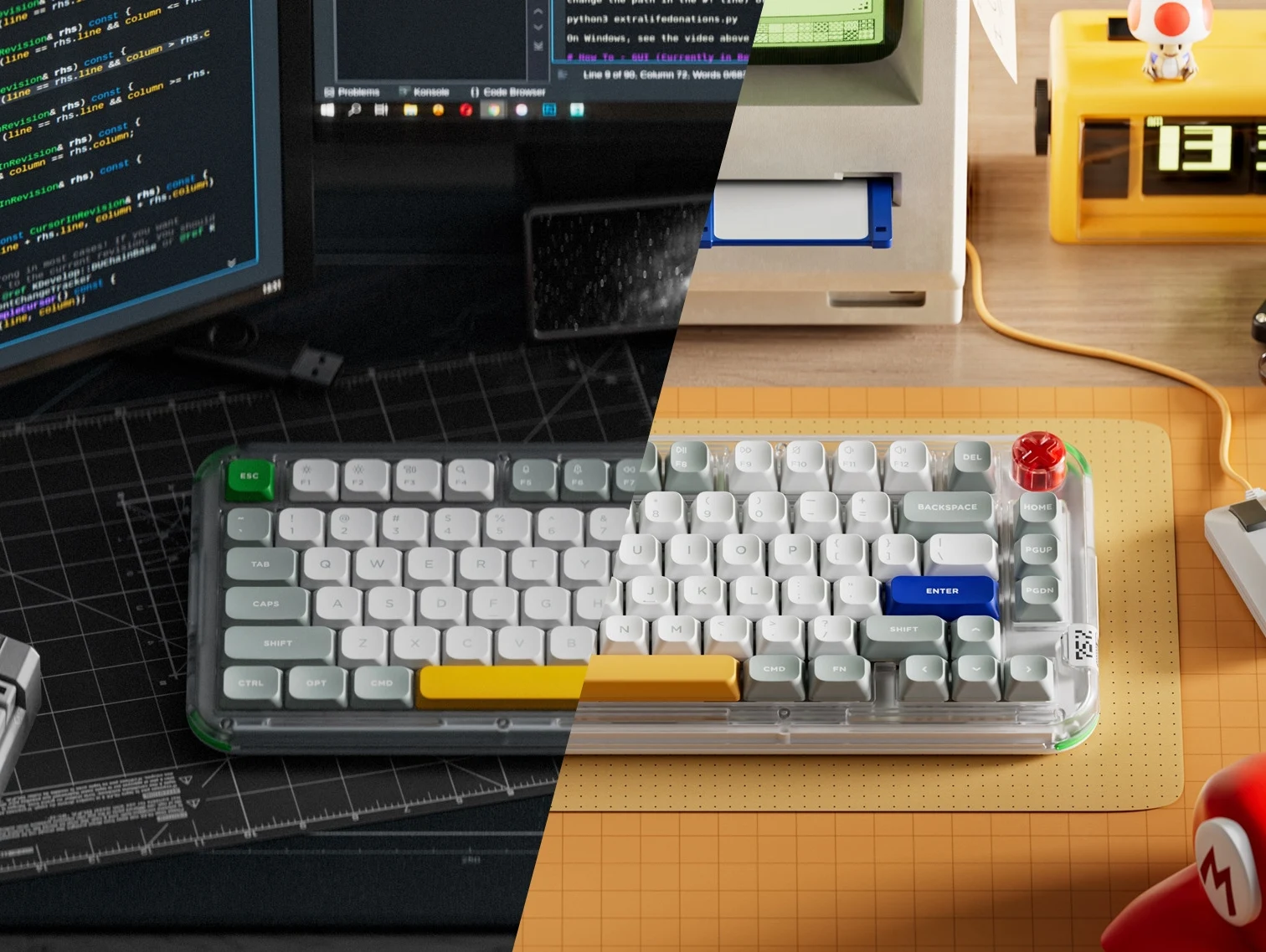
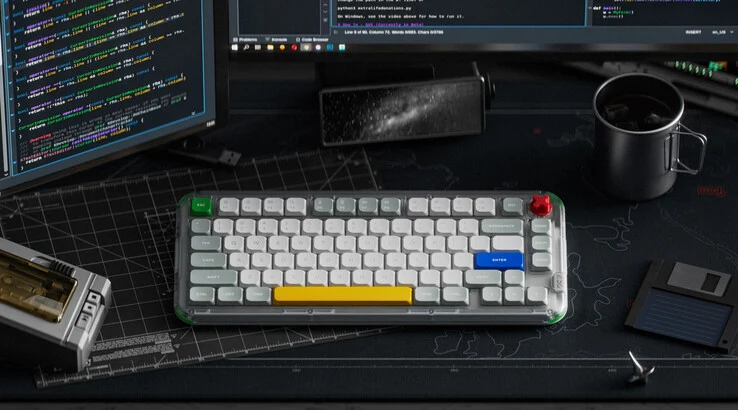
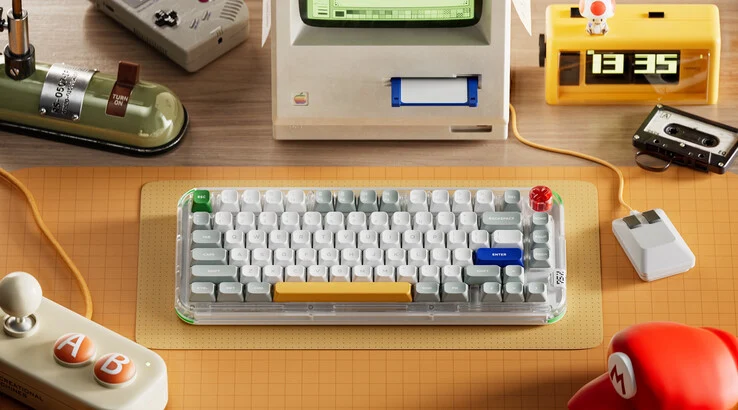
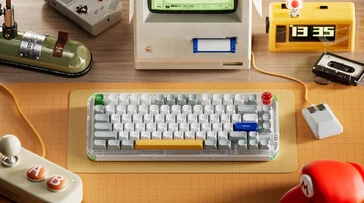
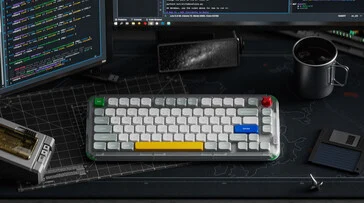
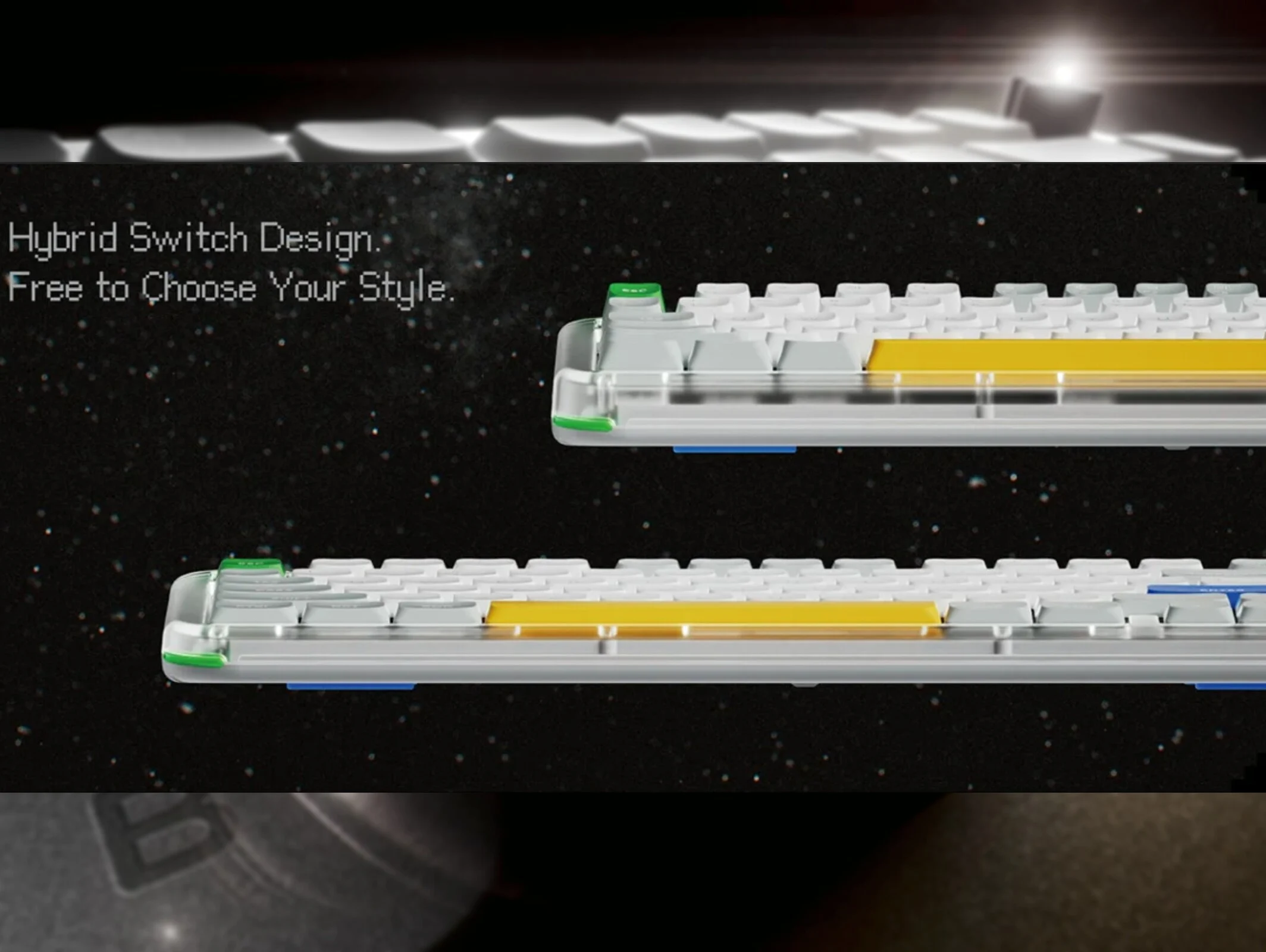
    NuPhy has officially opened pre-orders for the NuPhy Kick75 after teasing its new “hybrid-profile” mechanical keyboard for several weeks. A standout feature of the Kick75 is its ability to work with both low-profile and full-height mechanical switches.

    New Insights on Switching Modes

    Although earlier information about how to switch between low-profile and full-height modes was vague, the updated product page now clarifies how this process will function and what potential buyers need to consider. However, there are still some puzzling elements, such as NuPhy’s decision to offer two different firmware options for the keyboard.

    Kick75 Low, NuPhyIO: $89.99
    Kick75 Low, QMK/VIA: $109.99
    Kick75 High, NuPhyIO: $99.99
    Kick75 High, QMK/VIA: $119.99

    The Kick75 is available in four versions without extra accessories or customization. Customers can choose from either low- or high-profile kits, and NuPhy also provides the Kick75 with either QMK/VIA firmware or its proprietary NuPhyIO firmware, with the latter being priced lower for some unknown reason.

    Switch Options and Keycaps

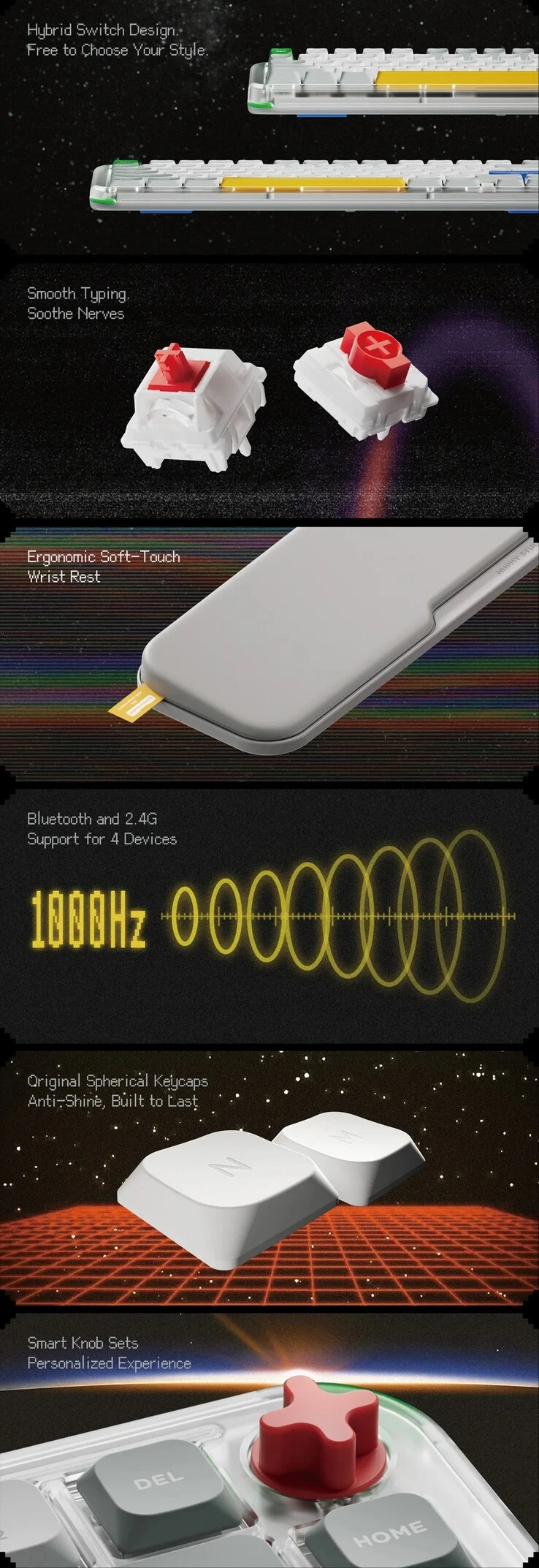
    NuPhy has made the Kick75 available with four different switch types: Red (linear), Brown (light tactile), Silver (tactile), and Blush (long-travel linear). The keyboard comes equipped with either nSA low-profile keycaps featuring concave tops and green highlights or mSA full-height keycaps, which are a variation of the popular SA profile but with slightly reduced key heights.

    In addition to its unique look and design, the NuPhy Kick75 boasts a 4,000 mAh battery for the QMK version and a 2,500 mAh battery for the NuPhyIO version. NuPhy claims that this will deliver 294 hours of battery life with the RGB backlighting turned off and 60 hours with the backlighting on. The Kick75 supports both Bluetooth and 2.4 GHz wireless connections, along with a USB Type-C port. However, it’s not clear if NuPhy is providing battery life estimates for Bluetooth or 2.4 GHz.

    Innovative Design Features

    When the Kick75 was first revealed by NuPhy, the specifics of the switching mechanism were not clear. Initially, only an alternative top case, switches, and some internal components were shown as needing to be changed. However, the pre-order page now offers further insights into how the innovative hybrid design works. It appears that the Kick75 utilizes a PCB gasket mount, allowing only the plate foam and top case to be swapped for the switching process. Remarkably, NuPhy has engineered its stock stabilizers to function in both setups, which is quite an achievement.

    This information is intriguing for two reasons. First, it enables NuPhy to provide a switching kit with minimal hardware—just a different top case and foam for placement between the PCB—thereby lowering costs for those wanting to experiment with both profile options. Second, hot-swappable low- and high-profile mechanical switches have distinct plate height requirements. Past efforts to standardize the switch pin layout, which NuPhy attempted with the Nos75, often required different plates, mounts, or entire bottom cases. The transition to a PCB gasket mount helps the Kick75 avoid the plate height issue without needing to replace multiple injection-molded components.

    Cost-Effective Profile Swap Kit

    The profile swap kit for the Kick75 consists of just a taller top case and a thicker foam sheet, allowing NuPhy to offer it at a low price (discounted by 30% to $19 with a pre-order of the Kick75). Buyers will need to purchase additional switches for the alternative profile, but many mechanical keyboard fans likely already own an extra switch set, making it feasible to buy a Low Kick75 and a swap kit to achieve their goal.

    It’s also important to mention that the full-height version of the Kick75 supports standard five-pin Cherry MX-style switches, like the Epomaker Wisteria Tactile switches, which can be found on Amazon for around $11.99 for a set of 30. In contrast, the low-profile Kick75 configuration utilizes a new Gateron Nano switch, which shares the same pin arrangement as the full-height switches, making them the only low-profile switches currently compatible with the hybrid-profile keyboard. Therefore, anyone interested in the low-profile switches should likely opt for the Low configuration, as there is uncertainty about the future production of this new switch standard.

    Source:
    Link


  • NuPhy Kick75 Mechanical Keyboard: $1 Pre-Order, Customization & More

    NuPhy Kick75 Mechanical Keyboard: $1 Pre-Order, Customization & More

    When NuPhy’s Kick75 was introduced last week, details about this new mechanical keyboard were limited. It was known for its eye-catching retro style and the ability to use both low-profile and standard-height mechanical switches. Now, NuPhy has opened the pre-order page for the Kick75, providing us with further insights into what we can expect from this wireless mechanical keyboard.

    Pre-Order Details

    The pre-order page and the Kick75 microsite don’t provide a lot of specifics, but there’s still useful information available. Firstly, the pre-order cost is just $1, while the final price is still unknown and set to be announced on February 18, 2025.

    Design Features

    NuPhy appears to be applying lessons from their previous models, the NuPhy Air60 HE (currently priced at $139.99 on Amazon) and Air75 HE keyboards, to the new Kick75. According to the Kick75 microsite, the low-profile version will feature switches with a travel distance of 3.4 mm, which is comparable to some full-height switches, along with a full-POM construction. In theory, this full-POM build should allow the switches to feel smoother over time, though POM isn’t universally praised as a switch material.

    Community Involvement

    NuPhy has also announced that 3D models for the Kick75 will be available, enabling users to 3D print their own accessories. While this isn’t entirely new in the realm of custom mechanical keyboards, it’s somewhat rare for larger manufacturers. This approach could lead to plenty of community-driven enhancements and additions.

    In addition, the Kick75 seems to take inspiration from the Nos75. Rather than employing distinct switch sockets to support both low-profile and standard keycaps, the Kick75 switches will have a unified pin layout. This is beneficial for customization regarding full-height options, but it does limit the selection of low-profile switches that can be used with the Kick75.

    Future Plans

    For now, it remains uncertain how NuPhy intends to market the Kick75. They are asking customers to indicate their preferred variant in a survey after paying the $1 pre-order fee. This suggests that NuPhy is primarily aiming to sell the Kick75 as a pre-configured kit, with optional switches, top cases, and plates available for separate purchase.

    NuPhy is on a mission to make keyboards accessible to everyone, similar to how Odyssey has made gaming more inclusive.

    Source:
    Link


  • NuPhy Kick75: World’s First Hybrid Mechanical Keyboard with Switch Compatibility

    NuPhy Kick75: World’s First Hybrid Mechanical Keyboard with Switch Compatibility

    NuPhy has launched some fascinating keyboards before, including the Air60 HE, which is currently priced at $139.99 on Amazon and proudly holds the title of the first low-profile Hall-effect gaming keyboard in the world. Now, they seem to be introducing another first with the Kick75, a 75% wireless keyboard that comes packed with some cool features.

    Unique Switching Capabilities

    One of the standout features of the Kick75 is its ability to work with both low-profile and full-height mechanical switches, all incorporated into the same PCB and case — mostly, anyway. While NuPhy hasn’t shared too many specifics, a few details can be gathered from the official teaser page for the Kick75.

    To switch between low-profile and full-height modes, it appears that users will need to change out at least the top case. Other components, like the plate or perhaps some plate foams and mounting hardware, will likely need to be swapped too, considering it looks like it employs gaskets. If there are any additional layers, such as PCB foams or films, those might also require replacement.

    Keycap Options

    In a similar vein to the switches, the Kick75 will feature the choice between flat low-profile keycaps or full-height ones. Once again, NuPhy has not confirmed which keycaps will be included, but the ones shown in the teaser images seem to represent nSA for the low-profile setup and mSA for the full-height variant.

    The bottom case of the Kick75 isn’t see-through, but it appears to be made from some kind of plastic. TechPowerUp got a sneak peek at the Kick75 during NuPhy’s CES 2025 booth, revealing some features that NuPhy hadn’t previously disclosed. One notable feature is the kick-out feet, which are essential for low-profile keyboards. Since the Kick75 is made to be customizable, it uses screws to connect the top and bottom cases, and it looks like there are green silicone strips in between the two that could act as both a force-break and a gasket mount for either configuration.

    Purchasing Options

    As of now, it’s uncertain whether NuPhy will offer the Kick75 in just the low-profile or full-height setup or if customers will have the option to buy a hybrid kit that includes mounting hardware, foams, and top cases for both configurations. The latter seems more probable, given how NuPhy has marketed keyboards like the Nos75.

    What is confirmed, however, is that the Kick75 will support both wired and wireless connectivity, operating on 2.4 GHz with a 1,000 Hz polling rate, as well as Bluetooth for longer battery life.

    Source:
    Link