Tag: MediaTek Dimensity 9400

  • iQOO Z10 Turbo+ Launches: Dimensity 9400+ & 8,000 mAh Battery

    iQOO Z10 Turbo+ Launches: Dimensity 9400+ & 8,000 mAh Battery

    Key Takeaways

    1. iQOO launched the Z10 Turbo+ in China, part of the Z10 Turbo series alongside Z10 Turbo and Z10 Turbo Pro.
    2. The phone features a 50 MP rear camera with OIS, an 8 MP ultra-wide camera, and a 16 MP front camera, all in a slim design with an 8,000 mAh battery.
    3. It is powered by a MediaTek Dimensity 9400+ processor, up to 16 GB of RAM, and includes iQOO’s Q2 chip for enhanced gaming.
    4. The 6.78-inch AMOLED display has a resolution of 2800 x 1260 pixels, a 144 Hz refresh rate, and peak brightness of 5500 nits, running on Android 15-based OriginOS 5.
    5. Pricing starts at CNY 2,299 ($320) for the base model, with multiple configurations available, and it can be purchased from Vivo’s online store in China.


    Vivo’s gaming-centric smartphone brand, iQOO, has introduced a new flagship device, the Z10 Turbo+, in China. This new addition is part of the Z10 Turbo series, which also features the iQOO Z10 Turbo and Z10 Turbo Pro that were released in April with the Dimensity 8400 and Snapdragon 8s Gen 4 processors. The design of the Z10 Turbo+ closely resembles that of its siblings in the series.

    Camera Features

    The rear camera configuration is identical to that of the Pro version, with a 50 MP primary sensor equipped with Optical Image Stabilization (OIS) and an 8 MP ultra-wide camera. On the front, there is a 16 MP camera for selfies and video calls. The phone has a sleek dimension of only 8.16 mm (0.32 inch) in thickness and weighs 212 grams (0.46 lbs). iQOO has cleverly fitted an impressive 8,000 mAh battery, which supports 90 W wired charging, despite its slim design.

    Performance and Specifications

    This model boasts a stronger chipset compared to the other two variants in the lineup. Specifically, it uses a MediaTek Dimensity 9400+ processor, combined with up to 16 GB of LPDDR5X RAM and storage options of 256/512 GB using UFS 4.1 technology. Additionally, the device incorporates iQOO’s proprietary Q2 chip to enhance the gaming experience further.

    Display and Software

    On the front side, the Z10 Turbo+ features a 6.78-inch AMOLED display that offers a resolution of 2800 x 1260 pixels, a refresh rate of 144 Hz, and a peak brightness of 5500 nits, which is an improvement from the Z9 Turbo+’s 4550 nits. The software running on this device is Android 15-based OriginOS 5 right out of the box. Other specifications of the Z10 Turbo+ include an optical in-display fingerprint scanner, a substantial 7000 mm² vapor chamber cooling system, an IP65 rating for water and dust resistance, stereo speakers, an IR blaster, and an X-axis linear motor.

    Pricing and Availability

    Regarding pricing, the iQOO Z10 Turbo+ comes in four memory configurations: 12 GB + 256 GB, 12 GB + 512 GB, 16 GB + 256 GB, and 16 GB + 512 GB, priced at CNY 2,299 ($320), CNY 2,699 ($375), CNY 2,499 ($347), and CNY 2,999 ($417) respectively. The device is currently available for purchase through Vivo’s online store in China.

    Source:
    Link


  • Samsung Galaxy Tab S11 Ultra Leak: Smaller Notch & S Pen Move

    Samsung Galaxy Tab S11 Ultra Leak: Smaller Notch & S Pen Move

    Key Takeaways

    1. The Samsung Galaxy Tab S10 Ultra will launch in October and features a 10% CPU performance boost with the MediaTek Dimensity 9400+ chip.
    2. The tablet’s design retains a dual-camera setup on the back but moves the S Pen connector to the edge and has a smaller display notch.
    3. One of the two front cameras has been removed, but it still includes a 12 MP wide-angle and a 12 MP ultrawide camera.
    4. The Galaxy Tab S10 Ultra is expected to have an 11,700 mAh battery, slightly larger than the previous model’s 11,200 mAh.
    5. Despite improvements, the device’s performance is still behind that of competitors using the Qualcomm Snapdragon 8 Elite processor.


    The new version of the Samsung Galaxy Tab S10 Ultra (about $1,050 on Amazon) is set to be released in October. It was recently seen on Geekbench, revealing that it has a roughly 10% boost in CPU performance compared to the last model, thanks to the MediaTek Dimensity 9400+ chip. However, it still struggles to match the performance of devices that use the Qualcomm Snapdragon 8 Elite processor. Notable tipster Evan Blass has shared what could be the very first image of this new tablet.

    Design Changes

    Looking at the image, it seems that Samsung is keeping the dual-camera arrangement on the back of the tablet, but they have taken away the pill-shaped section that marked the magnetic charging spot for the S Pen. This might mean that Samsung is moving the magnetic connector to the edge of the tablet, similar to what Apple does with the iPad Pro. Another nice upgrade is the smaller notch on the display. However, it looks like Samsung has decided to drop one of the two front cameras, likely to create more space.

    Specs and Features

    The Galaxy Tab S10 Ultra comes with a 12 MP wide-angle camera and a 12 MP ultrawide camera on the front. In theory, a higher-resolution ultrawide lens with digital zoom could replace the two cameras without losing any function. Besides the design updates and a slightly quicker processor, the Galaxy Tab S11 Ultra is expected to have an 11,700 mAh battery—about 4.5% bigger than the previous model’s 11,200 mAh capacity.

    Source:
    link


  • Xiaomi 15T Pro Leaked: Disappointing Memory Options Revealed

    Xiaomi 15T Pro Leaked: Disappointing Memory Options Revealed

    Key Takeaways

    1. The Xiaomi 15T Pro is nearing its official launch, having received approval from the FCC in the US.
    2. It will feature memory options starting at 12 GB RAM and 256 GB storage, with additional options for 512 GB and 1 TB, but no microSD card slot for expansion.
    3. Unlike the Xiaomi 14T Pro, the 15T Pro will not offer a 16 GB RAM option.
    4. The Xiaomi 15T Pro is based on the Redmi K80 Ultra, which includes a 16 GB RAM configuration and similar storage options.
    5. The device will be powered by the MediaTek Dimensity 9400+ chipset and has a battery capacity of 5,500 mAh, which is 25% smaller than that of the Redmi K80 Ultra.


    The Xiaomi 15T Pro is set to be unveiled soon, as it has made its way to the Federal Communications Commission (FCC) in the US. This device carries the model number 2506BPN68G, which is the same as seen in its recent appearance at the IMDA. As usual, the FCC’s initial documents reveal some information about the upcoming gadget ahead of its official launch.

    Memory Options Revealed

    The FCC has shared some insights related to the memory configurations that will be available for the Xiaomi 15T Pro. Similar to its previous version, it is indicated that this new model will come with a starting point of 12 GB of RAM and 256 GB of internal storage. Furthermore, there will be options for 512 GB and 1 TB for users who require more space, especially since there is no microSD card slot for expansion. Interestingly, it appears that Xiaomi will not offer the 16 GB of RAM choice that was available with the Xiaomi 14T Pro, which is currently priced at $617 on Amazon.

    Comparisons with Redmi K80 Ultra

    In a curious twist, the Redmi K80 Ultra, which serves as the foundation for the Xiaomi 15T Pro, offers configurations with 16 GB of RAM alongside various storage options of 256 GB, 512 GB, and 1 TB. Presently, it is anticipated that the Xiaomi 15T Pro will be powered by the same MediaTek Dimensity 9400+ chipset found in the Redmi K80 Ultra. However, it will feature a battery with a capacity that is 25% smaller, totaling 5,500 mAh. For now, the Xiaomi 15T Pro is expected to be launched in September, accompanied by a more affordable variant named the Xiaomi 15T.

    Source:
    Link


  • Xiaomi 15T Pro Leaked Ahead of Global Launch Announcement

    Xiaomi 15T Pro Leaked Ahead of Global Launch Announcement

    Key Takeaways

    1. Xiaomi has launched the Redmi K80 Ultra, primarily available in China, with a potential global version identified in Singapore’s IMDA database.
    2. The global version is believed to be the Xiaomi 15T Pro, linked to the model number 2506BPN68G from previous leaks.
    3. The expected release date for the Xiaomi 15T Pro is September, following Xiaomi’s typical launch schedule.
    4. The Xiaomi 15T Pro is anticipated to have minor differences from the Redmi K80 Ultra and will feature a MediaTek Dimensity 9400+ chipset, a 6.83-inch LTPS OLED screen, and a 7,000 mAh battery with 100 W wired charging.
    5. The Redmi K80 Ultra’s launch and the forthcoming Xiaomi 15T Pro are generating excitement among international fans for new features and improvements.


    Xiaomi has launched the Redmi K80 Ultra in China, and it can be found through various third-party sellers. Although the Redmi K80 Ultra is anticipated to stay exclusive to China, a global version has been seen on Singapore’s Infocomm Media Development Authority (IMDA) database.

    Model Number Discovery

    The device is thought to be the Xiaomi 15T Pro, but on the IMDA, it’s only listed by its model number. The model number 2506BPN68G was linked to the Xiaomi 15T Pro in a previous leak. This model number suggests that Xiaomi is gearing up for a worldwide launch later this year.

    Expected Release Date

    If Xiaomi keeps to its usual release schedule, the Xiaomi 15T Pro could be officially launched in September, alongside a more affordable Xiaomi 15T. The Pro version is likely to have only slight differences from the Redmi K80 Ultra, similar to what happened with last year’s Redmi K70 Ultra and the Xiaomi 14T Pro (currently priced at $618 on Amazon). Therefore, the Xiaomi 15T Pro is expected to come this autumn with a MediaTek Dimensity 9400+ chipset, a 6.83-inch LTPS OLED screen, and a roughly 7,000 mAh battery that supports 100 W wired charging. For more specifications, check our article on the Redmi K80 Ultra launch.

    Summary of Features

    Overall, the Redmi K80 Ultra’s introduction marks an exciting step for Xiaomi, while the upcoming Xiaomi 15T Pro holds promise for international fans. Everyone is looking forward to what features and improvements will be put in the global version.

    Source:
    Link


  • Redmi K80 Ultra: Affordable Flagship Phone Launches Worldwide

    Redmi K80 Ultra: Affordable Flagship Phone Launches Worldwide

    Key Takeaways

    1. The Redmi K80 Ultra is an affordable flagship device launched in China, with prices starting at $459 for the basic model.
    2. The device features a powerful MediaTek Dimensity 9400+ SoC, UFS 4.1 storage, and LPDDR5X RAM.
    3. Importing the phone may cost an additional $100 to $170, with the Chinese version of HyperOS and potential bloatware included.
    4. The K80 Ultra comes with Google Mobile Services pre-installed, but some global features, like Android Auto, may be missing.
    5. It boasts a 50 MP main camera and a large 7,410 mAh battery that supports 100 W fast charging.


    The Redmi K80 Ultra has been released in China and is positioned as an affordable flagship device, featuring a powerful MediaTek system on chip (SoC). Although it hasn’t officially launched globally, international customers can already purchase it through import channels. As listed on Giztop, the starting price for the basic model is $459.

    Pricing Details

    To give some context, the same model, which comes with 12 GB of RAM and 256 GB of storage, debuted at a price of CNY 2,599 in China, equating to roughly $362. Giztop also provides various configurations of the K80 Ultra, with the highest-end variant equipped with 16 GB of RAM and 1 TB of storage available for $699. In China, this version launched at CNY 3,799, which is about $530.

    Import Considerations

    This means that importing the device costs about $100 to $170 more through Giztop, which isn’t terrible for those eager to get their hands on the Redmi K80 Ultra sooner. Nevertheless, there are some important factors to think about before bringing a smartphone from China.

    For instance, the imported model will come with the Chinese version of HyperOS. Although it supports multiple languages, it may include certain bloatware specific to China. Additionally, some features found in global models, like Android Auto, won’t be present on this device.

    Device Specifications

    On a positive note, Giztop confirms that the budget-friendly flagship will arrive with Google Mobile Services already installed. Warranty is another aspect to consider; even though the store seems to have a reasonable policy, it won’t be as straightforward as dealing with an official warranty.

    When it comes to the phone’s specifications, the Redmi K80 Ultra is powered by the Dimensity 9400+, combined with UFS 4.1 storage and LPDDR5X RAM. The device features a 50 MP main camera on its rear, along with a substantial 7,410 mAh battery that supports 100 W fast charging (the 25K Anker 100 W power bank is currently priced at $109.98 on Amazon). For more information about the device, check out our launch coverage.


  • Redmi K Pad: Xiaomi’s New Device Beats iPad Mini 7

    Redmi K Pad: Xiaomi’s New Device Beats iPad Mini 7

    Key Takeaways

    1. Processor Performance: Redmi K Pad features an octa-core MediaTek Dimensity 9400+ processor, while iPad Mini 7 has a hexa-core Apple A17 Pro processor.

    2. Display and Features: K Pad offers an 8.8-inch 2.5k IPS LCD with 165 Hz refresh rate, superior to the iPad Mini 7’s 8.3-inch 2k IPS LCD with 60 Hz.

    3. Cooling and Audio: K Pad uses a liquid cooling system for better thermal management, while Mini 7 relies on passive cooling; K Pad also has louder stereo speakers.

    4. Battery Life and Connectivity: K Pad has a larger 7,500 mAh battery with 67 W fast charging compared to Mini 7’s 5,078 mAh battery and 20 W charging.

    5. Pricing and Variants: K Pad launches at CN¥2,799 ($391), significantly cheaper than iPad Mini 7’s CN¥5,799 ($810); it offers multiple storage options.


    Xiaomi has just made an official announcement for the Redmi K Pad, a compact tablet that aims to rival the Apple iPad Mini 7. During the launch, Xiaomi drew comparisons between its specifications and those of the iPad Mini (2024), making a bold move to claim the title of the top mini tablet. Let’s explore how it stacks up against its direct competitor, starting with the processors.

    Processor Performance

    The Redmi K Pad is powered by the octa-core MediaTek Dimensity 9400+ processor, which is manufactured using advanced 3 nm technology and can reach speeds of up to 3.63 GHz. In contrast, the iPad Mini 7 is equipped with the Apple A17 Pro processor, a hexa-core chip also built on a 3 nm architecture, capable of clocking up to 3.78 GHz.

    Display and Features

    Boasting an 8.8-inch 2.5k IPS LCD, the Redmi K Pad offers a refresh rate of 165 Hz, a touch sampling rate of 372 Hz, and a pixel density of 403 PPI. The iPad Mini 7, on the other hand, has an 8.3-inch 2k IPS LCD with a maximum refresh rate of 60 Hz, a touch sampling rate of 120 Hz, and a pixel density of 327 PPI. The K Pad’s display sports a narrower 8:5 aspect ratio and provides 700 nits of peak brightness, while the Mini 7 features a 9:6 ratio and 500 nits peak brightness.

    Cooling and Audio

    For thermal management, the K Pad utilizes a liquid cooling system measuring 12,050 mm², whereas the Mini 7 depends on a passive cooling solution. Both tablets are equipped with stereo speakers, with the K Pad reaching a sound level of 80.2 dB and the Mini 7 hitting 71.6 dB.

    Battery Life and Connectivity

    On the battery front, the K Pad houses a robust 7,500 mAh battery and supports fast charging at 67 W. In comparison, the Mini 7 has a smaller 5,078 mAh battery with a 20 W charging capability. The new mini tablet from Xiaomi includes a side-mounted USB-C 3.2 Gen 1 port, while the Mini 7 comes with a USB-C 3.1 Gen 2 port.

    Pricing and Variants

    The Redmi K Pad is set to launch at a price of CN¥2,799 ($391) for the 8/256 GB model, significantly undercutting the Apple iPad Mini 7’s launch price of CN¥5,799 ($810) for its 8/256 GB variant (currently $577.50 on Amazon). The K Pad will be available in five different versions: 8/256 GB, 12/256 GB, 12/512 GB, 16/512 GB, and 16/1 TB.

    Source:
    Link

  • Xiaomi Launches Affordable Redmi K80 Ultra with Minimalist Design

    Xiaomi Launches Affordable Redmi K80 Ultra with Minimalist Design

    Key Takeaways

    1. Xiaomi launched the Redmi K80 Ultra, also known as the Redmi K80 Extreme Edition, targeting the market with competitive pricing.
    2. The device is powered by MediaTek’s Dimensity 9400+ chipset, with options for up to 16 GB of LPDDR5x RAM and 1 TB of UFS 4.1 storage.
    3. It features a large 7,410 mAh battery with 100 W wired charging but does not support wireless charging.
    4. The camera setup includes a 50 MP primary camera, a 20 MP front camera, and an 8 MP ultra-wide-angle camera.
    5. The AMOLED display measures 6.83 inches with a resolution of 2,772 x 1,280 pixels, a 144 Hz refresh rate, and peak brightness of 3,200 nits, with prices starting at CNY 2,599 (~$363).


    Earlier this week, Xiaomi unveiled the Poco F7 to the global market with very competitive pricing. Now, they have introduced the Redmi K80 Ultra, which is also known as the Redmi K80 Extreme Edition. Regardless of its name, this device is anticipated to give us a glimpse of what will eventually take the place of the Xiaomi 14T Pro (currently priced at $623 on Amazon).

    Powering the Device

    To achieve this, Xiaomi has chosen to use MediaTek for the Redmi K80 Ultra instead of Qualcomm. Specifically, they have selected the Dimensity 9400+, which can also be found in other smartphones like the OnePlus Ace 5 Ultra, Oppo Find X8s, and Vivo X200s. Additionally, the Redmi K80 Ultra offers up to 16 GB of LPDDR5x RAM and a massive 1 TB of UFS 4.1 flash storage, similar to the Mix Flip 2 that was also launched today.

    Impressive Battery and Camera Features

    The Redmi K80 Ultra boasts a large 7,410 mAh battery that supports 100 W wired charging. However, like many Redmi smartphones, it lacks wireless charging capabilities. On the camera front, Xiaomi has equipped the device with a 50 MP primary camera and a 20 MP front camera, although it features a less impressive 8 MP ultra-wide-angle camera.

    Display and Pricing Options

    Another standout feature of the Redmi K80 Ultra is its display. It measures 6.83 inches diagonally and is housed in a casing that measures 163.08 x 77.93 x 8.18 mm, weighing in at 219 g. The AMOLED display has a resolution of 2,772 x 1,280 pixels, a refresh rate of 144 Hz, peak brightness of 3,200 nits, and includes full DC dimming to completely eliminate pulse-width modulation (PWM).

    Currently, the Redmi K80 Ultra is priced starting at CNY 2,599 (~$363) for the version with 12 GB of RAM and 256 GB of storage. Alternatively, buyers can opt for a configuration available in one of four colors, featuring up to 16 GB of RAM and 1 TB of storage for CNY 3,799 (~$530). For comparison, Xiaomi has set the following prices for the device across its five memory options:

    Source:
    Link


  • Xiaomi Unveils Key Features of Redmi K80 Ultra Before Launch

    Xiaomi Unveils Key Features of Redmi K80 Ultra Before Launch

    Key Takeaways

    1. Premium Design: The Redmi K80 Ultra features a flat glass fiber back, a flat metal frame, rounded corners, and an off-center circular camera module.

    2. Impressive Display Features: It has a 6.83-inch display with a 144Hz refresh rate, Eye Protection 2.0, and peak brightness of 3200 nits, along with an independent AI-enhanced display chip.

    3. Powerful Performance: Powered by the MediaTek Dimensity 9400+ chipset, it includes the largest 3D vapor cooling system from Redmi, with undisclosed RAM and storage options.

    4. Enhanced Battery Life: The device includes a 7,410mAh battery, offering up to 2.26 days of usage and supports 100W fast wired charging, though it lacks wireless charging.

    5. Audio and Vibration Features: It boasts high-quality coaxial dual speakers and an advanced vibration motor with 85 unique vibration effects.


    Ahead of the launch of the Redmi K80 Ultra, Xiaomi’s Liu Weibing and Thomas Wang shared in-depth insights about the essential features of this new flagship device, also referred to as the Redmi K80 Extreme Edition. Their livestream event highlighted not only the phone but also introduced the Redmi K Pad and offered a sneak peek at the Redmi Game Controller.

    Premium Design

    Marketed as the top-tier flagship from Redmi, the Redmi K80 Ultra boasts a flat glass fiber back, a flat metal frame, and rounded corners. The large rectangular camera module seen on the Redmi K70 Ultra and the Poco F6 Pro (available on Amazon.de for €415.66) has been replaced by an off-center circular camera island, which houses two rear cameras and an LED flash. Customers can choose from colors like Green, Ice Blue, White, and Sandstone Grey.

    Impressive Display Features

    The Redmi K80 Ultra is set to feature a 6.83-inch display with a 144Hz refresh rate, Eye Protection 2.0, and a peak brightness of 3200 nits, along with DC dimming support. Redmi has also introduced an independent display chip named the Redmi D2, which utilizes AI technology to enhance the phone’s resolution.

    Powerful Performance

    Similar to its predecessor, the Redmi K80 Ultra runs on a MediaTek processor; however, it now uses the Dimensity 9400+, which is currently MediaTek’s top chipset. Unfortunately, details on the specific RAM and storage options remain undisclosed. Additionally, the camera details have not been revealed yet, but Redmi claims that the K80 Ultra features the largest 3D vapor cooling system in the brand’s history.

    When the Redmi K80 Ultra hits the market, it will come equipped with an impressive 7,410mAh battery, marking a significant improvement over the 5,500mAh found in the Redmi K70 Ultra. Redmi asserts that this device can provide up to 2.26 days of usage and supports 100W fast wired charging. However, it appears to lack wireless charging capabilities like those found in the Redmi K80 Pro. Additional features include high-quality coaxial dual speakers and an advanced vibration motor that incorporates a closed-loop driver IC, offering as many as 85 unique vibration effects.

    Source:
    Link

  • Xiaomi Redmi K80 Extreme Beats RedMagic 10S Pro Plus in Benchmarks

    Key Takeaways

    1. Xiaomi is set to launch the Redmi K80 Extreme Edition alongside the Redmi K Pad before the end of the month, but full details are not yet disclosed.
    2. The device features a MediaTek Dimensity 9400+ processor and 16 GB of RAM, with confirmed scores reaching 3.24 million on AnTuTu V10.
    3. The Redmi K80 Extreme Edition aims to outperform competitors, potentially exceeding the performance of Snapdragon 8 Gen 3 and Dimensity 9400 devices.
    4. A score of 3.24 million would set a new record in AnTuTu’s Android rankings, surpassing the current leader, RedMagic 10S Pro Plus.
    5. Promotional images reveal the device in three color variants, featuring a 50 MP main camera with OIS and a 6.83-inch display with thin bezels.


    Xiaomi is currently not disclosing all the details about the Redmi K80 Extreme Edition. Instead, they have hinted that this new device will launch alongside the Redmi K Pad before the month concludes. Also known as the Redmi K80 Ultra, the phone has already been listed on Geekbench with a MediaTek Dimensity 9400+ processor and 16 GB of RAM.

    Confirmed Specs

    Xiaomi has confirmed this information through another series of official teasers. The company states that the combination of the Dimensity 9400+ and their in-house D2 display chip enables the Redmi K80 Extreme Edition to achieve a remarkable score of 3.24 million on AnTuTu V10. If retail versions manage to reach this score, it would mean the Redmi K80 Extreme Edition exceeds the average scores recorded by devices powered by Snapdragon 8 Gen 3, Snapdragon 8 Elite, and Dimensity 9400 in our evaluations.

    Performance Edge

    Notably, a score of 3.24 million would set a new record in AnTuTu’s official Android rankings. As of now, the RedMagic 10S Pro Plus (currently priced at $899 on Amazon) is leading this table with an approximate score of 2.95 million. In simpler terms, Xiaomi is indicating that the Redmi K80 Extreme Edition could have a 10% performance lead over its competitors.

    Design Features

    In addition, Xiaomi has released a new collection of promotional images showcasing the device. These images reveal the Redmi K80 Extreme Edition in three color variants, one of which is named ‘Tsukiiwa White.’ From the visuals, we can infer that the phone is equipped with a 50 MP main camera featuring OIS, which Xiaomi plans to pair with a 6.83-inch display that has very thin bezels.

    Source:
    Link

  • Xiaomi Unveils Design of Upcoming Lenovo Legion Y700 Rival Tablet

    Xiaomi Unveils Design of Upcoming Lenovo Legion Y700 Rival Tablet

    Key Takeaways

    1. Xiaomi will launch two new flagship products: the Redmi K Pad and the Redmi K80 Ultra, but the release date is not yet announced.
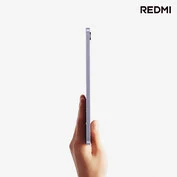
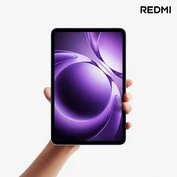
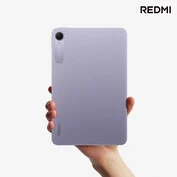
    2. The Redmi K80 Ultra’s design is similar to its predecessors, while the Redmi K Pad features a sleek design with a single rear camera, akin to the iPad Mini 7.
    3. The Redmi K Pad is designed for easy one-handed use and portability, targeting performance enthusiasts with a MediaTek Dimensity 9400+ chipset.
    4. Both the Redmi K Pad and Legion Y700 have 8.8-inch LCD screens, but the Redmi K Pad may have a slightly lower battery capacity of 7,000 mAh compared to the Legion Y700’s 7,600 mAh.
    5. The Redmi Pad SE is available for purchase on Amazon.


    Xiaomi recently revealed that it will soon launch two new flagship products, the Redmi K Pad and the Redmi K80 Ultra. Although the company has not yet announced a specific date for the release, it has shared design details for both devices.

    Design Reveal

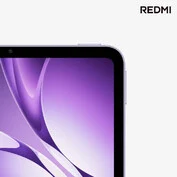
    Xiaomi showcased several images of the Redmi K Pad and the Redmi K80 Ultra on its Redmi Weibo page. The design of the Redmi K80 Ultra resembles that of its relatives, the Redmi K80 and Redmi K80 Pro, so there isn’t much new there. However, the Redmi K Pad features a sleek design that aligns with earlier reports suggesting it would have a single rear camera, similar to the iPad Mini 7, which it is targeting.

    Performance Focused

    The company is promoting the Redmi K Pad as a tablet that is easy to hold in one hand and can even fit into a pocket. In a similar vein to the Legion Y700 (4th Gen), the Redmi K Pad is aimed at performance enthusiasts and is powered by MediaTek’s Dimensity 9400+, a chipset comparable to the Snapdragon 8 Elite found in the Lenovo tablet. Both tablets have 8.8-inch LCD screens, but it seems the Redmi K Pad might face a battery challenge, as rumors suggest it will come with a 7,000 mAh battery, which is slightly less than the Legion Y700’s 7,600 mAh capacity.

    Source:
    Link