
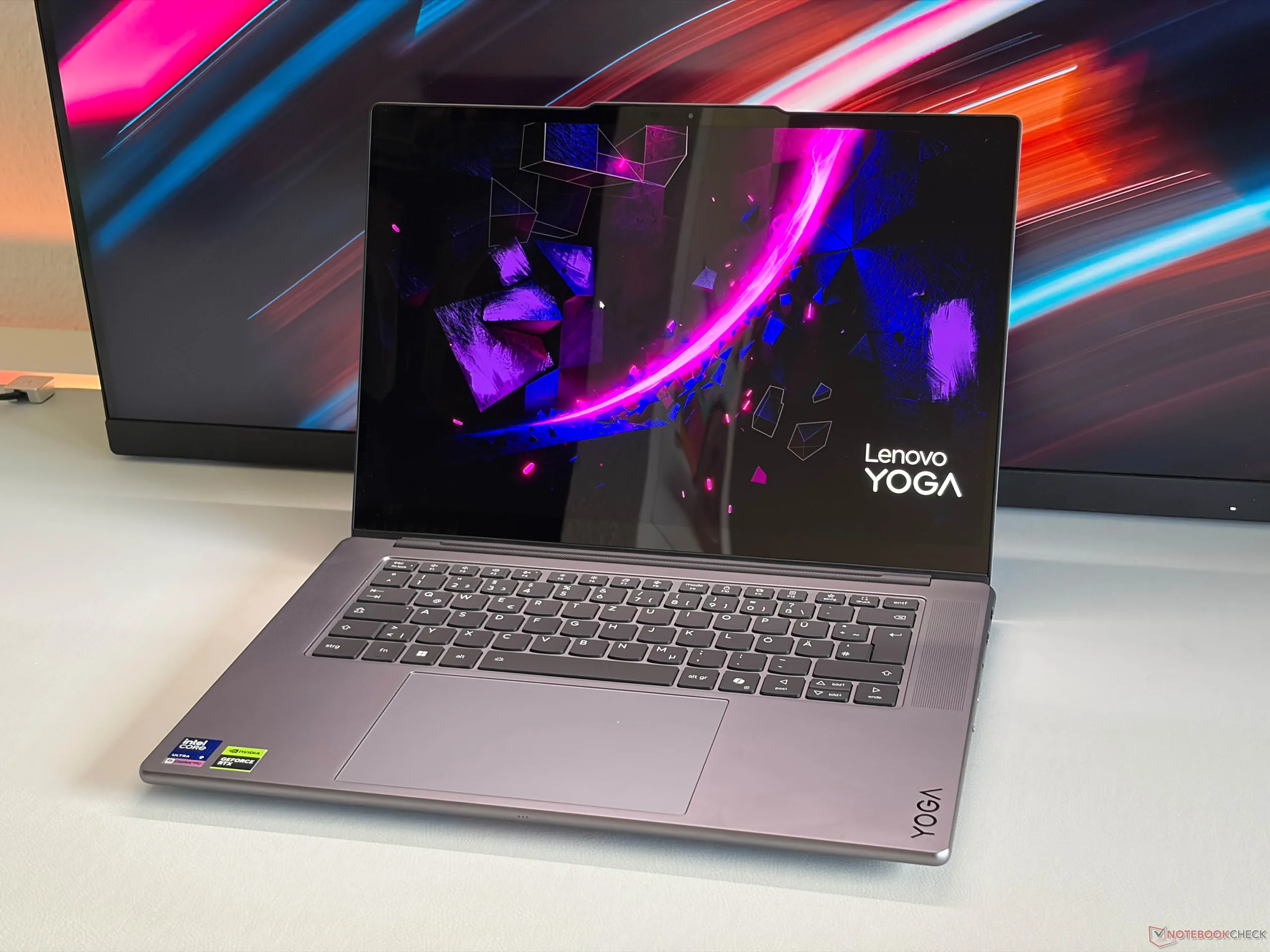
– Apple MacBook Pro offers better build quality, quieter operation, and superior efficiency.
– MacBook has better value when discounted, often costing less than comparable Windows laptops like the Lenovo Yoga Pro 7i.
– Yoga excels with its OLED touchscreen, higher refresh rate, and better keyboard, but has glossier display and minor build issues.
– For gaming and Windows compatibility, the Yoga (with RTX 5060) is preferable; otherwise, the MacBook is stronger overall.
– Battery life depends on usage: MacBook wins at adjusted brightness; Yoga wins at full brightness.
Pricing and Specs Comparison
Apple’s MacBook Pro models are among the best multimedia laptops you can buy and the overall package is still hard to beat. They’re expensive devices specially when you select some options, but preconfigured models which are also sold by other retailers are usually heavily discounted. This is becoming a bigger issue for Windows laptops like the new Lenovo Yoga Pro 7i 15, witch we recently reviewed. In terms of size it is more comparable to the slightly smaller MacBook Pro 14 (the MBP 16 is noticeably larger), which is already available for around $2050 with the M5 Pro, 24 GB RAM and 1 TB SSD. So you really have to think about weather you want to spend around $600 more for the mentioned Yoga, for example.
Build Quality and Ports
If you dont want to play games (where the RTX 5060 in combination with the superior selection of games for Windows), the MacBook is better in some respects. This starts with the chassis quality, were our Yoga suffered from some minor creaking sounds from the hinges. The MacBook also offers Thunderbolt 5 ports, whereas the Yoga offers two regular USB-A ports, which are still useful in practise. Its key to note that the MacBooks unibody construction feels more premium overall, while the Yoga’s plastic elements might flex under pressure, though this doesn’t affect daily use significantly.
Display Panel Differences
The display situation is a bit more complicated. The Mini-LED panel of the MacBook Pro 14 offers superior brightness results, but the OLED panel of the Yoga does not have to hide, neither in terms of brightness nor color accuracy. It even features a higher refresh rate and you can get a touchscreen, which does not affect the image quality. However it is also super glossy, which is less of a problem on the MacBook Pro (which is even available with a matte panel). For creative professionals, the MacBooks local dimming zones provide better contrast in HDR content, while the Yoga’s OLED delivers perfect blacks in dark enviroments.
Performance and Efficiency
In terms of pure CPU performance, the M5 Pro is superior to the Intel Core Ultra 9 386H (Panther Lake), which has a bigger focus on efficiency but does not stand a chance against the M5 Pro (neither performance nor efficiency). The MacBook is also super quiet in everyday situations even in short load situations, where you can hear the fans of the Yoga. The speaker systems are very comparable, but the Yoga has a better keyboard. Then there is the battery runtime, where the MacBook is superior at an adjusted panel brightness, while the Yoga has an advantage at full brightness (but it is also a bit darker). This makes the Yoga a better choice for outdoor use, while the MacBook excels in indoor long-session work.
Overall Value Proposition
All in all the devices are comparable and except for the differences in terms of operating system and compatibility issues, Apple offers the better overall package for a lower price. The Yoga provides a touchscreen, higher refresh rate, and USB-A ports for legacy devices, but suffers from fan noise and hinge creaking. Meanwhile the MacBook delivers superior build, Thunderbolt 5, quiet operation, and better battery life in normal conditions. For gamers and Windows users, the Yoga remains a viable option, but for multimedia tasks and productivity, the MacBook Pro 14 wins with its lower entry price of $2050. Consider your software needs before choosing between these two excellent machines.