
Key Takeaways
1. Astronomers observed a black hole emitting energy equivalent to 10,000 billion suns, a groundbreaking discovery.
2. Supermassive black holes are found at the centers of galaxies and can consume vast amounts of matter.
3. The specific black hole, J2245+3743, is located about 10 billion light-years away and has a mass of 500 million suns.
4. The extraordinary brightness of J2245+3743 was likely caused by a star getting too close and being distorted by the black hole’s gravity.
5. This discovery raises new questions about cosmic phenomena and suggests that more significant findings will occur in the future.
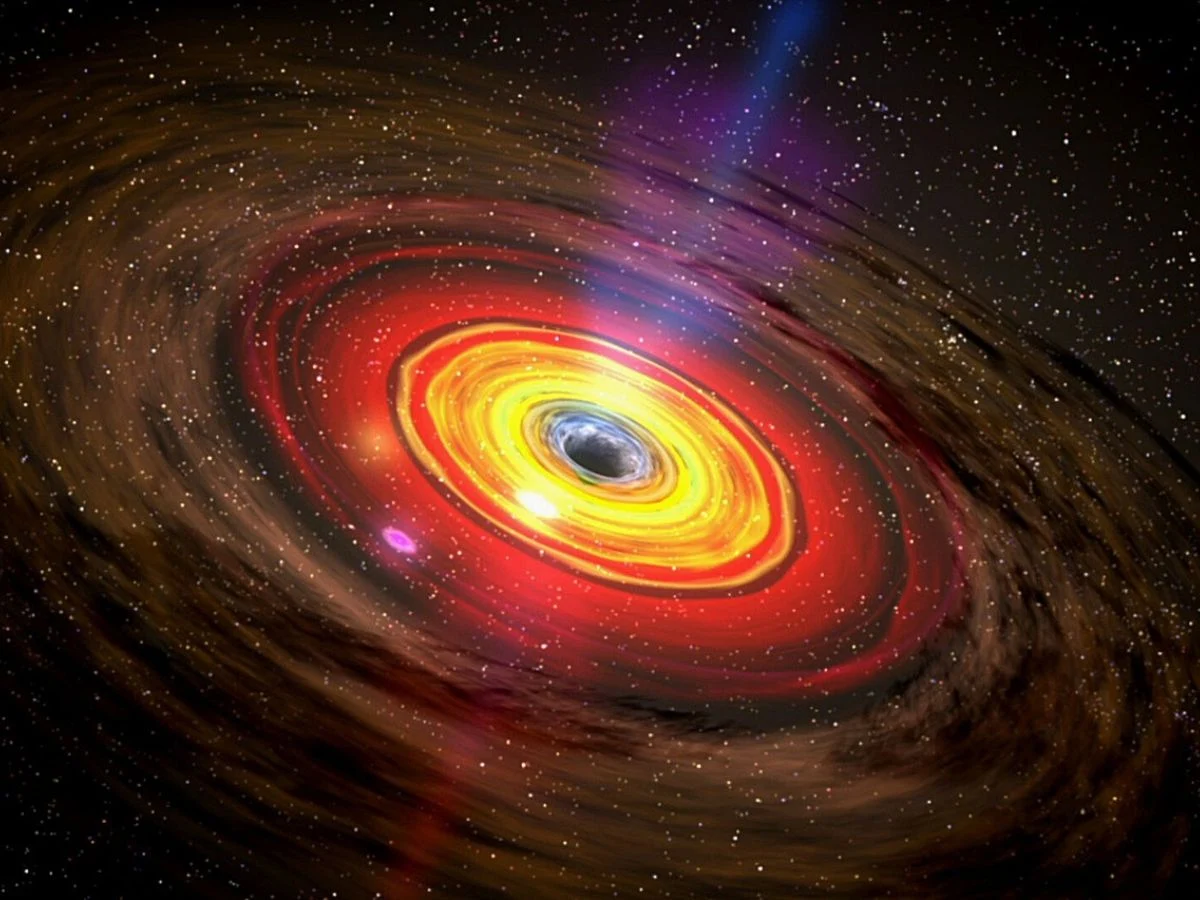
Black holes are undeniably among the most formidable entities in the cosmos. If there’s still any skepticism about their might, astronomers have made a groundbreaking observation of a black hole that emitted energy comparable to 10,000 billion suns, marking a first in this field.
The Heart of Galaxies
At the center of galaxies lie supermassive black holes that consume vast amounts of matter. One such black hole shined brighter than all others, if only for a brief moment. This finding was published in the journal Nature Astronomy. Utilizing cameras from the Zwicky Transient Facility at the Palomar Observatory in the U.S., astronomers searched for objects with rapidly changing brightness.
They stumbled upon J2245+3743, a supermassive black hole situated around 10 billion light-years away from Earth, boasting a mass equivalent to 500 million suns. During their observations, they found that J2245+3743 had become 30 times more luminous than any other black hole, with an incredible energy output of 10,000 billion suns.
Questions Raised by Discovery
Such an extraordinary event prompts numerous inquiries, especially about its origin. Based on various research studies, astronomers theorize that a star may have ventured too close to this black hole, causing its gravity to distort the star. Moreover, to release such immense power, the star would have to be 30 times heavier than our Sun.
This remarkable discovery highlights that the universe is still brimming with enigmas and that countless cosmic occurrences continue to unfold. It appears likely that similar findings will emerge in the years ahead, enhancing our understanding of the vast cosmos that envelops us.
Source:
Link