
Tag: black holes

  • Black Hole Releases Energy of 10,000 Billion Suns

    Black Hole Releases Energy of 10,000 Billion Suns

    Key Takeaways

    1. Astronomers observed a black hole emitting energy equivalent to 10,000 billion suns, a groundbreaking discovery.
    2. Supermassive black holes are found at the centers of galaxies and can consume vast amounts of matter.
    3. The specific black hole, J2245+3743, is located about 10 billion light-years away and has a mass of 500 million suns.
    4. The extraordinary brightness of J2245+3743 was likely caused by a star getting too close and being distorted by the black hole’s gravity.
    5. This discovery raises new questions about cosmic phenomena and suggests that more significant findings will occur in the future.


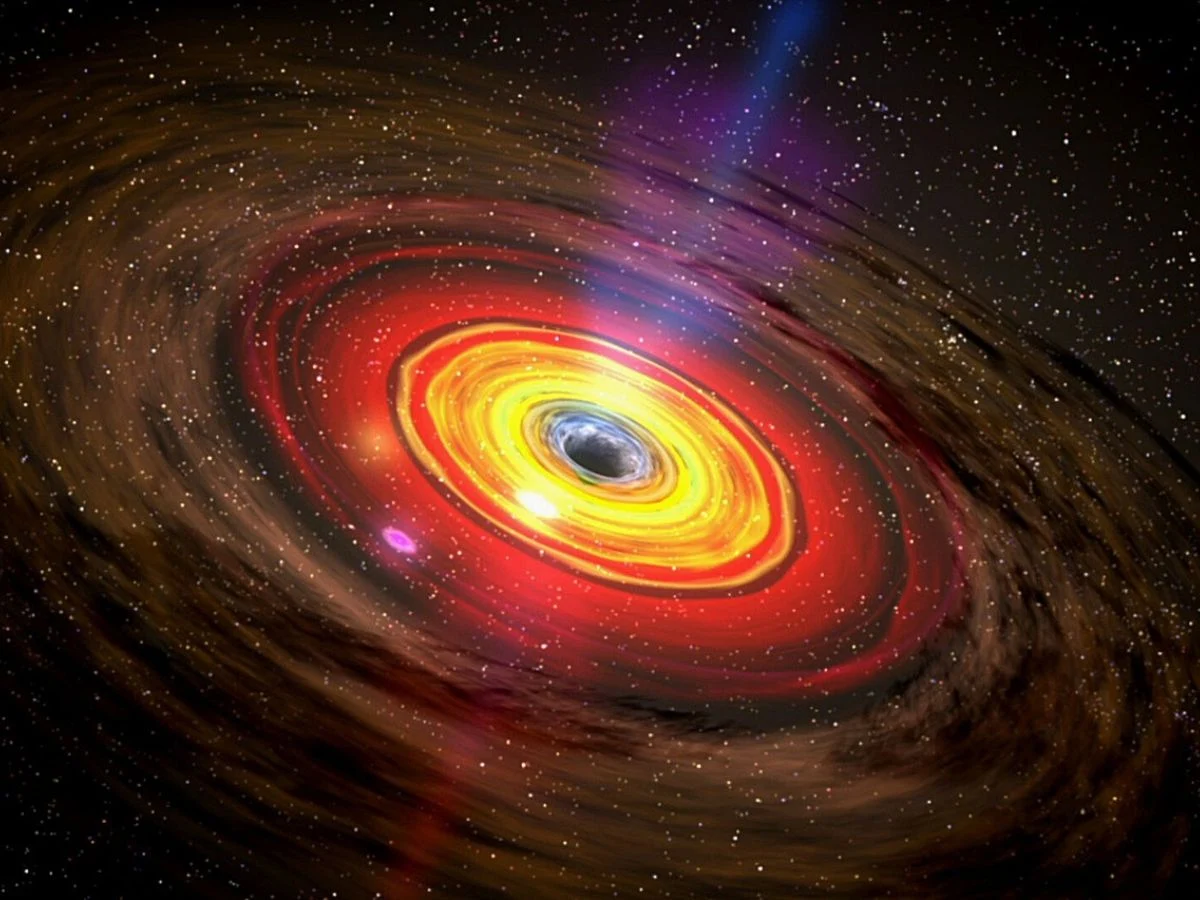
    Black holes are undeniably among the most formidable entities in the cosmos. If there’s still any skepticism about their might, astronomers have made a groundbreaking observation of a black hole that emitted energy comparable to 10,000 billion suns, marking a first in this field.

    The Heart of Galaxies

    At the center of galaxies lie supermassive black holes that consume vast amounts of matter. One such black hole shined brighter than all others, if only for a brief moment. This finding was published in the journal Nature Astronomy. Utilizing cameras from the Zwicky Transient Facility at the Palomar Observatory in the U.S., astronomers searched for objects with rapidly changing brightness.

    They stumbled upon J2245+3743, a supermassive black hole situated around 10 billion light-years away from Earth, boasting a mass equivalent to 500 million suns. During their observations, they found that J2245+3743 had become 30 times more luminous than any other black hole, with an incredible energy output of 10,000 billion suns.

    Questions Raised by Discovery

    Such an extraordinary event prompts numerous inquiries, especially about its origin. Based on various research studies, astronomers theorize that a star may have ventured too close to this black hole, causing its gravity to distort the star. Moreover, to release such immense power, the star would have to be 30 times heavier than our Sun.

    This remarkable discovery highlights that the universe is still brimming with enigmas and that countless cosmic occurrences continue to unfold. It appears likely that similar findings will emerge in the years ahead, enhancing our understanding of the vast cosmos that envelops us.

    Source:
    Link


  • Visible Violent Cosmic Event May Occur Within 10 Years

    Visible Violent Cosmic Event May Occur Within 10 Years

    Key Takeaways

    1. Black holes are mysterious cosmic entities with strong gravitational pull and unusual behaviors.
    2. A new study suggests that a black hole explosion could happen as soon as 2034, much sooner than previously thought.
    3. The black holes in question are smaller and lighter, formed shortly after the Big Bang, leading to their instability.
    4. Smaller black holes become hotter and emit more particles, eventually resulting in a massive explosion.
    5. If an explosion occurs, it will be observable in real time and could be the most intense cosmic event ever witnessed by humanity.


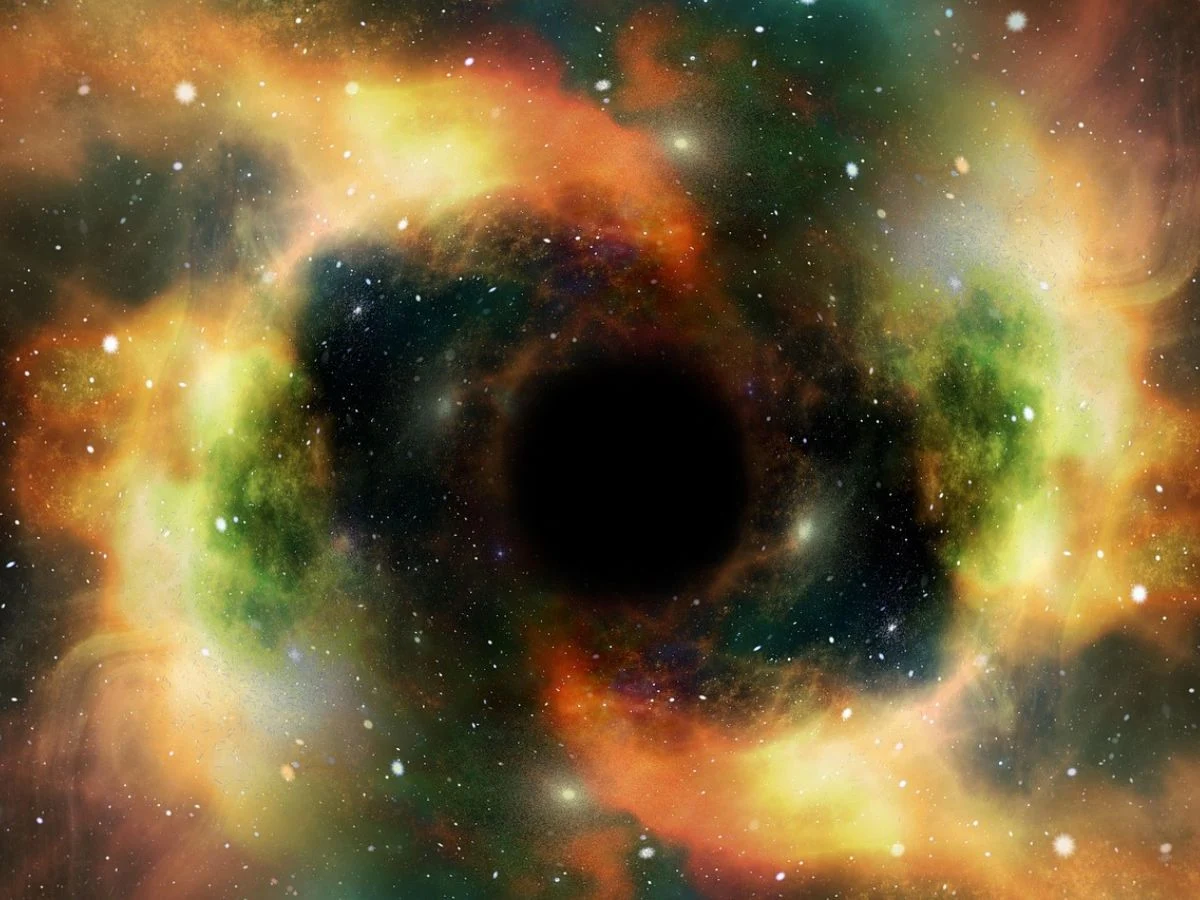
    The universe is an immense expanse where numerous cosmic occurrences take place continuously. In less than a decade, we might witness a black hole explosion, marking a historic first for the world.

    The Mystery of Black Holes

    Black holes are enigmatic entities in space, characterized by their peculiar behaviors and unparalleled gravitational strength. While Stephen Hawking theorized that they would vanish, the timeline for such an event was not anticipated to be so brief.

    Shocking New Findings

    Previous estimates suggested that such occurrences happened roughly every 100,000 years. However, a new study by Aidan Symons and his research team from the University of Massachusetts indicates that this event could take place as soon as 2034.

    The black holes discussed in this research are not the large ones we typically envision. Rather, these are theoretical structures that formed just one second after the Big Bang and are considerably lighter, leading to their instability.

    The Impending Explosion

    Interestingly, the smaller the black hole, the hotter it becomes, resulting in a higher emission of particles. Eventually, this evaporation culminates in a massive explosion.

    If a black hole explosion indeed occurs in the next ten years, it will be observable in real time thanks to the various telescopes stationed on Earth and beyond. This event will likely be the most intense spectacle ever witnessed by humanity, far surpassing the power of a supernova. Additionally, it represents a rare opportunity to deepen our understanding of these extraordinary structures.

    Source:
    Link