Tag: ISOCELL JN5

  • Xiaomi 17 Ultra Unveiled Early with New Camera Features

    Xiaomi 17 Ultra Unveiled Early with New Camera Features

    Key Takeaways

    1. Xiaomi has launched the Xiaomi 17, Xiaomi 17 Pro, and Xiaomi 17 Pro Max in China, breaking revenue records of previous models.
    2. Only the Xiaomi 17 will be available internationally; the Pro versions will not be released outside China.
    3. The Xiaomi 17 Ultra is expected to launch globally after the new year, featuring advanced camera specifications.
    4. The camera setup will include a dual telephoto system with 50 MP and 200 MP sensors, along with a 50 MP ultra-wide camera for the Xiaomi 17 Ultra.
    5. Enthusiasts are excited about future announcements and camera advancements in the Xiaomi 17 series.


    Xiaomi has unveiled the Xiaomi 17, Xiaomi 17 Pro, and Xiaomi 17 Pro Max in China. Official reports suggest that these new models have already surpassed the revenue records set by earlier versions. Sadly, it appears that Xiaomi does not plan to release the Xiaomi 17 Pro or Xiaomi 17 Pro Max, including their unique secondary displays, outside of China.

    Limited Global Availability

    Only the Xiaomi 17 is expected to be available internationally, similar to how the Xiaomi 15 was handled (current price: $890 on Amazon). It is anticipated that Xiaomi will introduce the Xiaomi 17 on a global scale along with the Xiaomi 17 Ultra, which is predicted to be the priciest option in the lineup. While the launch of the latter is not expected to happen until after the new year, XiaomiTime has reportedly uncovered initial details regarding the camera specifications for the device.

    Camera Innovations

    Rumor has it that a dual telephoto camera setup will return, featuring Samsung’s ISOCELL JN5 (S5KJN5) and ISOCELL HPE (S5KHPE) sensors, which will deliver native outputs of 50 MP and 200 MP, respectively. For reference, the 200 MP sensor is expected to be used in other flagship devices and is also likely to appear in the global version of the Redmi Note 15 Pro Plus.

    XiaomiTime also points to code snippets that indicate Xiaomi will use the ISOCELL JN5 for the ultra-wide-angle lens on the Xiaomi 17 Ultra. This 50 MP ultra-wide camera will be accompanied by 50 MP main and front-facing cameras, which are made of the OmniVision OVX10500U and OV50M sensors, respectively. Currently, XiaomiTime hypothesizes that the OVX10500U might be a successor to the OV50X, hinting that it could be a new 1-inch type sensor.

    Future Speculations

    As the information continues to circulate, enthusiasts are eagerly anticipating further announcements from Xiaomi regarding these models. The excitement surrounding the Xiaomi 17 series, especially with the camera advancements, sets a high expectation for the brand’s future releases.

    Source:
    Link



  • Xiaomi 16 Pro: New Periscope Telephoto Camera with Macro Mode

    Xiaomi 16 Pro: New Periscope Telephoto Camera with Macro Mode

    Key Takeaways

    1. Xiaomi is set to unveil three flagship phones in September: Xiaomi 16, Xiaomi 16 Pro, and Xiaomi 16 Pro Max.
    2. All models are expected to feature Qualcomm’s Snapdragon 8 Elite 2 chipset.
    3. The Xiaomi 16 Pro may include a new periscope telephoto camera, potentially using the Samsung ISOCELL JN5 sensor.
    4. The ISOCELL JN5 sensor will introduce a dedicated macro camera mode for the Xiaomi 16 Pro.
    5. The smaller Xiaomi 16 model is likely to feature a standard telephoto camera instead of a periscope.


    Leaker Kartikey Singh has shared new details about the Xiaomi 16 Pro, which might be one of the three flagship phones that the brand is set to unveil this September. The lineup is rumored to include the Xiaomi 16 and Xiaomi 16 Pro Max alongside the Xiaomi 16 Pro. All three devices are expected to feature Qualcomm’s Snapdragon 8 Elite 2 chipset, but they could vary when it comes to their camera setups.

    New Camera Features

    According to earlier speculations, Singh has mentioned that Xiaomi is planning to include a new periscope telephoto camera in its upcoming Pro model. For comparison, the Xiaomi 15 Pro uses the Sony IMX858, a 50 MP sensor with dimensions of 1/2.51 inches, an f/2.5 aperture, and a focal length equivalent to 120 mm. In contrast, Singh suggests that the company might switch to the Samsung ISOCELL JN5, which was announced over a year ago.

    Sensor Specifications

    Like the IMX858, the ISOCELL JN5 is also a 50 MP sensor, but it has a slightly smaller optical format at 1/2.76 inches. This new sensor is expected to introduce a dedicated macro camera mode for the Xiaomi 16 Pro. Interestingly, this is the same sensor used by Nothing for their periscope telephoto features in the recent Phone (3) (currently priced at $799 on Amazon). However, it seems that the smaller Xiaomi 16 will not feature a periscope telephoto camera. Instead, Singh predicts that Xiaomi will opt for a standard telephoto camera for this more compact flagship model.

    Kartikey Singh’s insights about the Xiaomi 16 Pro offers a glimpse into what could be an exciting release for the brand.

    Source:
    Link

  • Samsung Unveils Advanced New Camera Sensors

    Samsung Unveils Advanced New Camera Sensors

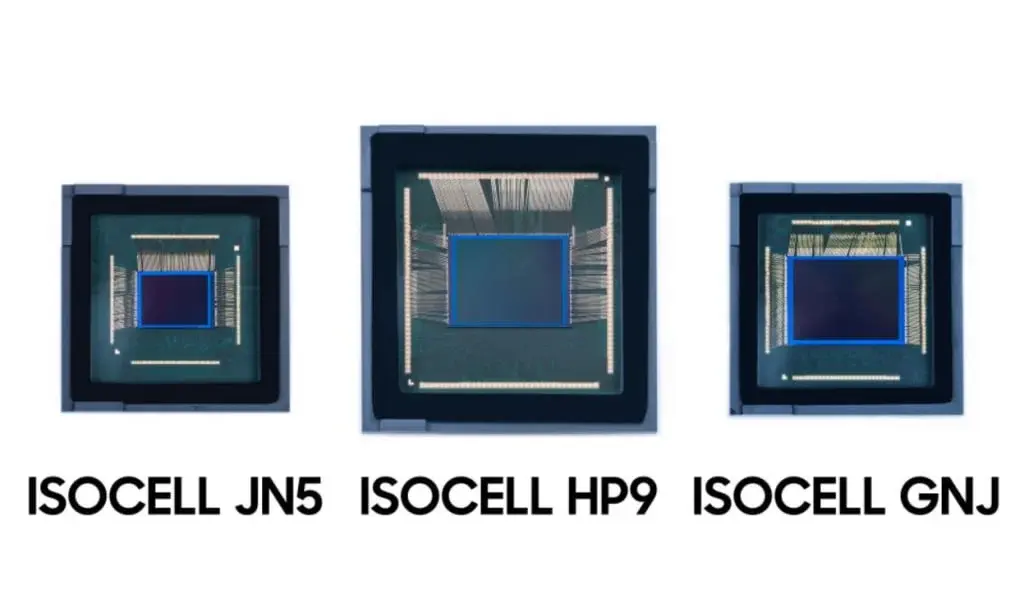
    Samsung has unveiled three new ISOCELL camera sensors: the ISOCELL GNJ, ISOCELL HP9, and ISOCELL JN5. While these sensors are not the flagship models, they are excellent choices for telephoto and ultrawide cameras in smartphones. Various Android smartphone manufacturers, including Samsung, are expected to adopt these sensors going forward.

    ISOCELL GNJ

    The ISOCELL GNJ features a 50MP sensor with 1µm pixels and a 1/1.57-inch optical format. It includes dual-pixel autofocus for quick and precise focusing, even in low-light conditions. The sensor also offers in-sensor zoom, which, when combined with an optical zoom lens, enhances zoom capabilities without significant loss in image quality.

    To improve light collection and minimize unwanted reflections, the GNJ sensor is equipped with an enhanced anti-reflective layer and a high-refractive microlens. It utilizes silicon oxide between pixels to reduce noise. Additionally, it is energy-efficient, consuming 29% less power in preview mode and 34% less power during 4K 60fps video recording.

    ISOCELL HP9

    The ISOCELL HP9 is a 200MP sensor with a 1/1.4-inch optical format and 0.56µm pixels. Compared to the older ISOCELL HP3, it boasts 12% higher light sensitivity and 10% better autofocus. This sensor is suitable for both main and telephoto cameras and is already featured in the Vivo X100 Ultra’s telephoto camera.

    This sensor employs a highly refractive microlens to direct light more effectively to the RGB color filter, enhancing color accuracy, autofocus speed, and light sensitivity. Its 4×4 pixel binning capability allows it to perform well in low-light conditions while creating a realistic background blur. It offers 2x and 4x in-sensor zoom and can achieve up to 12x optical-quality zoom with a 3x optical zoom lens.

    ISOCELL JN5

    The ISOCELL JN5 is a 50MP sensor with a 1/2.76-inch size, ideal for ultrawide cameras in smartphones. It delivers improved autofocus and a broader color range for a consistent camera experience. The sensor employs Dual Vertical Transfer Gate (Dual VTG) technology to enhance pixel charge transfer, minimizing noise in low-light conditions. Super Quad Phase Detection (Super QPD) improves autofocus accuracy by comparing horizontal and vertical phase differences.

    The JN5 sensor utilizes Dual Slope Gain (DSG) for enhanced dynamic range and HDR, amplifying and converting light signals for a wider color gamut. It also features hardware remosaic algorithms for faster capture and real-time zoom preview. Its compact size makes it suitable for front-facing, telephoto, or ultrawide cameras.

    Jesuk Lee, Executive Vice President and CTO of the System LSI Sensor Business Team at Samsung Electronics, commented, “Improving image sensor performance and making main and sub cameras work better together for a consistent photo experience is the new direction of the industry. We will keep setting industry standards and pushing technology boundaries with our new mobile sensors that include the latest advancements.”