Tag: IPhone 12

  • Fast Charging and Smartphone Battery Life: A Long-Term Test

    Fast Charging and Smartphone Battery Life: A Long-Term Test

    Key Takeaways

    1. Fast charging does not significantly damage battery capacity after 500 cycles for both iPhones and Android devices.
    2. Keeping your smartphone battery between 30% and 80% can lead to a slight increase in capacity over time (4% for iPhones, 2.5% for Android).
    3. The study automated charge and discharge tests to ensure accurate results across different devices.
    4. Storing batteries at half-charge, full-charge, or nearly empty showed no noticeable differences in capacity over a week.
    5. The video reflects a strong commitment to quality, technical skill, and thorough investigation into battery performance.


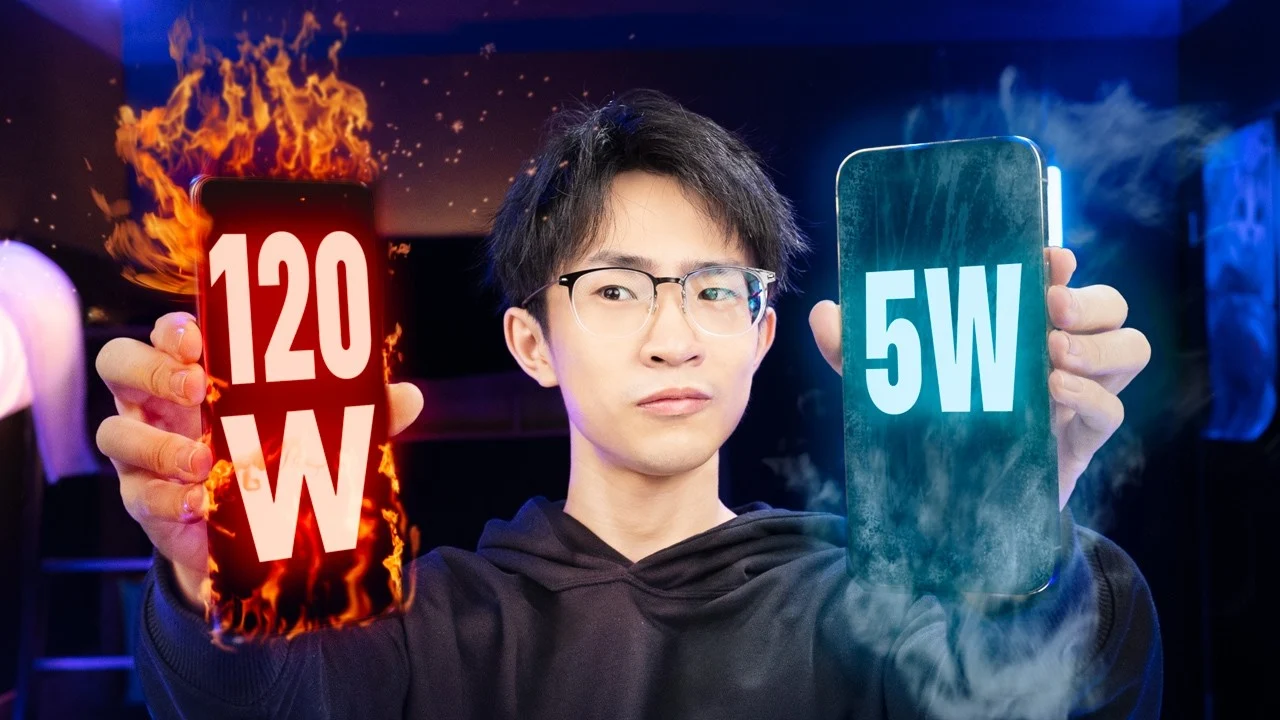
    Tech enthusiasts from the newer YouTube channel HTX Studio have taken great steps to investigate if fast charging actually damages battery life, which is a common belief. Is it more beneficial to charge your smartphone overnight with a slower 5-watt charger, or should you only use between 30% and 80% of its overall capacity? These inquiries, along with a few others, are succinctly addressed in a brief, 7-minute video that showcases clear dedication in terms of time, technical skills, and production quality. If you don’t want to know the outcome yet, we will share the results later on.

    Testing Methodology

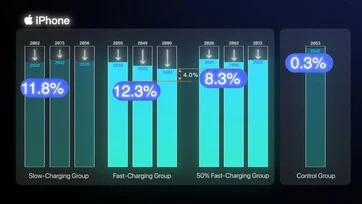
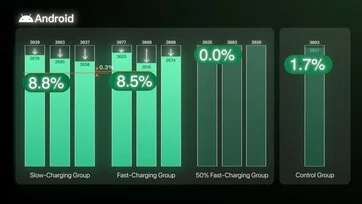
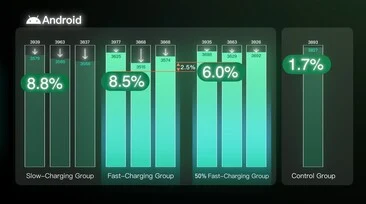
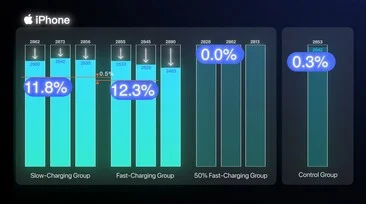
    In this study, 10 Apple iPhone 12 models and ten iQOO 7 devices were sorted into four distinct groups. The battery capacities of all these smartphones were measured both before and after the testing process. The charge and discharge test was automated using an app that manages a discharge loop, triggering charging through a relay as soon as the battery level drops to 5%. After completing 500 charge cycles, the remaining battery capacities for the four groups were observed.

    Key Findings

    The findings are pretty straightforward. Fast charging does not significantly reduce battery capacity after 500 charging cycles for either iPhones or Android devices. Keeping your smartphone within the “ideal” range of 30% to 80% capacity can lead to a slight increase in capacity over many charging cycles. In the study, this resulted in a 4% increase for iPhones and a 2.5% increase for the Android devices tested. Still, the tester concluded that it hardly matters how or how quickly you charge your smartphone battery.

    Starting from minute 3:40, the video delves into other battery-related questions, like whether it’s better to store batteries when they are half-charged, fully charged, or nearly empty. While a week may not be a lengthy enough timeframe, no noticeable differences in capacity were detected during this duration. Notably, the effort put into this video is just the beginning. As shown in the last few minutes, there have been two similar experiments conducted in the past two years that also did not produce clear results. The personal story regarding the tester’s first iPhone, which concludes the video, is particularly heartwarming.

    Source:
    Link


  • Google Pixel 10 Pro XL Compatible with Apple MagSafe Battery Pack

    Google Pixel 10 Pro XL Compatible with Apple MagSafe Battery Pack

    Key Takeaways

    1. Apple created a Battery Pack for the iPhone 12 series featuring MagSafe but has not released a newer version since.
    2. The Battery Pack is no longer available in the Apple Store as of 2023.
    3. Users have reported that the original Apple Battery Pack works with the new Pixel 10 Pro XL, despite not officially supporting the latest Qi2.2 standard.
    4. The Battery Pack’s compatibility with newer devices may extend its lifespan and reduce electronic waste.
    5. There are rumors of Apple developing a new charger for the upcoming iPhone 17 Air, which may conflict with the phone’s slim design.


    Apple created a Battery Pack to celebrate the addition of MagSafe to the iPhone 12 series, but oddly, they didn’t release another version after that.

    Disappearance from Store

    By 2023, the tech giant had taken this accessory off their Store. However, those who still have the sleek wireless power bank can continue using it—provided they upgrade to a new Pixel 10-series phone.

    Compatibility with New Devices

    User Paul J on X claims to show that the original Apple Battery Pack is functional with the new Pixel 10 Pro XL. While it might not officially back the latest Qi2.2 standard (unlike the up-to-25W Ugreen MagFlow available on Amazon), it seems to work just fine.

    Apple played a role in creating the universal wireless charging tech standard with its MagSafe knowledge, which might explain why the Battery Pack functions similarly to the new Pixelsnap charger.

    Longevity of Older Gadgets

    Thus, this older device could potentially avoid ending up in a landfill for a bit longer in certain situations. In the meantime, there are rumors that Apple is finally working on a new extra charger for the iPhone 17 Air, though using it might somewhat contradict the concept of the super-slim next-gen phone.

    Source:
    Link


  • Surprise: iPhone 12 Now Supports Qi2 Wireless Charging with Software Update

    Surprise: iPhone 12 Now Supports Qi2 Wireless Charging with Software Update

    Apple’s most recent update to iOS 17.4, primarily related to compliance with the EU Digital Markets Act, has brought a pleasant surprise for iPhone 12 users. This new update now allows iPhone 12 models to be compatible with the advanced Qi2 wireless charging standard for the device.

    Enhanced Wireless Charging Experience

    Tests carried out by Macworld show that iPhones running on iOS 17.4 can now wirelessly charge at 15W, even when using a Qi2 charger that is not Apple’s certified MagSafe charger. The charging times between MagSafe and Qi2 chargers for the iPhone 12 were found to be quite similar in these tests.

    Improved Charging Speed and Animation

    Charging times for the iPhone 12 were notably close, with both MagSafe and Qi2 chargers taking around 20 minutes to reach 30 percent battery and 45-50 minutes to reach 50 percent. It is interesting to note that the phone now displays a 15W-only charging animation when connected to these chargers, a feature not officially mentioned by Apple in their release notes.

    Advancements in Wireless Charging Technology

    Previously, iPhone 12 users were limited to a charging speed of 7.5W on non-MagSafe Qi wireless chargers. This recent upgrade mirrors the improvements made for the iPhone 13 and iPhone 14 in December with the iOS 17.2 update. The Qi2 standard, known for its enhanced efficiency in wireless power transfer and magnetic alignment, shares similarities with Apple’s MagSafe technology.

    More Freedom in Charging Options

    This development presents iPhone 12 users with increased flexibility in wireless charging. With the support for non-MagSafe Qi2 chargers now providing the same rapid 15W charging speed, users have a broader range of charger options available without sacrificing performance.