Tag: HiNa

  • First Grid-Level Sodium-Ion Battery Station Balances Wind and Solar

    First Grid-Level Sodium-Ion Battery Station Balances Wind and Solar

    Key Takeaways

    1. Hybrid Battery Project: China launched its first hybrid battery project combining sodium-ion and lithium cells to enhance energy storage capabilities.

    2. Energy Storage Capacity: The facility in Yunnan province has a capacity of 400 MWh, aimed at stabilizing energy from wind and solar farms connected to the Southern Power Grid.

    3. Improved Technology: The sodium-ion batteries used have a response speed six times faster than traditional sodium batteries, improving management of renewable energy fluctuations.

    4. Cost-Effective and Safe: Sodium batteries are less expensive, safer, and perform better in extreme temperatures compared to typical lithium iron phosphate (LFP) batteries.

    5. Significant Output: The system provides a steady output of 200 MW and can power around 270,000 homes with up to 98% renewable energy annually.


    After the successful rollout of energy storage initiatives utilizing sodium-ion batteries to stabilize the electricity grid, China has now launched its first hybrid battery project.

    Combining Battery Technologies

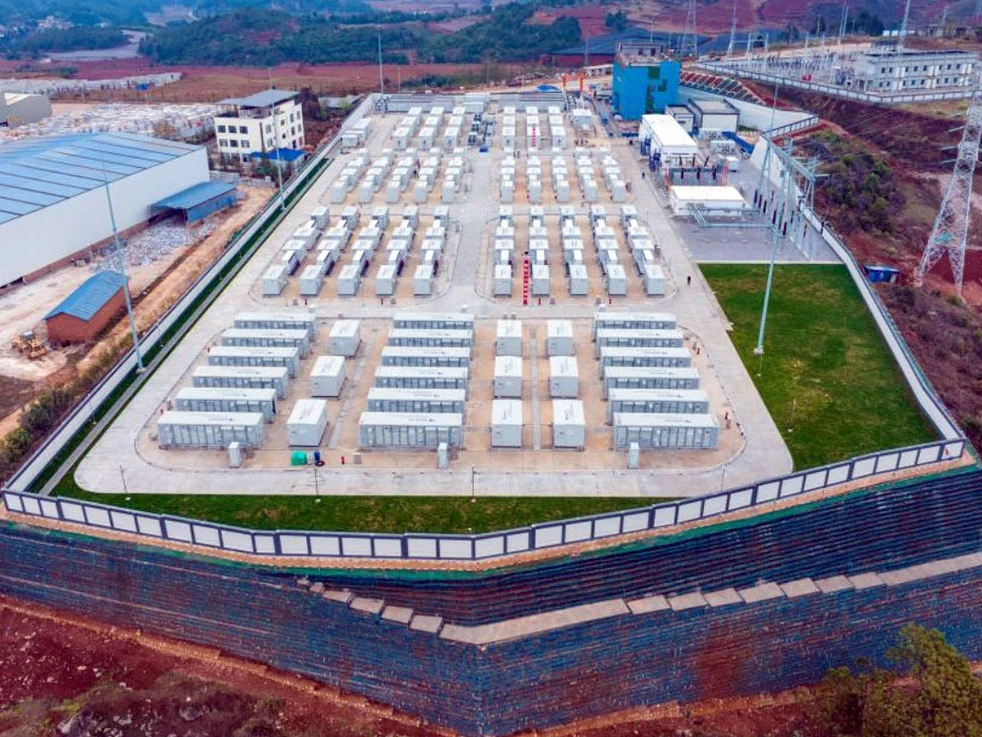
    This innovative project incorporates both sodium-ion and lithium cells, leveraging the unique advantages of each type. Located in Yunnan province, the energy storage facility has a remarkable capacity of 400 MWh, designed to store the fluctuating energy generated by wind and solar farms connected to the Southern Power Grid. This development aims to mitigate the kind of system strain from renewable sources that contributed to recent blackouts in Southern Europe.

    Advanced Battery Features

    The hybrid lithium-sodium energy storage system (ESS) relies on sodium-ion batteries provided by HiNa. They assert that their latest generation of high-capacity cells has a response speed that is six times quicker than traditional sodium batteries, a critical improvement for managing the unpredictable nature of renewable energy inputs.

    Typically, energy storage projects utilize lithium iron phosphate (LFP) batteries, commonly found in portable power stations like the Anker Solix C1000. In contrast, sodium batteries are not only less expensive but also safer, provide faster output, and have better capacity retention in extreme temperatures. This makes hybrid ESS systems more durable and cost-effective.

    Groundbreaking Achievement

    HiNa proudly claims that this project is the first-ever multi-power composite sodium-ion battery energy storage system in the world. They had to develop a specialized grid-level power converter tailored specifically for the unique requirements of sodium batteries as part of the project.

    The first high-capacity sodium-lithium energy storage station designed for grid use occupies a mere 0.012 square miles and has the capability to handle 580 million kWh annually. This amount of energy can power around 270,000 homes with up to 98% renewable energy all year long.

    The sodium-lithium ESS delivers a steady output of 200 MW, aimed at stabilizing the peak output fluctuations from over 30 local wind and solar facilities. The system adjusts its charging and discharging modes in real-time based on the renewable energy input. It has been undergoing grid capacity tests since March and has now received certification to operate as a large-scale hybrid ESS featuring both sodium-ion and lithium batteries.

    Source:
    Link


  • New Sodium-Ion Battery for EVs: Fast Charging & LFP Energy Density

    New Sodium-Ion Battery for EVs: Fast Charging & LFP Energy Density

    Key Takeaways

    1. HiNa has introduced new Haixing sodium-ion batteries tailored for commercial electric vehicle fleets, available in various capacities (K150, K210, K280, K350).
    2. The new batteries feature an improved energy density of 165 Wh/kg, making them competitive with lithium iron phosphate (LFP) cells.
    3. HiNa’s sodium-ion batteries are 30% to 40% cheaper to manufacture than lithium-based batteries and can be fully charged in under 25 minutes.
    4. These batteries maintain stable performance in extreme temperatures (-40°C to 45°C) and can handle over 8,000 charging cycles while retaining capacity.
    5. HiNa operates a GWh-level factory aimed at increasing output and lowering costs, focusing on the commercial electric vehicle market.


    HiNa, a manufacturer of sodium-ion batteries that are already being used in electric vehicles, has revealed its latest generation of Na-ion batteries.

    New Haixing Cells

    The new Haixing cells are aimed at commercial fleets of electric vehicles, coming in various battery pack options named K150, K210, K280, and K350, likely indicating their differing capacities.

    As expected, the K150 and K210 sodium-ion batteries are designed for electric vehicles that need to travel shorter distances, while the models with higher numbers are suited for EVs that undertake longer logistics journeys.

    Current Usage

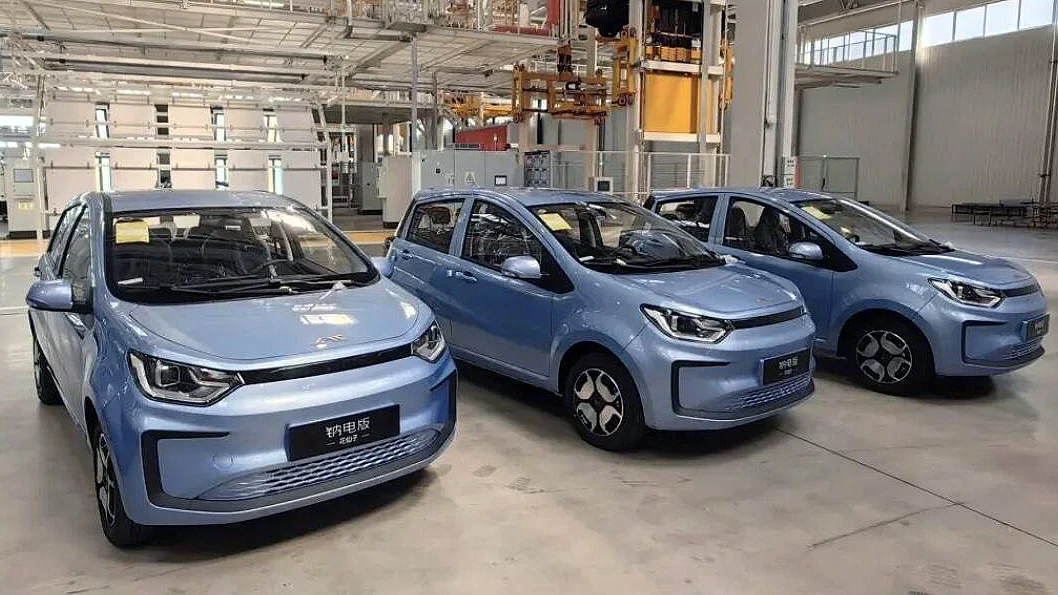
    HiNa is already providing sodium-ion batteries for compact electric cars, such as the Jiwei 3, which is produced by JAC, a Volkswagen EV joint venture in China. The Na-ion battery in the Jiwei 3 has a modest 23 kWh capacity, leading to a range of about 230 kilometers according to the local CLTC testing cycle.

    The Jiwei 3’s battery utilizes HiNa’s earlier generation of cylindrical 32140 sodium-ion cells that have an energy density of 140 Wh/kg. However, the new Na-ion batteries boast an improved energy density of 165 Wh/kg, making them comparable to LFP cells used in various devices, including 145 W Ugreen power banks and mass-market electric vehicles.

    Competitive Edge

    In contrast, the base RWD Tesla Model 3, which was discontinued in the US market due to its CATL batteries being ineligible for federal tax credits, features cells with an energy density of 125 Wh/kg. This comparison highlights why the new HiNa Haixing sodium-ion battery may represent a significant step forward in promoting Na-ion cell technology.

    HiNa claims that their sodium-ion batteries are 30% to 40% less expensive to manufacture than lithium-based batteries. Additionally, the latest Haixing Na-ion cells are capable of rapid charging, reaching full capacity in under 25 minutes.

    Performance and Production

    These batteries also exhibit stable discharge rates across a temperature range of -40°C to 45°C (-40°F to 113°F). Furthermore, the packs can be fast-charged continuously while still retaining good capacity even after 8,000 charging cycles, according to HiNa.

    The battery manufacturer operates a GWh-level factory and asserts that it is prepared to deliver “greater output at significantly lower costs.” This will be a key factor, particularly considering the new sodium-ion battery’s target market of commercial electric vehicle fleets.

    Source:
    Link