Tag: high-speed rail

  • France’s TGV-M Approved to Run at 320 km/h

    France’s TGV-M Approved to Run at 320 km/h

    Key Takeaway

    – TGV-M (Alstom Avelia Horizon) cleared EU safety approval and could enter service around Aug/Sep 2026 for SNCF in France.
    – Train design features two power cars, Jacobs bogies, two decks, and up to 200-meter multi-unit formations with 740 seats (up from 600).
    – Capacity and efficiency gains: ~20% more seats and ~20% lower energy use (potentially up to 30% for Horizon family); 5G Wi-Fi planned.
    – Speed capability varies by system: up to 320 km/h on ETCS/TVM, 220 km/h under KVB, and 160 km/h in Crocodile network; designed for cross-border, multi-voltage operation (1.5 and 25 kV in France; Horizon family supports multiple electrifications, aiding Eurostar compatibility).


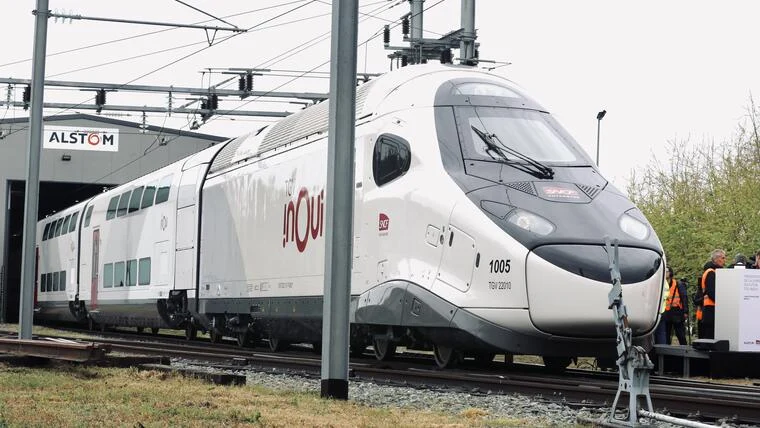
    France’s TGV-M is allowed to run. As Elias Van Deun discovered, Alstom’s new high-speed train has cleared the approval hurdle of the European Union Agency for Railways. The step was long overdue, although rolling stock has repeatedly suffered from approval problems in recent years. The news comes a few days after the travel and tourism magazine Voyages D’Affaires pointed out that operator SNCF is no longer giving any dates for the possible commercial entry into service of the new TGV-M trainsets.

    Approval timing and entry into service

    However, the approval that has now taken place matches information from the magazine that the train could transport passengers for the first time in August or September 2026. The TGV-M is the first train based on Alstom’s Avelia Horizon platform. In 2018, according to Alstom, SNCF ordered 100 trainsets and later placed an additional order.

    Platform and cross-border capabilities

    The Horizon will also be important for the Eurostar network with its special requirements, especially when used in the Channel Tunnel. Here, 30 units are intended to replace the aging fleet. They are also intended to support four electrification voltages for the necessary compatibility across national borders. The now approved TGV-M is designed for France and two voltages: 1.5 and 25 kV.

    Train architecture and flexibility

    The Avelia Horizon follows the classic TGV principle: there are two power cars that provide the drive. They are therefore not conventional replaceable locomotives, but the traction equipment is not distributed beneath the cars either. In Germany, this corresponds to the first ICE generation. The train also again uses Jacobs bogies for its running gear. This means that two wagons rest on one bogie.

    Length and capacity

    In regular operation, the trains cannot just be shortened or lengthened. That said, changes to the length of the ICE 1 were also quite rare. Most recently, the train was shortened. However, there is still flexibility with the TGV-M, because a trainset is 200 meters long and can operate in multiple unit formation to provide more capacity.

    Seating, efficiency, and technology

    The new trains also rely on two decks again. Alstom manages, however, to get over 20 percent more seats into the train. According to SNCF, the capacity is now 740 instead of 600 seats. In addition, the energy requirement is expected to drop by another 20 percent. According to Alstom, the potential of the Horizon series is even 30 percent.

    Onboard connectivity and speed

    The trains in the SNCF network will also offer 5G-based Wi-Fi. The maximum speed of the TGV-M depends on the train protection system. According to approval information, 320 km/h is possible under ETCS and TVM. This is especially important for the high-speed lines of the LGV type. Under KVB 220 km/h is possible and in the Crocodile network it is 160 km/h.

    Sources
  • Positive Initial Reports on New NextGen Acela High-Speed Trains

    Positive Initial Reports on New NextGen Acela High-Speed Trains

    Key Takeaways

    1. The Nextgen Acela trains began operating on August 28, marking an upgrade to the US’s first high-speed rail network, increasing maximum speeds from 150 mph to 160 mph, albeit only for short distances.

    2. Early passenger feedback highlights significant improvements in comfort compared to previous Acela trains, but the US high-speed rail system still lags behind international options.

    3. The trains must operate on outdated infrastructure which affects their performance and reliability, with older Acela trains being repurposed for spare parts.

    4. The seating configuration includes a 1-2 arrangement in first class and a 2-2 layout in business class, with a focus on spacious tables for work, though some aspects like internal digital signage are lacking.

    5. Criticism exists regarding certain design features, such as the sliding seat pan design causing discomfort, and the dining car’s distance from first class, though first-class passengers receive seat service.


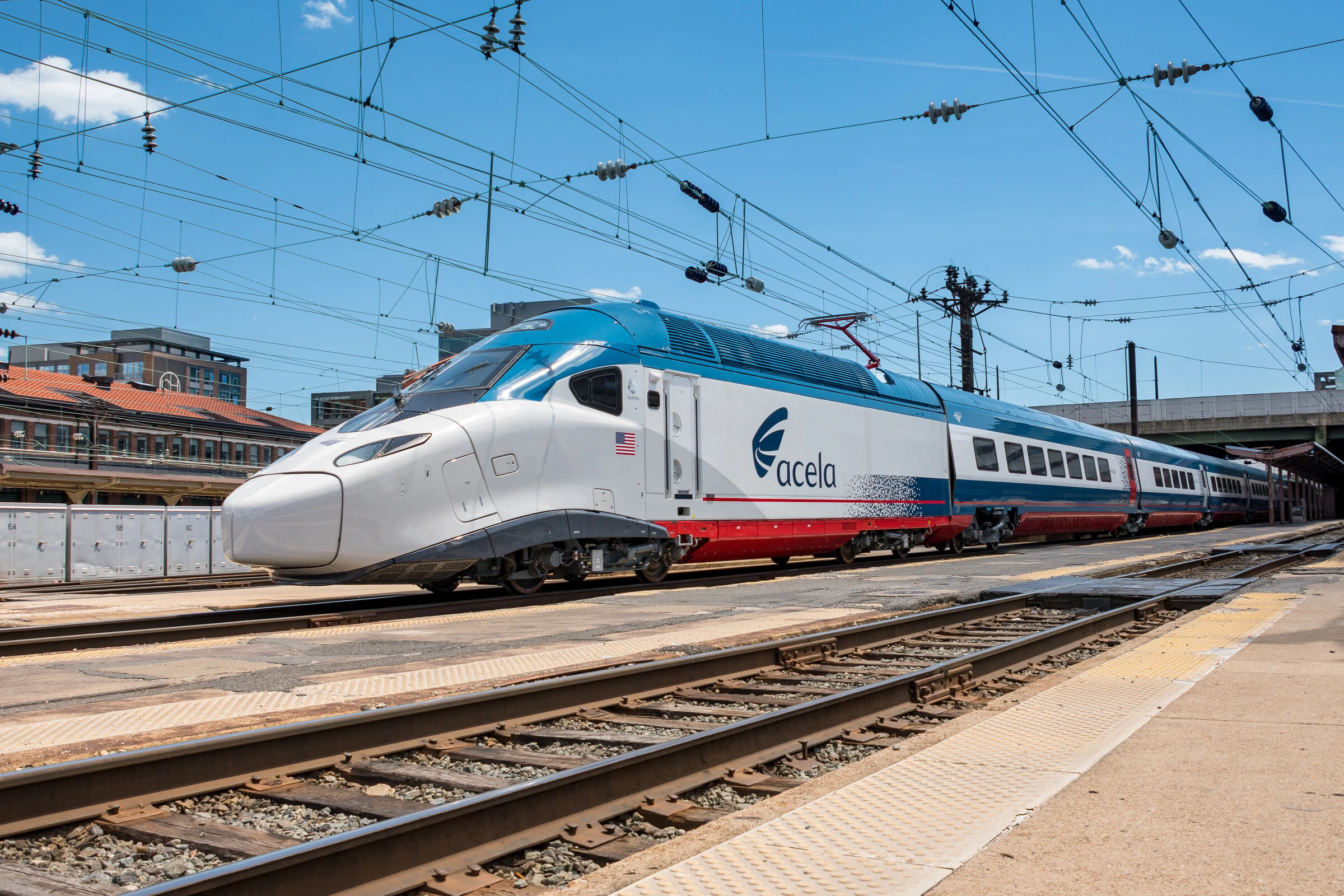
    Since August 28, the Nextgen Acela trains have been operating along the Northeast Corridor, linking Boston, MA, with Washington, D.C. This event signifies the start of the upgrade to the United States’ first high-speed rail network, which has seen its maximum speed rise from 150 mph to 160 mph.

    Speed Limitations

    Acela is, as per the US definition, one of the only two high-speed rail systems available in the country. However, the 160 mph speed can only be achieved on a few short stretches for just a couple of minutes. There are various sections south of Boston where this speed is possible.

    Passenger Experience

    Early feedback from passengers has been encouraging. The new Acela offers a notable enhancement in comfort when compared to its predecessor trains. In the US, the roll-out of these new trains is being celebrated as a groundbreaking milestone, heralding a fresh era for high-speed rail. Nevertheless, when compared with high-speed rail options in other nations, there is still room for improvement in the US system.

    Aviation journalist Jason Rabinowitz penned an insightful piece for the tech magazine Runway Girl Network. He also sheds light on the modern trains, which must operate safely on outdated infrastructure, contributing to delays in their introduction. Additionally, some older Acela trainsets are being used for spare parts to ensure the current fleet runs smoothly. The four Nextgen Acela trains now in service are expected to alleviate some of the pressure, with a total of 28 planned to be operational.

    Design Features

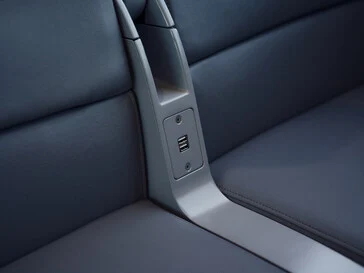
    An intriguing detail is that every USB port in the First Class car was equipped with USB-A to C adapters during the press trip, which Rabinowitz predicts “won’t stay in place after the first few uses by passengers.” The design of the trains, however, feels somewhat outdated, lacking in modern technological features. On a positive note, Rabinowitz does commend the significantly enhanced ride comfort.

    In both the US and Europe, it is common for passengers to not always be seated facing the direction of travel. The rotation of seats, a practice common in parts of Asia, has not been adopted.

    Seating Configuration

    In first class, seating is arranged in a 1-2 configuration, typical in Europe. The first-class section is always found at the southern end of the train. A reverse seating arrangement is highly unlikely on the Acela network, given that the Northeast Corridor is just one line without any branches.

    Amtrak continues to label the second class as business class, citing the train’s overall high standards as reasoning. In other countries, the amenities provided would be regarded as standard for second class. Regardless, business class passengers enjoy a 2-2 seating arrangement, ensuring that they typically have an empty seat next to them. The business class tables are quite spacious, offering better work space than what a German ICE offers in first class—though this can vary by generation. Out of the nine cars, seven are designated for business class.

    Areas for Improvement

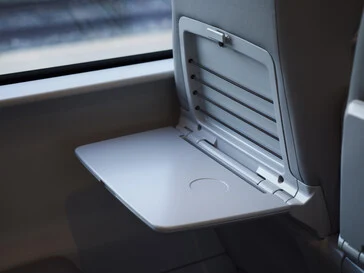
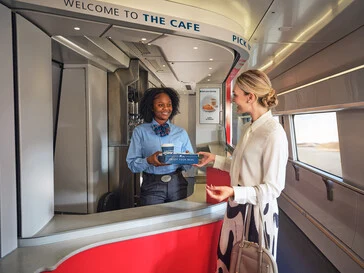
    However, there are some areas of criticism. Amtrak seems to have failed in getting the internal digital signage system operational; digital screens are only available on the outer parts of the train. Additionally, the sliding seat pan design of the table seats can cause passengers’ knees to touch, creating potentially awkward situations. The dining car lacks seating and is distanced from the first-class area, but first-class passengers do receive seat service.

    There are various video reports available online, including one from Gogosupertoe that offers a detailed look at the press trip that took place on August 27, 2025.


  • High-Speed Trains from Boston to D.C.: Smooth but Slow Journey

    High-Speed Trains from Boston to D.C.: Smooth but Slow Journey

    Key Takeaways

    1. Amtrak is introducing new high-speed trains called NextGen Acela on the Northeast Corridor, reaching speeds of up to 160 mph.
    2. The NextGen Acela trains are based on Alstom’s Avelia Liberty model and feature two power cars at both ends, with Jacobs bogies connecting them.
    3. Improvements include 27% more seating, USB ports, and an upgraded tilting system for a smoother ride at higher speeds.
    4. Amtrak has not disclosed any significant improvements in travel times, though more express trains may enhance journey speeds.
    5. The definition of “high-speed rail” varies, with U.S. standards being lower than international classifications, and Amtrak markets the Acela as the fastest train in the Western Hemisphere.


    After much waiting, Amtrak is set to introduce new high-speed trains on the Northeast Corridor, connecting Boston, MA, and Washington, DC. The latest Acela trainsets will reach speeds of up to 160 miles per hour (mph), which is just shy of 260 km/h. This speed is 10 mph faster than the previous generation of trains, still referred to as Acela Express, which have been in service for over 25 years.

    NextGen Acela Details

    The new trains are officially named NextGen Acela, designed on Alstom’s Avelia Liberty model. The trains will continue to have two power cars located at both the front and rear. Additionally, both ends of the train are connected by a bogie known as Jacobs bogies, which complicates the process of altering the train’s length—a task that is infrequently undertaken in high-speed rail.

    Enhancements and Features

    These new Acelas are aimed at enhancing the overall travel experience. They offer 27% more seating per trainset, including eight spaces for wheelchairs. Also, the seating now comes equipped with USB ports, though only USB-A ports are available. Another improvement is the upgraded tilting system; similar to the former model, this train can lean into bends, but it is anticipated to provide a smoother ride at the higher speed of 160 mph. This could potentially allow for faster travel along the Northeast Corridor, which primarily consists of winding tracks with only brief sections suitable for high speeds. So far, the average speed has only been capped at 70 mph (112 km/h).

    Future Expectations

    Nevertheless, Amtrak has yet to reveal any improvements in travel times. Faster journeys may be possible by introducing more express trains, especially since Amtrak now has additional rolling stock. More details about the new Acela are anticipated before August 28th.

    So, the trains won’t exactly be lightning fast. In the United States, high-speed rail is defined differently, where a speed of nearly 180 km/h or 110 mph suffices. On the other hand, the International Union of Railways (UIC) classifies high-speed rail as speeds of 255 km/h, though it allows for exceptions down to 200 km/h in certain cases. In South Korea, high-speed rail operates at a minimum of 300 km/h.

    Amtrak’s Perspective

    Of course, Amtrak has its own viewpoint on this matter. In its marketing materials from 2020, the company touted it as the fastest train in the Western Hemisphere. This is a rather unique perspective, especially considering that Morocco had already achieved speeds of 320 km/h by that time.

    Source:
    Link