
Tag: Herhoter Galaxy Projector

  • Hubble Reveals Stunning Protoplanetary Disks in Space

    Hubble Reveals Stunning Protoplanetary Disks in Space

    Key Takeaways

    1. Protoplanetary disks form as stars attract gas and dust from their surroundings, contributing to star growth and potential planet formation.

    2. In visible light images, protoplanetary disks appear as dark dust disks against bright reflection nebulae, with jets of gas also visible.

    3. Infrared observations reveal stars in earlier developmental phases, hidden by thick dust envelopes that visible light cannot penetrate.

    4. The protoplanetary disks cast shadows on surrounding clouds, making them appear larger in infrared images.

    5. The observed stars are located in different molecular clouds, with distances ranging from 450 to 1,500 light-years from Earth.


    This Hubble collection shows eight protoplanetary disks, with four captured in visible light and four in infrared. As stars are being formed, they attract gas and dust from their surroundings. Some of this material creates a spinning disk known as a protoplanetary disk. The gas and dust within this disk continue to supply the growing star, while the leftover matter may eventually give rise to planets.

    Visible Light Observations

    In the visible light image presented, the protoplanetary disks appear as dark dust disks amidst the bright light. HH 390 is not seen edge-on, which is the reason why its disk looks like it’s at the edge of the bright area. The bright light that is being referred to is a reflection nebula, which is a zone of gas and dust illuminated by a star’s light. You can also see jets of gas in the image. Both HH 390 and Tau 042021 are located around 450 light-years away in the Taurus Molecular Cloud, while the stars at the bottom are nearly 500 light-years distant in the Chameleon I star-forming region.

    Infrared Insights

    The stars seen in the infrared image seem to be at earlier phases of their development than those in the visible light photo. During these earlier stages, stars are shrouded by a thick dust envelope. Infrared light can penetrate this envelope, whereas visible light cannot, which explains why the envelope is not visible in the light images.

    The dark regions that are centered in the bright light are indeed the protoplanetary disks. The shadows cast by the disks on the surrounding clouds make them appear larger than they really are. The stars located at the top right and bottom left are situated in the Orion Molecular Cloud, approximately 1,300 light-years from us. The stars in the top left and bottom right are found in the Perseus Molecular Cloud, about 1,500 light-years away.

    Source:
    Link


  • Webb Captures Sharpest Image Yet of Black Hole’s Surroundings

    Webb Captures Sharpest Image Yet of Black Hole’s Surroundings

    Key Takeaways

    1. The Circinus galaxy, located 13 million light-years away, contains an active supermassive black hole emitting significant infrared light.
    2. Recent studies reveal that about 87% of the infrared emissions come from dust near the black hole, contradicting earlier beliefs about outflows.
    3. The research utilized advanced techniques like the Aperture Masking Interferometer on Webb’s NIRISS to overcome observational challenges.
    4. This study produced the first infrared interferometric image of an extragalactic object captured from space.
    5. The findings could help improve understanding of other black holes in the universe and were published in the journal Nature.


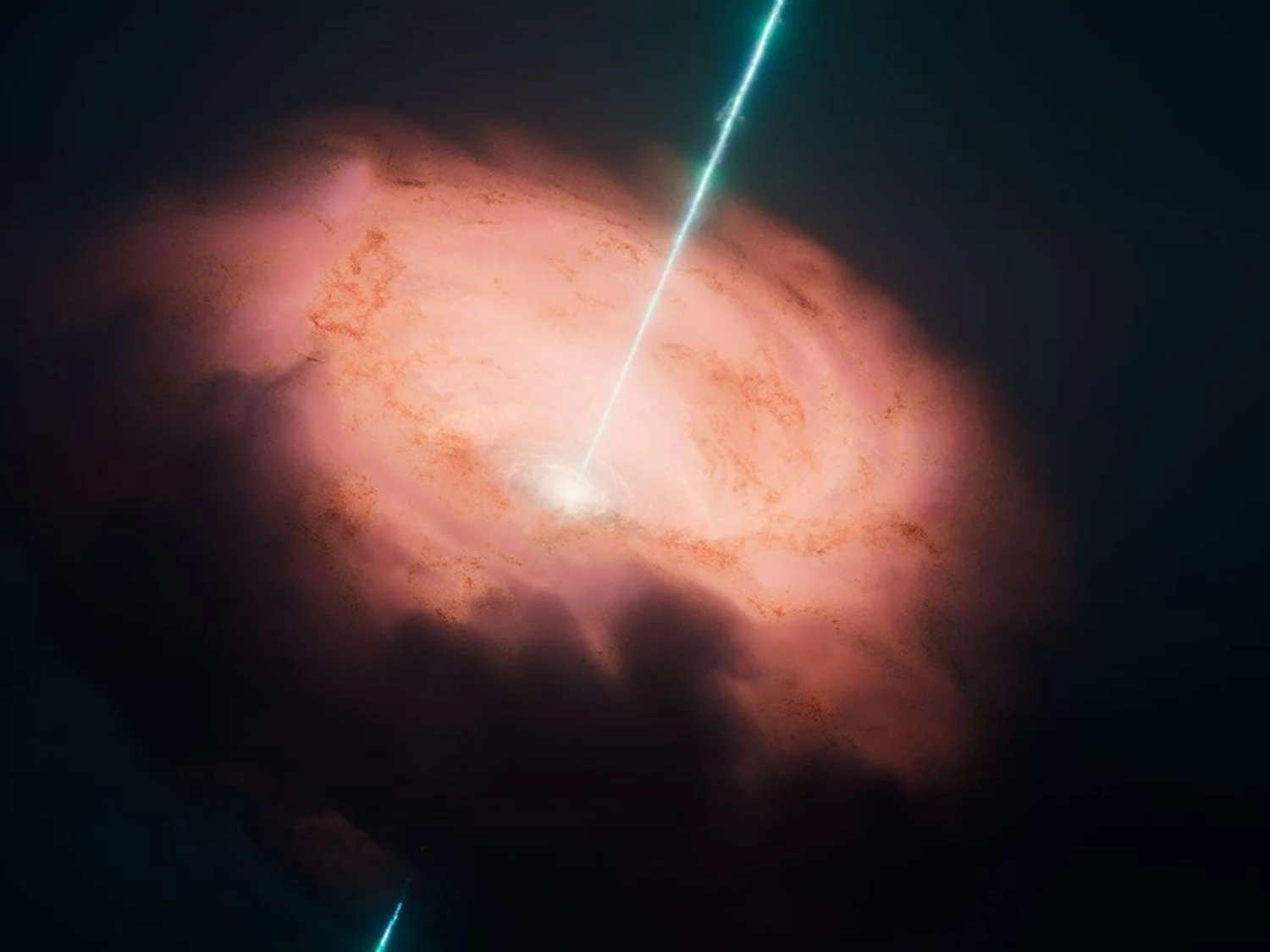
    The Circinus galaxy is situated approximately 13 million light-years from our planet. This galaxy hosts an active supermassive black hole. Earlier studies indicated that it emitted an unusual amount of infrared light. Scientists believed that much of this infrared emission originated from the outflows driven by the black hole. Yet, they were unable to pinpoint the exact source of this excess light.

    New Discoveries

    Recent findings from Webb’s study provide a fresh perspective, challenging earlier assumptions. It was discovered that nearly 87% of the intense infrared emissions are generated by dust that is in close proximity to the black hole, with less than 1% attributed to the hot, dusty outflows. This implies that the radiant dust is primarily feeding the black hole, while the rest, which is about 12%, comes from more distant regions.

    Advanced Techniques

    The research utilized the Aperture Masking Interferometer on Webb’s NIRISS (Near-Infrared Imager and Slitless Spectrograph) instrument. This innovative interferometric method enabled astronomers to bypass the challenges posed by the brightness of surrounding stars and the luminous matter near the black hole. The dense structure of the torus, which is the doughnut-shaped ring circling the black hole created by accreting gas and dust, also previously hindered visibility of the black hole’s inner area.

    Pioneering Observations

    By using the interferometric technique, researchers produced a clear image of the galaxy’s center. This marks the first time an infrared interferometric image of an extragalactic object has been captured from space. Additionally, it’s the first occasion where Webb’s high-contrast mode was utilized on a galaxy outside of the Milky Way. This method could pave the way for unraveling the enigmas surrounding other black holes throughout the universe. The findings were published in the journal Nature.

    Source:
    Link