
Tag: heart rate variability

  • Garmin Smartwatch Fails to Accurately Measure Key Fitness Metric, Study Finds

    Garmin Smartwatch Fails to Accurately Measure Key Fitness Metric, Study Finds

    Key Takeaway

    1. Modern smartwatches, like the Garmin Forerunner 265, can accurately measure resting heart rate using optical sensors, comparable to single-lead ECG standards.
    2. Heart rate variability measurement on these devices is currently unreliable and does not meet the precision needed for athletic or research purposes.
    3. Blood pressure measurement capabilities are included in some models but are less emphasized, with varying accuracy depending on sensors and conditions.

    Various Sensors in Modern Smartwatches

    Today, smartwatches are equipped with a bunch of sensors that can do many things, like monitoring your health. Some models even give you the ability to check or estimate your blood pressure, which is an impressive feature. The standard sensor for heart rate monitoring is optical, which means it uses light to detect changes in blood flow, and hardly any new watches lack it. For most watches nowadays, not only can you track your heart rate, but also its variability, which provides more detailed health information.

    Understanding Heart Rate Variability and Measurements

    Measuring heart rate variability (HRV) involves precision because it looks at the time gap between each heartbeat, or pulse beat when talking about watches. Unlike simple pulse measurement with a stopwatch, HRV is more complicated, as it requires analyzing tiny differences in time intervals. This makes HRV measurement a challenging task for smartwatches, demanding more sensitive sensors and accurate data processing, which is why not all devices excel at it.

    Study on Garmin Forerunner 265 Accuracy

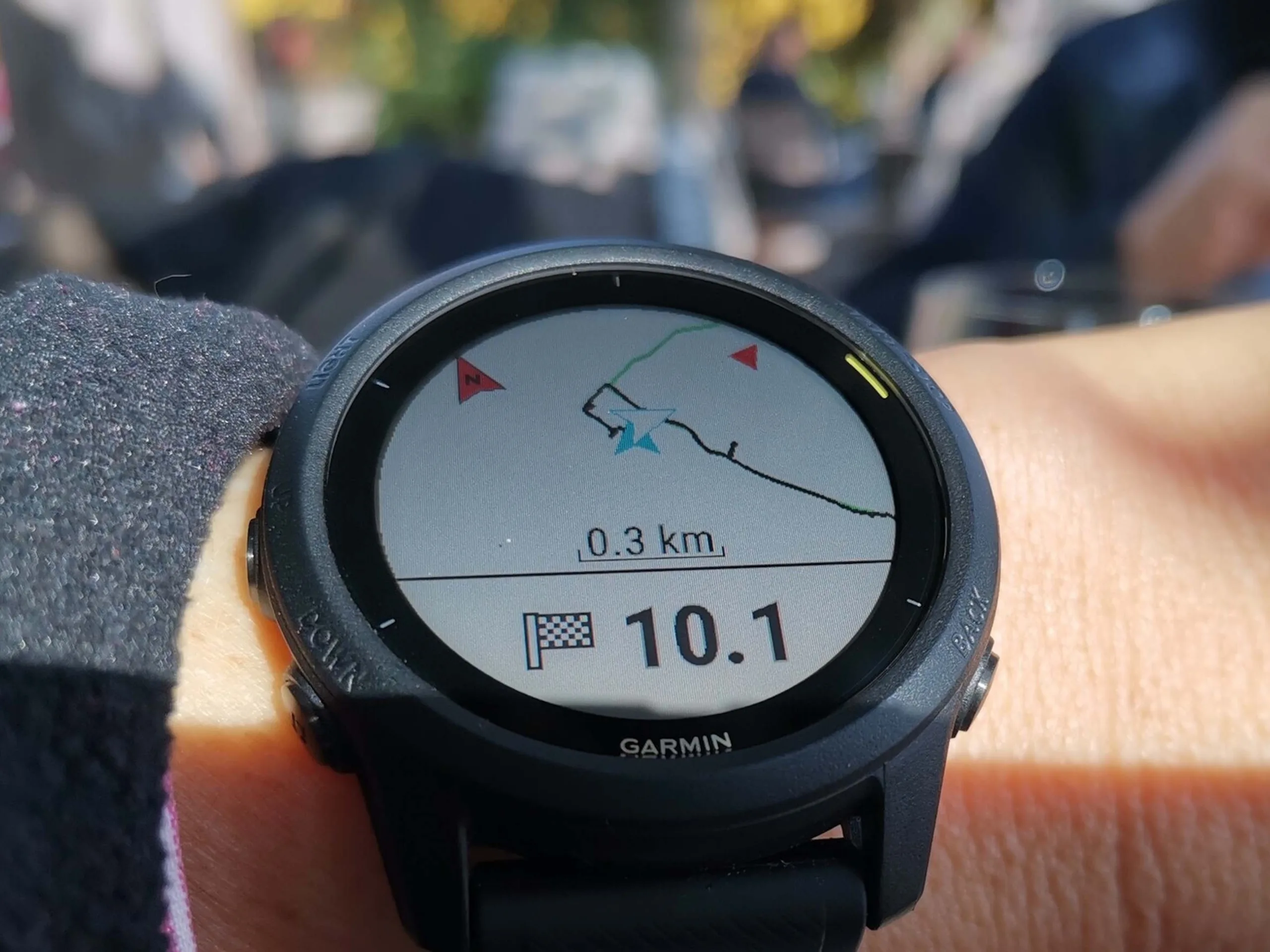
    Recently, a study was conducted on the Garmin Forerunner 265 to analyze how well it measures heart rate and HRV. The test involved only 30 grown adults, making the sample quite small for broad conclusions. Because subgroups within this sample are even smaller, it was hard to tell if factors like skin type affect accuracy. Furthermore, the study was an academic project under supervision but not peer-reviewed, so some caution is needed. The results showed that the Forerunner 265 provides very reliable resting heart rate readings, with deviations around two beats, almost negligible. But for heart rate variability, the watch’s data is not dependable enough, especially for research or athletic purposes.
    Sources
  • Garmin Smartwatch Health Metrics Show Large Margin of Error

    Garmin Smartwatch Health Metrics Show Large Margin of Error

    Key Takeaways

    1. Heart rate variability (HRV) measures the differences in timing between heartbeats and requires frequent tracking of heartbeats for accuracy.
    2. Garmin devices, like the Vivosmart 4, provide useful data on current and resting heart rates but struggle with accurate HRV measurements, especially during regular activities.
    3. A study with 62 participants showed that errors in HRV readings from the Vivosmart 4 can skew results and overshadow real changes in HRV.
    4. Researchers recommend focusing on HRV readings taken during minimal movement, such as sleep, for better accuracy.
    5. Limitations include Garmin’s lack of raw data access, which makes it difficult for users and researchers to analyze the data effectively and perform independent calibrations.


    Heart rate variability shows how much the timing between heartbeats differs. To do this, it’s necessary to track heartbeats more frequently. For instance, Garmin uses heart rate variability to evaluate recovery status. However, the heart rate variability recorded by Garmin watches isn’t necessarily relevant for medical use, and thus, these devices are not certified as medical equipment.

    Study Findings on Garmin Vivosmart 4

    In a study that has not yet been formally published, the older Garmin Vivosmart 4 struggles to accurately estimate heart rate variability during regular use. The research involved 62 participants who wore both a Garmin Vivosmart 4 and an ECG device, adding up to over 900 hours of data collection. After processing the data, an average of 179 five-minute intervals per participant was analyzed. The findings show that the Garmin Vivosmart 4 measures current heart rate and resting heart rate fairly well, indicating that the accuracy is less affected by factors like movement. On the other hand, heart rate variability proves to be less reliable and is more susceptible to inaccuracies. In simpler terms, errors can heavily skew the displayed readings, overshadowing even minor changes in heart rate variability itself. If these errors dominate the actual measurements, the results become less useful.

    Recommendations and Limitations

    Despite these findings, the researchers don’t deem heart rate variability measurements as completely pointless. They recommend that users should concentrate on readings taken when there is minimal movement, such as during sleep. Additionally, the researchers highlight certain limitations, particularly that Garmin does not offer raw data access. This lack of transparency complicates the ability for users and researchers to identify which values were collected under specific conditions for average calculations, and it hinders the possibility of independent data cleaning, such as through personalized calibration.

    Sinichi, Amin & Gevonden, Martin & Krabbendam, Lydia & van der Mee, Denise. (2026). Right Place, Right Time: Validation of a Consumer-Grade Wearable for Heart Rate and Heart Rate Variability Across Sleep-Wake Cycles, Physical Activity, and Postures in an Ambulatory Study [Preprint], on Researchgate, Images under CC BY 4.0 license, Teaser image: Inge Schwabe, Notebookcheck.

    Source:
    Link