1. Modern smartwatches, like the Garmin Forerunner 265, can accurately measure resting heart rate using optical sensors, comparable to single-lead ECG standards.
2. Heart rate variability measurement on these devices is currently unreliable and does not meet the precision needed for athletic or research purposes.
3. Blood pressure measurement capabilities are included in some models but are less emphasized, with varying accuracy depending on sensors and conditions.
Various Sensors in Modern Smartwatches
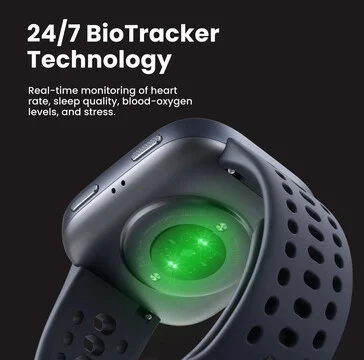
Today, smartwatches are equipped with a bunch of sensors that can do many things, like monitoring your health. Some models even give you the ability to check or estimate your blood pressure, which is an impressive feature. The standard sensor for heart rate monitoring is optical, which means it uses light to detect changes in blood flow, and hardly any new watches lack it. For most watches nowadays, not only can you track your heart rate, but also its variability, which provides more detailed health information.
Understanding Heart Rate Variability and Measurements
Measuring heart rate variability (HRV) involves precision because it looks at the time gap between each heartbeat, or pulse beat when talking about watches. Unlike simple pulse measurement with a stopwatch, HRV is more complicated, as it requires analyzing tiny differences in time intervals. This makes HRV measurement a challenging task for smartwatches, demanding more sensitive sensors and accurate data processing, which is why not all devices excel at it.
Study on Garmin Forerunner 265 Accuracy
Recently, a study was conducted on the Garmin Forerunner 265 to analyze how well it measures heart rate and HRV. The test involved only 30 grown adults, making the sample quite small for broad conclusions. Because subgroups within this sample are even smaller, it was hard to tell if factors like skin type affect accuracy. Furthermore, the study was an academic project under supervision but not peer-reviewed, so some caution is needed. The results showed that the Forerunner 265 provides very reliable resting heart rate readings, with deviations around two beats, almost negligible. But for heart rate variability, the watch’s data is not dependable enough, especially for research or athletic purposes.