
Key Takeaways
1. HD 61005 is a young star located about 120 light-years from Earth, with a mass and temperature similar to our Sun but only 100 million years old compared to the Sun’s 5 billion years.
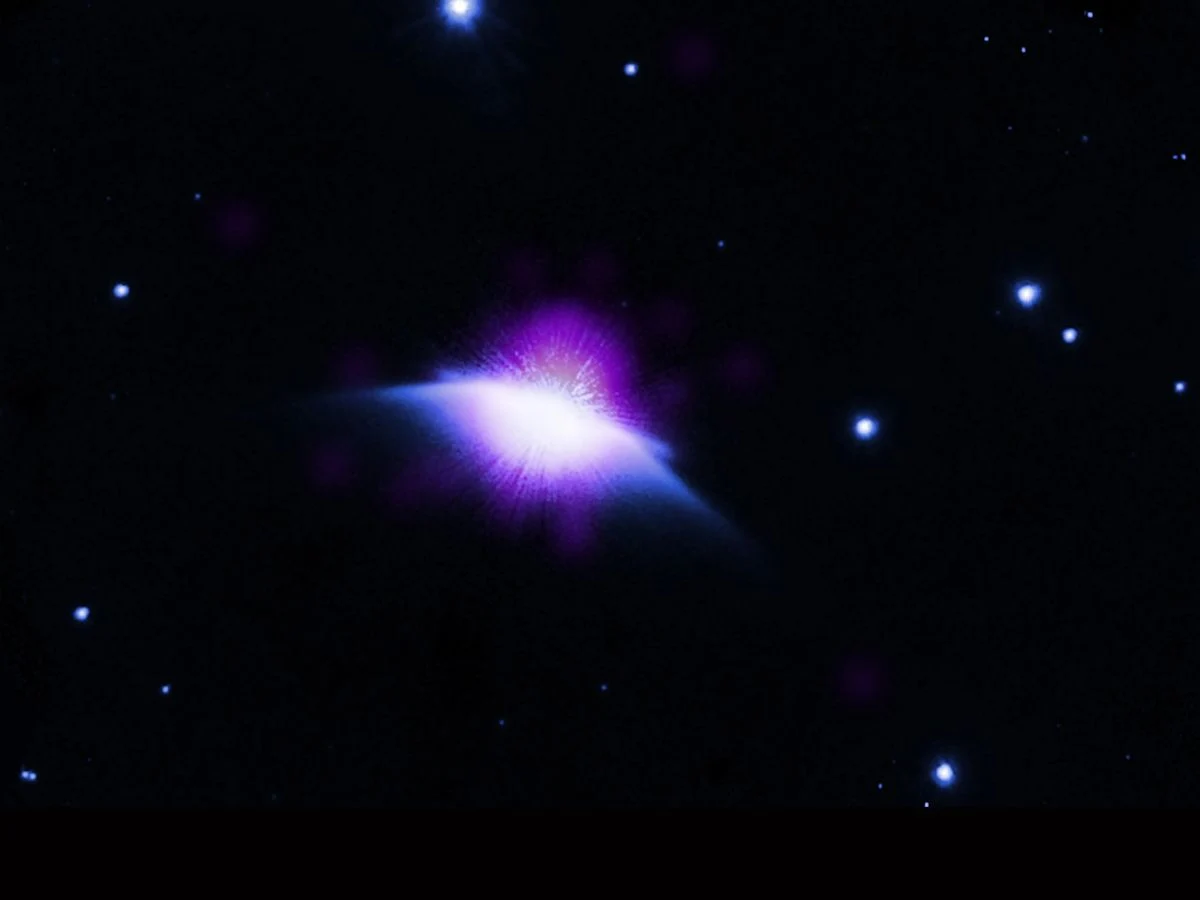
2. The star is nicknamed “the moth” due to a unique dust pattern that resembles moth wings surrounding it.
3. HD 61005 has a visible astrosphere, a protective bubble created by stellar wind, which is 200 times the distance from Earth to the Sun.
4. The stellar wind from HD 61005 is three times faster and 25 times denser than the solar wind, making its astrosphere more noticeable.
5. Observations of HD 61005 provide insights into the evolution of solar wind, offering a glimpse into the early conditions of our Sun billions of years ago.
A star known as HD 61005 is situated around 120 light-years from our Sun. It shares the same mass and temperature as our Sun but is much younger, estimated to be only about 100 million years old, while the Sun is approximately 5 billion years old. This makes HD 61005 a more youthful counterpart of our familiar star.
Stellar Characteristics
This star has received the nickname “the moth” because of the unique dust pattern that resembles moth wings surrounding it. The star also has a visible astrosphere, which is a massive bubble extending 200 times the distance from the Earth to the Sun. An astrosphere is created by the stellar wind that pushes outwards into space, forming this protective bubble around the star.
The particle wind emerging from the surface of HD 61005 moves at three times the speed of the solar wind and is roughly 25 times denser. This higher density and speed make the astrosphere more visible, especially given its close distance to us. The Chandra X-ray Observatory detected this interesting phenomenon by observing X-rays emitted from the hot gas that results when the stellar wind collides with cooler dust and gases in space.
Insights from the Discovery
Our Sun also has a similar protective layer called the heliosphere, which extends well beyond the orbit of Pluto and serves to shield us from cosmic radiation. Nevertheless, astronomers have yet to capture an image of it from the outer regions. This remarkable image of HD 61005 offers valuable insights into how the solar wind has evolved, providing a peek into the past of our Sun billions of years ago.
Source:
Link