
Key Takeaways
1. Astronomers observed a significant crash between two large objects in the Fomalhaut system, indicating instability in the planetary system.
2. The first dust cloud, initially thought to be a planet, is now recognized as a debris cloud (cs1), while a second cloud (cs2) has been identified.
3. The close proximity of cs1 and cs2 raises questions about the randomness of their collisions, which are occurring more frequently than expected.
4. Collisions in the Fomalhaut system are estimated to happen every 100,000 years, but two have occurred within just 20 years.
5. Future observations with Webb’s Near-Infrared Camera (NIRCam) will help analyze cs2 and provide insights into the dust grains’ composition.
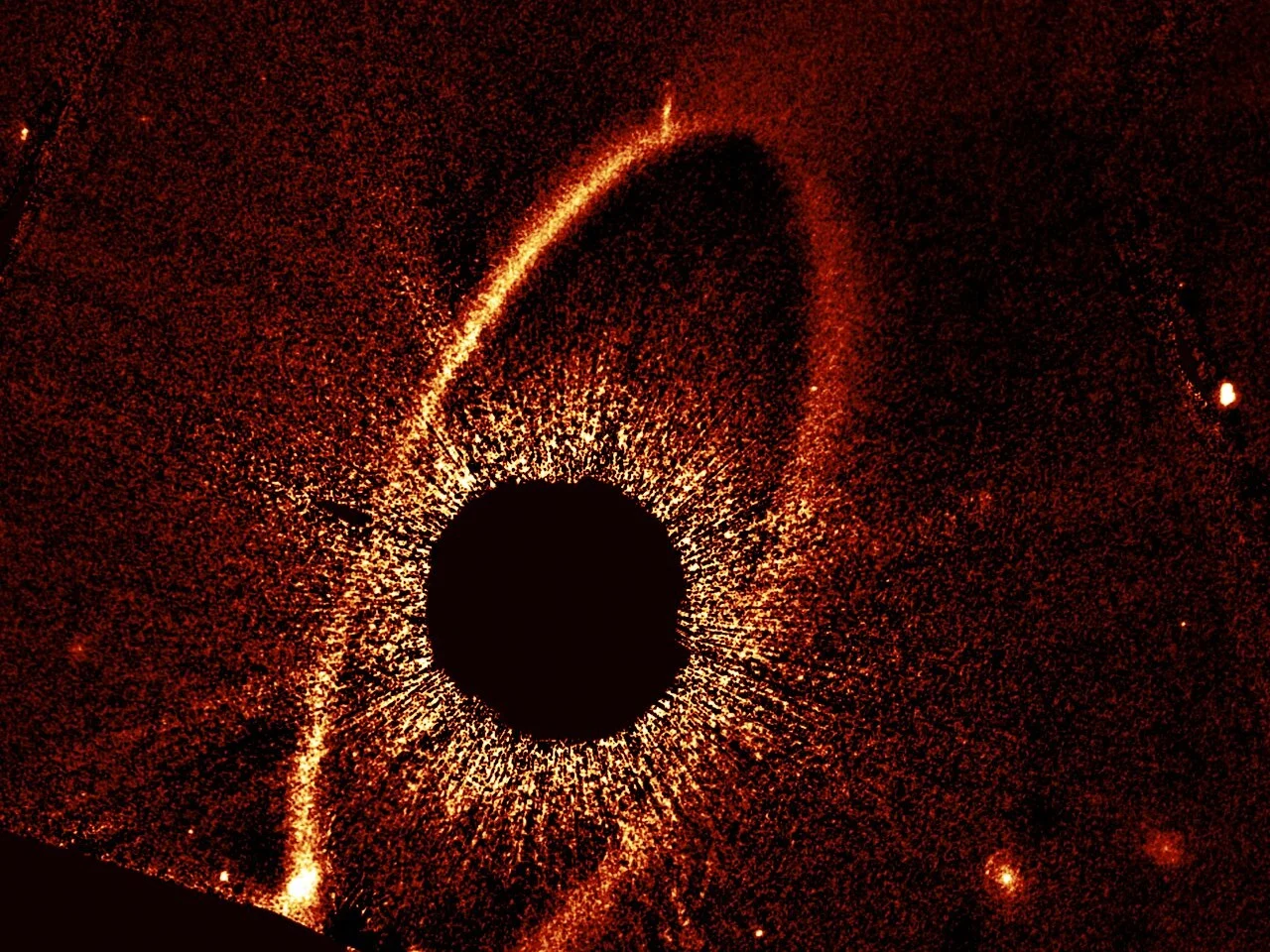
Using the Hubble Space Telescope, astronomers have observed a dramatic crash between two large objects located about 25 light-years from Earth. These observations indicate that the Fomalhaut system is experiencing significant instability. This instability, known as dynamic upheaval, is when a planetary system is in flux, leading to frequent collisions among asteroids and planetesimals. Our own solar system underwent such a phase during its early hundreds of millions of years.
Discovering Dust Clouds
Astronomers reached this conclusion after detecting two dust clouds situated closely around the Fomalhaut star. The first cloud was identified in a 2008 Hubble observation and was initially thought to be a planet. However, scientists have since realized it is a debris cloud that resembles a planet, now referred to as circumstellar source 1 (cs1). The second cloud, identified more recently, is called circumstellar source 2 (cs2).
Close Proximity and Collision Frequency
One intriguing aspect of this finding is how near cs1 and cs2 are to each other. This raises questions about whether the collisions are truly random. If they were random, these objects would likely be found in separate locations.
Another puzzling detail regarding these collisions is the brief interval between them. While scientists have estimated that such collisions might happen roughly every 100,000 years, in this case, two have seemingly occurred within a span of just 20 years.
Future Observations with Webb
Astronomers are set to explore the mysteries surrounding the Fomalhaut system further. They plan to utilize Webb’s Near-Infrared Camera (NIRCam) to examine cs2. The NIRCam is capable of providing valuable color data, which can help in identifying the dust grains and their composition.
Source:
Link