
Tag: EV Charging Stations

  • PM2.5 Pollution from EV Charging May Raise Lung and Heart Risks

    PM2.5 Pollution from EV Charging May Raise Lung and Heart Risks

    Key Takeaways

    1. PM2.5 particles are smaller than 2.5 micrometers and can penetrate deeper into the body, making them more harmful than PM10 particles.
    2. Children living in high PM2.5 areas experience slower lung development, leading to smaller lungs by age 18.
    3. PM2.5 is linked to approximately 2,800 hospital admissions for heart and lung diseases and about 6,700 emergency visits for asthma each year in California.
    4. Research from UCLA found that PM2.5 levels at fast-charging EV stations were significantly higher than in urban areas without these stations.
    5. Power cabinets at level 3 EV chargers are a major source of PM2.5 emissions, with levels exceeding 300 micrograms per cubic meter, unlike level 1 and level 2 chargers that produce lower emissions.


    PM2.5 is a term that describes tiny particles that are 2.5 micrometers or smaller in size. While both PM2.5 and PM10 can harm health, PM2.5 is considered more dangerous because it can go deeper into the body.

    Impact on Children’s Health

    A study from the California Air Resources Board showed that kids who live in high PM2.5 areas have slower lung development. By the time they reach 18, their lungs are smaller than those of kids from areas with lower PM2.5 levels. Furthermore, PM2.5 is linked to around 2,800 hospital admissions for heart and lung diseases and approximately 6,700 emergency visits for asthma annually in California. There are also other health issues connected to PM2.5.

    Findings from UCLA Researchers

    A recent investigation by researchers at UCLA analyzed daily PM2.5 levels at fast-charging EV stations, finding concentrations between 7.2 and 39 micrograms per cubic meter. These figures are considerably higher than those recorded in urban areas without these charging stations, which were between 3.6 and 12.4 micrograms per cubic meter.

    To make their study reliable, the researchers checked air quality at urban locations like gas stations, not only in residential neighborhoods. They evaluated air quality at 50 EV charging stations across 47 cities in Los Angeles County.

    Source of Emissions

    The researchers discovered that PM2.5 levels near power cabinets reached over 300 micrograms per cubic meter at times. This indicates that power cabinets, which convert alternating current to direct current in level 3 chargers, are a main source of emissions. In contrast, level 1 and level 2 EV chargers use AC power and do not require power cabinets, resulting in lower PM2.5 emissions.

    Source:
    Link
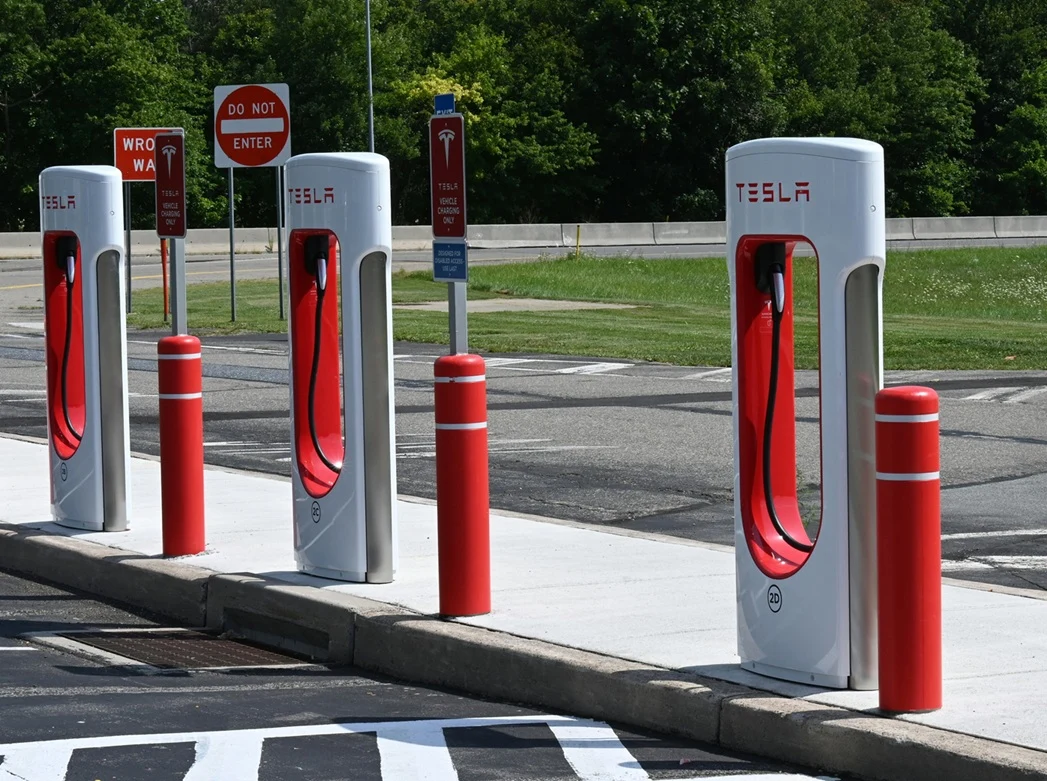
  • California Surpasses Gas Pumps with More EV Charging Stations

    California Surpasses Gas Pumps with More EV Charging Stations

    Key Takeaways

    1. California has over 178,000 EV charging stations, surpassing the 120,000 gas pumps available.
    2. The growth of charging stations is driven by business owners seeking to attract customers and increase sales.
    3. California leads the US in EV adoption with 3026 electric vehicles per 100,000 residents.
    4. Approximately 25% of new vehicles sold in California are electric.
    5. The state plans to ban the sale of new fossil fuel-powered cars by 2035 and has invested over $1 billion in expanding EV infrastructure.


    California is once again showing why it is leading the way in the electric vehicle (EV) movement across the US. The state’s charging network has expanded significantly and now competes with traditional gas station refueling options, as the number of EV chargers has surpassed that of gas pumps.

    Expanding Access for EV Owners

    State energy figures reveal that EV drivers in California can find over 178,000 charging stations, while there are approximately 120,000 gas pump nozzles for those who prefer internal combustion engines (ICE). This number doesn’t even include home charging setups, which are thought to total around one million.

    Business Incentives Drive Growth

    Professor Gil Tal from the UC Davis Research Center notes that the surge in charging stations is mainly due to business owners installing them to draw in customers and increase sales. He stated, “We see commercial retail places that know that if you stop to charge by their place, you are most likely to spend a little bit more money while waiting for your car to charge.”

    California’s Dominance in EV Adoption

    California stands out in the US for its EV adoption rates, boasting 3026 electric vehicles for every 100,000 residents, based on 2024 statistics from Visual Capitalist. Washington follows in second place with 1805 EVs per 100,000 people.

    Roughly a quarter of the new vehicles sold in California are electric, but even more charging stations are anticipated to shift the way people view EV ownership. The state plans to prohibit the sales of all new fossil fuel-powered cars by 2035 and has allocated over $1 billion to expand its EV charging and hydrogen refueling infrastructure.

    Source:
    Link