
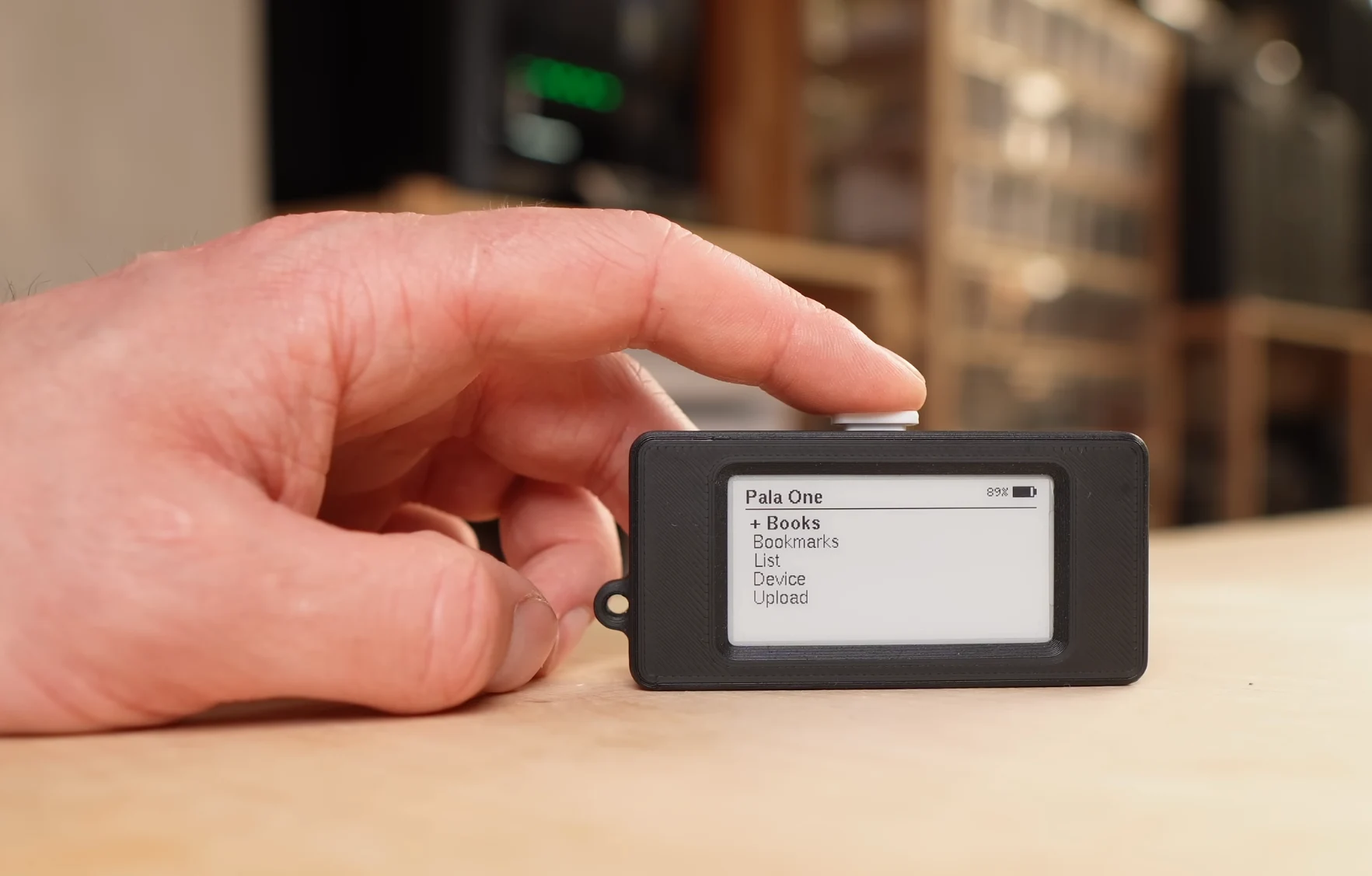
1. The new iteration of the world’s smallest e-reader addresses assembly and durability issues by switching to a screw-down case with threaded inserts, making it more robust.
2. Software improvements include increased storage capacity, automated text compression, and new navigation features like jumping to specific pages.
3. The project remains open-source and affordable, with parts costing around $30 and additional case designs and firmware available for €4.90.
Smallest E-Reader Gets a Major Upgrade
Paul Lagier recently released a new version of his most tiny e-reader project, moving away from the rough prototype into a more robust and durable device. This second version is a response to the original build, which first launched just over a month ago as a minimalist tool for reclaiming time spent on mobile gaming. Its focus was on creating a simple, compact e-reader that fits conveniently into your pocket or bag.
Hardware and Design Changes
The first version used an ESP32 microcontroller (which costs around $16.79) and a small 2.9-inch monochrome e-ink display. However, it faced several assembly challenges; the 3D-printed case depended on tiny plastic pins that many hobbyists found hard to produce reliably. It also had inefficient memory use, with most of its 8 MB flash storage wasted, leaving so little as 1.5 MB for books, equaling maybe two books max. The new version eliminates these issues by switching to a sturdy screw-down case design, incorporating M2 threaded inserts, making the entire device, which is the size of an AirPods case, much stronger and more solid. An added small patch of self-adhesive foam inside helps to dampen the mechanical “click” noise from the navigation button, a common complaint among early users. The design now feels more reliable and user-friendly than its predecessor.
Software Improvements and Features
On the software part, the second iteration brings a significant partitioning fix that frees up 5.5 MB of storage for books. Automated text compression has also been introduced, allowing the device to now accommodate between six and ten full-length books at once. Users can manage their library more easily thanks to folder-based systems, a storage indicator visible on the web interface, and the capability to jump directly to specific pages—features that the single-button UI couldn’t support in the original version. These upgrades make reading and navigation much more efficient, enhancing overall user experience.
Open-Source and Parts Cost
- The project remains open-source, with available case designs and firmware versions listed for €4.90.
- Parts for the build typically cost around $30, making it an affordable DIY project for technology enthusiasts. The affordable parts combined with the open-source nature makes this device a fun and functional alternative to just reading on a smartphone, providing a dedicated space for digital reading in a small, portable form factor.
Overall, Paul Lagier’s e-reader project continues to impress by balancing minimalism, functionality, and affordability, now with a much more refined design that is both practical and fun to build.