
Tag: development board

  • Elecrow CrowPanel 1.46″ Round Smart Home Display Launches

    Elecrow CrowPanel 1.46″ Round Smart Home Display Launches

    Key Takeaway

    – Compact 1.46-inch round touchscreen with 360×360 resolution, powered by an ESP32-S3, suitable as a development board and secondary display.
    – USB-driven (no HDMI/DisplayPort); programmable via Arduino IDE and LVGL for custom interfaces.
    – WiFi (2.4 GHz) and Bluetooth 5.0, enabling smart home integrations and wireless control.
    – Connectors for UART/I2C; no built-in sensors, requires external peripherals; needs external power source (no battery).
    – Priced at $30 direct from Elecrow; perspective for tinkering projects and potential smart-screen use.

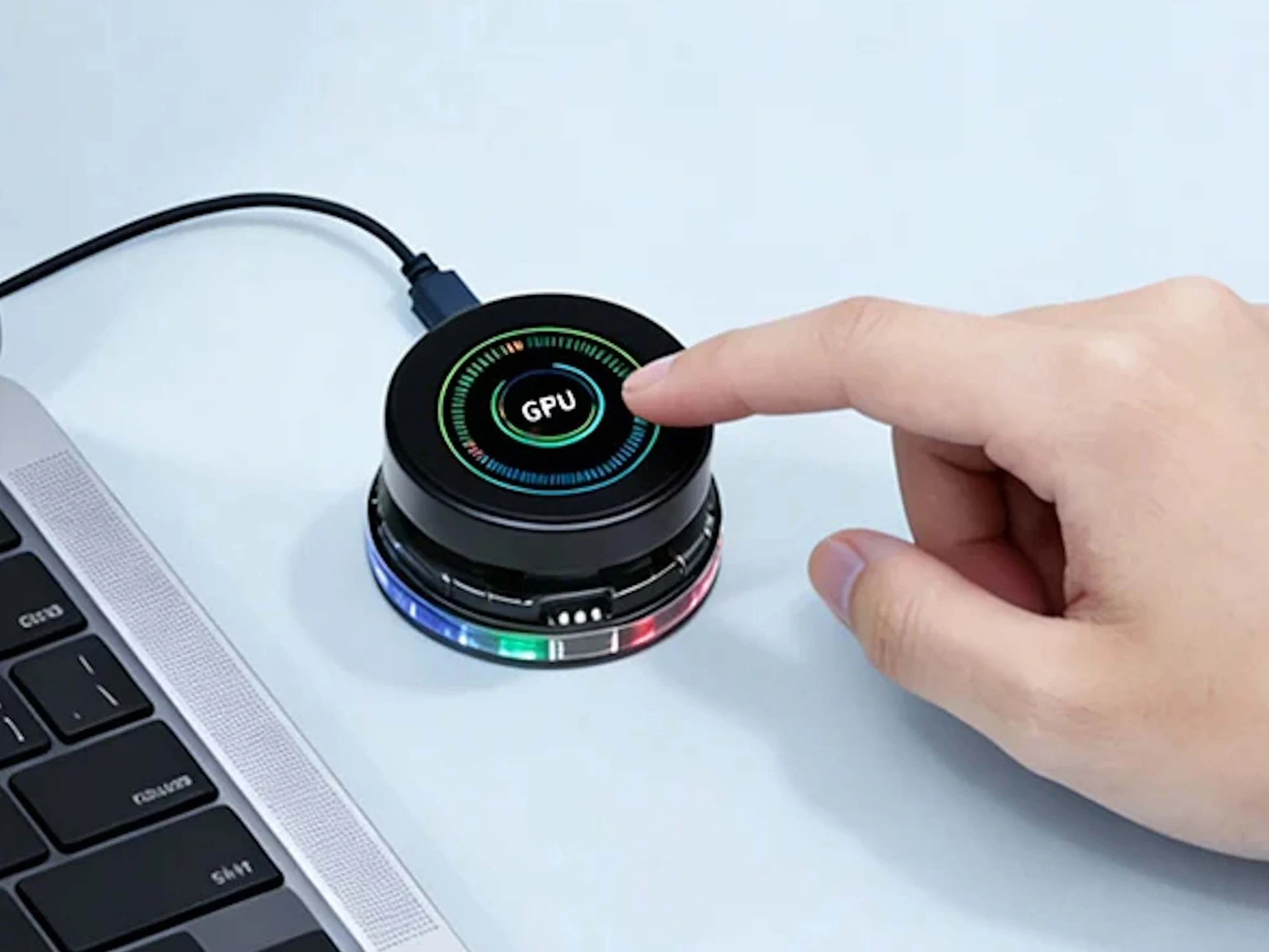
    The manufacturer Elecrow may be familiar to attentive readers. The company tends to offer products by and for makers rather than for traditional consumers. The new CrowPanel is not really an exception. With the compact, round display, the manufacturer is likely also targeting customers who have at least some interest in tinkering and building their own projects. The display has a 1.46-inch diagonal and a resolution of 360 x 360 pixels, so it should offer decent sharpness.

    Design and Interfacing

    This is a touchscreen, but the device itself can also be rotated, making it possible to quickly switch between different views, among other things. The display can be used for a wide range of projects. It can be used as a secondary screen for a PC or laptop, for example. However, the system is not controlled via HDMI or DisplayPort, but via USB. Accordingly, it has to be programmed to a greater or lesser extent. This is possible via the Arduino IDE, for example, while custom interfaces can reportedly be used with LVGL. The display has its own processor, specifically an ESP32-S3 chip.

    Embedded Capabilities

    This also makes the CrowPanel a development board with its own display. The ESP32-S3 supports 2.4GHz WiFi and Bluetooth 5.0 (BLE), allowing the display to be integrated into a smart home setup. The CrowPanel could therefore also be used as a compact smart screen or switch. Such a compact system could be useful for controlling an air conditioner or other devices, for example. There is no battery, so at least one cable is required for power.

    Connectivity and Applications

    The smart home display also has UART and I2C, which means additional sensors and actuators can generally be connected. The board does not include its own sensors, such as sensors for measuring humidity or temperature. The CrowPanel is currently available directly from the manufacturer for $30. Potential buyers should check the shipping conditions and may also want to look at sample projects.
    Sources

  • BeagleConnect Zepto: Affordable $1 Microcontroller Board for Makers

    BeagleConnect Zepto: Affordable $1 Microcontroller Board for Makers

    Key Takeaway

    1. The BeagleConnect Zepto is a low-cost developer board targeting smart home and maker projects, priced at just $1.
    2. It is based on a Texas Instruments MSPM0L1117 microcontroller with a 32 MHz ARM Cortex-M0+ CPU, suitable for simple control tasks.
    3. The board emphasizes expandability through mikroBUS and QWIIC connectors, supporting sensor and actuator integration.
    4. Its simplified design lacks native support for displays or cameras, focusing on basic connectivity and control functions.

    Cheap and Simple Developer Board

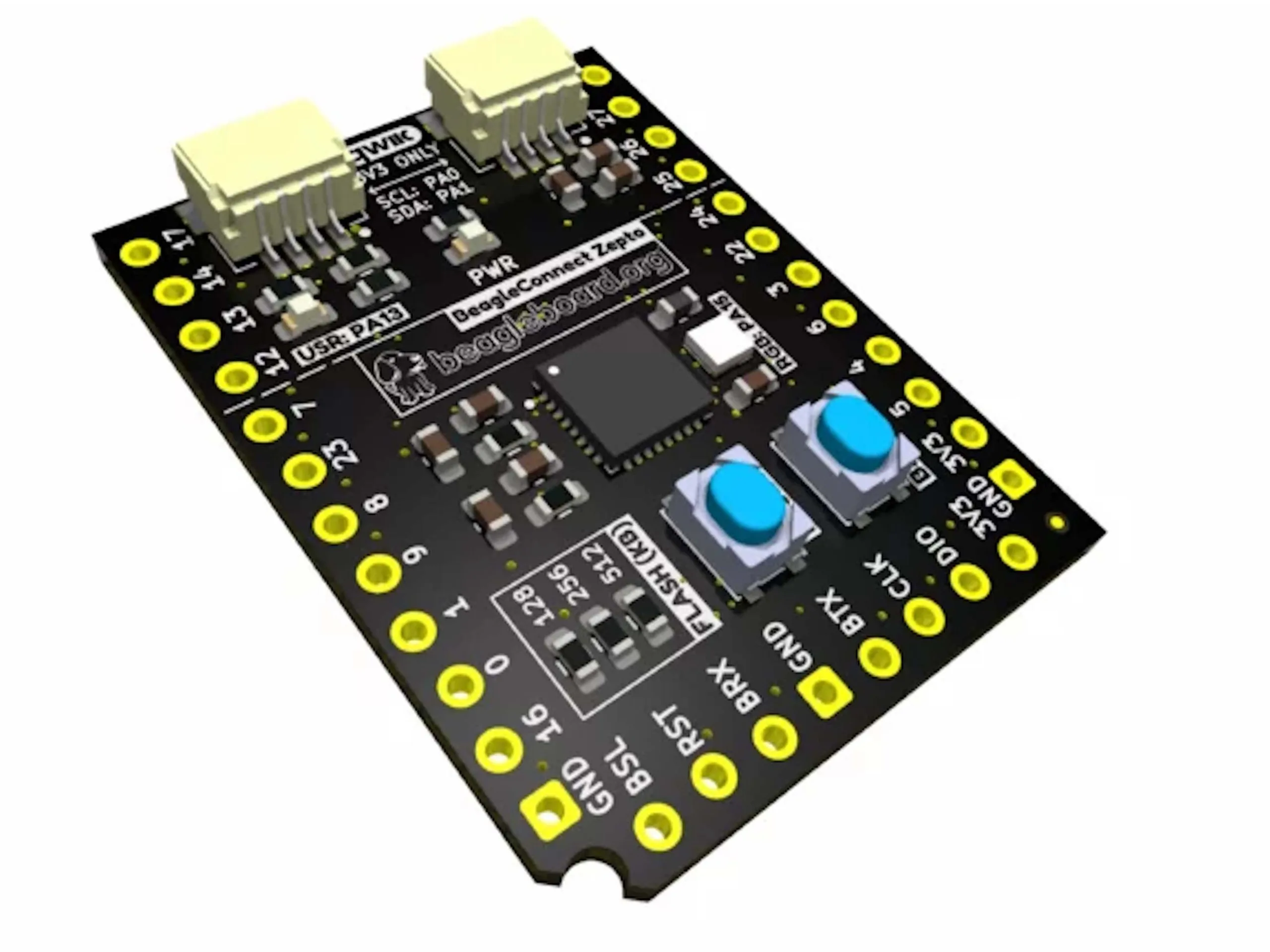
    The BeagleConnect Zepto is a very inexpensive, upcoming developer board that you can get for just a dollar according to BeagleBoard. But, don’t think of it as a full-blown computer, it’s more like a small piece made for smart home stuff and DIY projects, not for running a full desktop OS. Its main purpose is for modders, hobbyists, and makers who need a tiny, affordable controller rather than a powerful computer.

    Made with Basic Components

    The heart of the Zepto is a Texas Instruments MSPM0L1117 microcontroller, running at 32 MHz with an ARM Cortex-M0+ core. That’s similar to many basic Arduino boards (which you might find on Amazon), and it’s enough for simple automation and sensor management. The low cost comes from using a cheap microcontroller, a straightforward two-layer PCB, and limited features—no built-in display or camera support. It’s a minimalistic device aimed at straightforward projects rather than multimedia or complex interfaces.

    Expansion and Compatibility

    The Zepto uses the mikroBUS standard for modifications, which is free and does not require any licensing. This makes it compatible with many add-on modules, allowing you to expand its capabilities with various sensors and functional boards. Additionally, it has two QWIIC connectors, which facilitate easy connection of sensors and actuators without complex wiring. Interestingly, the Zepto can also serve as a QWIIC device itself, acting like an expansion module for other systems, adding to its flexibility. Developers are encouraged to modify and improve the platform since it is open-source, inviting community contribution.

    Sources
  • Cheap $30 Boards That Outperform AMD Ryzen 9 5950X

    Cheap $30 Boards That Outperform AMD Ryzen 9 5950X

    Key Takeaway

    1. The ESP32 Solo Miner LCD is a niche and novelty mining device with a hash rate of up to 1,000 KH/s, primarily for entertainment rather than practical mining.
    2. Despite its limited mining efficiency, the ESP32 includes SHA256 acceleration and is compatible with NMMiner.
    3. As a development board, it offers useful features such as a touchscreen display, Wi-Fi, multiple interfaces (GPIO, I2C, UART), and expandability options at an affordable price.

    Introduction to Unique Mining Hardware

    There are products that makes even a journalist like myself slightly surprised at first glance, and the ESP32 Solo Miner LCD in particular brings back some nostalgia. Back in around 2010, mining was mainly a niche activity and mostly operated on CPU power rather than specialized equipment. As years went by, dedicated hardware like ASICs began to dominate. Yet, even in 2026, new mining gadgets are still showing up, hinting at the ongoing interest in the field.

    Understanding the ESP32 Solo Miner

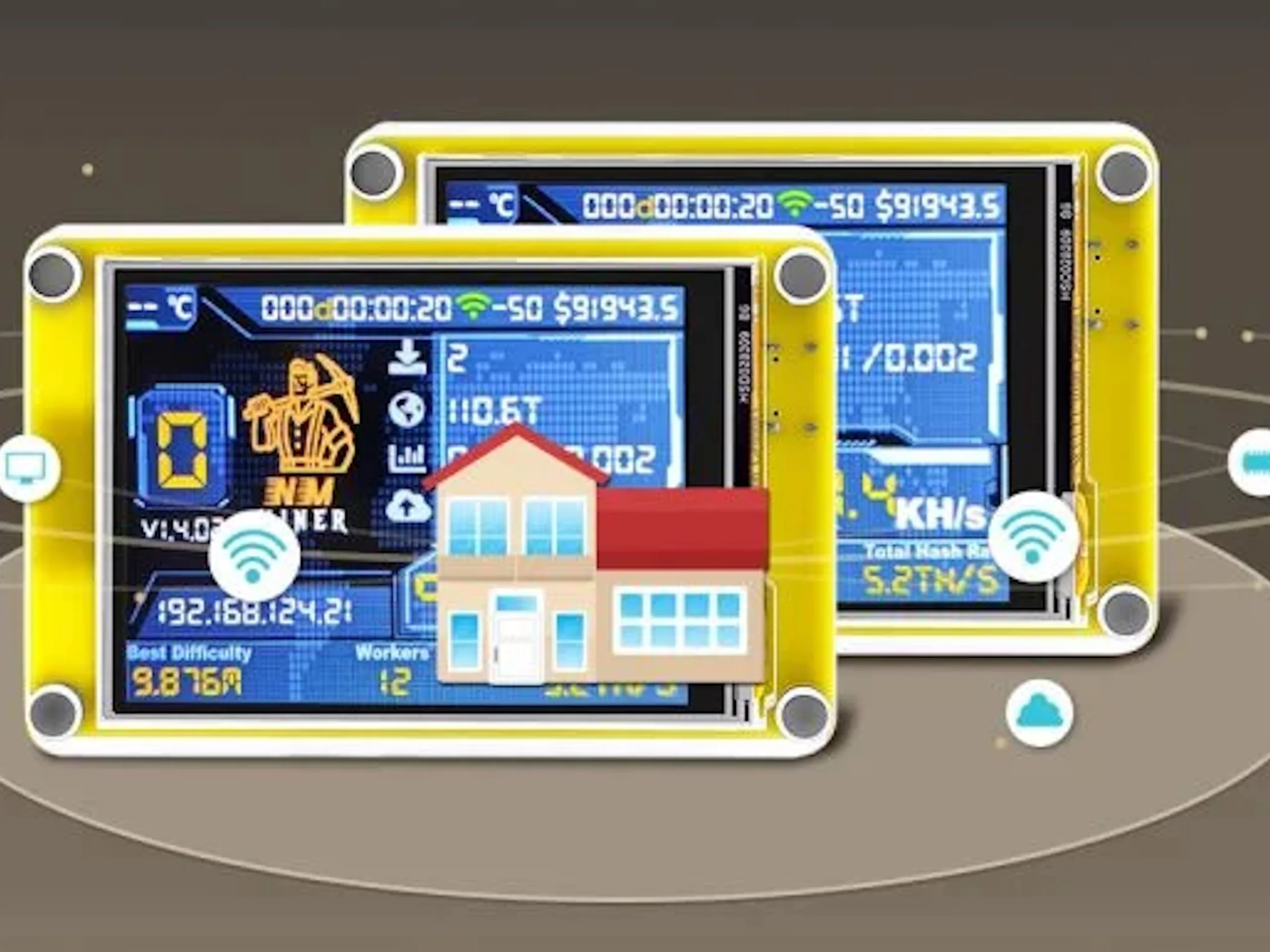
    This tiny device from Elecrow is labelled as a miner with a hash rate of up to 1,000 KH/s, a capacity that hypothetically could generate a new Bitcoin, but the chances are, it’s a total lottery. This means the system can perform up to 1,000,000 calculations per second attempting to find a block, but the odds are extremely slim, similar to NMMiner’s description of it. Despite its small size, it even beats some high-end desktop systems like the AMD Ryzen 9 5950X in such specific tasks, owing to its SHA256 acceleration technology.

    Practical Use and Features

    In practical terms, mining with such a device isn’t sustainable or worthwhile—it’s mainly a novelty or a fun experiment. Nevertheless, the device is also a handy development platform with important features. It has a display, Wi-Fi connection, and some interfaces for customization. The 320×240 pixel touchscreen can be used for various projects, stuff like connecting sensors or building custom interfaces. It offers GPIO, I2C, UART ports, and a slot for a memory card. For $30, you can buy a two-pack of these boards from Elecrow, making it an affordable tool for hobbyists and developers alike.

    Sources