
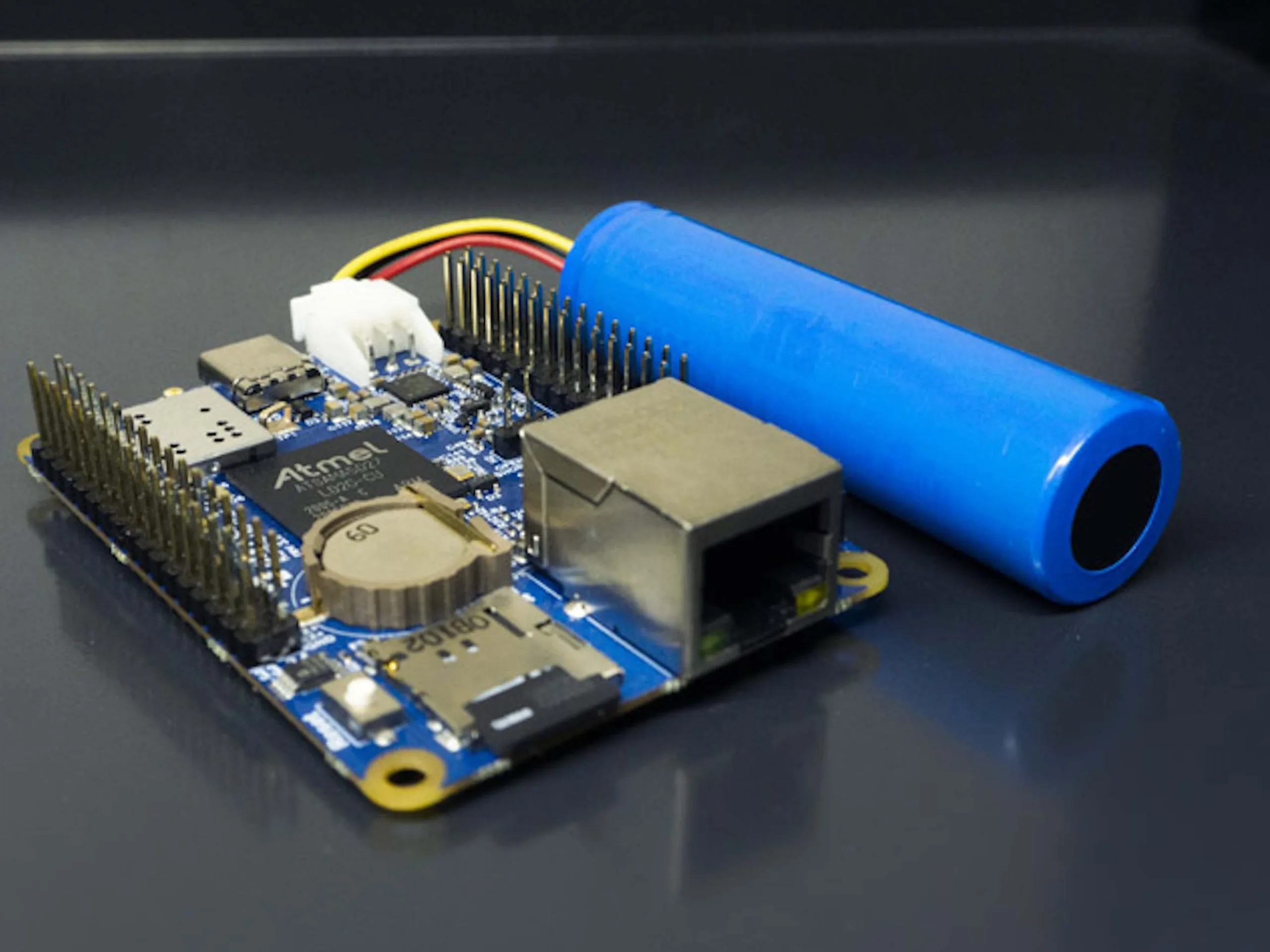
1. The KSTR-SAMA5D27 is a compact, low-power single-board computer based on the SAMA5D27 SoC with limited processing and no HDMI output.
2. It features minimal onboard storage, relying on memory cards, and has basic connectivity options including Ethernet, Wi-Fi, Bluetooth 4.1, and USB-C.
3. The board is highly expandable with 64 GPIO pins and a QWIIC interface, and can operate directly from a rechargeable battery.
4. Its small size (50 × 70 mm) and embedded power management make it suitable for specialized applications rather than media center use.
Compact Design but Limited Multimedia Capabilities
The Conclusive Engineering KSTR-SAMA5D27 has been designed as a tiny marvel, measuring just 50 by 70 millimeters, making it perfect for projects where space is at a premium. Its small size is disguising a basic mantra; it’s not built for multimedia entertainment, since there’s no HDMI port & its processor is quite humble. Made with the SAMA5D27 SoC, the system has only one Cortex-A5 core which runs at a modest 500 MHz, and it comes with 256 MB of LPDDR2 RAM. Onboard storage? Nope, just a memory card support, typical of similar small nods.
Connectivity & Power Management
Connectivity options on this little device are decent for its class, offering Ethernet at up to 100 Mbit/s, alongside Wi-Fi and Bluetooth 4.1. It includes a USB Type-C port for both supplying power and connecting peripherals, which is convenient for various applications. One cool feature is the power management system, it enables the board to be powered directly from a rechargeable battery, offering more mobile use. The design also boasts 64 GPIO pins, which means you can hook up a bunch of sensors and controls or LEDs, plus a QWIIC interface for easier sensor connections. It prices around $119, but potential buyers should check shipping & distribution info before they buy.
Summary and Final Words
Overall, the KSTR-SAMA5D27 is a neat, tiny board with a decent set of connection options. It’s more suited for embedded projects or sensor-based applications where size & power efficiency are critical, rather than media-rich uses. Its modest processor & lack of onboard storage mean it’s not for heavy computing or multimedia tasks, but it’s a good choice for specialized uses.