
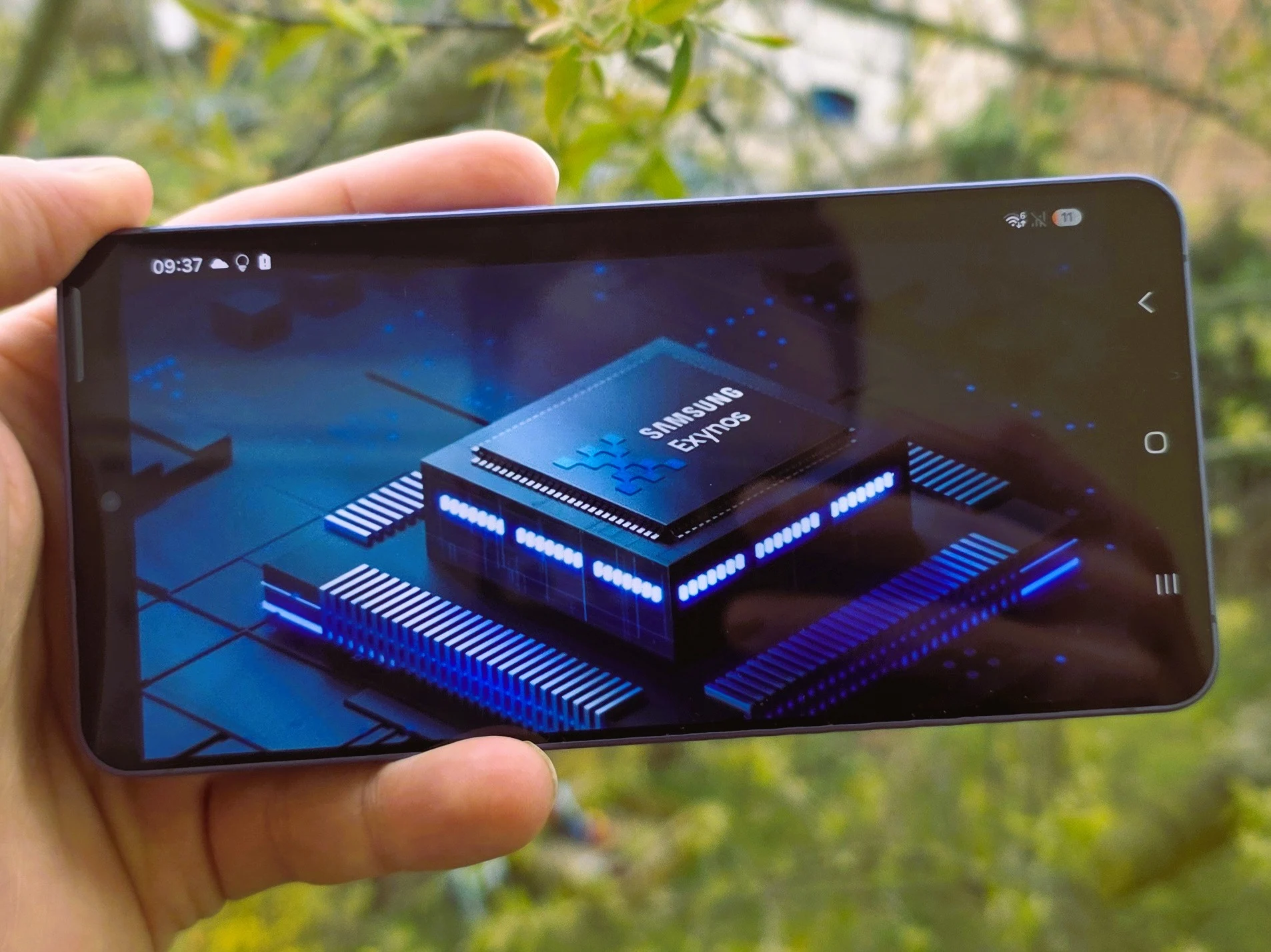
1. The Exynos 2600 is Samsung’s first 2nm process chip, aiming to compete with TSMC’s 3nm and 2nm processors amidst delays at TSMC.
2. It features a 10-core ARM Lumex architecture, including a high-clocked prime core and a GPU (Xclipse 960) promising improved gaming performance.
3. While it shows competitive multi-core performance, it lags behind Snapdragon 8 Elite Gen 5 in single-core performance and has slightly lower efficiency, impacting battery life in daily use.
Introduction to the Chipset and Manufacturing Process
The demand for more powerful chips is increasing, so many folks were really looking forward to Samsung’s Exynos 2600. It’s built using a new 2nm GAA process, which is very promising as a strong alternative to TSMC’s 3nm and 2nm chips. But there’s a catch, as those advanced process nodes from TSMC are taking quite long, with wait times stretching into 2027 or even 2028. So, the Exynos 2600’s release is super important not just for Samsung’s premium phones but also for the entire smartphone industry. It really aims to fill a gap that’s been growing in the market for high-end, efficient chipsets.
Core Architecture and GPU Details
This new SoC features a total of 10 cores built on ARM Lumex architecture, similar to MediaTek’s Dimensity 9500. The heart of the chip is a prime core called C1 Ultra, capable of reaching speeds up to 3.8 GHz, surrounded by three C1 Pro cores clocked at 3.25 GHz, and six C1 Pro cores reaching 2.75 GHz. The GPU is an Xclipse 960, which will need to prove its worth in gaming benchmarks to see if it can keep up with competitors.
Performance and Benchmark Results
In real-world testing, like our review of the Galaxy S26 Plus, the Exynos 2600 did fall short compared to devices with Snapdragon 8 Elite Gen 5 in single-core benchmarks such as Geekbench. While still speedy, it only offers a real edge over Snapdragon in multi-core performance when used in the Galaxy S25 Plus. Performance is not just about speed—it’s about how well the device manages power too. To test this, we measure power consumption at a standard brightness setting to see how the chips handle efficiency.
Power Efficiency and Gaming Performance
Samsung appears to have done a good job with the GPU, as in GFXBench tests, the Galaxy S26 Plus consumes less power than the previous model, even though it delivers higher performance. Though, when compared to the Snapdragon 8 Elite Gen 5, the Exynos 2600 shows slightly lower efficiency. But these differences aren’t that huge, which is pretty good overall.
Battery Life Concerns in Daily Use
Despite promising power efficiency in tests, the Samsung SoC encounters a “problem” in everyday usage—battery life. Users might notice that their devices don’t last as long as expected, indicating that real-world conditions might lessen its efficiency gains. This is a common challenge with high-end processors, but it remains something to keep an eye on for potential improvements in future updates or device models.