
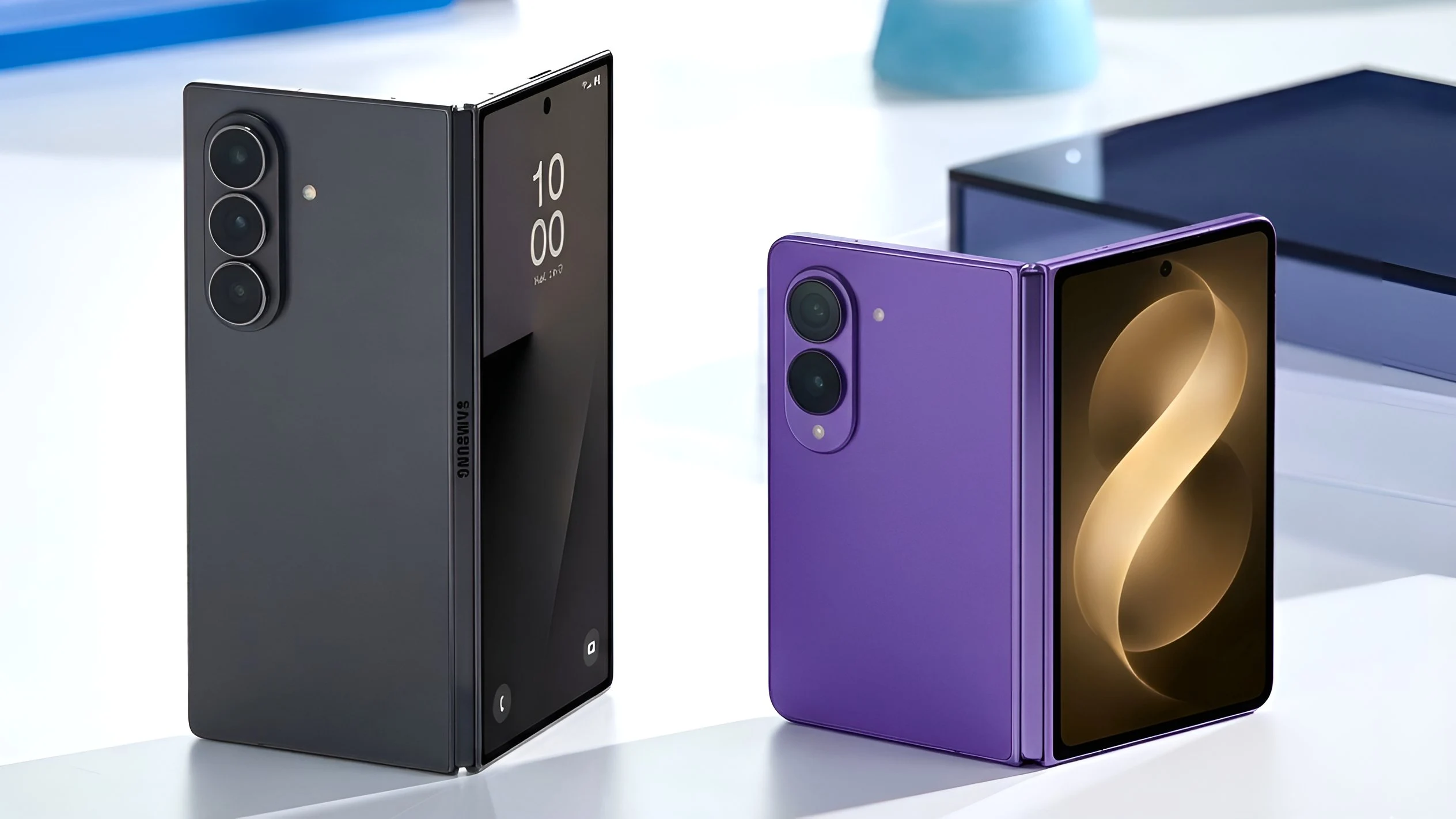
– Galaxy Z Fold 8 “Wide” uses 60μm UTG (30% thicker) for less creasing, while the Fold 8 Ultra remains at 45μm.
– The “Wide” model is expected to directly compete with Apple’s iPhone Ultra under closer scrutiny for crease-free design.
– Thicker UTG reduces creasing and improves drop resistance but increases risk of breakage when folded.
– The Galaxy Z Fold 8 serves as a test case; if successful, the 60μm UTG will likely be adopted in the Galaxy Z Fold 9 (2027).
Foldable Glass Gets a Major Thickness Upgrade
Accoring to a recent report by ZDNet Korea, the presumably more expensive and larger Galaxy Z Fold 8 Ultra will be less impressive then the more compact and wider Galaxy Z Fold 8, which has also been referred to as the Galaxy Z Wide Fold or Galaxy Z Fold 8 Wide. The report states that Samsung is using 30% thicker ultrathin glass (UTG) in the wider foldable than in the regular Galaxy Z Fold 8 form factor. We expect this compact foldable to directly compete with Apple’s iPhone Ultra and so come under closer scrutiny regarding its crease-free design.
Thickness Comparisons Across Generations
While the Galaxy Z Fold 8 Ultra (in the classic tall form factor) is said to use 45-micrometer-thin glass, the UTG thickness in the “Wide Fold” will apparently be 60 micrometers. The recent history with previous Galaxy Z Fold generations is also interesting. Accordingly, the glass thickness of the Galaxy Z Fold 6 from 2024 was 30 micrometers; on the thinner Special Edition, which was only available in Korea and China, it was increased to 45 micrometers—the same value as on the Galaxy Z Fold 7. This means that the Galaxy Z Fold 8 Ultra will likely see little change in this respect compared to its predecessor.
Tradeoffs of Thicker Glass
While a thicker UTG layer reduces creasing in the flexible AMOLED panel and offers advantages in the event of a drop, it also increases the risk of it breaking when folded. If the significantly thicker UTG layer proves successful in the Galaxy Z Fold 8, the Galaxy Z Fold 9 will also likely adopt the 60-micrometer-thick UTG component in 2027. Hence, the Galaxy Z Wide Fold is essentially a test case for the next generation of Samsung foldables.