
Key Takeaways
1. The solar cycle lasts 11 years and includes two phases: solar maximum (high activity) and solar minimum (low activity).
2. New research challenges the belief that the Sun’s internal structure remains constant during solar minimum phases.
3. Data collected over 40 years using helioseismology reveals insights about the Sun’s internal temperature, pressure, and density.
4. A unique sound wave disturbance, known as the helium ionization glitch, was detected, indicating changes in the Sun’s internal conditions.
5. The unusual solar minimum from 2008 to 2009 had unique internal conditions, which could improve understanding of solar activity and enhance space weather forecasts.
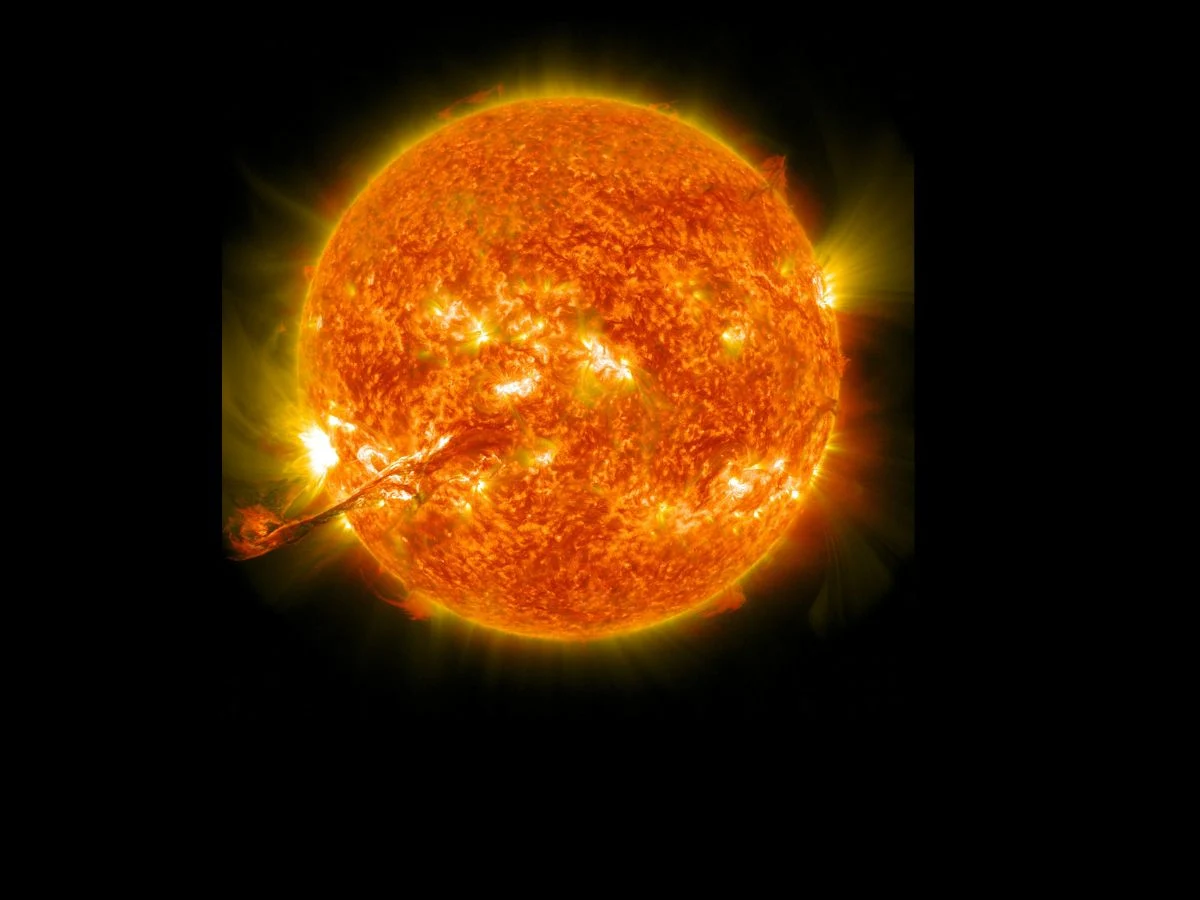
The solar cycle happens every 11 years and consists of two key phases. The first phase is called the solar maximum, when the Sun is very active and generates sunspots and solar flares. The second phase is known as the solar minimum, where the Sun’s activity significantly decreases, leading to weaker magnetic fields.
New Findings Challenge Old Beliefs
It was previously thought that the internal structure of the Sun remained constant during the solar minimum phases. But recent research has proven this idea to be incorrect. Scientists utilized the Birmingham Solar-Oscillation Network (BiSON), a collection of telescopes that observe the Sun continuously, to gather data on solar vibrations.
Long-Term Data Collection
Over a span of 40 years, data was gathered during four solar minimum periods across solar cycles 21 to 25. The primary method employed for this research was helioseismology, which allows scientists to study the Sun’s inner structure by analyzing vibrations caused by sound waves trapped within it. By measuring vibrations on the Sun’s surface from Earth, researchers can deduce information about the Sun’s internal temperature, pressure, and density. Notably, a sound wave called the helium ionization glitch was detected. This glitch occurs when helium atoms become ionized at very high temperatures, causing small disturbances in sound waves.
Unusual Solar Minimum Observed
The solar minimum from 2008 to 2009, which took place between cycles 23 and 24, was particularly unusual, as it lasted longer and showed extremely low solar activity. However, this minimum had very unique internal conditions when compared to the other three minima observed. These findings could enhance our understanding of stellar magnetic activity, allow for better predictions of future solar cycles, and improve space weather forecasts that have an impact on Earth.
arXiv.org via Phys.org
Source:
Link
Leave a Reply