
Key Takeaways
1. A new super-Earth, possibly rocky, has been discovered orbiting a star 83 light-years away, named TOI-1080 b.
2. The discovery team, led by Yilen Gómez Maqueo Chew, used a technique that has previously uncovered other exoplanets.
3. TOI-1080 b has a radius about 1.2 times that of Earth and a mass around 1.75 times greater, completing an orbit in just 3.97 days.
4. The planet is outside the habitable zone and likely has an atmosphere mainly composed of carbon dioxide, with no evidence of life.
5. Further observations with the TESS satellite are needed to explore the potential existence of other planets around the 5 to 7 billion-year-old red dwarf star.
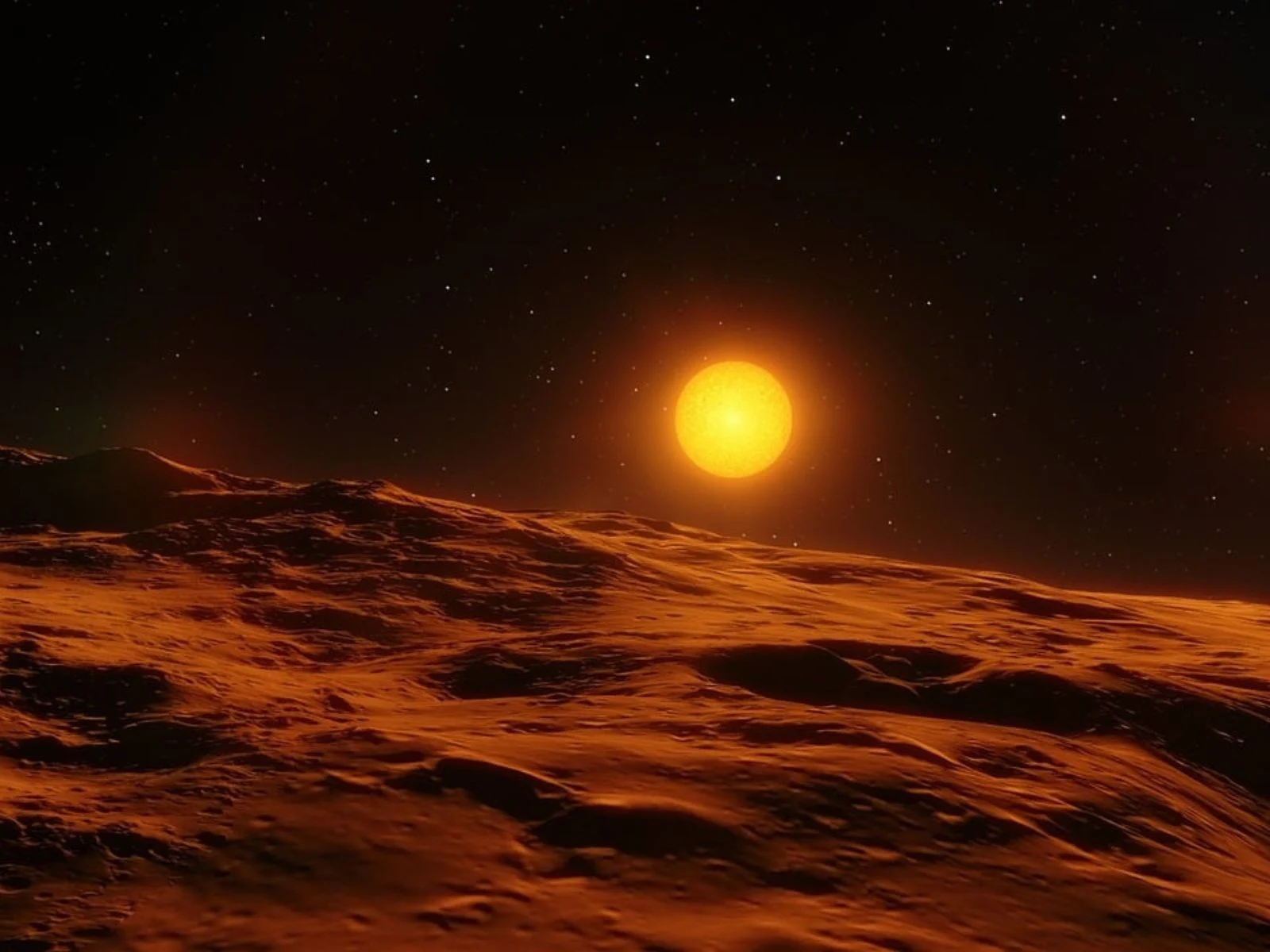
Recently, a new super-Earth has been found by astronomers, thanks to data from the TESS satellite. This planet orbits a star around 83 light-years away from Earth and seems to be larger and possibly rocky compared to our own planet.
Discovery Team
The team behind this exciting find was led by Yilen Gómez Maqueo Chew from the National Autonomous University of Mexico. They utilized a technique that has previously helped to uncover other exoplanets, like TOI-1452 b.
Detection Method
The detection of this exoplanet was achieved by watching a dip in brightness when it crossed in front of the star known as TOI-1080. Initial findings suggest it might be named TOI-1080 b, having a radius approximately 1.2 times that of Earth and a mass around 1.75 times greater. Its orbital period is quite astonishing, taking only 3.97 days to complete one orbit around its star.
Life on the Exoplanet?
Even though it is thought to be a rocky planet, there is currently no proof of life on this celestial body. It sits outside the habitable zone of its star, and astronomers suspect its atmosphere is mainly carbon dioxide. The star that TOI-1080 b orbits is smaller than our Sun, with a mass of roughly 0.16 solar masses.
Future Observations Needed
In addition, estimates suggest that this red dwarf star could be between 5 and 7 billion years old, which means there may be other planets in its orbit. To find these potential new worlds, more observations will be necessary utilizing the TESS satellite. This device has already found over 7,900 possible exoplanets in the universe.
Source:
Link
Leave a Reply