
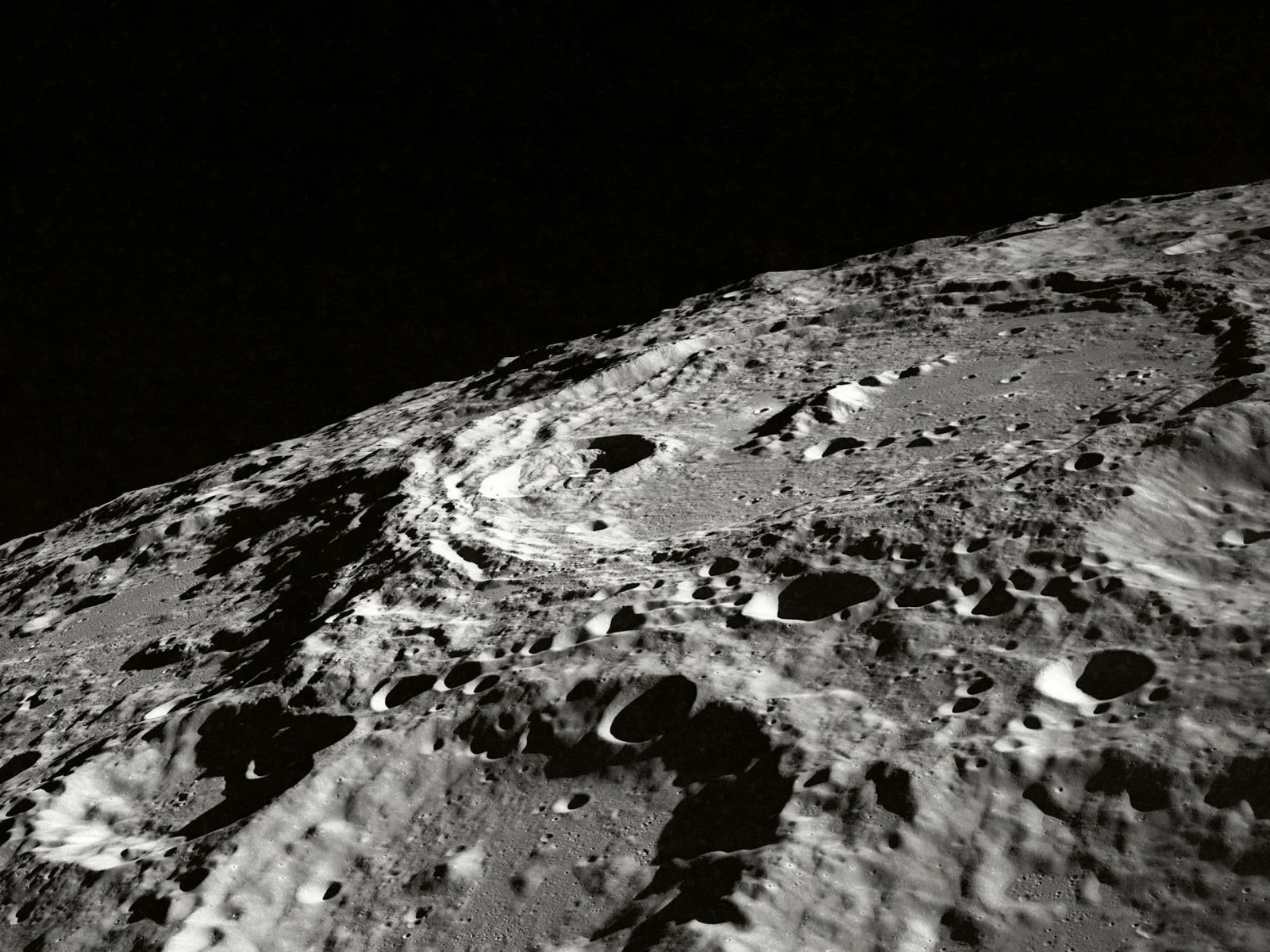
1. The South Pole–Aitken basin is the largest and most mysterious crater on the Moon, potentially containing materials from its mantle.
2. A 3D simulation suggests an asteroid about 260 km in diameter, composed of iron and rock, caused the impact at a shallow 30-degree angle and 13 km/s speed.
3. The impact likely ejected mantle fragments toward the Moon’s south pole, which astronauts could potentially collect during the 2028 Artemis mission.
4. Analyzing these ejecta could help scientists determine the timing of the impact and gain insights into the Moon’s composition and history.
The Surface and Craters of the Moon
When we in eyes view the Moon, either just looking or using a telescope, we see many craters scattered all over its surface. The most massive of these is called the South Pole–Aitken basin which measures over 1,550 miles across, about 2,500 kilometers! Recently some scientists might have figured out where it came from too.
The Mystery Behind the SPA Basin
The SPA basin still hold many secrets. Despite how important it is in science, its origin story remains partly a mystery. It could hold materials from the Moon’s mantle, which makes scientists really curious. A research team led by Shigeru Wakita at Purdue University ran some detailed 3D simulations. They concluded that an asteroid about 260 km wide probably caused the impact. Interestingly, this space rock was believed to be a mix of iron and rock.
The Impact Details and Subsequences
- The asteroid hit the Moon at a low angle of 30°
- The impact speed was roughly 13 km/sec
- Fragments from the lunar mantle may have been propelled toward the South Pole
This powerful collision might have ejected pieces of the Moon’s inner layers into space, which are now part of the crater’s debris. Scientists think that future lunar missions could retrieve these samples.
Future Missions and Scientific Benefits
According to the researchers, astronauts who travel to the Moon in 2028 might be able to pick up these ejected materials. Their study hints that NASA’s Artemis mission, planned to land near the South Pole, could bring back records from the impact site. Such samples would be crucial to date the impact event more precisely and understand the moon’s history better.
The Significance of Artemis
This upcoming mission is not just about exploration, but also about helping us learn about the Moon’s past impacts and its overall geology. By analyzing the ejected fragments, scientists hope to uncover secrets of the Moon’s inner composition and the timing of such colossal events.
Leave a Reply