
Key Takeaways
1. GitLab has released patch updates (versions 18.8.4, 18.7.4, and 18.6.6) for high-severity security issues in its Community Edition (CE) and Enterprise Edition (EE) platforms.
2. A critical vulnerability (CVE-2025-7659) in GitLab’s Web IDE could allow unauthenticated attackers to capture access tokens and access private repositories.
3. The updates fix multiple denial-of-service vulnerabilities, including CVE-2025-8099 and CVE-2026-0958, which could crash servers and drain system resources.
4. Additional security fixes address cross-site scripting and injection vulnerabilities, along with medium and lower-severity flaws in Markdown processing and authorization.
5. Upgrading to the latest version is crucial for security, and administrators should expect some downtime during the patch process, especially for single-node installations.
GitLab has put out new patch updates that tackle several high-severity security issues affecting its Community Edition (CE) and Enterprise Edition (EE) platforms. The updates are now available as versions 18.8.4, 18.7.4, and 18.6.6. The company is urging all self-managed installations to upgrade without delay. GitLab has already implemented the patched versions, and customers using GitLab Dedicated don’t need to take any steps.
Critical Vulnerabilities Addressed
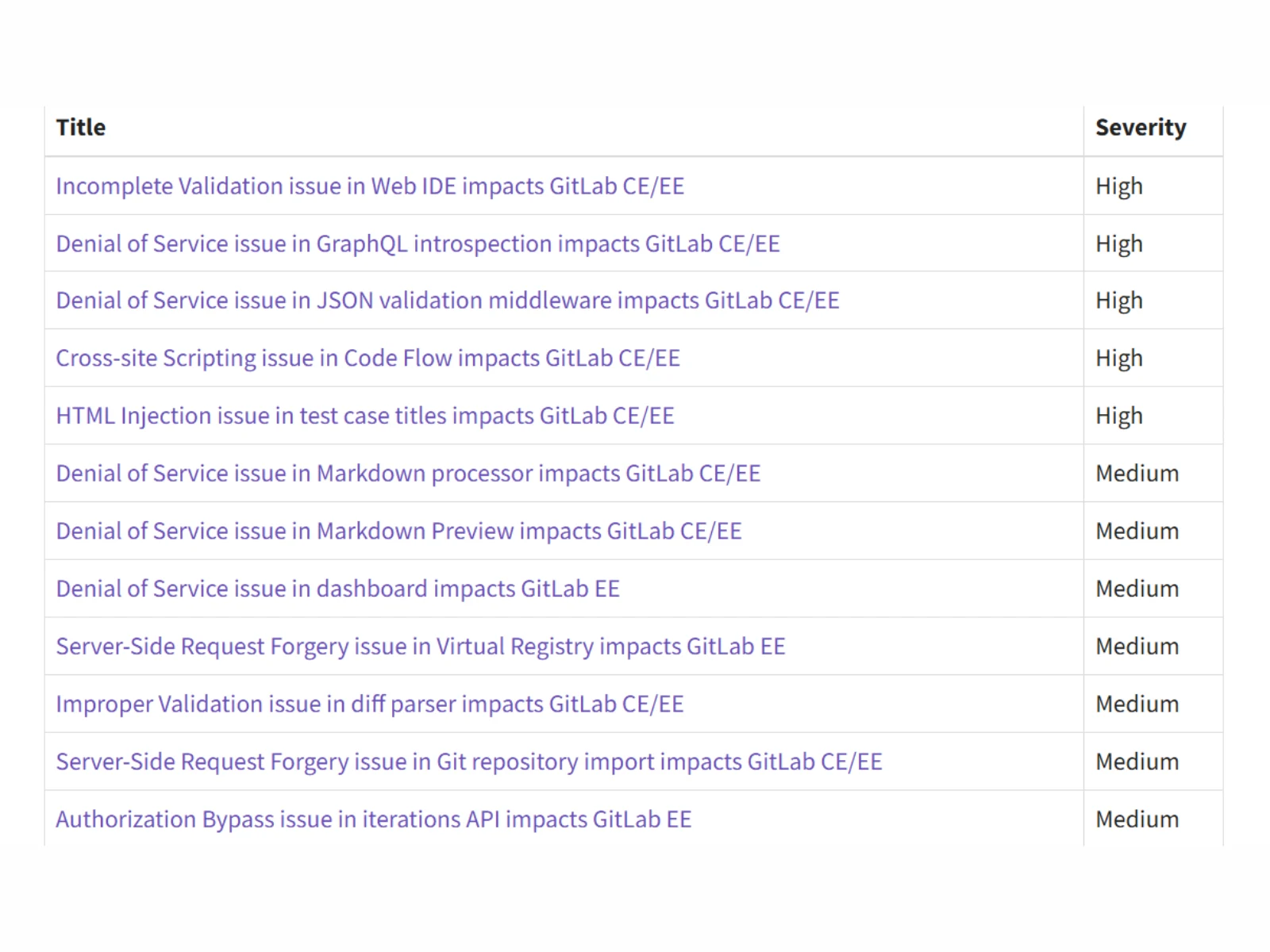
One of the most significant problems fixed is CVE-2025-7659, a high-severity vulnerability (CVSS score of 8.0) related to inadequate validation within GitLab’s Web IDE. GitLab mentions that this flaw could let unauthenticated attackers capture access tokens and potentially access private repositories. The patch also addresses multiple denial-of-service vulnerabilities, such as CVE-2025-8099, which could allow attackers to crash servers through repeated GraphQL queries, and CVE-2026-0958, which could drain system resources by skipping JSON validation middleware.
Additional Security Fixes
The update also resolves cross-site scripting and injection vulnerabilities like CVE-2025-14560 and CVE-2026-0595. These issues could enable attackers to inject harmful scripts or alter content under certain scenarios. Moreover, various medium-severity vulnerabilities related to Markdown processing, dashboards, and server-side request forgery (SSRF) have been fixed, along with several lower-severity flaws in authorization and validation.
GitLab clarifies that the affected versions encompass all builds from various release branches prior to the newly launched patches. The firm points out that details on security vulnerabilities are usually disclosed 30 days after a fix has been issued. The organization stresses that upgrading to the latest supported version is vital for keeping deployments secure.
Impact on Availability
The patch release also includes database migrations, which might temporarily affect availability. For single-node installations, some downtime is anticipated during the upgrade, while multi-node deployments can finish the update without downtime if they follow the suggested upgrade protocols.
GitLab typically adheres to a regular patch release timetable twice a month but can issue extra updates when critical vulnerabilities are found. The company recommends that administrators check release notes, test upgrades in staging environments, and apply the latest patches as quickly as possible to minimize potential exploitation risks.
Source:
Link
Leave a Reply