
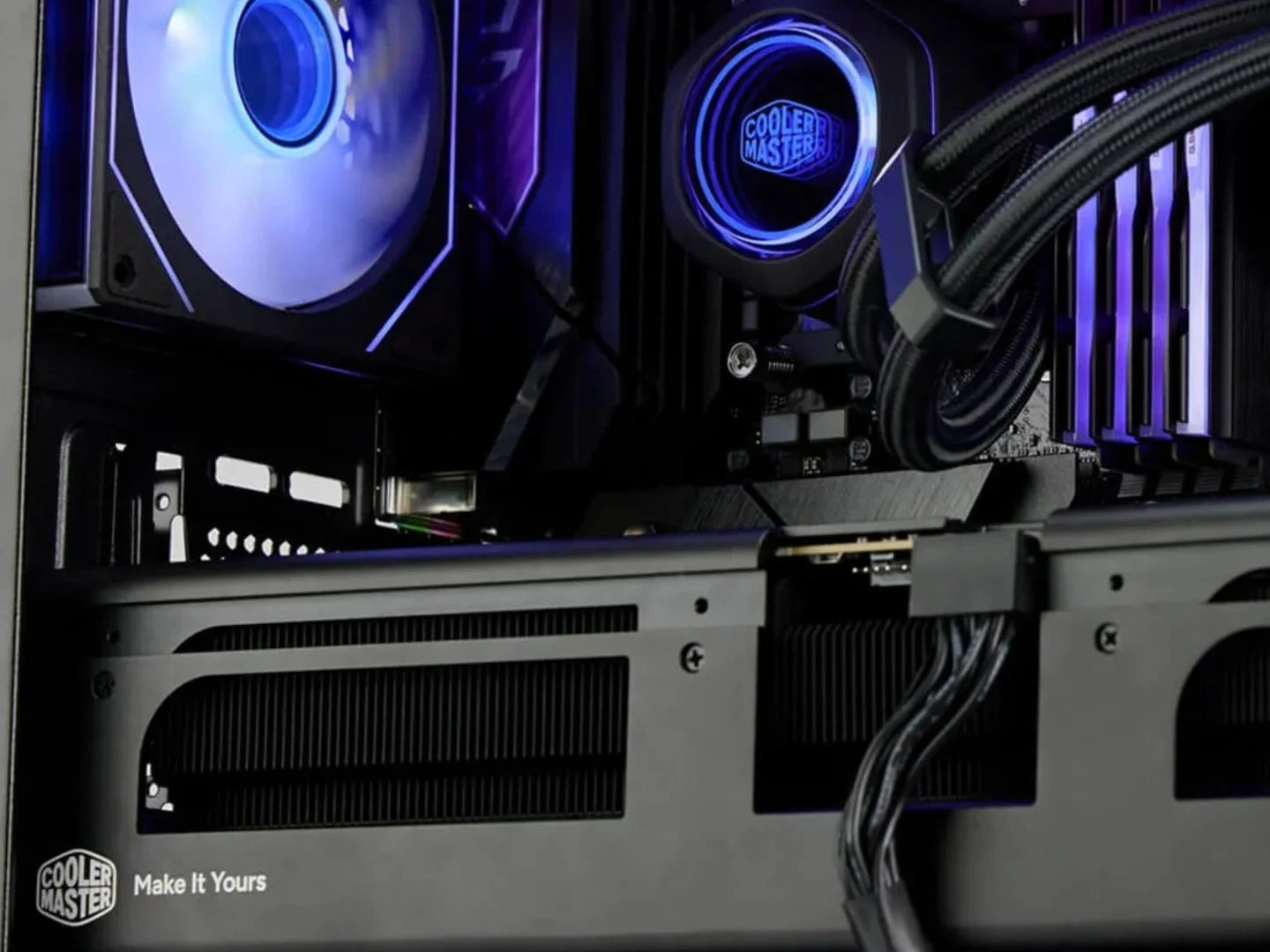
– Cooler Master’s MasterFlow accessory redirects hot GPU air out of the case, lowering CPU temps by up to 6°C.
– It uses a blower-style fan to exhaust heat through the rear, countering modern pass-through GPU designs.
– Designed for triple-fan GPUs like the RTX 5070 Ti or higher, with limited length adjustment.
– Still in development, with power connector (USB-C vs. 4-pin PWM) yet to be finalized.
– Expected to launch within the year, initially appearing in Cooler Master’s pre-built systems.
Computex has brought all kinds of tech innovations like RTX Spark-based laptops, AI glasses, displays, gaming handhelds, and more. Cooler Master was also present at the event, where it showed off something quite unique and interesting, aimed at PC gamers.
Performance Improvements and Design
Called the ‘MasterFlow,’ this GPU accessory claims up to 6 degrees Celsius lower CPU temperatures (via PC Gamer). It is essentially a metal shroud with a blower-style fan that is meant to exhaust the hot air out of the back of the case. Blower-style GPUs are now a thing of the past as most modern GPUs come with pass-through coolers, i.e., two or three fans at the front pulling in air and exhausting through the back of the GPU. What this does is push hot or warm air from the GPU towards the CPU.
How It Functions
With the MasterFlow accessory attached to the GPU, it would redirect all the hot air out of the case through the back, leading to a cooler CPU. It is a single-slot accessory that, according to Cooler Master (via GDM), works best with RTX 5070 Ti cards or higher. The position of the blower fan can be fine-tuned to align with a GPU’s exhaust vent, but there is not a lot of length adjustment available, so it is ideal for GPUs with triple fans.
Power and Availability
The MasterFlow is not a finished product yet, as Cooler Master is still finalizing whether to use a USB Type-C connector or a 4-pin PWN connector to power the fan. However, it is said to be released within the year and will appear in the company’s own pre-built systems, at least initially.
Leave a Reply