
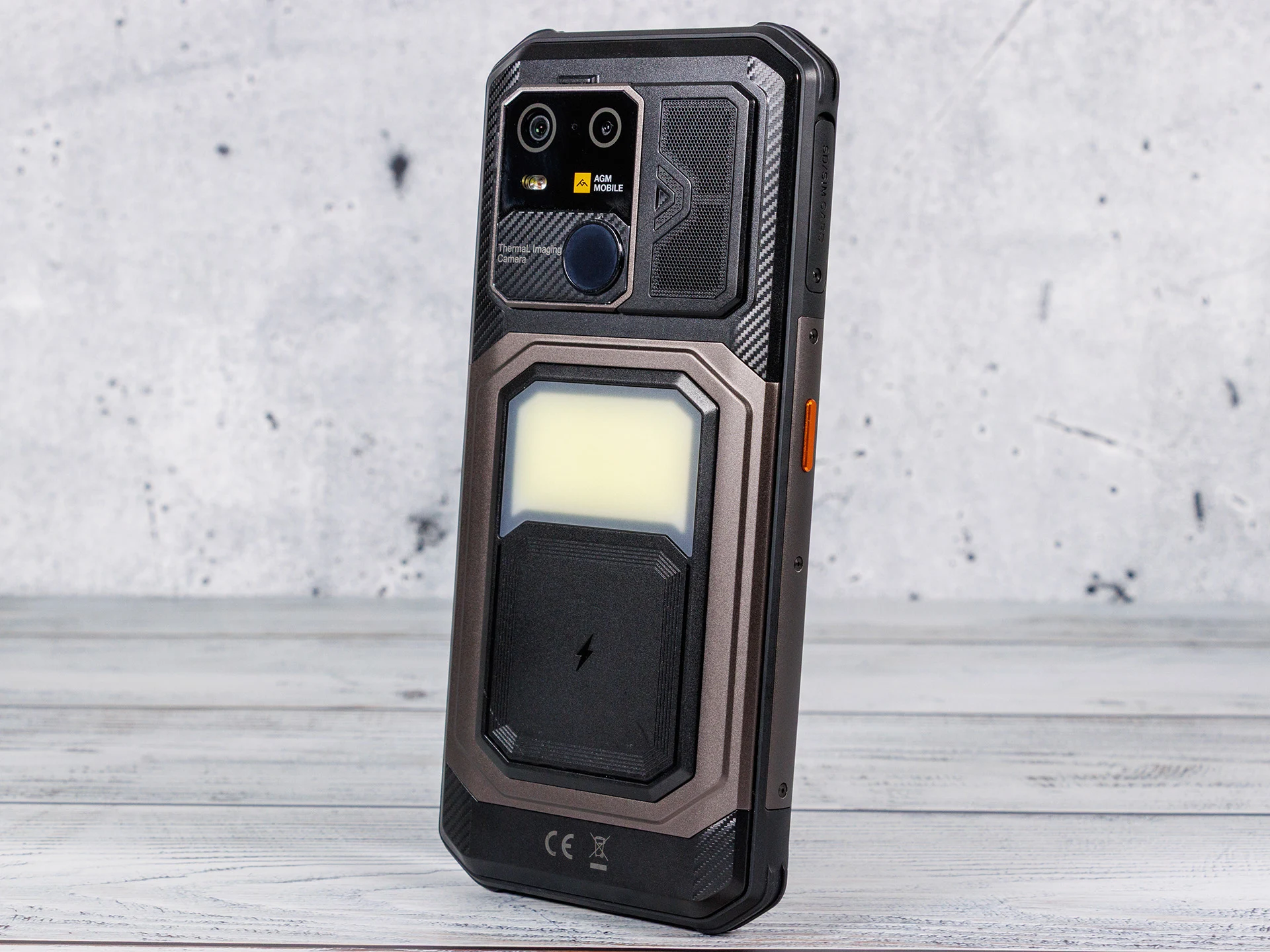
– Built-in thermal imaging camera enables quick visualization of temperature differences for trades, maintenance, and outdoor use, including electrical, heating, and building envelope issues.
– Two modes: user-selected measurement point or automatic hot/cold spot detection for fast problem identification.
– Readable display with practical detail, but expect up to ~5°C higher readings than reference infrared thermometers, limiting high-precision use.
– Smartphone integration allows immediate saving, viewing, and documentation of thermal images, effectively replacing a separate thermal camera in many scenarios.
AGM G3 Pro review summary
The AGM G3 Pro’s thermal imaging camera is one of the device’s key unique selling points and is primarily aimed at users in the trades, maintenance, or outdoor sectors. It makes it possible to visualize temperature differences that are not visible to the naked eye, such as in electrical installations, heating systems, or heat loss in buildings. There must be some everyday nuances described here, but the core idea stays the same: seeing heat where you normally cannot.
Operational modes and practical use
In practice, the camera offers two basic modes: First, a freely selected measurement point in the image can be evaluated directly; second, the system automatically detects the warmest and coldest areas in the captured field of view and highlights them accordingly. This allows potential problem areas to be quickly identified without having to manually search for conspicuous areas. The approach is practical for on‑site checks and quick assessments, though it may miss nuanced patterns if limits or settings aren’t adjusted properly.
Display quality and accuracy notes
In testing, the display is easy to read and provides sufficient detail for typical applications. However, there is a certain degree of deviation in accuracy: the measured temperatures tend to be slightly higher than those of a conventional infrared thermometer. In testing, this difference can be up to 5 °C, depending on the surface texture. This is also confirmed by contact measurements taken with the Fluke t3000 FC. The camera is nevertheless well-suited for rough diagnoses and orientation, but only to a limited extent for high-precision measurements in professional settings.
Smartphone integration advantages
The direct integration into the smartphone system is particularly practical, allowing thermal images to be saved, viewed, and used for documentation purposes immediately. As a result, the AGM G3 Pro (buy here on Amazon) replaces a separate thermal imaging device in many situations, even if it does not fully match its measurement accuracy. The seamless workflow means fewer devices to carry and faster reporting, though some users may still prefer a dedicated unit for critical tasks.
Overall assessment
Despite its limitations in precise measurement, the G3 Pro offers a compelling mix of mobility, immediacy, and functional imaging that suits many field tasks. The camera’s ability to present quick visual cues about heat distribution helps teams identify potential problems earlier, plan repairs, and document findings on the go. In contexts where pin‑point accuracy matters most, operators should calibrate expectations and consider supplementary tools when needed.
Leave a Reply