Key Takeaways
1. A new system from the Institute of Science Tokyo enables wireless energy transfer for small devices using a concentrated LED light beam, effective up to 16 feet (5 meters).
2. The technology targets IoT devices, reducing the need for frequent battery changes and maintenance by using high-powered infrared LEDs instead of lasers, which can be hazardous.
3. The system features a two-stage lens arrangement, with a liquid lens for dynamic focus adjustment and a fixed lens to direct the beam at photovoltaic cells.
4. It can power moving devices by using a two-axis mirror and a depth camera to track solar cells, ensuring reliable operation in various lighting conditions.
5. Current efficiency is at 56.2%, with a goal to improve it to 80% for practical applications, making it suitable for industrial sensor networks, smart home devices, and medical tools.
A research group from the Institute of Science Tokyo has unveiled a novel system that empowers small devices through a concentrated LED light beam, allowing for wireless energy transfer across distances of up to 16 feet (5 meters). This technology is mainly aimed at IoT devices, which are networked sensors found in both everyday and industrial settings, like smart thermostats or motion detectors that share data automatically. The findings were published on November 3 in the journal Optics Express.
Simple and Effective Concept
The idea is quite simple: a concentrated LED beam is aimed at photovoltaic cells that transform the light into electrical energy, presenting a possible solution to the rising issue of powering an ever-growing number of IoT devices. As these devices continue to grow in number, so do the expenses and efforts related to battery changes and upkeep. While optical power transmission over several feet is already a reality, it often relies on laser beams, which can be hazardous. Instead, the research team led by Tomoyuki Miyamoto and Mingzhi Zhao opted for high-powered infrared LEDs as a safer option.
Innovative System Design
At the core of the system lies an infrared LED, which is sharply focused using a two-stage lens arrangement. A liquid lens adjusts the focus dynamically, while a fixed lens aims the beam at the photovoltaic cells. The study indicates that the LED beam is precise enough to consistently strike small solar cells at distances beyond 16 feet.
Powering Movement
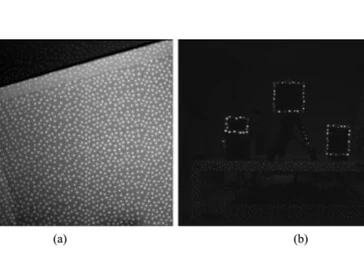
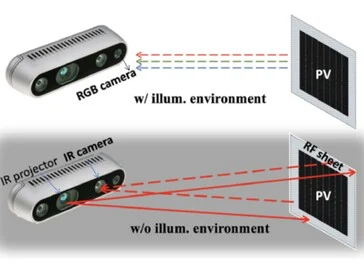
The system is also capable of powering moving devices. To facilitate this, it integrates a two-axis mirror arrangement with a depth camera. The Intel RealSense D435 identifies the small solar cells using standard imaging during daylight and retroreflector signals at night. An AI model oversees the system, ensuring that the light beam is consistently tracked and focused through the liquid lens. The researchers assert that the system functions reliably under all lighting conditions, which is essential for IoT sensors operating in industrial or remote settings.
The study’s findings reveal that while the system is dependable, it currently lacks the efficiency needed for everyday practical applications. In trials, it reached an efficiency of 56.2%, mainly constrained by radiation losses and absorption in the liquid lens. The researchers aim to enhance this number to as much as 80% by refining the LED optics, making real-world applications more achievable. In the long run, this technology could be applied in situations where battery changes are expensive or cabling is not feasible, particularly in industrial sensor networks, and potentially in smart home devices or medical measurement tools.
Source:
Link