
Tag: TrueGPU

  • Lisuan LX 7G100: Chinese Gaming GPU Trails RTX 4060

    Lisuan LX 7G100: Chinese Gaming GPU Trails RTX 4060

    Key Takeaway

    – 7G100 shows solid 1080p playability (56–182 FPS across tested titles) but trails mainstream GPUs by ~30%, with larger gaps in less-supported games.
    – Stronger game compatibility and fewer driver issues than older Chinese GPUs, though stability and driver software still need work (stuttering, frame pacing, settings reset).
    – No ray tracing and software ecosystem is underdeveloped (minimal control panel, overclock resets), impacting advanced features and long-term usability.
    – Pricing (~$485) positions it close to faster competitors, making value dependent on demand for compatibility over peak performance.


    Overview of the Lisuan LX 7G100 Graphics Card

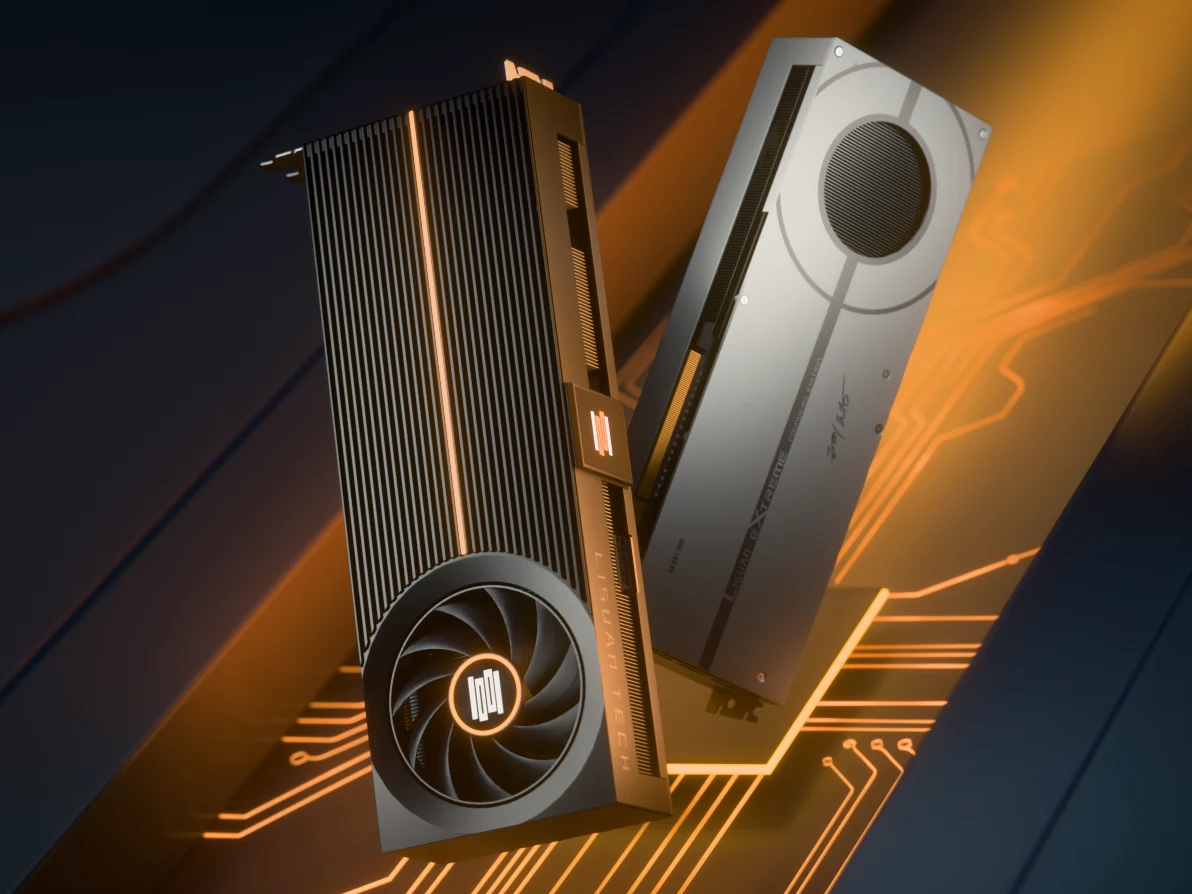
    Fully detailed months ago, a Lisuan LX 7G100 graphics card has now been put through early independent gaming benchmarks. Built on Lisuan Tech’s in-house TrueGPU architecture, the card reportedly fully supports DirectX 12 and modern AAA titles without the severe driver issues that plagued earlier Chinese GPUs. The LX 7G100 model teste comes equipped with 12 GB of GDDR6 memory and uses a 6 nm GPU chip known as the 7G106. In real-world gaming tests at 1080p, the card manages 56 FPS in Black Myth: Wukong, 57 FPS in The Witcher 3: Wild Hunt, 80 FPS in Elden Ring, 150 FPS in Grand Theft Auto V, and 182 FPS in Dota 2. In Cyberpunk 2077 with FSR3 Quality mode and frame generation enabled, the GPU averages around 88 FPS.

    Performance Against Mainstream Competitors

    While those numbers are enough for playable gameplay, the card still falls roughly 30% behind mainstream competitors like the Nvidia GeForce RTX 4060 and Intel Arc B580, and in poorly supported games, the performance gap widens further, with competing GPUs delivering two to three times higher frame rates. The hardware itself also lacks ray tracing support, with Lisuan planning to add it only in future GPU generations.

    Software and Compatibility

    Reviewers say the biggest improvement compared to older Chinese GPUs is game compatibility. Modern titles launch and run without major issues or months of waiting for driver fixes. However, the software side still needs work. Testers reported stuttering, inconsistent frame pacing, a nearly empty driver control panel, and overclock settings resetting after every reboot.

    Pricing and Market Position

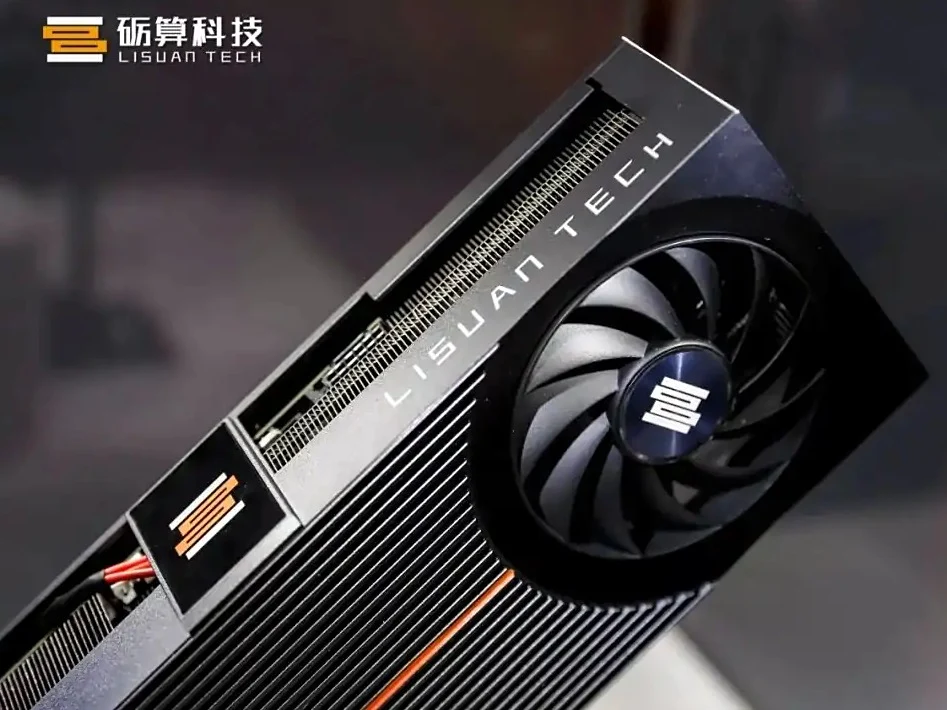
    Pricing may be the hardest sell for the LX 7G100. In China, the Founders Edition is listed at around ~$485, putting it close to much faster alternatives from Nvidia, AMD, and Intel.

    Sources

  • Lisuan’s 6nm GPUs Compete with RTX 4060 for Gaming and AI

    Lisuan’s 6nm GPUs Compete with RTX 4060 for Gaming and AI

    Key Takeaways

    1. Lisuan Technology launched its first discrete graphics cards, the 7G100-series “eXtreme,” featuring a fully self-designed GPU using the TrueGPU Tiantu architecture.
    2. The TrueGPU technology includes intelligent multitasking for managing 48 tasks, an out-of-order triangle engine for improved raster efficiency, and NRSS upscaling, competing with DLSS and FSR.
    3. Two initial models are released: the consumer-focused 7G106 with 12 GB GDDR6 and the workstation model 7G105 with 24 GB ECC, both manufactured on TSMC’s 6 nm N6 process.
    4. Initial performance benchmarks show the 7G100 series performing comparably to Nvidia’s GeForce RTX 4060, with notable scores in 3DMark and Geekbench tests.
    5. Lisuan plans to distribute samples in August 2025 and aims for mass production in September, potentially positioning the 7G100 series to compete with AMD and Nvidia in various sectors.


    Lisuan Technology has officially launched its first line of discrete graphics cards, the 7G100-series “eXtreme” cards, as announced on July 26. This event is noteworthy as it represents the first instance where a Chinese company has created a fully self-designed GPU, covering everything from the instruction set to the compute core, all built on the proprietary TrueGPU Tiantu architecture.

    Innovative Hardware Features

    TrueGPU incorporates various hardware techniques to optimize performance. It can manage up to 48 tasks at once without delays, which the company describes as “intelligent multitasking.” Additionally, an out-of-order triangle engine is said to improve raster efficiency by 50% in certain scenes. The technology also features a block-based matrix layout, NRSS upscaling (a competitor to DLSS and FSR), and SR-IOV support, allowing for up to 16 virtual GPUs.

    Specifications of the Initial Boards

    Two models are set to be released initially. Both are manufactured using TSMC’s 6 nm N6 process. The consumer-focused 7G106 offers 12 GB of GDDR6 on a 192-bit bus, delivering 24 TFLOP/s (FP32) of compute power, along with 192 texture units and a single 8-pin power connector, indicating an approximate TDP of 225W. The workstation model, 7G105, increases the memory to 24 GB ECC while maintaining the same peak throughput and introducing professional features like SR-IOV and support for 8K AV1/HEVC codecs.

    Performance Results and Future Plans

    Initial performance numbers are cautiously optimistic. Lisuan reports a 3DMark Fire Strike score of 26,800 points, which is on par with Nvidia’s GeForce RTX 4060, and a Steel Nomad score of 2,268. In Geekbench 6 OpenCL, the advantage grows to around 111,000 points—approximately ten percent higher than the RTX 4060 in that benchmark. In-house tests demonstrated that titles like Black Myth: Wukong and Shadow of the Tomb Raider were running at 70–80 frames per second (fps) on high settings at 4K resolution.

    Lisuan intends to distribute samples of both cards in August 2025, with mass production planned for September. If independent testing verifies the claimed performance and the software stability, the 7G100 series could potentially be the first domestically produced Chinese GPU line to effectively compete with AMD and Nvidia in gaming, AI, and cloud-rendering sectors.

    Source:
    Link

  • China’s First 6nm GPU Matches Decade-Old GTX 660 Ti Performance

    China’s First 6nm GPU Matches Decade-Old GTX 660 Ti Performance

    Key Takeaways

    1. Lisuan Technology’s G100 is the first graphics processor made on a local 6 nm node and has powered on for the first time.
    2. The G100 features 32 Compute Units, 256 MB of VRAM, and a core clock speed of 300 MHz, but these specs may not reflect final hardware capabilities.
    3. It achieved an OpenCL score of 15,524, comparable to older GPUs like the Nvidia GeForce GTX 660 Ti and AMD Radeon R9 370.
    4. Driver software is a significant challenge, as previous Chinese GPU companies struggled with underdeveloped drivers rather than hardware issues.
    5. Mass manufacturing of the G100 may begin by the end of this year or early 2026, but significant improvements in performance, clock speeds, and driver software are still needed.


    China has hit a noteworthy achievement as Lisuan Technology’s G100 has successfully moved past its final design phase and powered on for the very first time. This graphics processor is claimed to be the first made on a local 6 nm node. The chip features the company’s proprietary TrueGPU architecture and is designed to rival Nvidia’s budget-friendly GeForce RTX 4060, even though that model has already been succeeded by the RTX 5060 series.

    Specifications Overview

    Details about the specifications are not very clear, but a listing on Geekbench shows it has 32 Compute Units, 256 MB of VRAM, and a core clock speed of only 300 MHz. These numbers likely represent temporary firmware settings instead of the final hardware capabilities; however, they do provide a glimpse into the current status of the device.

    Benchmark Performance

    The G100 received an OpenCL score of 15,524 points in the same benchmark, putting it in line with older GPUs like Nvidia’s 13-year-old GeForce GTX 660 Ti and AMD’s Radeon R9 370. The benchmark setup included the G100 with a Ryzen 7 8700G APU and 64 GB of DDR5-4800 on a B650M motherboard. In summary, the real-world performance has not yet aligned with Lisuan’s promotional claims.

    Challenges Ahead

    Driver software presents a significant challenge. Previous Chinese GPU companies, such as Moore Threads and Birentech, faced major issues primarily due to underdeveloped drivers rather than hardware flaws. Lisuan is likely to encounter similar obstacles and will require effective driver optimization before the G100 can effectively compete with established brands.

    Production for risk is currently in progress, with mass manufacturing potentially starting by the end of this year or in early 2026. There is a considerable amount of work still to be done: improving clock speeds, resolving memory reporting problems, and enhancing the driver software to elevate compute and gaming performance beyond what has been available for the last ten years.

    Source:
    Link