Tag: streaming devices

  • Amazon Court Case: Alleged Intentional Damage to Fire TV Sticks

    Amazon Court Case: Alleged Intentional Damage to Fire TV Sticks

    Key Takeaway

    1. Amazon is facing a class action lawsuit over allegedly misleading communication about software support duration for older Fire TV sticks.
    2. Support for the first two generations ended earlier than the implied or advertised timeline, leading to decreased device functionality.
    3. The case raises concerns about planned obsolescence, where devices become worthless without physically breaking.
    4. Similar issues have arisen with Amazon’s other products, such as the Cloud Cam, where support was discontinued without clear notice.

    Legal Battle Over Fire TV Stick Support

    When consumers buy gadgets like smartphones or tablets, they usually look at how long the manufacturer will support the device with updates. Now, it seems that this same advise applies to streaming gadgets like Fire TV sticks. Currently, Amazon is facing a lawsuit in the USA, related to older Fire TV stick models. The lawsuit accuses Amazon of devaluing the first and second generation devices, but not for hardware problems. Instead, the issue revolves around the software support, or lack of it.

    Support Ended Too Soon?

    The lawsuit claims that support for the first gen Fire TV sticks ended in December 2022, with the second gen following not long after. Despite this, Amazon apparently gave an impression that support would continue until 2024. The customers involved believe this lack of clear info is the main problem, which has lead to apps not working well, devices running slow, and some becoming barely usable. This situation raises questions about planned obsolescence, where gadgets are intentionally made to last for only a certain period without physically breaking.

    Customer Impact and Legal Consequences

    The case was brought by a US user who bought two second-generation Fire TV sticks back in 2018. Years later, those devices became so sluggish that they had to buy new ones in 2024. Amazon hasn’t officially spoken about the lawsuit yet. It’s hard to predict how the case will end. Similar issues have happened before, like with Amazon’s Cloud Cam security cameras, which Amazon shut down in December 2022. Some users got compensations like free Blink Mini cameras or even newer Echo models. Whether Fire TV Stick owners will get similar solutions isn’t sure yet.

    Sources
  • Fire TV Stick 4K Max vs 4K vs 4K Select: Comparison Guide

    Fire TV Stick 4K Max vs 4K vs 4K Select: Comparison Guide

    Key Takeaways

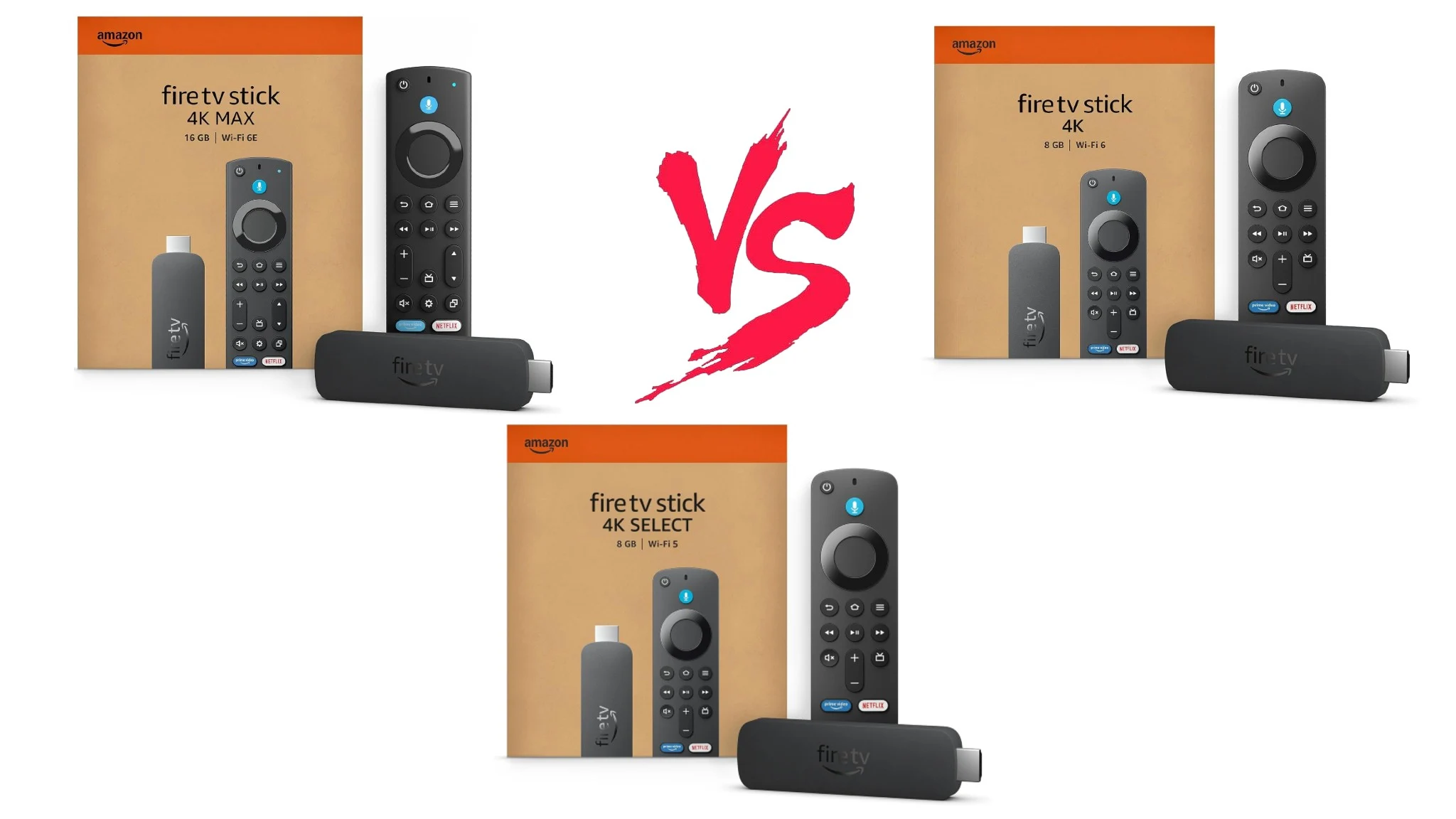
    1. Device Overview: Amazon introduced the Fire TV Stick 4K Select, expanding its lineup alongside the Fire TV Stick 4K (2nd Gen) and Fire TV Stick 4K Max (2nd Gen), all supporting 4K streaming.

    2. Performance Differences: The Fire TV Stick 4K Max has the best specs with a 2.0GHz CPU, 850MHz GPU, 2GB RAM, and 16GB storage. The Fire TV Stick 4K and Select have lower CPU speeds and storage, affecting performance.

    3. Audio and Connectivity: Only the Fire TV Stick 4K and Max support Dolby Atmos audio. The Max offers tri-band Wi-Fi 6E for better streaming, while the Select has dual-band Wi-Fi 5.

    4. Remote Features: The Fire TV Stick 4K Max includes an enhanced Alexa Voice Remote with more buttons and better functionality, while the other models come with a standard remote.

    5. Pricing: The Fire TV Stick 4K Select is available for pre-order at $39.99, the Fire TV Stick 4K is discounted to $24.99, and the Fire TV Stick 4K Max is priced at $59.99 but also on sale for $39.99.


    Amazon recently revealed its latest TV streaming device, the Fire TV Stick 4K Select, during its fall event. This new stick joins the existing Fire TV Stick 4K (2nd Gen) and Fire TV Stick 4K Max (2nd Gen), all capable of streaming content in 4K.

    Key Differentiations

    While all three devices share similar features such as support for Alexa+, smart home management, and future Cloud Gaming on the Fire TV Stick 4K Select, there are important differences among them. Understanding these differences can assist you in choosing the best option for your needs.

    To begin with, the Fire TV Stick 4K Max stands out as the most robust option. It boasts a quad-core processor with a CPU speed of 2.0GHz, along with an 850MHz GPU. This model also includes 2GB of RAM and offers 16GB of storage, making it the most extensive storage option among the Fire TV Sticks.

    Performance Comparisons

    In contrast, the Fire TV Stick 4K also has a quad-core processor but with a lower clock speed of 1.7GHz and a 650MHz GPU. It has the same 2GB of RAM, but its storage is only half that of the Fire TV Stick 4K Max, resulting in reduced space for apps and games.

    The Fire TV Stick 4K Select features a quad-core processor running at 1.7GHz, but its GPU specs are not disclosed. It comes with 1GB of RAM and 8GB of storage. The lower RAM means it has less temporary memory for active data, leading to a generally slower performance compared to the other two models.

    Although all three devices support 4K streaming, the experience varies based on which one you pick and the type of content. All three support HDR10, HDR10+, and HLG, but only the Fire TV Stick 4K and Fire TV Stick 4K Max can handle Dolby Vision content.

    Audio and Connectivity

    The audio experience is notably enhanced when using either the Fire TV Stick 4K or Fire TV Stick 4K Max, especially with a Dolby Atmos-compatible TV or soundbar, as they both support Dolby Atmos audio. In contrast, the Fire TV Stick 4K Select only supports Dolby-encoded audio.

    For connectivity, the Fire TV Stick 4K Max offers the best options, featuring tri-band Wi-Fi, including support for Wi-Fi 6E. This enhancement promises smoother streaming, faster speeds, and lower latency when playing games.

    The Fire TV Stick 4K and Fire TV Stick 4K Select offer dual-band Wi-Fi. However, the Fire TV Stick 4K is slightly better with Wi-Fi 6, while the Fire TV Stick 4K Select uses Wi-Fi 5. Additionally, the Fire TV Stick 4K is equipped with Bluetooth 5.2, whereas the Fire TV Stick 4K Select has Bluetooth 5.0.

    Remote Features

    A significant difference among these Fire TV Sticks lies in the remote control. The Fire TV Stick 4K Max includes the Alexa Voice Remote Enhanced, which is longer and has more buttons than the standard Alexa Voice Remote that comes with the other two models. The enhanced remote offers special buttons for Live TV and recently used apps.

    Moreover, the Alexa Voice Remote Enhanced supports both Bluetooth and infrared, while the standard remote only supports Bluetooth. Both remotes operate on two AAA batteries, but neither features backlit buttons or a Remote Finder, unlike the Alexa Voice Remote Pro.

    It’s important to note that while the standard remote is compatible with all three Fire TV Sticks, the enhanced version is not compatible with the Fire TV Stick 4K and Fire TV Stick 4K Select.

    Pricing Insights

    Lastly, the Fire TV Stick 4K Select is not yet available for purchase but can be pre-ordered for $39.99 ahead of its October 15 release. The Fire TV Stick 4K (2nd Gen) is priced at $49.99, but currently has a 50% discount, bringing it down to $24.99.

    The Fire TV Stick 4K Max is the priciest at $59.99, though it is also on sale for $39.99, similar to the Fire TV Stick 4K.

    Considering their features, the Fire TV Stick 4K Max emerges as the top choice due to its larger storage, superior connectivity, and better remote. With its current discount, it makes sense to opt for it over the others. However, if your budget is under $30, the Fire TV Stick 4K at $24.99 is a fantastic deal, offering most features of the 4K Max, except for the expanded storage, Wi-Fi 6E, and enhanced remote.

    Source:
    Link



  • Xiaomi Box 5 & 5 Max Launch: HyperOS, Dolby Vision, and More

    Xiaomi Box 5 & 5 Max Launch: HyperOS, Dolby Vision, and More

    Key Takeaways

    1. Xiaomi has launched the Box 5 and Box 5 Max streaming devices in China, priced at 299 yuan ($41) and 499 yuan ($69) respectively, with pre-orders open and shipments starting May 15.

    2. The Box 5 features a quad-core processor with 2GB RAM and 32GB storage, while the Box 5 Max improves on this with 4GB RAM and 64GB storage for better performance and multitasking.

    3. Both devices support 4K resolution, have Xiaomi’s AI-SR engine for enhancing non-4K content, and are compatible with Dolby Vision and DTS:X audio formats for high-quality audio-visual experiences.

    4. They come with dual-band Wi-Fi 6 for fast streaming, Bluetooth 5.2 for low-latency audio, and various physical connections including HDMI and USB 2.0.

    5. Running on Xiaomi’s HyperOS, they act as smart home dashboards with Xiao Ai voice assistant integration, and the remote control allows NFC screen casting for easy content sharing.


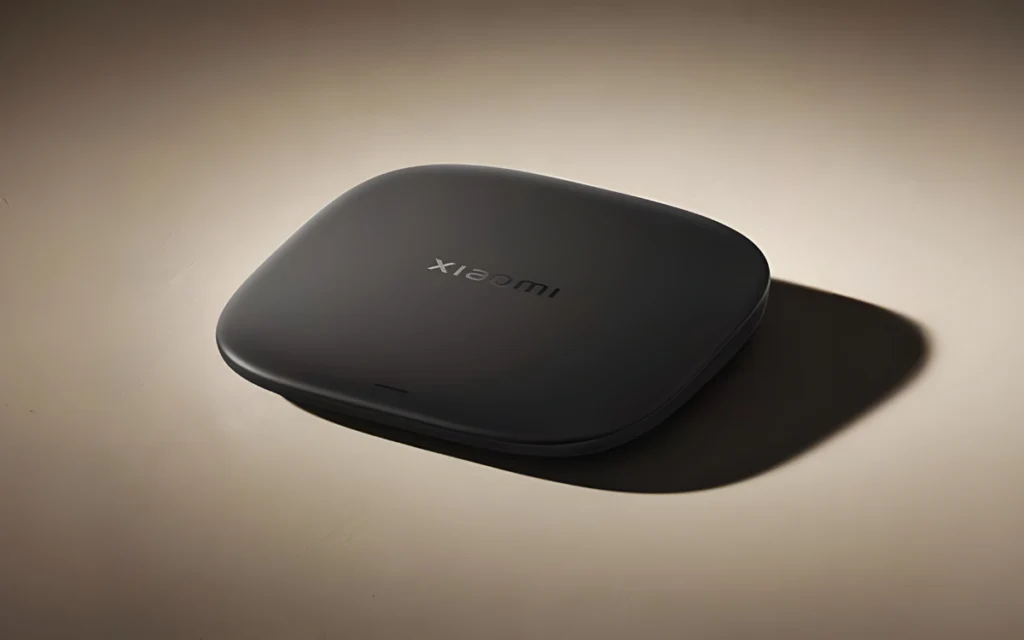
    Xiaomi has introduced the new Box 5 and Box 5 Max streaming devices in China. These small Android-based boxes offer advanced AI features, better connectivity, and high-quality audio-visual experiences. The standard Box 5 is available for 299 yuan ($41), while the Box 5 Max is priced at 499 yuan ($69). Pre-orders are now open, and shipments are expected to start on May 15.

    Specifications of the Xiaomi Box 5 Series

    The Xiaomi Box 5 is equipped with a quad-core Cortex-A55 processor and a Mali-G310 V2 graphics unit, along with 2GB of RAM and 32GB of internal storage. The Box 5 Max enhances the performance with 4GB RAM and 64GB storage, which allows for improved multitasking and more space for local content.

    Features and Capabilities

    Both versions support 4K resolution up to 3840 × 2160 and are powered by Xiaomi’s AI-SR engine. This feature improves non-4K videos by sharpening details and enhancing clarity, particularly for older 720p or 1080p content. They also support Dolby Vision and DTS:X audio formats, and can transmit 7.1.4-channel audio for a rich surround sound experience when connected to suitable home theater systems.

    The devices have a compact size with a chassis measuring 97mm x 97.1mm and a height of just 17mm, weighing under 100g, making them easy to hide behind a television or take along while traveling.

    Connectivity and Smart Features

    Both models include dual-band Wi-Fi 6 for reliable and rapid streaming, even on congested home networks. Bluetooth 5.2 is available for low-latency audio streaming to wireless headphones or speakers. Physical connections consist of HDMI, USB 2.0, and a DC power input.

    Running on Xiaomi’s HyperOS, both devices function as a smart home dashboard when paired with the Mi Home app. They feature integration with Xiao Ai, Xiaomi’s voice assistant, allowing users to control streaming, smart home devices, or ask general questions using voice commands.

    The provided remote control supports NFC screen casting, enabling users to simply touch their smartphone to the remote to cast content without the need for pairing menus or QR code scanning. Notifications and calls are concealed during casting to protect user privacy.