Tag: Stop Killing Games

  • Stop Killing Games Launches EU and US Watchdog NGOs for Victory

    Stop Killing Games Launches EU and US Watchdog NGOs for Victory

    Key Takeaways

    1. The Stop Killing Games movement is gaining traction with significant advancements, including a verified petition of 1.3 million signatures.
    2. Ross Scott, the movement’s founder, expresses optimism about stopping game publishers from making purchased games unplayable.
    3. There are challenges ahead, particularly with industry lobbyists influencing legislation like the Digital Fairness Act.
    4. The movement has strong support in the European Parliament, with majority backing for their cause.
    5. Two new NGOs are being established to focus on counter-lobbying, fundraising, and creating a system for reporting unplayable games.


    The Stop Killing Games movement is seeing significant advancements. Although there are still some challenges with European Union regulators, the overall situation is looking more encouraging than many had anticipated.

    Update from Ross Scott

    Ross Scott, the founder of Stop Killing Games, shared an update on his YouTube channel, Accursed Farms, where he talked about the latest news with optimism. He highlighted that the effort to stop game publishers from making purchased games unplayable is increasingly becoming a reality as time goes on.

    Milestone Achieved

    For some background, the European Citizens’ Initiative “Stop Destroying Videogames” reached an important milestone on January 26, when officials verified that the petition collected 1.3 million valid signatures.

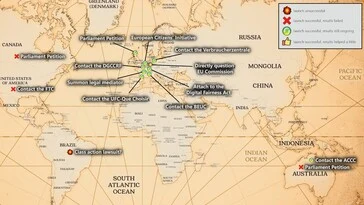
    This effectively places the movement on the European Commission’s agenda, requiring a formal reply by July 27. Key members of the movement, including Scott, are anticipated to meet with Commission officials soon to directly present their arguments.

    Challenges Ahead

    Nonetheless, the journey has not been easy. Earlier in October 2025, there were talks to include game protections in the new Digital Fairness Act. However, industry lobbyists got involved first.

    The campaign later emphasized that they are not demanding endless support from publishers for video games. Instead, they seek a practical solution that allows people to continue playing games they purchased even after the official servers are closed.

    Strong Support in Parliament

    Currently, there is strong backing for the movement in the European Parliament. Scott mentioned, “I’ve been told we have majority support, and our issue will be brought before Parliament.” This is promising news, as even if the movement faces obstacles at the Commission level, Parliament could still enact new regulations in its favor.

    Launch of New NGOs

    Stop Killing Games is now establishing two new non-governmental organizations in the EU and the US. These NGOs are expected to focus on counter-lobbying, fundraising, raising awareness, and creating a system for players to report games that have become unplayable.

    In conclusion, Scott’s message to the gaming community was uplifting and encouraging. He expressed, “I think we’re going to win this.”

    With a validated petition, two new NGOs, support from Parliament, and a solid legal foundation, the movement that started from frustration over not playing games like The Crew has transformed into a formal initiative.

    Source:
    Link


  • One Man vs Games Industry: Stop Killing Games Urges Government Action

    One Man vs Games Industry: Stop Killing Games Urges Government Action

    Key Takeaways

    1. Ross Scott’s Stop Killing Games project began as a protest against the removal of digital games and has grown into a significant international movement for digital game preservation.

    2. The campaign has led to legal inquiries and political initiatives in several countries, including a successful European Citizens’ Initiative, but faces ongoing uncertainties regarding petition legitimacy and legislative progress.

    3. Scott reflects on his personal journey of exhaustion and frustration, acknowledging the need for action against the erasure of purchased digital content, despite wishing to return to his previous projects.

    4. Future efforts should focus on community-driven oversight and preserving game environments, while the campaign’s legal changes aim to ensure users can back up and access their purchased games even if support is withdrawn.

    5. Legislation is essential to prevent game delistings, emphasizing the need for publishers to provide notice and offline access before games go offline, highlighting the ethical concerns of digital ownership.


    What started as one person’s angry reaction to Ubisoft’s removal of The Crew has transformed into a broad international effort aimed at stopping the destruction of digital games. Ross Scott’s Stop Killing Games project—initially a video essay protest—has rallied millions and sparked legal investigations, political initiatives, and public pressure across both oceans. Significant developments include consumer protection inquiries in several nations, the European Citizens’ Initiative gaining substantial support, and increasing engagement from legal professionals, regulators, and policymakers.

    Ongoing Uncertainty

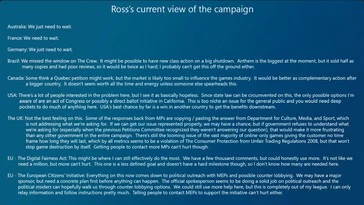
    Despite many unknowns—like the legitimacy of over a million EU petition signatures or the finalized wording of the Digital Fairness Act—Scott believes the movement has achieved all it can within realistic limits. Most campaign strategies are currently in a “waiting game” phase. Notably, Brazil’s legal efforts have halted due to missing local sales information, but key markets such as Germany, France, and Australia are continuing to make progress. Meanwhile, Scott has taken a step back from active organizing, allowing politically savvy volunteers and allies to handle future lobbying tasks.

    A Personal Journey

    In a heartfelt reflection, Scott shares months of relentless behind-the-scenes efforts, exhaustion, and frustration—not aimed at supporters but at a system that permits the erasure of purchased digital content. “I never intended for this to become my mission,” he admits, “but I realized I’d regret it if I didn’t act.” Even though he feels worn out and wishes to return to his earlier endeavors like Ross’s Game Dungeon or Civil Protection, he recognizes this moment as potentially impactful: “Without our push, none of these legal or political initiatives would exist.”

    Future Directions

    Scott intends to assist with the remaining legal actions as needed, but he emphasizes that future initiatives—like watchdog groups or community-driven oversight—should develop independently. He also shared his interest in projects that digitally recreate “lost” game worlds using static or semi-interactive AI tools, suggesting that even if games disappear, their captivating environments could still be preserved for future generations.

    Although the Stop Killing Games campaign has mainly concentrated on always-online games becoming unplayable, recent happenings with Steam and Itch.io removals have broadened the discussion. Scott points out that while the campaign currently doesn’t tackle storefront removals or financial censorship (like by Visa or PayPal), its primary legal alterations could help ensure that users can still back up and play their purchased games in the future—even if support is withdrawn.

    The Need for Legislation

    Yet, he cautions that only legislation can fully prevent delistings, as platforms cannot be compelled to keep selling a title. The best-case scenario, he suggests, is a system where publishers must provide sufficient notice and offline backup access before any game goes offline. “Clear labeling doesn’t safeguard anything if the game is no longer available,” he asserts.

    Ross Scott’s Stop Killing Games campaign has highlighted a critical issue in contemporary digital commerce: buying a game often resembles renting access at the publisher’s whim. When a purchased product can be deleted remotely without recourse, the ethical argument against piracy weakens—especially when preservationists and players are left with no lawful alternatives. The campaign hasn’t yet halted game destruction, but it has shattered the illusion of ownership, compelling lawmakers and the public to confront an uncomfortable reality: if you can’t retain what you’ve paid for, then what exactly did you acquire? And who is truly robbing whom?

    Source:
    Link


  • Stop Killing Games: EU Official Supports Player Ownership Rights

    Stop Killing Games: EU Official Supports Player Ownership Rights

    Key Takeaways

    1. The Stop Killing Games movement has surpassed 1.3 million signatures for its EU Citizen’s Initiative petition, exceeding the 1 million target needed for review by the EU Parliament.
    2. Nicolae Ștefănuță, Vice President of the EU Parliament, publicly supports the movement and encourages EU citizens to sign the petition.
    3. The movement aims to advocate for consumer rights in gaming, focusing on ensuring game publishers maintain playable states for games after support ends.
    4. Ross Scott, the movement’s leader, believes that addressing video game rights could be an easy win for politicians, appealing to the gaming community.
    5. Support from a prominent politician like Ștefănuță is seen as a positive step, potentially increasing momentum for the initiative in the EU Parliament.


    The Stop Killing Games movement is on a roll, having recently exceeded the crucial 1-million-signature threshold necessary for the EU Citizen’s Initiative petition to be reviewed by the EU parliament. Nicolae Ștefănuță, the Vice President of the EU Parliament and MEP from Romania representing the Greens/EFA group, has publicly shown his support for this cause. In a post on his Instagram, he expressed:

    “I stand with the people who started this citizen initiative. I signed and will continue to help them. A game, once sold, belongs to the customer, not the company.” – Nicolae Ștefănuță via Stop Killing Games Official on X (translated)

    Encouraging Participation

    The politician emphasized his commitment by signing the petition and urged other EU citizens to join in. So far, the petition has garnered an impressive total of 1,358,605 signatures, surpassing the 1 million signature target by 35% before the approaching July 31 deadline.

    Aiming for Consumer Rights

    Ross Scott, the leading figure of the Stop Killing Games movement and the mind behind the Accursed Farms YouTube channel, has pointed out that one key reason for their lobbying efforts in the EU is the bloc’s strong history of enacting laws that favor consumers. He believes that addressing video game rights could be a “simple win” for politicians. The idea is that while politicians often deal with weighty issues, supporting this initiative could gain them favor among the gaming community.

    The Stop Killing Games Movement primarily seeks to ensure that game publishers and developers maintain games in a playable state when they can no longer support them. This may include designing multiplayer games to permit privately hosted servers, for instance.

    A Positive Sign for the Future

    Support from the Vice President of the EU Parliament is just the beginning of the movement’s efforts within the EU framework. Having a well-known politician acknowledge their cause is a promising development for the movement’s success. It is expected that this recognition will help the initiative gain momentum in the EU Parliament when the petition is reviewed by other European Union lawmakers.

    Source:
    link

  • Ubisoft Faces Backlash for EULA Requiring Game Deletion

    Ubisoft Faces Backlash for EULA Requiring Game Deletion

    Key Takeaways

    1. Ubisoft updated its End User License Agreement (EULA) to require players to “uninstall” and “destroy” games if support for them ends.
    2. The change has sparked significant backlash from gamers, particularly on platforms like Reddit.
    3. The revised EULA places the responsibility on users to stay informed about changes, allowing Ubisoft to terminate the agreement for various reasons.
    4. Ubisoft is experiencing financial difficulties, reporting a loss of €159 million for fiscal year 2024-2025, amid declining popularity and unsuccessful game releases.
    5. The new policy coincides with the “Stop Killing Games” movement, which aims to prevent publishers from shutting down online-only games without adequate support.


    Ubisoft has found itself in hot water once again after revising its End User License Agreement (EULA), adding a clause that has stirred up a lot of talk in the gaming community. The updated EULA indicates that players are required to “uninstall” and “destroy” their games if support for a particular title ceases.

    Gamers React

    This has led to a significant amount of backlash on various platforms, especially on Reddit, where users have reacted quite angrily to the recent changes in the EULA. Many see this update as a possible response to the Stop Killing Games movement, which has been gaining traction.

    The new EULA can be found on Ubisoft’s official site. It places the responsibility on users to stay informed about any modifications:

    “You and UBISOFT (or its licensors) may terminate this EULA at any time, for any reason. Termination by UBISOFT will be effective upon (a) notice to You or (b) termination of Your UBISOFT Account (if any) or (c) at the time of UBISOFT’s decision to discontinue offering and/or supporting the Product.

    This EULA will terminate automatically if You fail to comply with any of the terms and conditions of this EULA. Upon termination for any reason, You must immediately uninstall the Product and destroy all copies of the Product in Your possession.”

    Changes Noticed

    These revised terms have not gone unnoticed by gamers, who are increasingly vocal about their dissatisfaction with Ubisoft’s choices. Over the past five years, the company’s popularity and market share have taken a hit, leading Ubisoft to forge a partnership with Tencent. For the fiscal year 2024-2025, Ubisoft reported losses of €159 million ($177.9 million), marking a 20.5% decline in net bookings, totaling around $2 billion.

    Many gamers and industry analysts see this update as a miscalculation, especially in light of a string of lackluster titles like Skull and Bones, XDefiant, Prince of Persia: The Lost Crown, Avatar Frontiers of Pandora, and Assassin’s Creed: Shadows.

    The Road Ahead

    Additionally, this new policy comes at a time when the “Stop Killing Games” initiative has gathered 1,266,069 signatures towards its goal of 1,000,000. The movement’s objective is to stop publishers like Ubisoft from shutting down online-only games without providing any end-of-life support, similar to what happened with the original Crew.

    Ubisoft is still facing significant financial challenges and a tarnished public image, and the latest changes to the EULA appear to widen the gap between the company and the gaming community. While Ubisoft stands its ground, the strong backlash indicates that many gamers might be seeking other options.

    Source:
    Link

  • Ubisoft EULA Sparks Debate in Stop Killing Games Movement

    Ubisoft EULA Sparks Debate in Stop Killing Games Movement

    Key Takeaways

    1. The Stop Killing Games campaign seeks to prevent companies from making owned games unplayable after support ends.
    2. Ubisoft faced backlash for ceasing support for The Crew and included a controversial clause in its EULA requiring players to destroy their game copies.
    3. Gamers are concerned about being told how to manage their digital possessions, especially with online-dependent games.
    4. The campaign advocates for the continuation of game operations even after official support ends, suggesting third-party servers as a solution.
    5. Despite gaining over a million signatures, the gaming industry, represented by the Video Games Europe trade association, resists the campaign’s demands, citing safety and legal concerns.


    The Stop Killing Games campaign aims to stop companies from making the games that players own unplayable. Recently, Ubisoft has faced a lot of backlash after it ceased support for The Crew in 2024. The publisher removed the racing game from online stores, cancelled digital licenses, and shut down servers. Gamers who took a closer look at the Ubisoft End User License Agreement (EULA) found some shocking wording. The agreement actually tells players to destroy their copies of the game.

    EULA Concerns

    While gamers usually just skim through agreements before agreeing, EULAs are designed to protect companies from possible legal issues. They might limit the publisher’s responsibilities for server outages or caution against piracy. However, it’s the last line of the Ubisoft agreement that is sparking outrage. The company declares, “Upon termination for any reason, You must immediately uninstall the Product and destroy all copies of the Product in Your possession.”

    Consumer Reaction

    Typically, people don’t take kindly to being told how to use their computers or to get rid of their possessions. The Ubisoft EULA isn’t an isolated case; other games, like Oblivion Remastered, also require similar agreements. Yet, it’s the games that rely heavily on online features that worry the Stop Killing Games movement the most.

    The campaign wants publishers to keep games operational even after they stop supporting the software. Ubisoft titles, such as The Crew, are deeply connected to online services. When the servers go offline, all gameplay options become unavailable. Some players have urged publishers to consider third-party servers, which could prolong the lifespan of a game for many years.

    Industry Pushback

    Even though Stop Killing Games has gathered over a million signatures, the gaming industry is resisting its demands. The Video Games Europe trade association, which includes major publishers like Ubisoft and Microsoft, stated that only the servers run by publishers can guarantee player safety and reduce the chances of legal or civil issues. Companies might also need to spend money to keep games playable long after they are released.

    It’s uncertain whether Stop Killing Games can influence changes regarding the rights of gamers. However, it could lead potential buyers to hesitate before buying certain games or agreeing to an EULA.

    Source:
    Link