
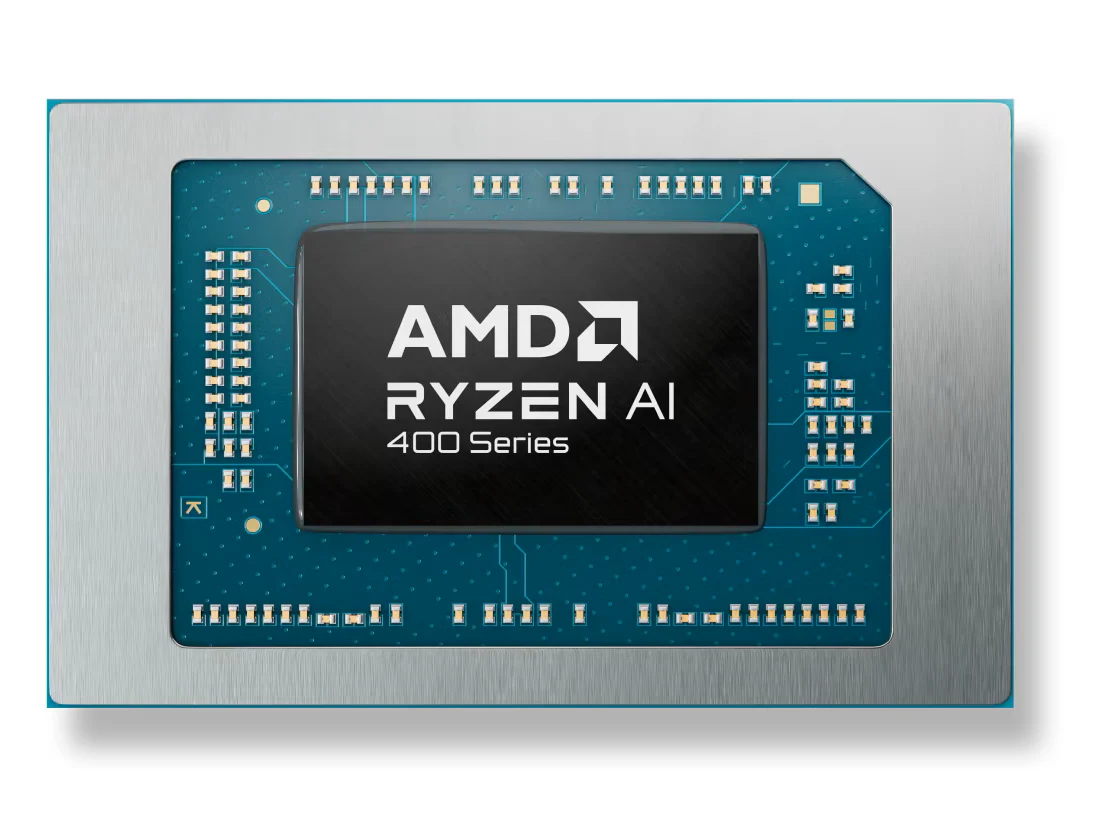
Tag: Ryzen AI 430

  • Ryzen AI 5 430 Benchmarks: First Results Show Mixed Performance

    Ryzen AI 5 430 Benchmarks: First Results Show Mixed Performance

    Key Takeaway

    1. The Ryzen AI 5 430 offers limited performance improvements over the Ryzen AI 5 330, primarily excelling in single-threaded tasks.
    2. The integrated GPU has been upgraded to Radeon 840M, providing a 1.5x to 2x performance boost in graphics, but remains unsuitable for gaming.
    3. Power consumption remains similar to its predecessor, with notable gains in graphics performance-per-watt but minimal changes in multi-threaded CPU performance.

    Introduction to AMD’s Latest Mobile Ryzen Series

    AMD is updateing its mobile Ryzen lineup this year with the new Ryzen AI 400 series to takes the place of last years Ryzen AI 300 series. The latest mid-range processor is the Ryzen AI 5 430 that you will typically find inside budget to mid-range laptops including the recent Lenovo IdeaPad 5 2-in-1 15. But how does this new model compare to the older Ryzen AI 5 330 that it is replacing?

    Performance Overview

    According to the initial benchmark tests we’ve seen, the Ryzen AI 5 430 only offers some slight improvements over the previous Ryzen AI 5 330, in some areas. For multi-threaded tasks like Blender, 7-Zip, or CineBench xT, it performs within 5 percent of its older sibling. Conversely, in single-threaded tests like R 2.5 or LibreOffice, it can be up to 30 percent faster. But, Turbo Boost still doesn’t make a huge difference in overall performance.

    Graphics and Power Consumption Insights

    The integrated GPU also got some upgrade, from Radeon 820M to Radeon 840M, showing about a 1.5x to 2x increase according to 3DMark benchmarks. Even though that’s a notable increase, it doesn’t make the CPU suitable for gaming, as it’s still only comparable to older Iris Xe 96 EUs, and nowhere near the power of Radeon 880M or 890M found in Ryzen AI 7 or 9 variants.

    In terms of power usage, the Ryzen AI 5 430 consumes almost the same amount of power as the previous model, just a few watts more on average. However, the graphics performance per watt is much improved, whereas the overall multi-threaded task performance remains largely unchanged.

    Further Comparisons and Benchmark Results

    More detailed benchmarks and comprehensive comparisons are available in our full review of the Lenovo IdeaPad 5 2-in-1 15. This can give you a clearer picture of how this processor performs in various scenarios and what kind of user it is suited for.

    Sources
    • Ryzen AI 5 430 Benchmarks: Startling Results and Performance Insights

      Ryzen AI 5 430 Benchmarks: Startling Results and Performance Insights

      Key Takeaway

      1. The Ryzen AI 5 430 offers limited performance improvements over the Ryzen AI 5 330, mainly in single-threaded tasks and GPU performance.
      2. Multi-threaded CPU performance remains nearly the same, within 5% of the previous generation.
      3. The integrated GPU has been upgraded to Radeon 840M, providing 1.5x to 2x better graphics performance, but still not suitable for gaming.
      4. Power consumption is similar between the two, with improved graphics performance per watt.

      New AMD Ryzen AI 400 Series Introduction

      AMD has recently launched an update to its mobile Ryzen lineup, introducing the Ryzen AI 400 series to intorduce fresh options for laptop lovers. This new series aims to replace last year’s Ryzen AI 300 lineup, bringing a variety of improvements to the table. The highlight is the Ryzen AI 5 430 processor, commonly seen in budget to mid-range laptops like the newer Lenovo IdeaPad 5 2-in-1 15, which’s popular among students and casual users alike.

      Performance Analysis and Benchmarks

      Looking at initial testing results, the Ryzen AI 5 430 shows improvements in some benchmarks, but in others, it remains pretty much the same. For instance, in intensive multi-core tasks like Blender, 7-Zip compression, or CineBench xT, it scores close to its predecessor, the Ryzen AI 5 330, with differences of just about 5 percent. However, it steps up significantly when it comes to single-core tasks—being roughly 30 percent faster in programs like R 2.5 or LibreOffice—that favor single-threaded performance. Turbo Boost pace doesn’t differ much since both chips face similar limitations.

      Graphics and Power Efficiency

      The integrated graphics have seen a sensible uplift, moving from Radeon 820M to Radeon 840M. According to 3DMark tests, this change results in about 1.5 to 2 times better performance. While this sounds appealing, it’s important to realize that the CPU still isn’t optimized for gaming—it’s roughly equivalent to an older Iris Xe with 96 execution units and pales compared to the powerful Radeon 880M or 890M found in Ryzen AI 7 or 9 series processors.

      Power Consumption and Overall Efficiency

      Regarding power use, the Ryzen AI 5 430 has similar requirements as the previous model, perhaps a little more wattage on average, making it not drastically more demanding. Yet, the efficiency per watt is noticeably better, especially for graphics. Nevertheless, for multi-core performance, things stay relatively stable without significant increases in energy consumption, meaning that users can get better graphics performance with minimal impact on battery life.

      Additional Resources and Reviews

      For more in-depth analysis, benchmarks, and user experiences, see our full review of the Lenovo IdeaPad 5 2-in-1 15. You might find detailed comparisons, performance metrics, and usability insights there that help make an informed decision about these Ryzen chips and the laptops they power.

      Sources