
Key Takeaways
1. The HANNOVER MESSE Press Preview took place on February 25, 2026, showcasing innovations for the upcoming trade fair on April 20 in Hannover, Germany.
2. GoodBytz GmbH won the Robotics Award 2026 for its AI-driven modular kitchen system, designed for efficient meal preparation.
3. The award nominees included Fraunhofer IFAM’s “Machine Tool Robot” and Robust.AI’s logistics solutions, highlighting diverse advancements in robotics.
4. GoodBytz’s kitchen system features automated portioning, weighing, and cooking, but still requires some manual food preparation.
5. The system is currently being tested at the University Hospital Tübingen, indicating a potential future for robotics in food service, although full automation is not yet achieved.
The HANNOVER MESSE Press Preview was held on February 25, 2026, giving a sneak peek of the upcoming trade fair that is set to occur on April 20 in Hannover, Germany. At this event, the Robotics Award 2026 was given to recognize exceptional advancements in the field of robotics.
Standout Nominees
Among the nominees was Fraunhofer IFAM with its “Machine Tool Robot,” which combines an industrial robot with a machine tool aimed at precise metalworking. GoodBytz GmbH showcased its robotic kitchen powered by AI, while Robust.AI presented an intelligent industrial solution for flexible management of autonomous logistics and warehouse robots. Last year, the award was won by Maple Advanced Robotics Inc. for its MARI AARS platform, which allows users to program robots without needing to write code. This year, however, the award went to GoodBytz.
Innovative Kitchen Solutions
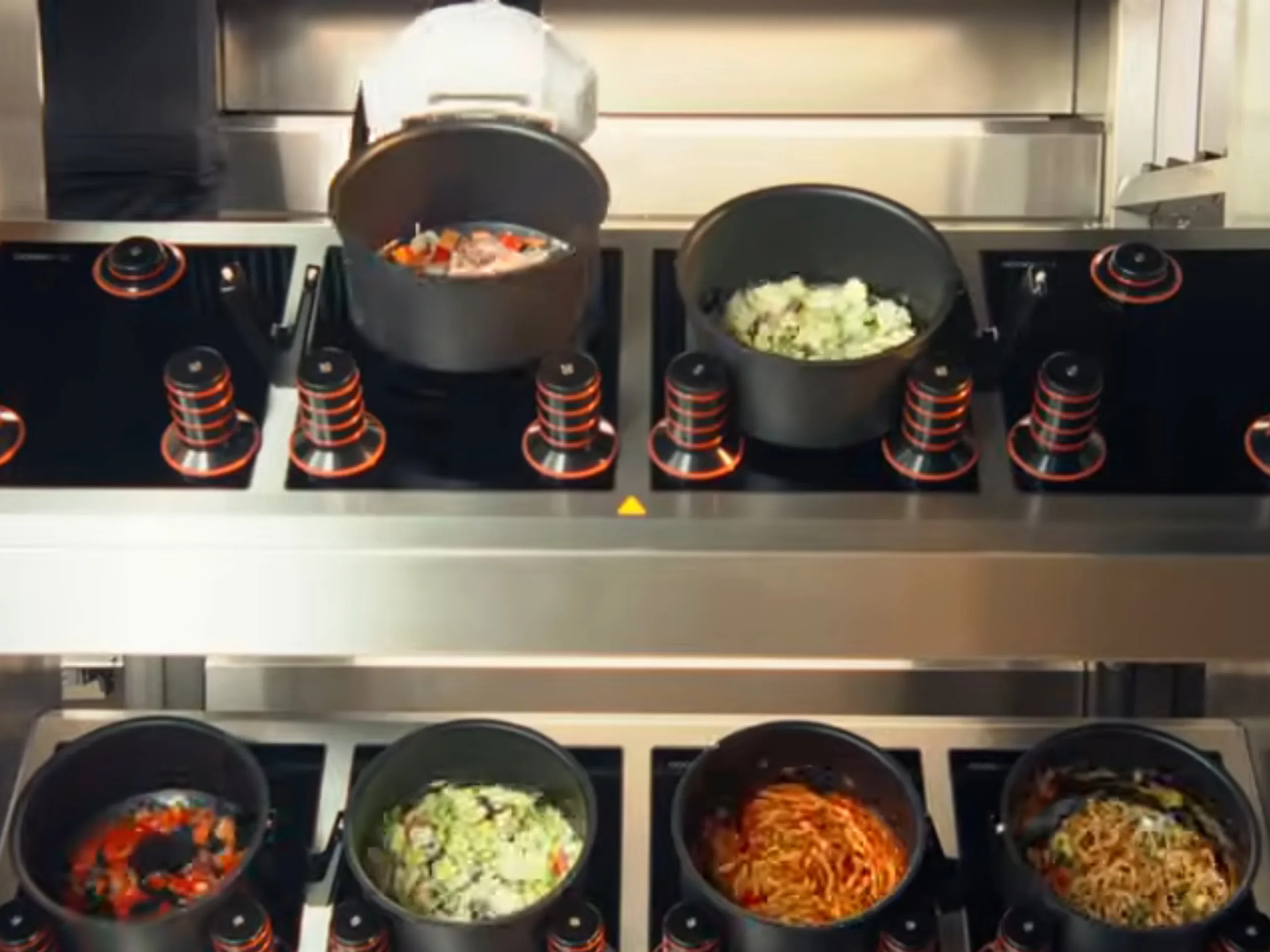
GoodBytz GmbH’s award-winning kitchen system is modular and driven by AI. It includes chilled storage for fresh ingredients, automated technology for portioning and weighing, as well as robotic arms for cooking and preparation. The AI integrated into the system manages multiple orders at the same time, enabling the preparation of thousands of meals each day, as the company claims. GoodBytz aims to deliver freshly made meals in settings where it is often difficult, like for shift workers. A promotional video from the company provides insight into the system’s functionality in real-life situations.
Limitations of Automation
However, the AI kitchen is not completely autonomous and cannot manage every aspect of food prep by itself yet. The video demonstrates that fresh ingredients, like peppers, still require manual chopping before they can be used in the system. During busy periods, staff may need to oversee the operations, prepare ingredients, and sometimes even take orders. In theory, a fully automated ordering process through a digital terminal could be possible. A similar idea is already being tested at a supermarket in Düsseldorf. Currently, the GoodBytz system is undergoing trials at the University Hospital Tübingen, as shown in a brief documentary by DW Deutsch (in German). Whether such systems will soon be common in restaurants is still uncertain, but the Robotics Award indicates that this future might be on the horizon.
Source:
Link